This book explores some of the Qur'anic references to the medicine and science in the light of the latest scholarship. The Qur'an repeatedly asks man to reflect on the signs of Allah in his own being and around him. Taking the cue from this directive, the Qur'anic allusions to medicine and science are elucidated in this work.
- 111 pages
- English
- ePUB (mobile friendly)
- Available on iOS & Android
eBook - ePub
Medical Miracles of the Qur'an
About this book
Information
Topic
Teología y religiónSubtopic
Teología islámicaChapter 1
Embryology and Human Creation: The Qur’ān and Science
HISTORICAL BACKGROUND
Although Aristotle summed up the prevailing theories of his age relating to the creation of the embryo, controversy continued among the supporters of different theories. Briefly, followers fell into two camps, those who argued that the full dwarf embryo existed in man’s sperm and those who argued that the full dwarf embryo was created out of the woman’s menstrual blood coagulation (thickening). Most believed that man was reduced into that sperm drop, and they drew a figure in which they imagined the embryo as a full creature in the sperm drop, which then developed in the womb as a small tree, (see Figure 1).
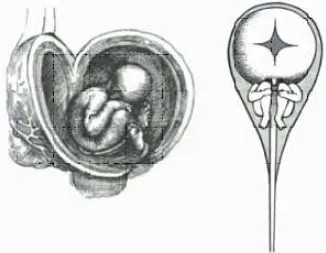
Figure 1: The dwarf embryo as imagined by Leonardo da Vinci in the fifteenth century (left) and the sperm as a miniature human being by Hartsoeker during the seventeenth century (right)
Neither group realized that man’s sperm and woman’s ovum participate in the creation of the embryo, as supported by the Italian scientist Spallanzani in 1775. In 1783, Van Beneden was able to confirm this statement, and thus the idea of the dwarf embryo was discarded. During the years 1888 and 1909 Boveri proved that chromosomes, when divided, carry the different genetic characteristics of each individual. Morgan, in 1912, was able to determine the role of genes, existing in certain parts of chromosomes, in a hereditary continuum.
Therefore, it is clear that mankind did not realize until the eighteenth century that the embryo is created of a man’s sperm mingled with a woman’s ovum. Furthermore, this was only confirmed at the beginning of the twentieth century.
On the other hand, the Holy Qur’ān and the Prophetic speeches confirmed in a very accurate scientific manner the creation of man from a mingled fluid-drop (nuṭfa amshāj). As the Qur’ān states:
Verily We created man from a drop of mingled sperm (nuṭfa amshāj), in order to try him: so We gave him (the gifts), of hearing and sight (76:2)
It has been agreed upon by commentators of the Holy Qur’ān that amshāj means mingling, as man’s water mingles with that of the woman and this is also what the Prophet confirmed in one of his speeches. Imam Aḥmad indicated in his book Al-Musnad that a Jew passed by Prophet Muḥammad (peace be upon him) while he was addressing his companions. Some of the Quraysh responded by saying:
“O Jew! This man proclaims that he is a prophet.” The Jew said: “I will ask him of something no one knows except a prophet.” He asked the Prophet: “O Muḥammad! What is man created from?” The Prophet said: “O Jew! Man is created from both: man’s fluid (nuṭfa) and woman’s fluid.” The Jew said: “This is what was said by those prophets before you.”
In the next few pages, the embryological developments as indicated in the Qur’ānic verses will be discussed. We will also shed light on the fixed scientific facts in each stage of development.
SPERM
Sperm are formed in the testicles, which in turn are created, as proved by embryology from cells underneath the kidneys at the back, which then go down to the lower abdomen during the last weeks of pregnancy. Man’s fluid mainly consists of the following components: the sperm which should be gushing and motile to cause fertilization and prostaglandin which causes contractions to the uterus, thus helping the transportation of sperm into the place of fertilization. The man’s fluid (semen) also contains sugar, necessary for the provision of energy to the sperm, different fluids for neutralising the acids at the entrance of the uterus and creating a slippery environment for the easy movement of the sperm.
While hundreds of millions of these sperm, 500-600 million, enter through the vagina to the uterine cervix, only one sperm is able to fertilize the ovum (see Figure 2), crossing a long distance to reach the place of fertilization in the fallopian uterine tube which connects the ovary with the uterus. This distance is full of obstacles that can be compared with the enormous efforts man takes to reach the moon! After direct fertilization, a quick change occurs to the membrane of the ovum preventing entrance of the remaining sperm.
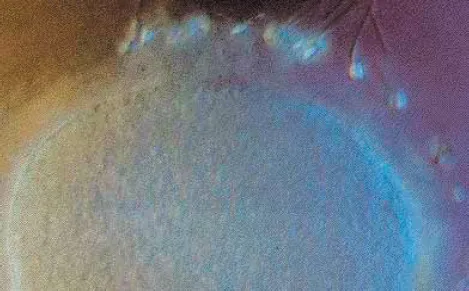
Figure 2: Of hundreds of sperm, only one can fertilize the ovum.
The sperm contains 23 chromosomes, of which one chromosome determines the sex of the embryo. The chromosome in the sperm is either (Y) or (X), while the chromosome in the ovum is always (X). When a sperm of chromosome type (Y) mingles with an ovum of chromosome (X), the formed zygote will be male (XY), whereas the embryo will be female (XX) if sperm (X) mingles with an (X) ovum. So, the sex of the embryo is determined by the sperm (the male), rather than the ovum (the female).
After five hours of forming the zygote, which is the primary human cell containing 46 chromosomes, dominant and recessive genetic characteristics can appear (the stage of genetic programming). The zygote is then divided quickly (see Figure 3) without any change in size and then moves from the fallopian tube (connecting the ovary and the uterus) towards the uterus, where it is implanted as seeds are implanted in soil.
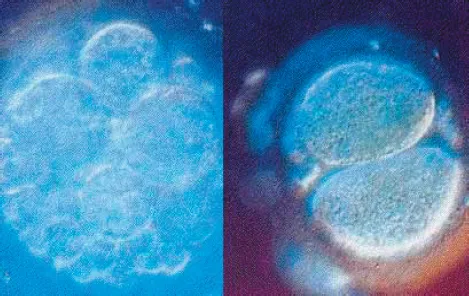
Figure 3: The zygote divides within hours of the fertilization process.
The uterus is the place where the embryo grows and develops before emerging as a fully created and well formed child. The uterus is distinguished as a safe place to perform this function for the following reasons:
1. The location of the uterus is in the woman’s pelvis, where it is protected with ligaments and fascia that hold the uterus from the sides and allow its mobility and growth to a hundred times its size at full term pregnancy.
2. The muscles of the pelvis and perineum fix the uterus in-situ.
3. The secretion of progesterone (pregnancy hormone) helps stabilize the uterus and slows down the uterine contractions.
4. The embryo in the uterus is surrounded with different membranes that produce amniotic fluid, which the embryo swims in to protect itself from the effect of external trauma.
The process of fertilization and the zygote’s travel to the uterus continue for about six days, and the zygote keeps implanting (this is known as blastocyst) and growing in the uterus wall for fifteen days, when the ‘alaqa (thick clotted blood) stage begins.
Reflections on the Qur’ān and Sunnah
Nuṭfa in Arabic means ‘very little water’ or ‘a drop of water’. This coincides with man’s water which contains sperm as part of its components. The sperm or (spermatozoon) is reproduced from the despised lowly water (nuṭfa) and looks like a long-tailed fish (this is one of the meanings of sulalah). Allah the Almighty says:
He Who has made everything which He has created most good: he began the creation of man with nothing more than clay, and made his progeny from an extract of despised fluid (sulālah).” (32:7-8)
The other meaning of sulālah is ‘extract’, in other words the essential or best part of something. By either implication, it means ‘part of a whole’ indicating that the origin of creation is from only part of man’s fluid and not all of it (which contains many components as shown above). Clarifying the role of nuṭfa in creation, He, the Almighty, says:
Now, let man think from what he is created! He is created from a drop emitted.” (86:5-6)
Furthermore, He says:
He has created man from a sperm-drop and behold this same (man) becomes an open disputer!” (16:4)
The Qur’ān tells us also that the essence of man is not the whole semen, but only a small part of it. This is explained in the Qur’ān as follows:
Does man think that he will be left uncontrolled (without purpose)? Was he not once a drop of sperm emitted (in lowly form)?” (75:36-37)
As we have seen, the Qur’ān informs us that man is made not from the entire semen, but only a small part of it. That the particular emphasis in this statement announces a fact only discovered by modern science is evidence that the statement is divine in origin. The divine statement also reiterates that man’s characteristics are determined and decreed in the nuṭfa stage. As He says:
Woe to man! What has made him reject Allah? From what stuff has He created him? From a nuṭfa (spermdrop) He h...
Table of contents
- Cover Page
- Title Page
- Copyright
- Dedication
- Transliteration Table
- Contents
- Acknowledgement
- Introduction
- Chapter 1: Embryology and Human Creation: The Qur’ān and Science
- Chapter 2: The Sensation of Pain on the Skin
- Chapter 3: The Intestines
- Chapter 4: The Importance of Hearing Over Sight in the Qur’ān
- Chapter 5: What We See and What We Do Not See
- Chapter 6: The Origin of Creation: Clay and Water
- Chapter 7: Fingerprints
- Chapter 8: The Forelock
- Chapter 9: How Man Copes in High Altitudes
- Chapter 10: Medical References in the Light of Sūrah al Kahf
- Chapter 11: An International Patent for an Eye-Drop Based on the Qur’ān
- Chapter 12: Breast-Feeding Your Baby
- Chapter 13: The Miracle of Honey
- Chapter 14: Carrion, Blood and Pork
- Chapter 15: The Importance of Fruit: Before or After
- Chapter 16: The Health Benefits of Ablution (Wuḍū’)
- Chapter 17: Prayer: A Healing Tonic for Body and Soul
- Chapter 18: The Medical Benefits of Fasting During Ramadan
- Chapter 19: The Qur’ān: A Healing and a Mercy!
- Conclusion
- References
Trusted by 375,005 students
Access to over 1.5 million titles for a fair monthly price.
Study more efficiently using our study tools.
Frequently asked questions
Yes, you can cancel anytime from the Subscription tab in your account settings on the Perlego website. Your subscription will stay active until the end of your current billing period. Learn how to cancel your subscription
No, books cannot be downloaded as external files, such as PDFs, for use outside of Perlego. However, you can download books within the Perlego app for offline reading on mobile or tablet. Learn how to download books offline
We are an online textbook subscription service, where you can get access to an entire online library for less than the price of a single book per month. With over 1.5 million books across 990+ topics, we’ve got you covered! Learn about our mission
Look out for the read-aloud symbol on your next book to see if you can listen to it. The read-aloud tool reads text aloud for you, highlighting the text as it is being read. You can pause it, speed it up and slow it down. Learn more about Read Aloud
Yes! You can use the Perlego app on both iOS and Android devices to read anytime, anywhere — even offline. Perfect for commutes or when you’re on the go.
Please note we cannot support devices running on iOS 13 and Android 7 or earlier. Learn more about using the app
Please note we cannot support devices running on iOS 13 and Android 7 or earlier. Learn more about using the app
Yes, you can access Medical Miracles of the Qur'an by Sharif Kaf Al-Ghazal in PDF and/or ePUB format, as well as other popular books in Teología y religión & Teología islámica. We have over 1.5 million books available in our catalogue for you to explore.