From Communists to Foreign Capitalists explores the intersections of two momentous changes in the late twentieth century: the fall of Communism and the rise of globalization. Delving into the economic change that accompanied these shifts in central and Eastern Europe, Nina Bandelj presents a pioneering sociological treatment of the process of foreign direct investment (FDI). She demonstrates how both investors and hosts rely on social networks, institutions, politics, and cultural understandings to make decisions about investment, employing practical rather than rational economic strategies to deal with the true uncertainty that plagues the postsocialist environment.
The book explores how eleven postsocialist countries address the very idea of FDI as an integral part of their market transition. The inflows of foreign capital after the collapse of Communism resulted not from the withdrawal of states from the economy, as is commonly expected, but rather from the active involvement of postsocialist states in institutionalizing and legitimizing FDI. Using a wide array of data sources, and combining a macro-level account of national variation in the liberalization to foreign capital with a micro-level account of FDI transactions in the decade following the collapse of Communism in 1989, the book reveals how social forces not only constrain economic transformations but also make them possible.
From Communists to Foreign Capitalists is a welcome addition to the growing literature on the social processes that shape economic life.
eBook - ePub
From Communists to Foreign Capitalists
The Social Foundations of Foreign Direct Investment in Postsocialist Europe
- 312 pages
- English
- ePUB (mobile friendly)
- Available on iOS & Android
eBook - ePub
From Communists to Foreign Capitalists
The Social Foundations of Foreign Direct Investment in Postsocialist Europe
About this book
Trusted by 375,005 students
Access to over 1.5 million titles for a fair monthly price.
Study more efficiently using our study tools.
Information
Chapter 1
SOCIAL FOUNDATIONS OF THE ECONOMY
IN 1985, THE ECONOMIC order of the day in socialist Central and Eastern Europe1 was full employment and absence of private property, domestic or foreign. Only fifteen years later, in 2000, the economic systems were based on private ownership and market competitiveness. Numerous postsocialist firms were in the hands of foreign investors, absorbing some of the $1.4 trillion of that year’s world foreign direct investment, which itself has increased more than twentyfold since 1985. In only fifteen years, how did we get from there to here?
This book is about the confluence of two grand processes of economic transformation that define our times: the transformation from command economies of state socialism to liberal market capitalism, and the intensification of transnational flows of capital as the defining characteristic of contemporary economic globalization. The book addresses two broad concerns. On the one hand, how have the economies in Central and Eastern Europe changed over the first decade after the fall of the Berlin Wall? How has market-based activity proliferated, and how do these newly established markets operate? On the other hand, what patterns global economic exchange? What influences whether a nation is more or less integrated into global capital flows, or whether a firm is controlled by foreign or domestic owners? Examining the determinants of foreign direct investment in Central and Eastern Europe is a strategic research site that allows me to simultaneously engage both sets of issues.
Foreign direct investment (FDI) is investment made by a company in the investor country in a foreign, host country. FDI refers to business transactions and does not include contributions from foreign governments, such as foreign aid. The objective of FDI is to obtain a lasting interest and an active role in a host company. The lasting interest implies the existence of a long-term relationship between the investor and the host and a significant degree of influence by an investor on the management of a company in a host country. Hence, FDI is usually classified as investment leading to ownership of 10 percent or more of the host firm, as opposed to portfolio investment, which refers to purchase of smaller equity shares.2 FDI can take the form of foreign acquisition, in which the investor obtains partial or full ownership in an existing company. On the other hand, foreign investors can establish new companies in the host country, referred to as greenfield investment, wholly foreign-owned or in partnership with domestic investors (Dunning and Rojec 1993).
From a macroeconomic perspective, FDI is a crucial medium through which national economies become interconnected on a global basis. In fact, world FDI flows in the past three decades show exponential growth in the intensity of global exchanges, and an ever more pronounced role of multinational corporations (MNCs) in creating a global economy. While in 1970, annual world FDI flows were a mere $12 million, in 1990 this figure was up to $200 billion, and by 2000 FDI had increased dramatically to $1.4 trillion (UNCTAD 2002).
FDI in postsocialist countries provides an ideal research opportunity because it allows us to examine how certain economic activity comes into existence de novo. These formerly socialist countries received virtually no foreign investment before 1989 because regimes were closed and private firms did not exist. Just fifteen years later, however, Central and Eastern Europe was very substantially penetrated by foreign capital. In 2004, average FDI stock as a share in gross domestic product (GDP) for these countries reached 39 percent, which is almost twice the average for the developed economies and significantly higher than the share in developing countries. To compare, FDI stock as share in GDP of China, one of today’s premier investment locations, was (only) 16 percent in 2004 (UNCTAD 2006).
The goal of this book is to exploit the advantages of this unique research setting in three ways: first, to trace the origins of FDI flows to postsocialist Europe and empirically examine the determinants of cross-border investment exchanges; second, to use this empirical case to learn more about the actual process of economic transformations in postsocialism; and third, to theoretically build on the empirical findings and advance our understanding of the creation and operation of markets in conditions of uncertainty.
THE ARGUMENT
On November 9, 1989, the Berlin Wall, which separated the socialist East from the capitalist West, fell. The fall symbolized what may be the most dramatic and revolutionary transformation of political and economic institutions in the twentieth century—the collapse of Communist regimes and socialist command economies. Vindicated by the eventual dismantling of the Iron Curtain, neoliberals3 saw the collapse of Communism as an impetus to unleash the “natural” form of economic organization: free-market capitalism. After all, in the eyes of these observers, planned socialist economies were artificially manufactured systems that created inefficiencies, which would be corrected once the intervention of the Party state in the economy was eliminated and free markets were allowed to emerge. This view reflected the notion that in a socialist system, economic organization is closely intertwined with politics and ideology. In fact, the close coupling of economic and noneconomic institutions, or economic embeddedness as defined by Karl Polanyi (1944, 1957), may have been the key distinguishing feature of the socialist system. At the same time, according to the neoliberal view, self-regulating markets are by nature free of political and social constraints on efficiency-seeking economic agents. From this perspective, to “transition” to market means to “disembed” the socialist economy, that is, to remove the political, social, and ideological influences that are assumed to impede the emergence of markets and constrain the natural propensity of economic agents to maximize efficiency. But does the “disembeddedness” perspective capture the character of actual economic changes in Central and Eastern Europe after 1989?
In this book, I use a case study of foreign direct investment in eleven postsocialist European countries, Bulgaria, Croatia, the Czech Republic, Estonia, Hungary, Latvia, Lithuania, Poland, Romania, Slovakia, and Slovenia, to empirically examine claims about spontaneous market emergence and the asocial nature of market exchanges. (See the map of the region in figure 1.1.) In fact, I am skeptical about both of these assumptions. First, as research in economic sociology contends, markets are institutions that do not emerge naturally or spontaneously but are socially created (Polanyi 1944; Swedberg and Granovetter 1992; Swedberg 1994, 2005; Lie 1997; Fligstein 2002). The socialist command economies were created by the Communist rulers. In a similar vein, markets in Central and Eastern Europe have been created by postsocialist states, international organizations, foreign investors, and domestic economic actors who had to learn new rules of economic behavior. Market “transition” has involved a transformation of one type of institutional order, socialism, into another, capitalism.4 Importantly, this transformation is not about eradicating social influences from the economic sphere. It is not about eliminating the role of the state in economic activity, and erasing the influence of ideational structures and political arrangements on economic transactions. Rather, it is about changing how these social forces structure the new market-based system of economic organization. From this perspective, socialist command economies and free-market systems are formally very similar, in the sense that both are socially constructed instituted systems, and in both, economic exchanges are embedded in social forces. However, these two economic systems are substantively very different. They exhibit different varieties of economic embeddedness. That is, each system is a configuration of different kinds of social-structural, political, and cultural influences on economic life.5
Second, I follow a sociological perspective on economic behavior, which understands economic transactions as social relations, enabled and constrained by three key social forces: social structures, power, and culture (Zukin and DiMaggio 1990).6 Structural conditions encompass the influence of repeated patterns of social interaction, which can take the form of social networks or social institutions, both consequential for economic processes. The role of power is visible because of the uneven distribution of resources, which gives rise to issues of control and disposal, and stimulates the pursuit of political interests and power struggles in the economic sphere. Culture is consequential because shared collective understandings and meanings shape economic strategies and goals, and affect the interpretations of economic situations. In this view, social influences of different kinds course through any economic transaction, whether it occurs in a competitive market or in a redistributive system of a command economy. Importantly, social forces not only constrain efficiency-seeking economic agents, as most analysts emphasize, but they enable and empower social actors to construct and then execute economic strategies of action in conditions of uncertainty.
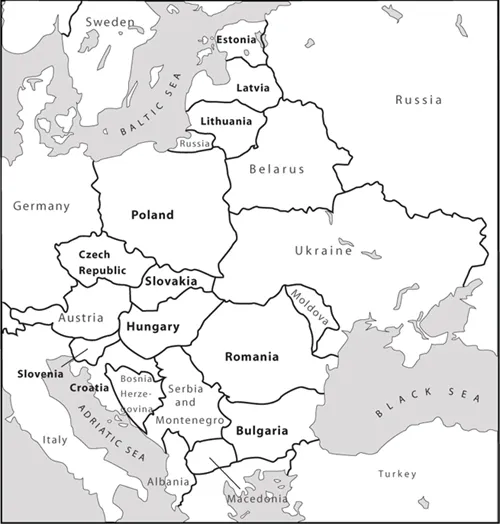
Figure 1.1. Map of Central and Eastern Europe
This perspective, that social forces not merely constrain but constitute economic behavior, rests on the distinction between two different analytic understandings of the nature of economic worlds and economic action, which I call the instrumentalist and the constructivist perspectives (table 1.1). On the one hand, from the instrumentalist standpoint, economic action is perfectly possible without the interference of social structures, politics, or culture. Such may very well be the ideal conditions for economic exchange. This is because social forces are conceived as something separate from and outside of the economic sphere. Should they transgress into the economic domain, they can be accounted for as constraints that shape the structure of incentives for rational actors. They either impede economic efficiency because they raise transaction costs, or they can be strategically employed as an efficiency-enhancing mechanism. The rational actor model aligns well with the instrumentalist perspective: economic agents are independent in their decision-making, with known, stable, and transitive preferences, and guided by inherent self-interest to maximize economic utility. When they make decisions, they follow a means-ends logic: they have a priori determined goals (ends), usually profit maximization, and compare and evaluate possible strategies of action (means) to select the one that is estimated to yield the greatest profits. Worlds in which these economic agents conduct exchanges are conceived as inherently knowable so that any uncertainty is treated as ignorance of objectively available information. But economic agents are seen as capable of dealing with such uncertainties by reducing them into risk probabilities, which can then be integrated into utility maximization calculations.
On the other hand, the social-constructivist model sees economic actors as always interdependent (embedded in social networks), influenced by interests and politics (politically embedded), and guided by culturally specific preferences and goals (culturally embedded). The socially constructed nature of social worlds implies that economic processes are inherently uncertain and not objectively knowable. Actors can deal with uncertainty only if they rely on social forces, which make their decision-making possible by helping them to construct strategies of economic action and providing them with a framework to evaluate them. Within stable worlds, where social forces congeal into institutions, taken-for-granted rules of interaction allow actors to reach a common basis of understanding—a common evaluation metric—and treat uncertainty as risk. However, in changing environments during unsettled times,7 economic actors may not have clear and consistent preferences, may be unable to reliably evaluate alternatives, and may have difficulty judging probabilities of future (truly uncertain) outcomes. Hence, they are incapable of turning uncertainties into risk probabilities, and will at best satisfice (Simon 1957) rather than maximize. Moreover, in conditions of radical uncertainty, economic actors may be ambiguous even about their goals of action; they may be attached to certain strategies rather than set on goals, or forced by contingencies to adjust both ends and means during the action process itself. To accommodate these circumstances, actors adopt economic strategies outside of the clear means-ends framework of instrumental rationality, such as following commitments, muddling through situational contingency, or improvisation. This means that economic action has multiple substantive and procedural varieties. To account for this diversity and flexibility of strategies, the social-constructivist model aligns best with the conception of actors as practical (Bourdieu 1980) rather than rational. Depending on context, economic-social actors will hold both economic and noneconomic motives for action, and their attempts at instrumental calculations will be mixed with, or even replaced by, affect, value judgments, and routine, which may or may not lead to efficiency maximization.
TABLE 1.1
Instrumentalist and Constructivist Perspectives on Economic Issues
Instrumentalist and Constructivist Perspectives on Economic Issues
Economic Issue | Instrumentalist Perspective | Constructivist Perspective |
Relationship between the social and economic spheres | Separated; if acknowledged, social forces considered as context for economic action | Permeated and embedded; economic action is social action; social forces constitute economic action |
Nature of economic worlds | Objectively knowable | Inherently uncertain |
Treatment of uncertainty | Uncertainty can be turned into calculable risk | Uncertainty necessitates reliance on social forces |
Model of economic actor | Rational | Practical |
Goals of economic action | Effficiency maximization | Multiple goals, economic and noneconomic |
Strategy of economic action | Means-ends instrumental rationality | Substantive and procedural varieties of action |
View of economic change | Natural evolution to one best way of free-market organization | Institutional transformation from one kind of embedded, socially constituted economy to another |
Needless to say, the social-constructivist model treats economic behavior as fundamentally social. Social forces are not imagined as something separate from the economic sphere. Instead, the social and the economic worlds interpenetrate so much that economic action is impossible without social structures, politics, or culture, which come to constitute economic behavior.8 While often these social forces support bounded rationality of actors, and help them enhance their material positions, social forces sometimes limit efficiency, as economic actors follow value commitments, get caught up in political games, or are hindered by social networks in which they are embedded. Hence, while the instrumentalist view on economic life sees economic action as a rational search for material efficiency, the social-constructivist perspective focuses on actors’ practical engagement in the processes of production, consumption, distribution, and exchange, and is agnostic about the resultant efficiency. That is, the constructivist approach does not assume maximization a priori bu...
Table of contents
- Cover
- Title
- Copyright
- Dedication
- Contents
- List of Tables
- List of Figures
- Acknowledgments
- Prologue
- Chapter 1: Social Foundations of the Economy
- Chapter 2: From Socialism to Postsocialism
- Chapter 3: Institutionalization of FDI in Postsocialism
- Chapter 4: Cross-Country Patterns in FDI Flows
- Chapter 5: Embeddedness of Organizational FDI Attempts
- Chapter 6: Uncertainty and the Practice of FDI Transactions
- Chapter 7: Embedded Economies
- Epilogue
- Appendix on Method and Data Sources
- Notes
- References
- Index
Frequently asked questions
Yes, you can cancel anytime from the Subscription tab in your account settings on the Perlego website. Your subscription will stay active until the end of your current billing period. Learn how to cancel your subscription
No, books cannot be downloaded as external files, such as PDFs, for use outside of Perlego. However, you can download books within the Perlego app for offline reading on mobile or tablet. Learn how to download books offline
Perlego offers two plans: Essential and Complete
- Essential is ideal for learners and professionals who enjoy exploring a wide range of subjects. Access the Essential Library with 800,000+ trusted titles and best-sellers across business, personal growth, and the humanities. Includes unlimited reading time and Standard Read Aloud voice.
- Complete: Perfect for advanced learners and researchers needing full, unrestricted access. Unlock 1.5M+ books across hundreds of subjects, including academic and specialized titles. The Complete Plan also includes advanced features like Premium Read Aloud and Research Assistant.
We are an online textbook subscription service, where you can get access to an entire online library for less than the price of a single book per month. With over 1.5 million books across 990+ topics, we’ve got you covered! Learn about our mission
Look out for the read-aloud symbol on your next book to see if you can listen to it. The read-aloud tool reads text aloud for you, highlighting the text as it is being read. You can pause it, speed it up and slow it down. Learn more about Read Aloud
Yes! You can use the Perlego app on both iOS and Android devices to read anytime, anywhere — even offline. Perfect for commutes or when you’re on the go.
Please note we cannot support devices running on iOS 13 and Android 7 or earlier. Learn more about using the app
Please note we cannot support devices running on iOS 13 and Android 7 or earlier. Learn more about using the app
Yes, you can access From Communists to Foreign Capitalists by Nina Bandelj in PDF and/or ePUB format, as well as other popular books in Social Sciences & Eastern European History. We have over 1.5 million books available in our catalogue for you to explore.