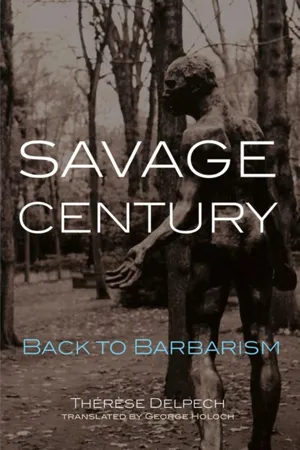
- 232 pages
- English
- ePUB (mobile friendly)
- Available on iOS & Android
eBook - ePub
Information
Year
2013eBook ISBN
9780870032769
1
INTRODUCTION
There have been not one, but many, “milestone” years in the history of the new Russia. The first and perhaps most familiar, 1991, marked not only the birth of post-communist Russia, but also the stillbirth of its democracy. In 1993, the Boris Yeltsin constitution created the framework for a new “personalized power.” Yeltsin’s victory in the controlled elections of 1996 marked an embryonic form of what would later become Russia’s imitation democracy. In 2003, the destruction of YUKOS signified a turn to bureaucratic capitalism. In 2004, the “orange revolution” in Ukraine hastened Russia’s return to a statist matrix. And finally, the August 2008 Russo-Georgian war heralded a period of open political confrontation between Russia and the West.*
This final milestone marked the end of an important path in Russia’s development—a path that began with Mikhail Gorbachev’s perestroika and was supposed to end with Russia’s integration into the community of liberal democracies. But there had been too many diversions from this course over the last two decades. No diplomatic thaws, no détentes, and no “resets” between Russia and West will now be able to return it to the track of integration with the West—at least not until Russia rejects the principles on which its political system and state are being built.
All successful democratic transformations since World War II occurred because conditions within the respective societies had matured enough to make them possible. At the same time, none of these transformations took place without the influence of Western civilization. In some cases, the very existence of the West as a model was enough to inspire authoritarian and totalitarian societies to open themselves up to the world, but even those transformations had to be consolidated by means of diplomatic and economic links to developed democracies, as occurred in Latin America, South Korea, and Taiwan. In other cases, the West put direct pressure on dictatorships like those in Portugal, Greece, the Republic of South Africa, and in a number of Asian and Latin American countries. The most successful transformations have been the ones in which the West took an active role in the internal life of states transitioning from totalitarian and authoritarian systems, as occurred in conquered Germany and Japan, in Southern Europe, and in the former communist states of Central and Southeastern Europe and the Baltic states. Admission to the North Atlantic Treaty Organization (NATO) and the European Union (EU) became the ultimate guarantee of a state’s successful transformation. In these cases, the West—as a community of liberal democracies—became both an internal and an external factor of reform. It should be noted that such intimate engagement only worked when Western experts and politicians actually understood what was going on in the countries they were trying to help.
For Russia in the 1990s, the West was not just a mentor and a guide on the path of reform; it was a participant. Today, a broad spectrum of political and social forces in Russia, including human rights activists and liberals, view the West with skepticism, if not antipathy. Of course, the West itself no longer greets Russia warmly, but Western politicians and commentators are loath to acknowledge this uncomfortable truth, fearing it will only further cool relations with Moscow. But neither polite smiles nor clarion calls to “reset” the relationship can disguise it: Russia and the West are further apart today than they have been at any time since Gorbachev’s perestroika.
This uncomfortable truth raises several questions: What role did the West, as a liberal civilization, play in Russia’s transformation? How does Russia’s internal evolution influence its relations with the West? What do Russian and Western observers think about the relationship? What is the liberal interpretation of this recent history? And finally, what can we expect from Russia in the future? Let us explore how the civilizational factor—that is, the method of organizing power and society, norms and principles—affects relations between Russia and West, and how those relations ease or hinder Russian reforms.
*In this book I use “the West” to refer to a civilization, that is, a community of states that organize themselves on the basis of liberal-democratic principles. The relations between Russia and the West interest me primarily from the point of view of norms and principles and how Western liberal civilization can influence the Russian transformation.
2
COLLAPSE OF THE USSR: THE WEST CAUGHT UNAWARES
There is an astonishing historical irony embedded in the disintegration of the Union of Soviet Socialist Republics (USSR)—so astonishing, in fact, that it raises doubts about the global elite’s ability to predict and prepare for the future. For many decades, the West marshaled its finest minds to the task of devising strategies to contain and neutralize its Cold War opponent. However, it was the possibility no one had prepared for—a Soviet collapse—that preoccupied the West’s key leaders at the end of the Cold War.
During the Soviet Union’s dying years, George H. W. Bush, François Mitterrand, Helmut Kohl, and John Major were all feverishly searching for a way to keep it alive. All of the Western powers, and especially the Americans, feared that Mikhail Gorbachev was losing control of a nuclear super-power. Secretary of State James Baker publicly called on the United States to do whatever was needed to “strengthen the center,” namely Gorbachev. President Bush shocked an audience of pro-independence Ukrainians in August 1991 by telling them that “freedom is not the same as independence,” and that Americans would not support those who sought independence in order to trade tyranny for “local despotism.” Brent Scowcroft later explained Washington’s position during the late 1980s and early 1990s:
We tried to act in a way that did not provoke in Eastern Europe another cycle of uprising and repression. We wanted to move liberalization forward, but at a pace that would be under the Soviets’ reaction point. Of course, we did not know exactly what that pace was. But we tried to avoid causing either a crackdown by the Soviet Union or an internal disruption within the Soviet Union in which the hardliners would kick Gorbachev out because he wasn’t tough enough.1
In Europe, the Soviet demise caused confusion, even panic. Leaders who had for many years feared Soviet imperialism now found that they couldn’t decide whether they could live without it. Should they support independence for the former Soviet satellites? Or should they help Moscow rein in the chaos of its crumbling empire?
These concerns were understandable, especially when seen in the context of unguarded nuclear stockpiles. But there was another reason the thought of a Soviet disintegration made Western leaders so nervous: The West had grown accustomed to a world order that relied on the idea of mutual containment for its stability. For some influential corporative interests—economic, military, and ideological—the struggle against international communism and the Soviet Union gave meaning to their existence. The disappearance of that struggle meant there was no longer a civilizational alternative by which the West could set itself apart. As Robert Cooper put it, “Today’s America is partly the creation of the Soviet Union. . . . The USSR presented a challenge that went to the core of America’s Enlightenment identity.” The existence of the USSR had hastened the process of European unification and given Europe’s leaders a foil against which they could set their own course. The Soviet Union, which had cemented the West and forced it to perfect itself, was disappearing. After it was gone, the West was unlikely to find another such organizing principle. It wasn’t clear what kind of Russia would appear in the place of the former Evil Empire. A new world was in the making, and the West wasn’t ready for it.
Bewildered, Western leaders continued to bet on Mikhail Gorbachev up until the very end, reluctant to negotiate with Boris Yeltsin. Neither Yeltsin nor the new Russia he represented were trusted in Western capitals. The West found Yeltsin and his people, who were busy pushing Gorbachev out of the Kremlin, suspicious.
Nevertheless, Western leaders were not prepared to support Gorbachev when he began to lose ground. Only Germany rendered aid to the USSR in the form of payments for the evacuation of Soviet troops from the former East Germany and Moscow’s acquiescence to German reunification. With that exception, the countries of the West had no intention of offering Gorbachev help. When the USSR began to come apart at the seams, they sought only to fill the niche left by the disappearance of the Soviet Union. It looked as if the West’s leaders liked having a weaker, less aggressive USSR. They clearly did not lend any credence to the prospect of its transformation and did not plan to offer Gorbachev any serious help to restore the Soviet state, even in a new form.
At the same time, the West no doubt understood that the USSR could not stand on one leg with the other dangling over a cliff for very long. It just couldn’t figure out what to do and preferred not to think about it. I remember those years, when the iconic Russian question—“What is to be done?”—became a Western preoccupation, too. Western elites had no answer to it. Gorbachev, meanwhile, was desperately pinging the West with requests for loans. Western leaders heard him and demanded in return, “Give us a plan. Tell us how you intend to use the money.” And then they did nothing.
Grigory Yavlinsky, one of the future leaders of the Russian democratic movement and a close confidant to Gorbachev at the time, came to the United States in 1990 to propose the idea of a Grand Bargain—a plan that would invite the West to take a major role in cooperating with Soviet reforms. Yavlinsky’s proposal met with polite evasions and deferrals. “Money can’t compensate for the lack of strong foundations for a new system,” the skeptics in the Bush administration told him. “And we’re not going to help you revive what is rotting away.” The skeptics were right, but the West was caught in a Catch-22: It feared a Soviet collapse, but it also couldn’t bring itself to do what it took to preserve or reform the Soviet Union. Gorbachev’s dream of renewing the state or creating a new kind of community of states was slipping away. Of course, no one knows what would have happened if Gorbachev had received the Western support he needed to implement radical reforms. No one knows whether Gorbachev would have embarked on these reforms if he had gotten the support he desired. But since that support was never very likely to materialize, we can only engage in idle speculation about what could have happened.
In July 1991, when the economic situation in the USSR was critical, Gorbachev attended the Group of Seven (G7) meeting in London. It was the first time a Soviet leader had been invited to the annual summit of global grandees. As his press secretary Andrei Grachev later recalled, Gorbachev’s fellow elite treated him “like a supplicant, politely but indifferently.” He “did not touch the hearts of the pragmatic members of the G7.”2 When I asked Gorbachev about the Seven Plus One summit, he replied bitterly,
I did not ask for grants. There was no talk of the Marshall Plan. We talked about loans with very specific conditions. Some of the Western leaders were ready to give us this urgent aid. Mitterrand spoke hotly and emotionally in our support. But then Bush took the floor and announced that perestroika was not a credit-worthy undertaking and there was no need to talk on that topic further.3
That pronouncement effectively ended Gorbachev’s mission in London. The elder Bush had hammered the last nail in the political coffin of the father of Soviet liberalization, and the other leaders of the West buried him. The club of Western democracies no longer believed in perestroika. They had decided to wait and see what would unfold.
Of course, fear of global chaos would eventually force Western leaders to loosen their countries’ purse strings, albeit slowly and reluctantly. Under pressure from Germany and France, the G7 issued the Soviet Union a loan of $11 billion, but the funds didn’t begin to arrive in Moscow until late 1991 and early 1992, when Yeltsin and his team, not Gorbachev, were the ones to enjoy them.
Many in the West regretted the departure of Gorbachev and the USSR, and they regarded the new faces filling Kremlin offices with distrust. Unexpectedly deprived of a foe, the West was not prepared to be a friend to the new Russia. Zbigniew Brzezinski analyzed the mood of the Western political and intellectual community during the USSR’s collapse:
When it began, there was no model, no guiding concept, with which to approach the task. Economic theory at least claimed some understanding of the allegedly inevitable transformation of capitalism into socialism. But there was no theoretical body of knowledge pertaining to transformation of the statist systems into pluralistic democracies based on the free market. In addition to being daunting intellectually, the issue was and remains taxing politically, because the West, surprised by the rapid disintegration of communism, was not prepared for participation in the complex task of transforming the former Soviet–type systems.4
Eliot Cohen broadly echoed this analysis: “At the end of the Cold War, the US unexpectedly found itself in a situation where it had enormous power and influence, but unlike 1947–1948, it had no idea how to use them.”5
Only when it became obvious that the collapse of the USSR was inevitable did Western leaders suddenly awaken to the need to avert its most catastrophic potential consequence—namely, an unsecured Soviet nuclear arsenal. But beyond this task, the West simply didn’t know what to do with Russia. Russians today who blame the West for the Soviet disintegration of the late 1980s and early 1990s are widely off the mark. The Western elite feared the collapse of the USSR more than the Soviets themselves did; the Soviet elite, after all, were the ones who elected to dismantle their own state. We must therefore put aside conspiracy theories and analyze Western intellectual and political attitudes toward Gorbachev’s perestroika and the Soviet collapse calmly and dispassionately.
It’s a much simpler matter to understand how the Russian elite failed to foresee the likely consequences of Gorbachev’s reforms; independent and strategic thinking skills had languished after decades of Soviet rule. But why were Western intellectuals and politicians so unprepared for the avalanche of events preceding and following the collapse of the USSR? Why were Western experts and political leaders unable to begin a discussion either about Russia’s place in a new world order or about how the West could support Russian reforms? Answering these questions calls not for a rush to judgment but for responsible consideration from Western experts themselves.
Notes
1. Zbigniew Brzezinski and Brent Scowcroft, America and the World: Conversations on the Future of American Foreign Policy (New York: Basic Books, 2008), p. 158.
2. Andrei Grachev, Gorbachev [Gorbachev] (Moscow: Vagrius, 2001), p. 360.
3. All direct quotations without corresponding footnotes are from personal conversations with the author between 2008 and 2010 or from personal diaries.
4. Nikolas Gvozdev, ed., Russia in the National Interest (New Brunswick and London: Transaction Publishers, 2004), p. 31.
5. Francis Fukuyama, America at the Crossroads. Democracy, Power and the Neoconservative Legacy (New Haven: Yale University Press, 2007), p. 162.
3
THE WEST REGARDS YELTSIN WARILY
From the first days of its existence, the new Russia expected to be embraced and helped by the West. Elite and public attitudes were marked by quite a bit of naïveté, provincialism, and feelings of inadequacy. In 1991–1992, one of the most popular topics for discussion in poli...
Table of contents
- Title Page
- Copyright Page
- Contents
- Foreword
- Letter to the Reader
- 1. Introduction
- 2. Collapse of the USSR: The West Caught Unawares
- 3. The West Regards Yeltsin Warily
- 4. Help or Wait?
- 5. Clinton Turns the West Around
- 6. Help Our Friend Boris at Any Cost
- 7. Europe Also Helps
- 8. Washington’s Dictate or Moscow’s?
- 9. Moments of Truth for Russia
- 10. Western Disillusionment in Russia and Republican Attacks on Democrats in the United States
- 11. The Donors Could Not Resist Temptation
- 12. The Results of the 1990s: Who Is to Blame?
- 13. The Arrival of Putin and His Western Project
- 14. Hopes That Once Again Did Not Come to Pass
- 15. With the West and Against the West
- 16. Altruism and Pragmatism
- 17. Where Western Money Goes
- 18. The Medvedev-Putin Tandem Being Tested by Foreign Policy
- 19. The War in the Caucasus and What It Says About Russia
- 20. The Kremlin Starts Rebuilding Bridges With the West
- 21. How to Force the West to Work for Russia
- 22. The Valdai Club, or the Kremlin and Western Commentators
- 23. And Now for the Major Victories
- 24. How Russia Was Humiliated
- 25. Is There Reason to Take Offense?
- 26. On the “Center of Power,” “De-sovereignization,” and Other Things
- 27. America the Model, and America the Excuse
- 28. Who Derailed Modernization?
- 29. How to Combine the Incompatible, and Who Are “We”?
- 30. The Trial of NATO and Kosovo
- 31. Does NATO Threaten Russia?
- 32. What Other Nastiness Does the West Have in Store for Russia?
- 33. Why Moscow Needed the Balkans
- 34. Ukraine as a Milestone
- 35. Where Is the Way Out?
- 36. Let’s Make a Deal!
- 37. Let’s Count Warheads
- 38. What Separates Russia and the West?
- 39. What It Would Be Better Not to Do
- 40. Western “Protectors”
- 41. How Serious Westerners Perceive Russia
- 42. On Interests and Values, and the Extent to Which the “Realists” Make a Convincing Case
- 43. How “Old” Europe Abandoned Its Mission
- 44. Why Russian Human Rights Advocates Are Dissatisfied
- 45. A Reconsideration Has Begun
- 46. How “New Europe” Is Trying to Revive the European Mission
- 47. European Society Is Starting to Say What It Thinks
- 48. Kissinger vs. Brzezinski
- 49. How Useful Is the League of Democracies and How Probable
- 50. Is a Global Authoritarian Revanche? The Obama Factor and the Idea of the “Reset Button”
- 51. What Do We Mean by the “Right Direction” for U.S. Policy Toward Russia?
- 52. How We Were Taught a Lesson
- 53. Obama in Moscow and the Aftermath
- 54. The Russian Understanding of “Reset”
- 55. Why the West Doesn’t Want to Annoy the Kremlin
- 56. So, What Should and Should Not Be Done?
- 57. Uncertainty as a Way to Survive
- 58. The Goal of Power Is to Retain Power
- 59. Can Russia Be Renewed by Leaving Everything As It Is?
- 60. Can Russia Get Out of the Dead End by Itself?
- Index
- About the Author
- Carnegie Endowment for International Peace
Trusted by 375,005 students
Access to over 1.5 million titles for a fair monthly price.
Study more efficiently using our study tools.
Frequently asked questions
Yes, you can cancel anytime from the Subscription tab in your account settings on the Perlego website. Your subscription will stay active until the end of your current billing period. Learn how to cancel your subscription
No, books cannot be downloaded as external files, such as PDFs, for use outside of Perlego. However, you can download books within the Perlego app for offline reading on mobile or tablet. Learn how to download books offline
Perlego offers two plans: Essential and Complete
- Essential is ideal for learners and professionals who enjoy exploring a wide range of subjects. Access the Essential Library with 800,000+ trusted titles and best-sellers across business, personal growth, and the humanities. Includes unlimited reading time and Standard Read Aloud voice.
- Complete: Perfect for advanced learners and researchers needing full, unrestricted access. Unlock 1.5M+ books across hundreds of subjects, including academic and specialized titles. The Complete Plan also includes advanced features like Premium Read Aloud and Research Assistant.
We are an online textbook subscription service, where you can get access to an entire online library for less than the price of a single book per month. With over 1.5 million books across 990+ topics, we’ve got you covered! Learn about our mission
Look out for the read-aloud symbol on your next book to see if you can listen to it. The read-aloud tool reads text aloud for you, highlighting the text as it is being read. You can pause it, speed it up and slow it down. Learn more about Read Aloud
Yes! You can use the Perlego app on both iOS and Android devices to read anytime, anywhere — even offline. Perfect for commutes or when you’re on the go.
Please note we cannot support devices running on iOS 13 and Android 7 or earlier. Learn more about using the app
Please note we cannot support devices running on iOS 13 and Android 7 or earlier. Learn more about using the app
Yes, you can access Savage Century by Therese Delpech in PDF and/or ePUB format, as well as other popular books in Politics & International Relations & Diplomacy & Treaties. We have over 1.5 million books available in our catalogue for you to explore.