Over the past two decades, the use of finite element method as a design tool has grown rapidly. Easy to use commercial software, such as ANSYS, have become common tools in the hands of students as well as practicing engineers. The objective of this book is to demonstrate the use of one of the most commonly used Finite Element Analysis software, ANSYS, for linear static, dynamic, and thermal analysis through a series of tutorials and examples. Some of the topics covered in these tutorials include development of beam, frames, and Grid Equations; 2-D elasticity problems; dynamic analysis; composites, and heat transfer problems. These simple, yet, fundamental tutorials are expected to assist the users with the better understanding of finite element modeling, how to control modeling errors, and the use of the FEM in designing complex load bearing components and structures. These tutorials would supplement a course in basic finite element or can be used by practicing engineers who may not have the advanced training in finite element analysis.
eBook - ePub
Using ANSYS for Finite Element Analysis, Volume I
- 208 pages
- English
- ePUB (mobile friendly)
- Available on iOS & Android
eBook - ePub
Using ANSYS for Finite Element Analysis, Volume I
About this book
Information
CHAPTER 1
INTRODUCTION TO FINITE ELEMENT ANALYSIS
1.1 FINITE ELEMENT METHOD
The field of mechanics can be subdivided into three major areas: theoretical, applied, and computational. Theoretical mechanics deals with fundamental laws and principles of mechanics studied for their intrinsic scientific value. Applied mechanics transfers this theoretical knowledge to scientific and engineering applications, especially through the construction of mathematical models of physical phenomena. Computational mechanics solves specific problems by simulation through numerical methods implemented on digital computers.
One of the most important advances in applied mathematics in the 20th century has been the development of the finite element method as a general mathematical tool for obtaining approximate solutions to boundary-value problems. The theory of finite elements draws on almost every branch of mathematics and can be considered as one of the richest and most diverse bodies of the current mathematical knowledge.
1.1.1 MATHEMATICAL MODELING OF PHYSICAL SYSTEMS
In general, engineering problems are mathematical models of physical situations. Two main goals of engineering analysis are to be able to identify the basic physical principle(s) and fundamental laws that govern the behavior of a system or a control volume and to translate those principles into a mathematical model involving an equation or equations that can be solved accurately to predict qualitative and quantitative behavior of the system. The resulting mathematical model is frequently a single differential equation or a set of differential equations with a set of corresponding boundary and initial conditions whose solution should be consistent with and accurately represent the physics of the system. These governing equations represent balance of mass, force, or energy. When possible, the exact solution of these equations renders detailed behavior of a system under a given set of conditions.
In situations where the system is relatively simple, it may be possible to analyze the problem by using some of the classical methods learned in elementary courses in ordinary and partial differential equations. Far more frequently, however, there are many practical engineering problems for which we cannot obtain exact solutions. This inability to obtain an exact solution may be attributed to either the complex nature of governing differential equations or the difficulties that arise from dealing with the boundary and initial conditions. To deal with such problems, we resort to numerical approximations. In contrast to analytical solutions, which show the exact behavior of a system at any point within the system, numerical solutions approximate exact solutions only at discrete points, called nodes.
Due to the complexity of physical systems, some approximation must be made in the process of turning physical reality into a mathematical model. It is important to decide at what points in the modeling process these approximations are made. This, in turn, determines what type of analytical or computational scheme is required in the solution process. Let us consider a diagram of the two common branches of the general modeling solution process as shown in Figure 1.1.
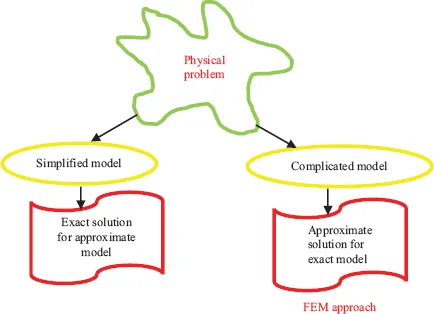
Figure 1.1. A diagram of the two common branches of the general modeling solution.
For many real-world problems, the second approach is in fact th...
Table of contents
- Cover
- Half-title Page
- Title Page
- Copyright
- Contents
- List of Figures
- Preface
- 1 Introduction to Finite Element Analysis
- 2 Static Analysis Using Ansys
- 3 Geometric Modeling
- 4 Static Analysis Using Line Elements
- 5 Static Analysis Using Area Elements
- 6 Static Analysis Using Volume Elements
- 7 Thermal Stress Analysis
- Summary
- Bibliography
- Index
- Backcover
Trusted by 375,005 students
Access to over 1.5 million titles for a fair monthly price.
Study more efficiently using our study tools.
Frequently asked questions
Yes, you can cancel anytime from the Subscription tab in your account settings on the Perlego website. Your subscription will stay active until the end of your current billing period. Learn how to cancel your subscription
No, books cannot be downloaded as external files, such as PDFs, for use outside of Perlego. However, you can download books within the Perlego app for offline reading on mobile or tablet. Learn how to download books offline
Perlego offers two plans: Essential and Complete
- Essential is ideal for learners and professionals who enjoy exploring a wide range of subjects. Access the Essential Library with 800,000+ trusted titles and best-sellers across business, personal growth, and the humanities. Includes unlimited reading time and Standard Read Aloud voice.
- Complete: Perfect for advanced learners and researchers needing full, unrestricted access. Unlock 1.5M+ books across hundreds of subjects, including academic and specialized titles. The Complete Plan also includes advanced features like Premium Read Aloud and Research Assistant.
We are an online textbook subscription service, where you can get access to an entire online library for less than the price of a single book per month. With over 1.5 million books across 990+ topics, we’ve got you covered! Learn about our mission
Look out for the read-aloud symbol on your next book to see if you can listen to it. The read-aloud tool reads text aloud for you, highlighting the text as it is being read. You can pause it, speed it up and slow it down. Learn more about Read Aloud
Yes! You can use the Perlego app on both iOS and Android devices to read anytime, anywhere — even offline. Perfect for commutes or when you’re on the go.
Please note we cannot support devices running on iOS 13 and Android 7 or earlier. Learn more about using the app
Please note we cannot support devices running on iOS 13 and Android 7 or earlier. Learn more about using the app
Yes, you can access Using ANSYS for Finite Element Analysis, Volume I by Wael A. Altabey, Mohammad Noori, Libin Wang in PDF and/or ePUB format, as well as other popular books in Technology & Engineering & Civil Engineering. We have over 1.5 million books available in our catalogue for you to explore.