The first edition of this book, published in 1999, was well-received, but interest in it has surged in recent years. It chronicles an early example of "regime change" that was based on a flawed interpretation of intelligence and proclaimed a success even as its mistakes were becoming clear. Since 1999, a number of documents relating to the CIA's activities in Guatemala have been declassified, and a truth and reconciliation process has unearthed other reports, speeches, and writings that shed more light on the role of the United States. For this edition, the author has selected and annotated twenty-one documents for a new documentary Appendix, including President Clinton's apology to the people of Guatemala.
eBook - ePub
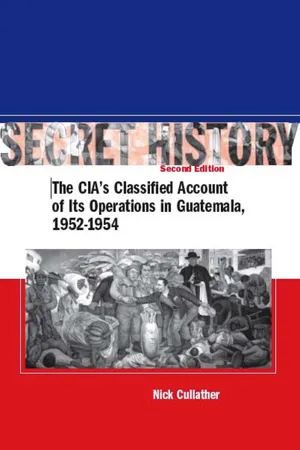
Secret History, Second Edition
The CIA’s Classified Account of Its Operations in Guatemala, 1952-1954
- 224 pages
- English
- ePUB (mobile friendly)
- Available on iOS & Android
eBook - ePub
Secret History, Second Edition
The CIA’s Classified Account of Its Operations in Guatemala, 1952-1954
About this book
Information
Publisher
Stanford University PressYear
2006Print ISBN
9780804754682
9780804754675
Edition
2eBook ISBN
9780804768160
CHAPTER I
America’s Backyard
They would have overthrown us even if we had grown no bananas.
Manuel Fortuny6
The CIA’s operation to overthrow the Government of Guatemala in 1954 marked an early zenith in the Agency’s long record of covert action. Following closely on successful operations that installed the Shah as ruler of Iran [ ] the Guatemala operation, known as PBSUCCESS, was both more ambitious and more thoroughly successful than either precedent. Rather than helping a prominent contender gain power with a few inducements, PBSUCCESS used an intensive paramilitary and psychological campaign to replace a popular, elected government with a political nonentity. In method, scale, and conception it had no antecedent, and its triumph confirmed the belief of many in the Eisenhower administration that covert operations offered a safe, inexpensive substitute for armed force in resisting Communist inroads in the Third World. This and other “lessons” of PBSUCCESS lulled Agency and administration officials into a complacency that proved fatal at the Bay of Pigs seven years later.
Scholars have criticized the agency for failing to recognize the unique circumstances that had led to success in Guatemala and failing to adapt to different conditions in Cuba. Students of the 1954 coup also question the nature of the “success” in Guatemala. The overthrown Arbenz government was not, many contend, a Communist regime but a reformist government that offered perhaps the last chance for progressive, democratic change in the region. Some accuse the Eisenhower administration and the Agency of acting at the behest of self-interested American investors, particularly the United Fruit Company. Others argue that anti-Communist paranoia and not economic interest dictated policy, but with equally regrettable results.7
CIA records can answer these questions only indirectly. They cannot document the intentions of Guatemalan leaders, but only how Agency analysts perceived them. CIA officials participated in the process that led to the approval of PBSUCCESS, but as their papers show, they often had little understanding of or interest in the motives of those in the Department of State, the Pentagon, and the White House who made the final decision. Agency records, however, do document the conduct of the operation, the [ ] how Agency operatives construed the problem, what methods and objectives they pursued, and what aspects of the operations they believed led to success. They permit speculation on [ ] whether misperceptions about PBSUCCESS led overconfident operatives to plan the Bay of Pigs. Chiefly, however, they offer a view other historical accounts lack—the view from inside the CIA.
Agency officials had only a dim idea of what had occurred in Guatemala before Jacobo Arbenz Guzmán came to power in 1950. Historians regard the events of the 1940s and 1950s as following a centuries-old cycle of progressive change and conservative reaction, but officers in the Directorate of Plans believed they were witnessing something new. For the first time, Communists had targeted a country “in America’s backyard” for subversion and transformation into a “denied area.” When comparing what they saw to past experience, they were more apt to draw parallels to Korea, Russia, or Eastern Europe than to Central America. They saw events not in a Guatemalan context but as part of a global pattern of Communist activity. PBSUCCESS, nonetheless, interrupted a revolutionary process that had been in motion for over a decade, and the actions of Guatemalan officials can only be understood in the context of the history of the region.
The Revolution of 1944
Once the center of Mayan civilization, Guatemala had been reduced by centuries of Spanish rule to an impoverished outback when, at the turn of the 20th century, a coffee boom drew investors, marketers, and railroad builders to the tiny Caribbean nation. The descendants of Spanish colonizers planted coffee on large estates, fincas, worked by Indian laborers. Coffee linked Guatemala to a world market in which Latin American, African, and Indonesian producers competed to supply buyers in Europe and the United States with lowpriced beans. Success depended on the availability of low-paid or unpaid labor, and after 1900 Guatemala’s rulers structured society to secure finqueros a cheap supply of Indian workers. The Army enforced vagrancy laws, debt bondage, and other forms of involuntary servitude and became the guarantor of social peace. To maintain the uneasy truce between the Indian majority and the Spanish-speaking ladino shopkeepers, labor contractors, and landlords, soldiers garrisoned towns in the populous regions on the Pacific coast and along the rail line between Guatemala City and the Atlantic port of Puerto Barrios.8
When the coffee market collapsed in 1930, ladinos needed a strong leader to prevent restive, unemployed laborers from gaining an upper hand, and they chose a ruthless, efficient provincial governor, Jorge Ubico, to lead the country. Ubico suppressed dissent, legalized the killing of Indians by landlords, enlarged the Army, and organized a personal gestapo. Generals presided over provincial governments; officers staffed state farms, factories, and schools. The Guatemalan Army’s social structure resembled that of the finca. Eight hundred ladino officers lorded over five thousand Indian soldiers who slept on the ground, wore ragged uniforms, seldom received pay, and were whipped or shot for small infractions. Urban shopkeepers and rural landlords tolerated the regime out of fear of both Ubico and the Indian masses.9
Ubico regarded the ladino elite with contempt, reserving his admiration for American investors who found in Guatemala a congenial business climate. He welcomed W. R. Grace and Company, Pan American Airways, and other firms, making Guatemala the principal Central American destination for United States trade and capital. The Boston-based United Fruit Company became one of his closest allies. Its huge banana estates at Tiquisate and Bananera occupied hundreds of square miles and employed as many as 40,000 Guatemalans. These lands were a gift from Ubico, who allowed the company a free hand on its property. United Fruit responded by pouring investment into the country, buying controlling shares of the railroad, electric utility, and telegraph. It administered the nation’s only port and controlled passenger and freight lines. With interests in every significant enterprise, it earned its sobriquet, El Pulpo, the Octopus. Company executives could determine prices, taxes, and the treatment of workers without interference from the government. The United States Embassy approved and until the regime’s final years gave Ubico unstinting support. 10
As World War II drew to a close, dictators who ruled Central America through the Depression years fell on hard times, and authoritarian regimes in Venezuela, Cuba, and El Salvador yielded to popular pressure. Inspired by their neighbors’ success, Guatemalan university students and teachers resisted military drills they were required to perform by the Army. Unrest spread, and, in June 1944, the government was beset by petitions, public demonstrations, and strikes. When a soldier killed a young schoolteacher, a general strike paralyzed the country, and the aged, ailing dictator surrendered power to his generals. Teachers continued to agitate for elections, and in October younger officers led by Capt. Jacobo Arbenz Guzmán and Maj. Francisco Arana deposed the junta. The officers stepped aside to allow the election of a civilian president, a sacrifice that earned popular acclaim for both them and the Army. The Revolution of 1944 culminated in December with the election of a university professor, Juan José Arevalo, as President of Guatemala.11
Arévalo’s regime allowed substantially greater freedoms, but remained essentially conservative. Political parties proliferated, but most were controlled by the ruling coalition party, the Partido Acción Revolucionaria (PAR). Unions organized teachers, railroad workers, and the few factory workers, but national laws restricted the right to strike and to organize campesinos, farm laborers and tenants. The Army remained in control of much of the administration, the schools, and the national radio. Modest reforms satisfied Guatemalans, and the revolutionary regime was highly popular. Most expected one of the revolution’s military heroes, Arbenz or Arana, to succeed Arévalo in 1951.12
So sure was Arana of taking power that he laid plans to hasten the process. In July 1949, with the backing of conservative finqueros, he presented Arévalo an ultimatum demanding that he surrender power to the Army and fill out the remainder of his term as a civilian figure-head for a military regime. The President asked for time, and along with Arbenz and a few loyal officers tried to have Arana arrested on a remote finca. Caught alone crossing a bridge, Arana resisted and was killed in a gunfight. When news reached the capital, Aranista officers rebelled, but labor unions and loyal Army units defended the government and quashed the uprising. In a move they later regretted, Arbenz and Arévalo hid the truth about Arana’s death, claiming it was the work of unknown assassins. Arbenz had saved democracy a second time, and his election to the presidency was ensured, but rumors of his role in the killing led conservative Guatemalans, and eventually the CIA, to conclude that his rise to power marked the success of a conspiracy.13
After the July uprising, Arbenz and Arévalo purged the military of Aranista officers and placed it under loyal commanders who enjoyed, according to the US Embassy, “an unusual reputation for incorruptibility.” Unions enthusiastically supported Arbenz’s candidacy, expecting him to be more progressive than Arévalo. The candidate of the right, Miguel Ydígoras Fuentes, lagged behind in the polls, and Arbenz would win in a landslide. Rightists made a final bid to usurp power in the days before the election. Along with a few followers, a purged Aranista lieutenant, Carlos Castillo Armas, mounted a quixotic attack on a military base in Guatemala City. He believed Army officers, inspired by the spectacle of his bravery, would overthrow the government and install him as president. Instead, they threw him in jail.14
Castillo Armas came to the attention of the Agency [ ] in January of 1950, when he was planning his raid. A protégé of Arana’s, he had risen fast in the military, joining the general staff and becoming director of the military academy until early 1949, when he was assigned to command the remote garrison of Mazatenango. He was there when his patron was assassinated on 18 July, but he did not hear of the Aranista revolt until four days later when he received orders relieving him of his post. Arbenz had him arrested in August and held on a trumped-up charge until December. When a CIA agent interviewed him a month later, he was trying to obtain arms from Nicaraguan dictator Anastasio Somoza and Dominican dictator Rafael Trujillo. The interviewer described him as “a quiet, soft-spoken officer who does not seem to be given to exaggeration.” He claimed to have the support of the Guardia Civil, the Quezaltenango garrison, and the commander of the capital’s largest fortress, Matamoros. He met with a CIA informer in August and again in November, just a few days before he and handful of adventurers mounted a futile assault on Matamoros. A year later, Castillo Armas bribed his way out of prison and fled to Honduras where he thrilled rightist exiles with stories of his rebellion and escape. He planned another uprising, telling supporters he had secret backers in the Army. This was delusion. After the July uprising, Arbenz was the Army’s undisputed leader, and he took steps to keep it that way.15
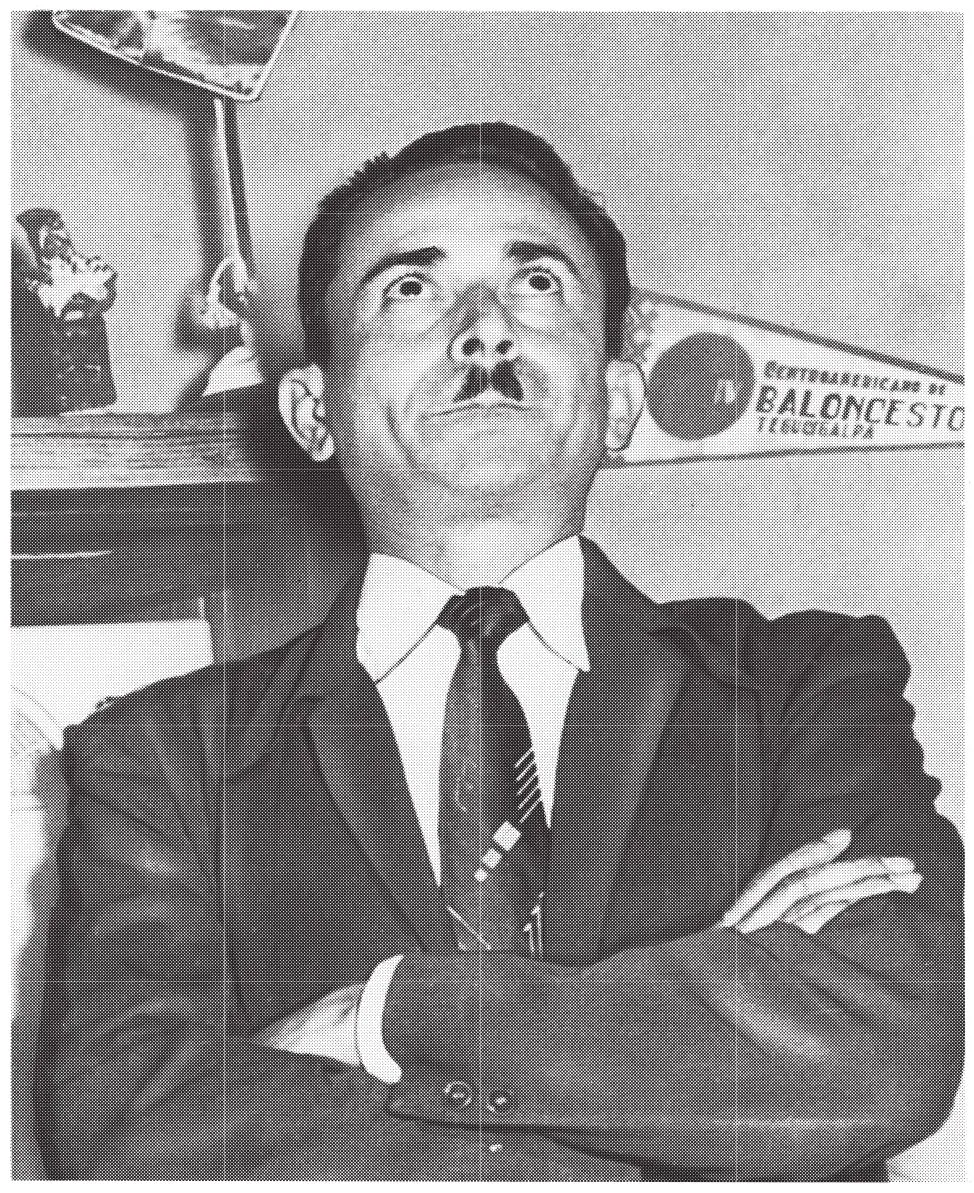
Carlos Castillo Armas in exile. Collection of the Library of Congress.
Partisan and union activity had grown amid the freedom of the Arévalo years, creating new political formations that later affected the Arbenz regime. The PAR remained the ruling party, but rival parties were tolerated. The federation of labor unions, the Confederación General de Trabajadores de Guatemala (CGTG), headed by Victor Manuel Gutierrez, claimed some 90,000 members. An infant union of campesinos led by Leonardo Castillo Flores, the Confederación Nacional Campesina de Guatemala (CNCG), began shortly after the July uprising to form chapters in the countryside. Toward the end of Arévalo’s term, Communist activity came into the open. Exiled Salvadoran Communists had opened a labor school, the Escuela Claridad, in 1947 and though harassed by Arévalo’s police, gathered a few influential converts, among them Gutiérrez and a onetime president of the PAR, José Manuel Fortuny. In 1948, Fortuny and a few sympathizers attempted to lead the PAR toward more radical positions, but a centrist majority defeated them. Shortly before Arbenz took office, they resigned from the PAR, announcing plans to form “a vanguard party, a party of the proletariat based on Marxism-Leninism.” They called it the Partido Guatemalteco del Trabajo (PGT).16
American Apprehensions
United States officials’ concern about Communism in Guatemala grew as Cold War tensions increased. Preoccupied by events in Europe and Asia, Truman paid scant attention to the Caribbean in his first years in office. The State Department welcomed the demise of dictatorships and found the new Guatemalan Government willing to cooperate on military aid programs and the Pan-American Highway. The FBI gathered dossiers on Fortuny and Gutiérrez in 1946 but found little of interest. Officers from the newly created Central Intelligence Group arrived in March 1947 to take over the FBI’s job of monitoring Perónist and Communist activities, but Guatemala remained a low priority. [ ]17
The Berlin crisis, the fall of China, and the Soviet acquisition of nuclear weapons in 1948 and 1949 made Agency and State Department officials apprehensive about Soviet designs on the Western Hemisphere. They reevaluated Arévalo’s government and found disturbing evidence of Communist penetration. Guatemala’s relative openness made it a haven for Communists and leftists from Latin America and the Caribbean.18 The number of homegrown Communists remained small, but they held influential positions in the labor movement and the PAR. The State Department complained, listing the names of persons to be watched and removed from high positions, but Arévalo refused to act, revealing a defiance Embassy officials found inappropriate in a Latin leader. “We would have been concerned with any tendency toward excessive nationalism in Guatemala,” department officials told the NSC, “but we are the more deeply concerned because the Communists have been able to distort this spirit to serve their own ends.” They saw other signs that Arévalo’s nationalism had grown excessive in his treatment of American companies, particularly United Fruit.19
United Fruit executives regarded any trespass on the prerogatives they enjoyed under Ubico as an assault on free enterprise. The company continued to report only a fraction of the value of its land and exports for tax purposes and initially found Arévalo cooperative and respectful. But United Fruit soon grew concerned about the new government’s sympat...
Table of contents
- Title Page
- Copyright Page
- Table of Contents
- Preface to the Second Edition
- Introduction - A Culture of Destruction
- Operation PBSUCCESS - The United States and Guatemala 1952-1954
- Foreword
- CHAPTER I - America’s Backyard
- CHAPTER 2 - Reversing the Trend
- CHAPTER 3 - Sufficient Means
- CHAPTER 4 - The Sweet Smell of Success
- Appendixes
- Afterword - The Culture of Fear
- Index
Trusted by 375,005 students
Access to over 1.5 million titles for a fair monthly price.
Study more efficiently using our study tools.
Frequently asked questions
Yes, you can cancel anytime from the Subscription tab in your account settings on the Perlego website. Your subscription will stay active until the end of your current billing period. Learn how to cancel your subscription
No, books cannot be downloaded as external files, such as PDFs, for use outside of Perlego. However, you can download books within the Perlego app for offline reading on mobile or tablet. Learn how to download books offline
Perlego offers two plans: Essential and Complete
- Essential is ideal for learners and professionals who enjoy exploring a wide range of subjects. Access the Essential Library with 800,000+ trusted titles and best-sellers across business, personal growth, and the humanities. Includes unlimited reading time and Standard Read Aloud voice.
- Complete: Perfect for advanced learners and researchers needing full, unrestricted access. Unlock 1.5M+ books across hundreds of subjects, including academic and specialized titles. The Complete Plan also includes advanced features like Premium Read Aloud and Research Assistant.
We are an online textbook subscription service, where you can get access to an entire online library for less than the price of a single book per month. With over 1.5 million books across 990+ topics, we’ve got you covered! Learn about our mission
Look out for the read-aloud symbol on your next book to see if you can listen to it. The read-aloud tool reads text aloud for you, highlighting the text as it is being read. You can pause it, speed it up and slow it down. Learn more about Read Aloud
Yes! You can use the Perlego app on both iOS and Android devices to read anytime, anywhere — even offline. Perfect for commutes or when you’re on the go.
Please note we cannot support devices running on iOS 13 and Android 7 or earlier. Learn more about using the app
Please note we cannot support devices running on iOS 13 and Android 7 or earlier. Learn more about using the app
Yes, you can access Secret History, Second Edition by Nick Cullather in PDF and/or ePUB format, as well as other popular books in History & North American History. We have over 1.5 million books available in our catalogue for you to explore.