With its increasing presence in a continuously evolving media environment, the essay film as a visual form raises new questions about the construction of the subject, its relationship to the world, and the aesthetic possibilities of cinema. In this volume, authors specializing in various national cinemas (Cuban, French, German, Israeli, Italian, Lebanese, Polish, Russian, American) and critical approaches (historical, aesthetic, postcolonial, feminist, philosophical) explore the essay film and its consequences for the theory of cinema while building on and challenging existing theories. Taking as a guiding principle the essay form's dialogic, fluid nature, the volume examines the potential of the essayistic to question, investigate, and reflect on all forms of cinema—fiction film, popular cinema, and documentary, video installation, and digital essay.
A wide range of filmmakers are covered, from Dziga Vertov (Man with a Movie Camera, 1928), Chris Marker (Description of a Struggle, 1960), Nicolás Guillén Landrián (Coffea Arábiga, 1968), Pier Paolo Pasolini (Notes for an African Oresteia, 1969), Chantal Akerman (News from Home, 1976) and Jean-Luc Godard (Notre musique, 2004) to Nanni Moretti (Palombella Rossa, 1989), Mohammed Soueid (Civil War, 2002), Claire Denis (L'Intrus, 2004) and Terrence Malick (The Tree of Life, 2011), among others. The volume argues that the essayistic in film—as process, as experience, as experiment—opens the road to key issues faced by the individual in relation to the collective, but can also lead to its own subversion, as a form of dialectical thought that gravitates towards crisis.
eBook - ePub
The Essay Film
Dialogue, Politics, Utopia
- English
- ePUB (mobile friendly)
- Available on iOS & Android
eBook - ePub
The Essay Film
Dialogue, Politics, Utopia
About this book
Information
Subtopic
Film & VideoPART ONE
The Essay Film as Dialogue

Chapter 1
Essayism and Contemporary Film Narrative
The essay, the essayistic and essayism represent three related modes that, at their core, test and explore subjectivity as it encounters a public life, and, in this action, they generate and monitor the possibilities of thought and thinking through that public life. The essay and essay film might be considered rhetorical organisations or structures; the essayistic an inflection or tactic within another primary practice; and essayism a dissipation or intellectual pause of that primary practice. In their relations to other practices – and for my purposes specifically to narrative – each of the three represents different representational ratios: assimilative, whereby the structure and perspective of the essay supercede and assimilate other representational organisations; inflective, whereby the essayistic defines and distinguishes, as it defers to, another practice; or digressive or dissipative, whereby essayism intervenes within and disrupts those traditional practices and their positionings.
The present chapter draws on the third mode, and aims to describe and argue a way in which the heritage and distinctions of the essay take a somewhat diffferent form and path from those described more essentially by the essay film. I have argued elsewhere that the essayistic ‘assimilates and thinks through other forms, including narrative forms, different genres, lyrical voices’ (2011: 35). Here I wish to investigate how, in a significantly different way, essayism puts that thinking into play as an intellectual and structural detour within the presiding shape of a contemporary film narrative, as a figurative disruption or digression that questions, at its heart, the experiential mode of film narrative itself. To be more specific and schematic, essayism questions the organisational knowledge of film narrative: i) through the disintegration of narrative agency; ii) through the exploration of the margins of narrative temporality as history; and iii) through the questioning of the teleological knowledge that has conventionally sustained and shaped narrative.
This framework and focus emerge from my work with the essay film proper, where I examined a specific kind of essay film that interrogates and pursues questions of cinematic value. Borrowing the term ‘refraction’ that André Bazin uses to discuss cinematic adaptations, I have described this particular brand of essay films – which include Abbas Kiarostami’s Close-Up (1990) and Lars von Trier’s The Five Obstructions (2003) – as refractive essays that reflexively examine the changing values of modern cinematic images (2011: 181–204). Although films which incorporate essayism do not fit, strictly speaking, into the category of essay film, they can be considered, I argue, a version of a film practice whereby essayism inhabits narrative in a way that generates complex reflections on the representational values embedded within their narrative organisations.
A critical touchstone for this model of narrative essayism is Thomas Harrison’s study of the novels of Joseph Conrad, Robert Musil and Luigi Pirandello, titled Essayism (1992). In this investigation, Harrison examines how the very different narratives of these very different novelists mobilise essayism as a mode of epistemological reflexivity on the perspectives and structures of the narratives themselves. According to Harrison, in these cases: ‘Not only does the essay give shape to a process preceding [narrative] conviction, and perhaps deferring it forever. More important, it records the hermeneutical situation in which such decisions are made. For this reason the essay ultimately requires novelistic form, which can portray the living condition in which thought is tangled’ (1992: 4). Essayism thus initiates an ‘immanent critique of…[the] norms and structures’ of the narrative, whose ‘hermeneutics of suspicion turns inward, toward the objectifications defining the active subject’, the agent of its narrative (1992: 10, 12; emphasis in original). Showing ‘that the real story’ is ‘the story of interpreting the story’, narrative essayism foregrounds a ‘process of derealization’ caused not by a characterological flaw in a protagonist but rather by the disturbance and implosion of those structures – ideas, values, facts, judgments, and laws […] that define the truth of the everyday’ (1992: 17, 47; emphasis in original).
This question of interpretation and value thus becomes arguably the inevitable, necessary and elusive concern of narrative essayism, aligning its encounter with what Hermann Broch terms the ‘gnosiological novel’, a narrative structure, perspective and strategy that focuses ‘its investigations on the very possibilities of knowledge and its worth within narrative’ (1992: 17). Later Milan Kundera would expand on Broch’s model in a way that describes essayism in terms of the ‘unachieved’: ‘All great works contain something unachieved,’ he writes, and this unachieved ‘can show us the need for i) a new art of radical divestment (which can encompass the complexity of existence in the modern world without losing architectonic clarity); ii) a new art of novelistic counterpoint (which can blend philosophy, narrative, and dream into one music); iii) a new art of the specifically novelistic essay (which does not claim to bear an apodictic message but remains hypothetical, playful or ironic)’ (2008: 63, 65; emphasis in original).
Moving this model of essayism to the cinematic encompasses numerous films with little else in common than this divergent incorporation of an essayism that acts as a digressive critique embedded within the struggle to narrate. As with other prominent tendencies in the post-war history of the essay film, French cinema of the 1960s features early examples, including Hiroshima mon amour (1960) directed by Alain Resnais from a screenplay by Marguerite Duras, and Jean-Luc Godard’s Le Mépris (Contempt, 1963), and these in turn have generated a variety of international films that continue the exploration and interrogation of film narrative from within the pull of narrative, including Glauber Rocha’s Antonio das Mortes (1969), Helke Sanders’ Die Allseitig reduzierte Persönlichkeit - Redupers (The All-Round Reduced Personality, 1978) and virtually all of Peter Greenaway’s work.
These and more recent films mobilise essayism to question, most broadly, ‘what counts’ in contemporary film and media culture as they investigate how contemporary films engage – implicitly or often explicitly – problems of imagistic and narrative value in culture, how movies can and do question our ways of seeing through movies, and how the dynamics of cinematic looking can become a measure of value. To borrow Wallace Stevens’ phrase, these films fracture and intensify narrative images in order ‘to make the visible a little hard to see’: that is, to see beyond the teleologies and agencies of narrative, to move intelligence beyond the frames of vision, and to question the use-value that increasingly defines the imagistic logic of new and old media today.
My two recent examples will be Terrence Malick’s Tree of Life and Lech Majewski’s The Mill and the Cross, both released in 2011, both engaged with and questioning – not coincidentally, I think – a dominant Judeo-Christian narrative as the foundation of knowledge, and both operating on the edges of conventional narrative form.1 While Malick’s film locates essayism as a movement beyond the boundaries of various narrative frames where a perceptual ‘grace’ expands, Majewski’s film configures its essayism as an arresting of narrative movement that concentrates an intellectual and emotional insight within those frames. As works that integrate essayism into their stories, both films open pressing questions about the implicit value of the narratives and cinematic images that they mobilise.
Looking Away: Terrence Malick’s The Tree of Life
The Tree of Life is an oblique adaptation of that pivotal epistemological tree in the biblical book of Genesis (and, less centrally, the book of Job), as well as a deflected adaptation of Darwin’s evolutionary tree in On the Origin of Species (1859). Aimed at significantly redefining the limits of those two trees, the first representing an absolute knowledge and the second a scientific knowledge, Malick’s film explores a narrative history in which knowledge comes to have much less to do with certain truth or evolutionary progress and much more to do with reflective ruptures of and branchings out of those earlier narrative visions, looking instead through and beyond both those frameworks.
Two patterns inform and contend in this tale of a post-World War II family tree: on the one hand, experience appears through perspectives based in appropriation, individuation and circulation and, on the other, experience provides perspectives based in adaptation, de-individuation and valuation. The intersection of these two developmental schemes propels the film’s narrative in a way that continually seems to resist its own narrative logic, pulling away from that narrative in what I would describe as a ‘looking away’ from the subjectivities and narrative developments that anchor it, and so engaging its world on the essayistic edges of or outside the frames of conventional narrative. For good reason, my reading is fascinated by that evolutionary raptor in the film who, during an astonishing animated sequence, moves ominously towards and then away from its potential prey – signaling and then swerving away from a Darwinian logic of appropriative conquest (and from the spiritual beginning aligned with an Old-Testament Genesis).
The Tree of Life is a paratactic narrative of fragments whose primary vehicle and drifting agent is the son Jack O’Brien and his perhaps coming of age between nature and grace, between the heritage of his father and that of his mother. For the father, life is about boundaries, control and the ‘ownership of ideas’. He is appropriately an inventor obsessed with use-value, rather than a creator of use-less value, who struggles for survival while haunted by his lost potential and path as a pianist. Shaped by a vision of a linear plot and a horizontal perception, his will to control and to ‘propertise’ human relations often desperately drives those familial relationships forward. Unsettling this vision from the outset, however, the very beginning of the film flashes the narrative forward to the traumatic death of one son, a trauma that irrevocably troubles the father’s agency and the genesis of the narrative that precedes and follows it. Conversely, Mrs. O’Brien shows Jack the way of grace, a way that opens emotionally onto a world into which she longs to surrender the agency of personal control and direction. She drifts longingly through events and lives with a perspective that continually looks vertically askance into essayistic spaces and skies beyond the frames of her home and the frames of the image.
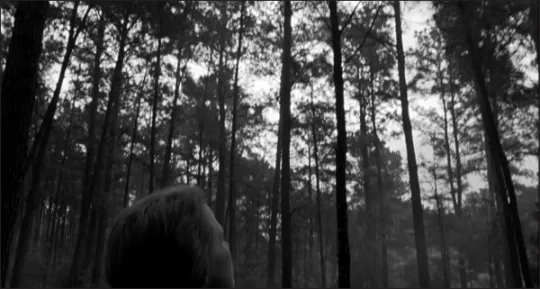
Fig. 1: Looking askance towards essayistic space: The Tree of Life (Terrence Malick, 2011)
The binary couplings that describe this and other Malick films accordingly include the push and pull between the logic of narrative and the space of essayism, between an anthropomorphic frame and its off-screen space, between continuity edits and unexpected temporal cuts. Within the tension of his two parental perspectives, Jack and his story struggle for coherence, mapped as decentered and fragmented flashbacks that, rather than orchestrating the past, pull the characters and their stories away from a narrative progression. With these two directions ‘wrestling inside’ him, Jack’s identity continually digresses from, rather than evolves through, visions and images of appropriation, individuation and circulation. He inhabits, in my terms, the spaces of essayism on the fringes of narrative, as he moves in and out of an open and fluid world defined by adaptation, de-individuation and valuation.
The Tree of Life and Jack’s life specifically thus create an image of spreading evolution that deflects both expressivity and subjectivity. Most sensationally seen in those swirling undefined images that punctuate the film and its twenty-minute sequence of ‘unseeable images’ in outer space, the characters and especially Jack attempt to ‘shape their own [evolutionary] autobiography from out of a cosmic bath of image and sound, the vastness of which repeatedly threatens the discrete shape of individual autobiography itself’ (Rybin 2012: 176). Rather than locate a linear connection between past, present and future, the narrative flashbacks in The Tree of Life become a search for a genesis – or more accurately many geneses – which might be better described as disruptive recollections that never adequately collect and circulate, as fractured and drifting images and moments producing not evolutionary lines but the spreadin...
Table of contents
- Cover
- Dedication
- Series Page
- Title Page
- Copyright
- Contents
- Acknowledgments
- Notes on Contributors
- Introduction Dialogue, Politics, Utopia
- Part One: The Essay Film as Dialogue
- Part Two: The Essay Film as Politics
- Part Three: The Essay Film as Utopia
- Afterword The Idea of Essay Film
- Index
Trusted by 375,005 students
Access to over 1.5 million titles for a fair monthly price.
Study more efficiently using our study tools.
Frequently asked questions
Yes, you can cancel anytime from the Subscription tab in your account settings on the Perlego website. Your subscription will stay active until the end of your current billing period. Learn how to cancel your subscription
No, books cannot be downloaded as external files, such as PDFs, for use outside of Perlego. However, you can download books within the Perlego app for offline reading on mobile or tablet. Learn how to download books offline
Perlego offers two plans: Essential and Complete
- Essential is ideal for learners and professionals who enjoy exploring a wide range of subjects. Access the Essential Library with 800,000+ trusted titles and best-sellers across business, personal growth, and the humanities. Includes unlimited reading time and Standard Read Aloud voice.
- Complete: Perfect for advanced learners and researchers needing full, unrestricted access. Unlock 1.5M+ books across hundreds of subjects, including academic and specialized titles. The Complete Plan also includes advanced features like Premium Read Aloud and Research Assistant.
We are an online textbook subscription service, where you can get access to an entire online library for less than the price of a single book per month. With over 1.5 million books across 990+ topics, we’ve got you covered! Learn about our mission
Look out for the read-aloud symbol on your next book to see if you can listen to it. The read-aloud tool reads text aloud for you, highlighting the text as it is being read. You can pause it, speed it up and slow it down. Learn more about Read Aloud
Yes! You can use the Perlego app on both iOS and Android devices to read anytime, anywhere — even offline. Perfect for commutes or when you’re on the go.
Please note we cannot support devices running on iOS 13 and Android 7 or earlier. Learn more about using the app
Please note we cannot support devices running on iOS 13 and Android 7 or earlier. Learn more about using the app
Yes, you can access The Essay Film by Elizabeth Papazian,Caroline Eades, Elizabeth Papazian, Caroline Eades in PDF and/or ePUB format, as well as other popular books in Media & Performing Arts & Film & Video. We have over 1.5 million books available in our catalogue for you to explore.