The 1944 Bretton Woods conference created new institutions for international economic governance. Though flawed, the system led to a golden age in postwar reconstruction, sustained economic growth, job creation, and postcolonial development. Yet financial liberalization since the 1970s has involved deregulation and globalization, which have exacerbated instability, rather than sustained growth. In addition, the failure of Bretton Woods to provide a reserve currency enabled the dollar to fill the void, which has contributed to periodic, massive U.S. trade deficits.
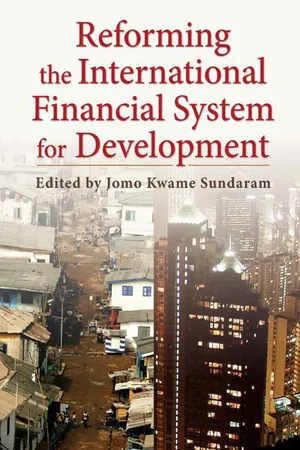
Our latest global financial crisis, in which all these weaknesses played a part, underscores how urgently we must reform the international financial system. Prepared for the G24 research program, a consortium of developing countries focused on financial issues, this volume argues that such reforms must be developmental. Chapters review historical trends in global liquidity, financial flows to emerging markets, and the food crisis, identifying the systemic flaws that contributed to the recent downturn. They challenge the effectiveness of recent policy and suggest criteria for regulatory reform, keeping in mind the different circumstances, capacities, and capabilities of various economies. Essays follow ongoing revisions in international banking standards, the improved management of international capital flows, the critical role of the World Trade Organization in liberalizing and globalizing financial services, and the need for international tax cooperation. They also propose new global banking and reserve currency arrangements.
- English
- ePUB (mobile friendly)
- Available on iOS & Android
eBook - ePub
Reforming the International Financial System for Development
About this book
Trusted by 375,005 students
Access to over 1.5 million titles for a fair monthly price.
Study more efficiently using our study tools.
Information
Subtopic
Development EconomicsIndex
Economics1
Contemporary Reform of Global Financial Governance: Implications of and lessons from the past
As the world experiences its worst financial crisis since the 1930s, there is a widespread sentiment that bold innovations in global financial governance are needed. Reflecting this mood, many analysts have begun to call for a Bretton Woods II, invoking the 1944 conference that established the postwar international financial order. Even some leaders took up the banner during the lead-up to the first G20 leaders’ summit in November 2008 that was called to draw lessons from the crisis and set an agenda for global financial reform. The global financial reforms endorsed by the G20 process so far, however, have not matched these ambitions. If they are to claim the mantle of Bretton Woods, policy makers will need to think more creatively.
This chapter suggests that there are, in fact, important lessons to be learned from the Bretton Woods experience for those searching for a more ambitious vision. The contemporary relevance of the Bretton Woods conference is that policy makers then were driven by a similar goal as those today: the desire to assert public authority in the realm of international finance in the wake of a major international financial meltdown. This overall goal culminated in three sets of proposals at Bretton Woods which were genuine innovations in global financial governance: 1) those designed to regulate international financial markets more tightly, 2) those aimed at addressing global economic imbalances, and 3) those promoting international development. For policy makers seeking to move beyond the G20 reform agenda, this chapter suggests that the three innovations could provide some inspiration at this moment. Even a number of the detailed—and often long-forgotten—mechanisms to achieve these goals may deserve revisiting today. At the same time, given how the world has changed, a Bretton Woods II must tackle these issues in some ways that are different from Bretton Woods I. It must also embrace a broader governance agenda of making international financial institutions—including, but not restricted to, the Bretton Woods institutions—more inclusive as well as more open to the principles of subsidiarity and regionalism.
The Bretton Woods Precedent
The international financial crisis that began in 2007 is generating a significant backlash against the lack of accountability of many private actors in international financial markets. Left to their own devices, global markets have created a mess. After the liberalizing and deregulatory trends of the past few decades, many analysts and policy makers are calling for public authority to be reasserted in the international financial arena.
The architects of Bretton Woods drew a similar lesson from the momentous international financial crisis of the early 1930s. Before that crisis, the world of international finance had been dominated by private international financiers as well as central banks, most of which were still privately owned at that time. Those groups favored a laissez faire order in which financial capital moved freely across borders and international payments imbalances were corrected by the automatic mechanism of the international gold standard. When the system came crashing down in the early 1930s, that liberal vision and its supporters lost their privileged position in international financial politics. If a multilateral financial order was to be rebuilt, it was clear that it would need to be one in which governments played a more active role.
This view was held particularly strongly by the New Dealers from the US who played the lead role in the Bretton Woods negotiations. They had blamed the financial crisis and Great Depression on the recklessness of private bankers, especially the internationally-oriented New York financial community. The first years of the New Deal were spent asserting greater public control over the US financial system by creating new regulations over the markets as well as by bringing the Federal Reserve System under tighter public control. When wartime pressures encouraged ambitious thinking about the post-war world order, New Deal policy makers began also to consider the possibility of creating what Treasury Secretary Henry Morgenthau called a “New Deal in international economics” (quoted in Van Dormael, 1978: 52).
With their country likely to emerge from the war as the dominant economic power, US policy makers were determined to play a leadership role in rebuilding a multilateral international economic order. The closed economic blocs and economic instability of the 1930s were believed to have contributed to the Great Depression and World War II. But US policy makers did not want to see a return to the classical liberal international economic order of the pre-1930s’ era. Instead, they sought to reconcile liberal multilateralism with the new interventionist economic policies that had been pioneered in the New Deal and elsewhere. This objective was shared by John Maynard Keynes who had emerged as lead policy maker in charge of British planning for the post-war world economy during the early 1940s. Both Keynes and his American counterpart, Harry Dexter White, saw the goal of bringing international finance under greater public control as a central objective of their blueprints. To achieve this goal, they advanced three sets of proposals, each of which signaled a major innovation in global financial governance. Not every specific idea put forward within each of the three categories ended up in the final Agreements. But some of those that were discarded deserve mention, not just to highlight the bold vision of the negotiators, but also because they may be useful for ambitious reformers today to revisit.
International Financial Regulation
The most dramatic departure from pre-1930s norms concerned the treatment of cross-border movements of private financial capital. Although countries agreed to make their currencies convertible for current account transactions under the Articles of Agreement of the newly created International Monetary Fund (IMF), they were given the right to control all capital movements under Article VI. Capital controls were also encouraged by the fact that IMF resources could not be used to cover “large or sustained outflows of capital” (quoted in Helleiner, 1994: 49). The contrast with post-World War I thinking could not have been more dramatic. The Brussels International Financial Conference of 1920 had passed a resolution condemning all barriers to the international movement of capital (League of Nations, 1920: 9). Now, an international agreement endorsed the use of capital controls in a comprehensive and unambiguous manner. As John Maynard Keynes put it: “What used to be a heresy is now endorsed as orthodox” (quoted in Helleiner, 1994: 25).
The Bretton Woods architects were under no illusions about the difficulties involved in controlling financial flows given the fungibility and mobility of money. But the seriousness of their commitment was made clear in two ways in the IMF charter. First, to curtail capital movements, governments were entitled to use comprehensive exchange controls in which all transactions—capital account and current account—could be scrutinized for illegal financial flows (as long as payments for current account transactions were not restricted). Second, the negotiators also endorsed the idea that each government might help to enforce the capital controls of other governments. During the lead up to the 1944 conference, Keynes and White had discussed how this kind of cooperation might involve governments sharing information about financial holdings within their countries that contravened other countries’ controls, or helping foreign efforts to repatriate capital through regulations or the taxing of foreigners’ holdings. At one point, White even suggested that governments could be asked to stop inflows of capital that were considered illegal in the sending country (Helleiner, 1994: ch. 2).
These ambitious plans were not designed to stop all private financial flows. In fact, the Bretton Woods architects strongly welcomed “equilibrating” private international financial flows and those designed for “productive” investment (Helleiner, 1994: 36). Indeed, they hoped that their overall effort to re-establish international currency stability would revive these kinds of private flows. But by explicitly permitting governments to control all financial movements, the IMF’s Articles of Agreements were written to give states the maximum freedom to decide which financial movements were desirable and which were not.
The Bretton Woods architects were particularly concerned about speculative and “disequilibrating” capital movements. There was widespread agreement that these movements had severely disrupted efforts to stabilize exchange rates in the interwar period. Many also feared that their volatility could undermine efforts to foster the expansion of international trade after the war. Even more important was the concern that these cross-border financial flows would undermine the policy autonomy of government to pursue macroeconomic planning. In addition, policy makers sought to protect governments from having their policy agendas thwarted by capital flight motivated by “political reasons” or the desire to evade domestic taxes or “the burdens of social legislation” (quoted in Helleiner, 1994: 34).
Public Management of Global Imbalances
The Bretton Woods architects also sought to assign public authorities a more conscious and active role in the management of international economic imbalances. The international gold standard had been idealized by classical economic liberals because it promised an automatically self-correcting international monetary order. In theory (although not in actual practice), international imbalances under the gold standard were corrected promptly and efficiently by market forces, rather than the discretionary behavior of governments. By requiring all countries to fix their currencies’ value to the dollar, which in turn was convertible into gold, the Bretton Woods conference appeared to re-establish an international gold standard—or to be more precise, a “gold exchange” standard or “gold-dollar” standard. But several other features of the agreements made it clear that this was to be an international monetary order in which public authorities played a much more central role.
To begin with, governments were allowed to adjust the par value of their currency whenever their country was in “fundamental disequilibrium”. Second, the IMF would provide short-term loans to help countries finance their temporary balance of payments deficits, thereby soften the kind of external discipline that private speculative financial flows and the gold standard had imposed. The IMF was also given the broader task of promoting global monetary and financial cooperation among governments. The most important part of this mandate involved encouraging countries to change policies that might be generating large international economic imbalances. Its lending capacity gave it some potential influence over deficit countries. But another clause in its charter—the scarce currency clause—also provided a means for official pressure to come to bear on surplus countries. If the Fund’s resources were drawn upon so extensively by deficit countries that its ability to supply a surplus country’s currency was threatened, the IMF could declare that currency “scarce”. Member governments would then be permitted to impose temporary restrictions on trade with that country.
These various provisions gave public authorities a much more active role in the management of international economic imbalances. It was not just that national governments were assigned this role, but also that an international public authority, the IMF, had been created to look out for the global public interest. The only existing international financial institution at the time was the Bank for International Settlements, created in 1930, whose principle mandate had been that of addressing war debt and reparations issues and whose members were central banks. The IMF, by contrast, had a much broader mandate and its members were politically-accountable government officials.
The New International Development Vision
The third major innovation embodied in the Bretton Woods Agreements was the creation, for the first time, of an official international commitment to promote the “development” of poorer member countries through mechanisms of international finance. This commitment was outlined most clearly in the creation of an international public institution with this goal as one of its two central purposes: the International Bank for Reconstruction and Development (IBRD). The conventional view is that the Bank’s development mandate “arrived almost by accident and played a bit role at Bretton Woods” (Kapur, Lewis and Webb, 1997: 68). More generally, it is widely assumed today that the Bretton Woods architects had little interest in development issues and the concerns of poorer countries. This conventional wisdom understates the interest in international development issues at the time, and has led scholars to overlook a number of innovative proposals put forward during the Bretton Woods negotiations to make the international financial system serve poor countries more effectively (Helleiner, 2006, 2009c).
To understand the innovative nature of Bretton Woods thinking in this area, it is important first to locate the negotiations within the context of broader post-war planning. This planning process was launched by Roosevelt’s and Churchill’s 1941 Atlantic Charter which set out very broad aspirations for all the world’s peoples, aspirations that Roosevelt compared to those of the US constitution and the British Magna Carta. One of the central commitments in the Atlantic Charter was an “assurance that all the men in all the lands may live out their lives in freedom from fear and want” (quoted in Borgwardt, 2005: 304). The concept of guaranteeing “freedom from want” had been developed earlier that year by Roosevelt and reflected his belief that the promotion of the economic security of individuals throughout the world would provide a crucial foundation for post-war political stability, domestically and internationally. In this way, he and other US policy makers sought to make the promotion of development in poorer countries an international responsibility for the first time (Borgwardt, 2005; see also Staples, 2006).
The earliest phases of US planning for Bretton Woods were strongly influenced by this sentiment. In his first draft for the World Bank in 1942, White suggested that all members should have to “subscribe publicly to a ‘Magna Carta of the United Nations’” which would constitute “a bill of rights of the peoples of the United Nations” (quoted in Oliver, 1975: 319). White and other US officials had, in fact, already endorsed the creation of an international institution to promote development in Latin American countries in 1939-40. This “Inter-American Bank” (IAB) initiative was part of the broader New Deal “Good Neighbor” policy towards the region at the time and its goal was to provide public capital that would support the development goals of national governments. Although opposition from isolationists and conservatives in the US Congress as well as New York financial interests prevented the IAB from being established, the first US drafts of the IMF and IBRD in early 1942 drew very heavily on the IAB precedent and inherited its commitment to promoting development goals (Helleiner, 2006, 2009c).
The most obvious continuity in this respect was the commitment to provide international public funds via the IBRD to support the economic development of poorer countries. Far from being an accident, the Bank’s mandate to promote development was strongly endorsed at the time. The commitment to large-scale public international development lending was widely shared in US policymaking circles during the war, and reflected a deep distrust of the ability of private markets to serve the new development agenda that the Roosevelt administration had committed to (Helleiner, 2009c). These sentiments were strongly supported by many other delegations to Bretton Woods, particularly those from poorer countries. It is often forgotten that well over half the countries attending Bretton Woods were from non-industrialized regions. Latin America was particularly well represented with 19 of the total 44 delegations at the conference.1 When the USSR suggested that the IBRD focus on reconstruction loans for war-devastated areas, the Latin American delegations mobilized successfully to insist that the Bank’s development mandate have at least equal standing (Oliver, 1975: 184, 188). The delegates representing still-colonized India (who were both Indian nationals and British citizens) also strongly backed the Bank’s development function and even pressed for the IMF to focus more explicitly on distinct development priorities of poorer countries (Kapur, Lewis and Webb, 1997: 60; Gold, 1971: 270-276). Strong support for the development function of the Bank also came from the Chinese delegation (Eckes, 1975: 91).
There were three other ways in which US policy makers attempted to integrate development goals into the post-war international financial architecture, each of which has been largely overlooked by scholars of Bretton Woods despite their contemporary relevance. The first relates to the problem of capital flight from poor countries. This issue had interested US officials during the IAB discussions because Latin American capital flight to New York had increased considerably during the 1930s. To recycle this capital, US policy makers had suggested that the Bank be allowed to accept private deposits and issue bonds directly to Latin American citizens, and then lend the funds back to the region for developmental purposes in ways that would “assure to each country the availability of the savings of its citizens” (quoted in Helleiner, 2009c). In his first drafts on the Bretton Woods institutions, Harry Dexter White abandoned that specific proposal since it had been strongly opposed by New York banks. In place of recycling the funds via an international public institution, he chose instead to recommend the control of flight capital, noting that the Fund’s endorsement of capital controls would be particularly useful to poorer countries for this reason (Horsefield, 1969: 67).
US policy makers also sought to address the question of restructuring the debts of poorer countries. The issue had been controversial in US-Latin American relations in the wake of widespread Latin American defaults on external debt in the early 1930s. As far back as 1933, some Latin American governments had proposed the creation of an international institution that could renegotiate these debts in a manner that avoided the kind of heavy-handed creditor interference of the past. This issue reappeared in the late 1930s when US financial assistance to the region was opposed by financial interests who felt it should not go to countries that had not settled their debts with US private lenders. Frustration with this opposition prompted some in the US Treasury to suggest that the proposed IAB could appoint independent arbiters to force settlements of outstanding debts.
White’s first drafts...
Table of contents
- Cover
- Half title
- Series Page
- Title
- Copyright
- Contents
- List of Tables
- List of Figures
- Acknowledgments
- List of Contributors
- Foreword
- 1: Contemporary Reform of Global Financial Governance: Implications of and lessons from the past
- 2: Global Liquidity and Financial Flows to Developing Countries: trends in emerging markets and their implications
- 3: The Global Financial and Economic Crisis and Its Impact on Development
- 4: The Unnatural Coupling: Food and global finance
- 5: Policy Responses to the Global Financial Crisis: Key issues for developing countries
- 6: Reforming Financial Regulation: What needs to be done
- 7: The Basel 2 Agenda for 2009: Progress so far
- 8: Should Financial Flows Be Regulated? Yes
- 9: Financial Services, the WTO and Initiatives for Global Financial Reform
- 10: Cross-Border Tax Evasion and Bretton Woods II
- 11: Learning from the Crisis: Is there a model for global banking?
- 12: The Report of the Commission of Experts on Reform of the International Monetary and Financial System and Its Economic Rationale
- 13: Special Drawing Rights and the Reform of the Global Reserve System
- Index
- Permissions
Frequently asked questions
Yes, you can cancel anytime from the Subscription tab in your account settings on the Perlego website. Your subscription will stay active until the end of your current billing period. Learn how to cancel your subscription
No, books cannot be downloaded as external files, such as PDFs, for use outside of Perlego. However, you can download books within the Perlego app for offline reading on mobile or tablet. Learn how to download books offline
Perlego offers two plans: Essential and Complete
- Essential is ideal for learners and professionals who enjoy exploring a wide range of subjects. Access the Essential Library with 800,000+ trusted titles and best-sellers across business, personal growth, and the humanities. Includes unlimited reading time and Standard Read Aloud voice.
- Complete: Perfect for advanced learners and researchers needing full, unrestricted access. Unlock 1.5M+ books across hundreds of subjects, including academic and specialized titles. The Complete Plan also includes advanced features like Premium Read Aloud and Research Assistant.
We are an online textbook subscription service, where you can get access to an entire online library for less than the price of a single book per month. With over 1.5 million books across 990+ topics, we’ve got you covered! Learn about our mission
Look out for the read-aloud symbol on your next book to see if you can listen to it. The read-aloud tool reads text aloud for you, highlighting the text as it is being read. You can pause it, speed it up and slow it down. Learn more about Read Aloud
Yes! You can use the Perlego app on both iOS and Android devices to read anytime, anywhere — even offline. Perfect for commutes or when you’re on the go.
Please note we cannot support devices running on iOS 13 and Android 7 or earlier. Learn more about using the app
Please note we cannot support devices running on iOS 13 and Android 7 or earlier. Learn more about using the app
Yes, you can access Reforming the International Financial System for Development by Jomo Kwame Sundaram in PDF and/or ePUB format, as well as other popular books in Economics & Development Economics. We have over 1.5 million books available in our catalogue for you to explore.