- English
- ePUB (mobile friendly)
- Available on iOS & Android
eBook - ePub
About this book
New Korean Cinema charts the dramatic transformation of South Korea's film industry from the democratization movement of the late 1980s to the 2000s new generation of directors. The author considers such issues as government censorship, the market's embrace of Hollywood films, and the social changes which led to the diversification and surprising commercial strength of contemporary Korean films. Directors such as Hong Sang-soo, Kim Ki-duk, Park Chan-wook, and Bong Joon-ho are studied within their historical context together with a range of films including Sopyonje (1993), Peppermint Candy (1999), Oldboy (2003), and The Host (2006).
Information
Subtopic
Film & Video1 | A NEW SOCIETY |
A middle-aged woman with a hardened, determined look on her face walks down a street crowded with protesters. She falls in among students and ordinary citizens chanting slogans and holding banners reading ‘Restore Democracy’ and ‘Chun Doo Hwan is a Murderer’. At one point a grim silence falls when some demonstrators pull a cart filled with slain bodies through the crowd. However, her resolve to support the demonstration is mixed with rising panic: having ignored all her threats, her 15-year-old daughter has followed her from their home into the city streets. The woman implores her daughter to stay behind, but the girl, also panic-stricken, keeps disobeying and running after her. Finally they come to a large central plaza where a teeming mass of protesters have gathered, pumping their fists in the air and shouting at a formation of armed paratroopers. The soldiers are impassive, seeming to ignore them. For a few moments, the citizens’ rage fills the air with an undulating roar. Then with a cracking sound, the soldiers begin firing and bodies start to fall.
This flashback sequence from Jang Sun-woo’s A Petal (Kkonnip, 1996) recreates an incident that occurred on 21 May 1980 in the southwestern city of Gwangju. However, the events that set these horrific scenes in motion stretch back to the previous year and beyond. Former general Park Chung Hee had presided over Korea ever since taking power in a military coup d’etat in 1961. Although some Koreans now remember him fondly for the period of strong, export-led economic growth he initiated in the 1960s and 1970s, he also created a police state where the arrest and torture of dissidents, often on trumped-up charges of pro-communist activity, was common. In the 1970s in particular he had strengthened his control over South Korean society, pushing through a constitution in 1972 that granted him sweeping powers and abolished term limits on his own rule. Although he set up various legislative bodies that were made to resemble democratic institutions, with a small opposition group tolerated in the National Assembly, the system was rigged to give Park the maximum amount of power.
By 1979, however, Park was increasingly isolated and facing an unprecedented degree of resistance from the populace. A sudden economic downturn, an outbreak of labour unrest and conflict between majority and opposition lawmakers led to massive anti-government strikes in Busan and neighbouring Masan in the autumn of 1979. Then without warning on 26 October, at a private dinner party in Seoul, Park was shot and killed by his own intelligence chief and longtime associate Kim Jae-gyu.
Park’s assassination was depicted in memorable fashion in Im Sang-soo’s The President’s Last Bang (Geuttae geusaramdeul, 2004), a work that proved to be hugely controversial even 25 years after the dictator’s death. In the film, Kim is portrayed as having shot Park partly out of personal frustration, and partly out of a genuine desire to bring democracy to the country. His actions are presented as having been planned out in their broadest outlines in advance, but executed on the spur of the moment. Although this coincides with many outside views of the incident, much of that night is shrouded in mystery, and there remain questions about the true motives of Kim’s actions.
The sudden assassination of such a powerful president threw the political sector into chaos. Choi Kyu Hah, who had been serving as prime minister under Park, was named acting president and promised both free elections and a new constitution. Hopes for a transition to democracy and a weakening of government authority spread quickly among the populace, though Choi’s hesitant approach failed to keep pace with public demands. However, on 12 December, Major General Chun Doo Hwan, who as head of the Defence Security Command was in charge of investigating Park’s assassination, staged a coup within the military. Without authorisation from Choi, Chun ordered the arrest of the ROK Army Chief of Staff and after a bloody shootout Chun and a close circle of fellow military men had gained control of the army. In the coming months he would sideline Choi and gradually take over all sectors of the government (see Robinson 2007: 139–40).
The first few months of Chun’s (at this stage, unofficial) leadership were marked by confrontation. Student protests against partially-imposed martial law, which had been declared at the time of Park’s death, began in earnest in March when universities opened for the new semester. Social unrest grew in April when Chun illegally took control of the intelligence agency, and culminated in a massive rally in Seoul on 15 May that drew 70,000–100,000 participants. It was Chun’s draconian response to the rally that would set the stage for the violence in Gwangju.
In a show of force Chun extended full martial law over the nation, dissolved the National Assembly, closed the nation’s universities and arrested 26 key opposition politicians including Gwangju hero (and future Nobel Prize laureate) Kim Dae Jung. Students in Gwangju responded with a wave of protests. A demonstration on 18 May at the gate of Jeonnam National University passed without incident; however, that afternoon as students moved to the city centre they came into contact with a group of elite black-bereted paratroopers. Sent in by the government to crush dissent, the special forces attacked students and passersby alike, in some cases using knives and bayonets. Martha Huntley, a missionary and long-term resident of Gwangju, described what she saw that day:
One man we knew, a businessman [of] about thirty, was pulled off the bus he was riding (along with other youngish-looking people), and was kicked about the head so bad he lost an eye. Another young mother about the same age, thirty or early thirties, was taking her two children to Sunday school, was beaten and left unconscious on the sidewalk – she had to have stitches on her scalp and was incoherent for four months – her husband joined the students Sunday afternoon when they fought with the soldiers. No one knew what was happening or why. (Quoted in Oberdorfer 2001: 127–8)
The following day, as more outraged citizens joined in, the protests grew larger and more paratroopers were dispatched. Several deaths occurred. On 20 May, bus and taxi drivers went on strike and citizens began to gain control of the streets. Protesters burned government television stations KBS and MBC, as well as the tax office. On the following day, a massive rally took place in front of troops who had retreated to Provincial Hall. As depicted in the abovementioned flashback, the soldiers opened fire, killing and wounding scores of people before retreating to the edge of the city. Meanwhile, citizens ransacked rifles and carbines from local police stations and took control of the city. Over the next five days, civilian committees held negotiations with the army, as more deaths occurred on the city’s outskirts. Finally talks broke down, and in the early hours of 27 May, members of the 20th Army Division moved in with tanks and put down the uprising once and for all.
The Korean press, firmly under the government’s thumb, reported the uprising in Gwangju as a revolt led by communist sympathisers. The official death toll as announced by the government was 170, and a 1996 investigation raised the estimate to 240; however, many Gwangju citizens claimed the number of deaths to be higher, as many as two thousand (see Cumings 2005: 383). Authorities, meanwhile, refused to compensate victims. In the aftermath of the incident, Chun found himself firmly in power; however, news about the true nature of the uprising spread through underground sources. Later in the decade, outrage over Gwangju would serve as a key rallying point for larger anti-government protests that would prove more difficult to contain.
Filmmaking in the Fifth Republic
In the tense, oppressive years of the early 1980s, Korean cinema was doubly cursed. Filmmakers operated in an extraordinarily hostile environment due to censorship and other sorts of government interference. At the same time, the film industry had recently lost much of its leading talent. Two of the most celebrated directors of the previous decade, Lee Man-hee (Road to Sampo) (Sampo ganeun gil, 1975) and Ha Kil-jong (March of Fools) (Babodeurui haengjin, 1975), had died prematurely in 1975 and 1979, respectively. Veteran masters Yu Hyun-mok and Kim Ki-young were reaching the final stages of their career. Yu and Kim’s contemporary Shin Sang-ok had mysteriously vanished in 1978, only to reappear several years later making films in North Korea with his wife, the actress Choi Eun-hee. Shin later recounted how he and Choi were kidnapped in Hong Kong and brought to Pyongyang at the request of Kim Jong Il to revitalise the industry there. After making seven feature films in the communist nation, in 1986 Shin and Choi made a dramatic escape on a promotional trip to Vienna, defecting to the US Embassy. The couple then spent several years in Hollywood, with Shin producing several films in the Three Ninjas series (1992–98).
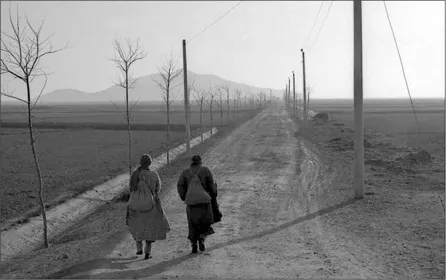
Im Kwon-taek’s breakthrough film Mandala (1981)
Only one director who had been active during Korea’s cinematic ‘golden age’ of the 1960s played a leading role in the 1980s and beyond, and that was Im Kwon-taek. Im debuted as a director in 1962 after serving as an assistant to director Chung Chang-hwa (who would later become famous for directing the 1972 Hong Kong film Five Fingers of Death). He initially found a niche as a highly prolific director of genre films, but in the 1970s his cinematic style underwent a slow evolution, as he became more interested in using the medium of film to explore the historical, cultural and artistic roots of his homeland. Neither his early genre films, nor his work of the 1970s attracted much critical attention, however.
It was only with his 75th film Mandala (Mandara, 1981) that Im would be recognised as a leading director. Based on a novel by Kim Seong-dong, the acclaimed film centres on an eccentric Buddhist monk named Ji-san who drinks heavily and remains sexually active at the same time as he pursues enlightenment through service to others, rather than meditation. The film can be seen on one level as a critique of the dominant Seon (aka ‘Chan’ or ‘Zen’) school of Buddhism practiced in Korea, which prioritises the individual’s seeking of enlightenment through meditation, and encourages retreat from the concerns of the material world (see James 2002: 60). Ji-san is joined in his travels across Korea by another monk, Beob-un, and the two men’s conversations form the basis of a wide-ranging debate on issues of responsibility and enlightenment.
Yet Mandala is just as concerned with the contemporary world as with the intricacies of Buddhist thought. Ji-san’s status as a conscientious outsider who questions established doctrine contains echoes of the idealised figure of the artist, and also that of the social activist. His easy connection with the marginalised, lower-class characters who appear in the film contrasts with Beob-un’s uncomfortable distance. However, Im also portrays Ji-san as being tortured by his excommunication from his faith, and the film, in contrast to the novel, ends on an uncertain note regarding Beob-un’s future spiritual path.
Mandala was screened in the Panorama section of the Berlin International Film Festival in 1982, and within a few years Im would become South Korea’s most familiar name on the international festival circuit. Gilsottum (Gilsotteum, 1985), about a mother, father and son separated during the Korean War and reunited in the 1980s, was shown in competition at Berlin in 1986. Surrogate Mother (Ssibaji, 1987) screened at the Venice Film Festival in 1987 and earned a Best Actress award for Kang Su-yeon – the highest-profile international accolade received by a Korean film to that date. Kang’s depiction of a village girl in Joseon Dynasty-era Korea who is contracted to bear a child for an aristocratic family turned her into a major star at home, and gave her a limited degree of international recognition as well. Surrogate Mother would set a new export record for Korean films, with $455,000 earned in sales to Europe and Asia, and it would gross over $1 million during its commercial release in Taiwan (see the Korea Motion Picture Promotion Corporation’s Korean Cinema Yearbook 1989: 212). In September 1988, Im’s Adada (Adada, 1988) picked up another Best Actress award, this time for Shin Hye-su at the Montreal World Film Festival for playing the role of a deaf woman in 1920s Korea. Then the following year, Kang Su-yeon won yet another Best Actress award from the Moscow International Film Festival for playing a Buddhist nun in Im’s Come, Come, Come Upward (Aje aje bara-aje, 1989), which explored many of the same themes as Mandala.
Im’s films, which often combine a long-take aesthetic with emotionally direct or melodramatic plotlines, are not known for bold experiments in form. Instead, critics praise his best work for the nuanced insight he brings to the historical and cultural forces that have shaped Korea’s development. Born during the Japanese colonial period in a small town outside of Gwangju, and growing up in a family accused of being leftist sympathisers, Im describes himself as carrying on his back the ‘big steel block’ of history (quoted in Chung 2006: 87).
Meanwhile, other directors who were highly active during Chun Doo Hwan’s ‘Fifth Republic’ include Lee Jang-ho, Bae Chang-ho and Lee Doo-yong. Lee Doo-yong is perhaps closest in style to Im Kwon-taek, in that his filmography spans both genre cinema and period-set dramas – though Lee’s work is less didactic than Im’s. Peemak (aka The Hut) (Pimak, 1980), which screened in competition at Venice, revolves around a female shaman who is called to a village to perform an exorcism. Possessed by spirits from the past, she uncovers a vicious crime committed by the family who summoned her. Lee’s best known work Mulleya, Mulleya (aka Spinning Tales of Cruelty Towards Women) (Mulleya, Mulleya, 1984) was the first Korean film to screen in the ‘Un Certain Regard’ section at the Cannes Film Festival. Starring Won Mi-gyeong, the film details the life of a woman living in the Joseon Dynasty who is forced to marry a man who is already deceased. Lee also spent time in Hollywood, co-directing the $2 million action movie Silent Assassins (1988) together with his regular cinematographer Son Hyun-chae. More recently, critical interest in Lee has been revived with the screening of an uncensored version of his 154-minute epic The Last Witness (Choehuui jeungin, 1980), about Korean War-era crimes that resurface in a murder investigation decades later.
Lee Jang-ho originally made his debut in 1974 with the smash hit Hometown of the Stars (Byeoldeurui gohyang), about a woman who battles alcoholism after numerous failed relationships, but his promising career was put on hold in 1976 when he was charged with use of marijuana and banned from working in the film industry. Cleared to return in December 1979, he made an eye-catching comeback with Fine Windy Day (Baram bureo joeun nal, 1980), one of the seminal works of 1980s Korean cinema. Set in the quickly urbanising southern regions of Seoul, where people from the countryside would migrate to take up menial jobs produced by the booming economy, the film gives voice to the frustration of being passed over by Korea’s rapid development. Deok-bae (Ahn Sung-ki), who delivers food for a small Chinese restaurant, develops a verbal stutter after moving to the city, and finds himself further humiliated when a rich young woman, Myung-hee (Yu Ji-in), takes up a playful, mocking flirtation with him. Chun-shik (Lee Yeong-ho), a barbershop assistant, is in love with a masseuse named Miss Yu (Kim Bo-yeon); however, she is being pursued by a wealthy loan shark who tempts her with offers to pay for her father’s hospital fees. Gil-nam (Kim Seong-chan) runs errands for the owners of a ‘love motel’, where couples go for short trysts, but he too is betrayed and swindled. Hyangjin Lee notes that the film depicts the society of that time as ‘producing essentially two types of people: one that has nothing but money to fill their empty lives, and so are always hungry for pleasure, and another that has nothing but their body to trade for survival’ (2000: 170).
Of all the directors of his generation, Lee was most successful in alternating commercial hits with bold experiments in narrative and film style. Declaration of Fools (Baboseoneon, 1983) opens with a film director (played by Lee himself) committing suicide by jumping off a tall building. The film then lurches into a surreal and disjointed story about two misfits who try to kidnap a beautiful university student, only to discover that she is a prostitute. Narrated by a child’s voice to a soundtrack of video game sound effects, the film’s abrupt non-sequiturs and embrace of the absurd function as a strong if indirect critique of the oppressive social climate of that era. A more subdued and lyrical form of experimentation can be found in the short story adaptation The Man With Three Coffins (Nageuneneun gireseodo swiji anneunda, 1987). Told in a series of fragmented, overlapping narrative strands, the film centres around a man carrying the ashes of his dead wife to her hometown, whic...
Table of contents
- Cover
- Half title
- Series Page
- Title
- Copyright
- Contents
- Dedication
- Acknowledgements
- Introduction
- 1. A New Society
- 2. A New Film Industry
- 3. The Boom
- 4. New Ambitions
- 5. Conclusion
- Filmography
- Bibliography
- Index
Trusted by 375,005 students
Access to over 1.5 million titles for a fair monthly price.
Study more efficiently using our study tools.
Frequently asked questions
Yes, you can cancel anytime from the Subscription tab in your account settings on the Perlego website. Your subscription will stay active until the end of your current billing period. Learn how to cancel your subscription
No, books cannot be downloaded as external files, such as PDFs, for use outside of Perlego. However, you can download books within the Perlego app for offline reading on mobile or tablet. Learn how to download books offline
Perlego offers two plans: Essential and Complete
- Essential is ideal for learners and professionals who enjoy exploring a wide range of subjects. Access the Essential Library with 800,000+ trusted titles and best-sellers across business, personal growth, and the humanities. Includes unlimited reading time and Standard Read Aloud voice.
- Complete: Perfect for advanced learners and researchers needing full, unrestricted access. Unlock 1.5M+ books across hundreds of subjects, including academic and specialized titles. The Complete Plan also includes advanced features like Premium Read Aloud and Research Assistant.
We are an online textbook subscription service, where you can get access to an entire online library for less than the price of a single book per month. With over 1.5 million books across 990+ topics, we’ve got you covered! Learn about our mission
Look out for the read-aloud symbol on your next book to see if you can listen to it. The read-aloud tool reads text aloud for you, highlighting the text as it is being read. You can pause it, speed it up and slow it down. Learn more about Read Aloud
Yes! You can use the Perlego app on both iOS and Android devices to read anytime, anywhere — even offline. Perfect for commutes or when you’re on the go.
Please note we cannot support devices running on iOS 13 and Android 7 or earlier. Learn more about using the app
Please note we cannot support devices running on iOS 13 and Android 7 or earlier. Learn more about using the app
Yes, you can access New Korean Cinema by Darcy Paquet in PDF and/or ePUB format, as well as other popular books in Media & Performing Arts & Film & Video. We have over 1.5 million books available in our catalogue for you to explore.