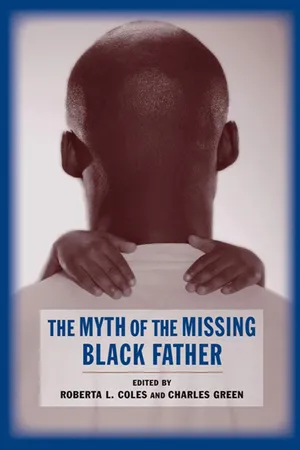
Common stereotypes portray black fathers as being largely absent from their families. Yet while black fathers are less likely than white and Hispanic fathers to marry their child's mother, many continue to parent through cohabitation and visitation, providing caretaking, financial, and other in-kind support.
This volume captures the meaning and practice of black fatherhood in its many manifestations, exploring two-parent families, cohabitation, single custodial fathering, stepfathering, noncustodial visitation, and parenting by extended family members and friends. Contributors examine ways that black men perceive and decipher their parenting responsibilities, paying careful attention to psychosocial, economic, and political factors that affect the ability to parent. Chapters compare the diversity of African American fatherhood with negative portrayals in politics, academia, and literature and, through qualitative analysis and original profiles, illustrate the struggle and intent of many black fathers to be responsible caregivers. This collection also includes interviews with daughters of absent fathers and concludes with the effects of certain policy decisions on responsible parenting.
eBook - ePub
The Myth of the Missing Black Father
- English
- ePUB (mobile friendly)
- Available on iOS & Android
eBook - ePub
The Myth of the Missing Black Father
About this book
Trusted by 375,005 students
Access to over 1.5 million titles for a fair monthly price.
Study more efficiently using our study tools.
Information
Subtopic
African American StudiesIndex
Social SciencesPART ONE
Married Fathers
CHAPTER ONE
“My Kids and Wife Have Been My Life”
Married African American Fathers Staying the Course
LOREN MARKS, KATRINA HOPKINS-WILLIAMS, CASSANDRA CHANEY, OLENA NESTERUK, AND DIANE SASSER
On the opening page of a recent edited volume titled Black Fathers in Contemporary American Society, Blankenhorn and Clayton (2003:1) ask, “Is any demographic fact more disturbing, more demanding of our collective attention, than the fact that the great majority of African American children do not live with their fathers?” However, they hasten to add some good news as well. The same page reads, conversely: “Is any demographic fact more hopeful, or more demanding of our collective encouragement, than the fact the proportion of African American children living with both of their biological, married parents, although still quite low, has risen significantly since 1995?” (1).
Dupree and Primus (2001) have noted that between 1995 and 2000 the proportion of black children living in two-parent, married-couple homes increased from 34.8 to 38.9 percent. While this increased figure is far lower than it was before 1980, when the majority of black families were still marriage based (McAdoo 2007), it is high enough to illustrate that many African American fathers and mothers and their children are sharing a marriage-based home life. Unfortunately, “little research exists on positive marital adjustment, happiness, and satisfaction among African Americans” (Lassiter 1998:35). Instead, researchers have chosen to focus almost exclusively on single mothers in poverty, leading to a great imbalance in research on black families (Bobo 2003), an imbalance that has resulted in scholars virtually ignoring responsible, generative black fathers (Allen and Connor 1997), and married black fathers in particular (Connor and White 2006). It is this condition in the literature to which Livingston and McAdoo (2007) refer, when they state, “To gain a more accurate view of the Black community, researchers will have to gain a more comprehensive sample of Black families, for only then will they be in a position to understand the unique roles that Black fathers play in nurturing and socializing their children” (233). This chapter is our effort to provide “a more comprehensive sample” by presenting some stories about a type of African American men that is rarely heard from—married fathers.
Black families and the fathers in these families face many structural and systemic challenges (e.g., economic, demographic, historical-legal; Coles 2006) as well as varying levels of racism, oppression, and powerlessness (Green 2001). These are topics that require volume-length attention, and here we will only be able to briefly overview three contextualizing issues involving black men, fatherhood, and marriage: trends in African American marriage and fatherhood, barriers to black marriage and marriage-based fatherhood, and the importance of father-child involvement.
Trends in African American Marriage and Fatherhood
In 1925, six out of every seven black households included a husband or father (Franklin 2007). In fact, “until the 1960s, a remarkable 75% of Black families included both husband and wife” (Franklin 2007:6). Sociologist Steven Nock (2003) has shown that in 1977, 69 percent of black men aged forty to forty-four in the United States were married and living with their wives. By 1987, the figure had dropped to 56 percent. Measures in 1997 revealed another 13-point drop to 43 percent (Mincy and Pouncy 2003; Nock 2003). Although marital rates declined for all races during those two decades, the downward trajectory for black marriage was especially sharp. However, in the 2000 Census (three years later), the percentage of black men living with their wives increased 2 points to 45 percent. In this regard, we are at an interesting point in history, when a sharp and steady decline has abated. It is time to examine some reasons for the recent increase, as well as an opportunity to ask, “Why did a sharp marital decline occur?” It is to the latter question that we turn to next.
Barriers to Black Marriage and Marriage-Based Fatherhood
There are several factors that have contributed to the eighty-year decline in black married fathers. These include an imbalanced gender ratio, lack of mate availability, criminality, and many other issues (for recent reviews, see Chapman 2007; Staples 2007). Here, we will briefly address two central barriers for black men: employment and education.
Employment
After years of examining African American fathers and families, William Julius Wilson (1996) concluded that “crime, family dissolution, welfare, and low levels of social organization are fundamentally a consequence of the disappearance of work” (cf. Sudarkasa 2007:180).1 To paint a more specific picture, “45% of Black men in Chicago aged 20 to 24 [were] out of work and out of school” and “all but out of hope” (Herbert 2003). Other urban centers or “cores” have similar or even higher unemployment rates (45–55 percent) among young black men (Kunjufu 2004). In connection with the unemployment situation among Black men, the late John McAdoo (1993) stated: “The ability to provide for self and family affects a man’s self-perception with regard to various family roles. [However], from an ecological perspective… an African American man’s ability to fulfill his provider role depends on community systems over which he has little control” (30).
Christiansen and Palkovitz (2001) have pointed out that the “provider role” (referred to by McAdoo) is not just something American men do, it is a significant portion of their identity, of who they are as men. Men, black or white, have difficulty trying to assume the responsibilities of husband and father unless they are meeting the societal and instrumental requirements associated with being a “provider.” This is underscored by the finding that for young, inner-city, black men in the eighteen to thirty-one age bracket, employment increases the likelihood that a young man will marry the mother of his child by eightfold (Testa and Krogh, 1995).
Education
The lack of employment and employability leads to a discussion of education because the industrial jobs that provided the economic foundation for the black working class in the first half of the twentieth century have dissipated (Green 1997, 2001). As African American leaders have argued in the past, education seems to be a critical key for opening the doors of opportunity—not just financial or employment opportunity but marital opportunity as well. Unfortunately, the American ideal of quality public education for all has not been realized. In many areas of the United States—most notably in inner cities and in the South—there are significant, even staggering differences between educational opportunities between black and white children and youth. Following the Brown v. Board of Education ruling, there was a white flight for private schools (which are often subsidized at some level by public funds [see Edelman 2007]). A significant portion of white children attend private schools that are prohibitively costly for most minorities, promoting de facto segregation (Marks et al. 2006). An extreme example is offered by Edelman (2007), who reports, “In Lee County School District in South Carolina, White students are almost 900 times more likely to attend private schools than Black students” (320). Indeed, in contexts where
large portions of the middle- and upper-class voting contingency [a]re paying private school tuition for their child(ren), [the relatively wealthy] have little incentive to support public education tax bases. Predictably, public education is grossly underfunded as a result, and the likelihood of a child from a lower (and disproportionately Black) income bracket receiving a high quality education that will allow [a good] standard of living for their rising African American generation is remote.
(Marks et al. 2006:211)
While relatively poor educational opportunities have harmed African American women, their male counterparts have fared even worse. Nearly twice as many black women are enrolled in higher education as black men—and about 40 percent of the black male population is functionally illiterate (Chapman 2007).
Education and employment are formidable barriers that stand between many (and possibly most) black men and marriage-based fatherhood. However, in spite of these and other barriers, many black fathers are highly committed to their marriage, wife, and children. Where are their stories in the social-science literature? Would it not be valuable to listen to and learn from black fathers who have enduring marriages and strong relationships with their children, children whom they raised in their own homes? While we are not the first to ask these questions, we are among the first to search out and tell the stories (cf. Connor and White 2006).
The Importance of Father-Child Involvement
Since 1980, more than seventy studies on the connection between father involvement and child well-being have been conducted. Of those, more than 80 percent indicate a significant positive relationship (Amato and Rivera 1999; Livingston and McAdoo 2007; see also Peters et al. 2000). Specifically, black children tend to have fewer behavior problems and higher academic achievement as father involvement increases (Coley 1998; Livingston and McAdoo 2007). While much is known regarding how fathers (and marriage) influence children, relatively little is known about how children influence married fathers. Married fathers tend to work more after their children are born and tend to see a dip in marital satisfaction but an increase in marital stability (Cowan and Cowan 2000; Palkovitz 2002). Some ethnographic work addressing single black fathers exists (Coles 2002, 2003, 2006), but research examining children’s effects on black married fathers is scant.
A Brief Description of Our Participants
Consistent with our desire to conduct a meaningful and relevant study, we focused on married couples where the partners had been raised (and still resided) in inner-city areas (including Boston, Cleveland, Milwaukee, New Orleans, and Portland, Ore.). Approximately one-half of African Americans reside in inner-city neighborhoods “typified by poverty, poor schools, unemployment, periodic street violence, and generally high levels of stress” (Lassiter 1998:37). These are contexts where marriages are less likely to form and where divorce is more likely when marriage does occur (Tucker 2000; Clayton, Mincy, and Blankenhorn 2003). By extension, married fathers are rare in American inner cities. However, twenty-four of our thirty interviewed couples (80 percent) resided in inner-city neighborhoods (four couples were rural, two were suburban). In terms of education, every one of the sixty people in our sample completed high school or earned a GED, and a majority had attended at least some college. Further, wives typically had as much education as their husbands or more than them, a characteristic that is a predictor of marital instability among whites (Veroff, Douvan, and Hatchett 1995). In terms of employment, every one of the thirty couples had had dual incomes for most of their married life, and the average combined household income was about $58,000. Except in one case of severe injury and a few cases of retirement, all wives and husbands were currently employed. Most of the husbands’ jobs were industrial “blue-collar” jobs with decent pay—jobs that are disappearing rapidly from urban America (Green 2001).
The couples in our study had been married for an average of about twenty-six years, with an average age of fifty-five years for the fathers and fifty-three years for the mothers. For four of the fathers (and three of the mothers), their present long-term marriage was a remarriage. Most couples had married in their mid- to late twenties. The couples had an average of slightly less than three children, and in all but a couple of cases the children had been born after marriage. A final note on our couples is that in order to be interviewed, both the wife and husband had to report (on an independently mailed and confidential survey) that their marriage was a “happy” one. In short, these couples’ marriages were not only stable or enduring, they were also happy.
Procedures
After the participants gave informed consent, each father and mother completed detailed demographic forms. The fathers and mothers were then asked twenty open-ended questions that addressed various aspects of parenting, marriage, and family life. Interviews were conducted in the participants’ homes and typically lasted about two hours, although some interviews went considerably longer. The thirty transcribed couple interviews comprised roughly 1,000 double-spaced pages. Themes relating to a variety of subject areas were coded, but this chapter will focus on four central themes relating specifically to the interface between fathering and marriage for the black men we interviewed.
Narrative Themes
In this section, four key themes from our qualitative data analysis will be presented: leaving the “bachelor mindset” behind; helping family, friends, and community; the influence of children on their fathers; and depth of relationship and commitment with wife. We have previously discussed some key barriers that stand between many black men and marriage. The first two themes that will be presented address challenges the black men we interviewed reported facing after marriage.
Leaving the “Bachelor Mindset” Behind
The first theme addresses the fundamental issue of moving from “me” to “we” in a marriage. Many men struggle with commitment—in terms of making a marriage proposal. However, a marriage commitment does not guarantee a shift from a self-centered to couple-centered life. That is, it was a significant struggle for many of the men we interviewed, by their own reports, to move past what they referred to as “the bachelor mindset” early on in their marriages. Terrence reflected:2
[I remember asking myself (about marriage)], “Can I really do this?” [And] asking God, “Really, can I do this?” ‘Cause [my wife] will tell you, I still had the bachelor mindset. She was chasing me down in the street. Telling me when to come home. I mean, we went back and forth with that for five or six years. I mean, my thing was: “I’m a bachelor.” I couldn’t get [out of] that mindset that… I’m independent. [I’d ask her], “What are you calling me for? Why do I got to come home? Why do I have to be there with you? Why do we have to eat together? I’m over here [with my boys]. I’m okay. I’m fine. I’ll be home when I get ready.” I couldn’t connect [the marriage vows with the actions]. [Well], I’m [fully] married now.
LaRon gave additional insight into this same struggle by discussing his transition from “opening up with buddies” to sharing with his wife. He explained:
You have to change, you have to be willing to give up everything that you used to think about relationships, and sacrifice your buddies. The buddy mentality [has been] with you all your life. To give up that type of thinking is tough, [but you must do it] for your spouse…. [You have the challenge of] convincing yourself that your spouse can be as good as [a] friend [to you] as your buddies were…. [I] always had a problem with that. This new person, a female at that, you have to be able to share openly—just as you would with your buddies. Share. That is the hardest thing! Opening up… opening up is not a natural thing for men with women. [With] their buddies, they talk all day long about anything, everything. We tend to save things in reserve, exclusively with our buddies…. [But now it is supposed to be your wife that] you share everything [with]; your thoughts, your ambitions, the things you hate. You [used to] tell your buddies everything… and well, that’s how you have to be with your spouse. Not that I have mastered that, I have not. But I think that [is] what you need [to do].
LaRon’s wife, Vanessa, agreed that she married a work-in-progress, but reported with some pride that “[over time, I have seen a lot of] maturity [and] spiritual growth [in him]. [Early on], he was extremely impulsive and selfish; very singularly absorbed. [He] just couldn’t even see anything beyond what he wanted for himself…. That has changed.” Another father similarly discussed his “turning point”:
I think there were moments [early in our marriage] that I was playing ...
Table of contents
- Cover
- Half title
- Title
- Copyright
- Dedication
- Contents
- Acknowledgments
- Introduction
- PART I: Married Fathers
- PART II: Single Resident Fathers
- PART III: Social Fathering
- PART IV: Young Fathers
- PART V: Fathers Through Children⁽s Eyes
- PART VI: Policies Affecting Black Fathers
- Epilogue
- Contributors
- Index
Frequently asked questions
Yes, you can cancel anytime from the Subscription tab in your account settings on the Perlego website. Your subscription will stay active until the end of your current billing period. Learn how to cancel your subscription
No, books cannot be downloaded as external files, such as PDFs, for use outside of Perlego. However, you can download books within the Perlego app for offline reading on mobile or tablet. Learn how to download books offline
Perlego offers two plans: Essential and Complete
- Essential is ideal for learners and professionals who enjoy exploring a wide range of subjects. Access the Essential Library with 800,000+ trusted titles and best-sellers across business, personal growth, and the humanities. Includes unlimited reading time and Standard Read Aloud voice.
- Complete: Perfect for advanced learners and researchers needing full, unrestricted access. Unlock 1.5M+ books across hundreds of subjects, including academic and specialized titles. The Complete Plan also includes advanced features like Premium Read Aloud and Research Assistant.
We are an online textbook subscription service, where you can get access to an entire online library for less than the price of a single book per month. With over 1.5 million books across 990+ topics, we’ve got you covered! Learn about our mission
Look out for the read-aloud symbol on your next book to see if you can listen to it. The read-aloud tool reads text aloud for you, highlighting the text as it is being read. You can pause it, speed it up and slow it down. Learn more about Read Aloud
Yes! You can use the Perlego app on both iOS and Android devices to read anytime, anywhere — even offline. Perfect for commutes or when you’re on the go.
Please note we cannot support devices running on iOS 13 and Android 7 or earlier. Learn more about using the app
Please note we cannot support devices running on iOS 13 and Android 7 or earlier. Learn more about using the app
Yes, you can access The Myth of the Missing Black Father by Roberta Coles,Charles Green, Roberta Coles, Charles Green in PDF and/or ePUB format, as well as other popular books in Social Sciences & African American Studies. We have over 1.5 million books available in our catalogue for you to explore.