- English
- ePUB (mobile friendly)
- Available on iOS & Android
eBook - ePub
About this book
Teen Movies: American Youth on Screen is a detailed look at the depiction of teens on film and its impact throughout film's history. Timothy Shary looks at the development of the teen movie – the rebellion, the romance, the sex and the horror – up to contemporary portrayals of ever-changing youth. Films studied include Rebel Without a Cause (1955), Splendor in the Grass (1961), Carrie (1976), The Breakfast Club (1985), and American Pie (1999).
Information
Subtopic
Film & Video1 THE TEEN FILM IN ITS INFANCY 1895–1948
Adolescence before the teen film
Some of the earliest motion pictures ever made featured youth at play, including the comical short L’Arroseur arrosé (The Waterer Watered), which was shown at the historic public screening of the Lumière brothers’ films in Paris on December 28, 1895. Yet in the late 1890s, movies were still something of a novelty, primarily viewed through machines limited to a single viewer, machines that were usually too tall for children to even use. By the early 1900s, the principal format of movies became large screens, making their viewing more of a group experience, although the characters on screen were almost always adults, often caught up in a great adventure. Movies were so popular with and accessible to the public at large that film studios did not feel compelled to make products aimed at children, who generally had no income for entertainment, and who could be assumed to enjoy the same films their parents enjoyed.
In her book Images of Children in American Film (1986), Kathy Merlock Jackson argues that the popular depiction of children in early American cinema revolved around their rescue from danger, as in The Life of an American Fireman (1903) and The Adventures of Dolly (1908). Showing the innocence and vulnerability of children was appealing to adults and to censors, who became increasingly concerned with positive portraits of proper behavior. Audiences of that time would likely have not welcomed any tales of juvenile delinquency or adolescent sexual curiosities, which were taboo topics.
So when Hollywood first made films about youth, they tended to focus on pre-teen children. Thomas Aylesworth makes this point in Hollywood Kids (1987) by exploring the career of Mary Pickford, who was sixteen when she went to work for Biograph studios in 1909, but gained her greatest fame in her twenties by playing young girls, such as the title characters in Poor Little Rich Girl (1917) and Pollyanna (1920). The most popular young performers until the later 1930s were all younger than 10 years old: the impressive Jackie Coogan in Chaplin’s The Kid (1921), the endearing Our Gang tots (who started a run of many short films in 1922), and of course the brightest child star ever, Shirley Temple. Yet while child characters may have been safer for studios, the movies did begin to portray some aspects of teenage life by the 1910s and 1920s, as in the film Seventeen (1916).
Georganne Scheiner details the crucial change in the popularity of girl characters of the 1920s, when the rise of flappers in films like The House of Youth (1924), Campus Flirt (1926) and Our Dancing Daughters (1928) ‘helped to perpetuate the popular image of wild adolescence and youth run amuck’ (2000: 29). Such films appeared as movie studios in the Roaring Twenties began testing moral boundaries with their images of decadence, becoming cautionary – yet exciting – tales about the dangers of teenage vices. Scheiner makes a further distinction between the ‘young adult’ flapper roles, which tended to feature college-aged characters, and 1920s films about clearly adolescent youth, of which there were quite few, such as the high-school comedy Harold Teen (1928). Most often, films about teenagers in the 1920s were designed to exploit adult fears about youth rather than appeal to real youth interests, as with the depiction of ‘white slavery’ in films like The Port of Missing Girls (1928) and promiscuous sexuality in The Road to Ruin (1928).
Through much of the century the film industry was not altogether altruistic in making movies about teen troubles. The studios’ central concern, as always, was profits, and before the industry agreed to the Production Code in 1934 – which would significantly diminish the sexual and violent content of movies – the moguls used titillation and scandal quite often to generate revenue, even if that meant using minors. In the 1950s, when the Production Code weakened, and in the 1980s, when Hollywood was suffering losses, the film industry would again rededicate its interests in the exploitation of adolescent images. The difference in those later years would be that teens themselves had formed increasingly distinct cultures all their own.
Clean teens and domestic delinquents
The lack of an established teen cinema before the 1930s is made evident through David Considine’s exhaustive study, The Cinema of Adolescence. Considine’s work was the first book-length study of the image of teenagers in American movies, and yet he cites no examples before 1930. This may again be due in part to the lack of extant examples available for viewing, but it also indicates the general dearth of films about adolescence before the 1930s.
Considine begins his study with All Quiet on the Western Front (1930), a film featuring an adolescent in the otherwise adult arena of war. This film, like many of the Depression-era 1930s, portrayed youth under tragic circumstances, wherein adolescents were failed by their parents and/or adult society at large. Considine thus explores the significance of a film like Wild Boys of the Road (1933), wherein the teenaged Frankie Darro has to sacrifice his ambitions for the sake of his family. He then considers the reversal of this formula, which by the end of the decade produced the numerous Andy Hardy films, with Mickey Rooney entertaining audiences in a ‘distortion of reality that both confirms and denies, heeds and ignores the changing nature of the American family’ (1985: 28).
By the 1930s, Hollywood studios had firmly established a strong grip on American culture, and even more so on their contract players. Thus, the history of teen films during this era can be best traced through the resumés of the actors who starred in them. In a pattern that would repeat itself throughout the rest of the century, the majority of child actors were unable to parlay their early success into an adult acting career. Witness the demise of Jackie Coogan, who became the world’s youngest millionaire in the 1920s, but fell into obscurity in the 1930s. The same would hold true for the famous Deanna Durbin, whose success started at age fifteen in films such as Three Smart Girls (1936), 100 Men and a Girl (1937) and That Certain Age (1938), films that were largely responsible for keeping the Universal studio out of bankruptcy at that time. Her fame was built on her singing talents as well as her girlish charm, and as Scheiner points out, Durbin’s characters were rather feminist for their time, since she ‘demands respect and attention from men’ (2000: 76). Yet despite (or perhaps due to) this progressive aspect of her roles, and even though Universal continued to heavily promote her after adolescence, audiences of the Second World War era became increasingly disenchanted with Durbin’s films, and she retired from acting in 1948 at the age of 27.
A similar curse befell Jackie Cooper, who started in films in the late 1920s as a member of the Our Gang series, and achieved widespread fame by the age of nine in Skippy (1931), for which he was the first child ever nominated for a Best Actor Academy Award.1 MGM signed him, knowing that Cooper had a natural gift for playing emotionally ingratiating characters, and his next film, The Champ (1931), showed his tear-jerking skills to even greater effect. By the time he made Tough Guy in 1936, Cooper was playing adolescents, but he had difficulty competing for prominence with Mickey Rooney and Freddie Bartholomew, who both up-staged him in The Devil is a Sissy (1936), and went on to more success in their own films. Even though he started a mildly successful series of films about teenager Henry Aldrich with What a Life (1939) and Life With Henry (1941), the series continued without him in 1942, when Cooper went off to the military to serve in the Second World War. When he returned he was greeted with indifference, never regaining the fame he had as a child.
The stories of two of the most popular stars of the 1930s further demonstrate the fickle fate of child actors who enter adolescence. Both Mickey Rooney and Shirley Temple built their careers on a clean image of youthful exuberance, only his career thrived as a teen while hers declined. America seemed far more prepared to watch a boy grow into manhood than to watch a girl grow beyond adolescence. As with Durbin, Hollywood at this time (and perhaps still to this day) denied young actresses and their characters a level of agency that most women rightly expect after adolescence.
The catalogues of Temple’s career focus on her pre-teen roles, which is understandable given her overwhelming presence in American cinema of the 1930s. By the time she was starring in Bright Eyes (1934) and The Little Colonel (1935), she was a veteran of over two dozen movies, and she was barely seven years old. She made over a dozen more movies in the late 1930s, and from 1935 to 1938, she was the number one box-office draw in Hollywood, certainly to the delight of the studio that signed her, Twentieth Century-Fox. Much has been written about Temple’s distinct allure: she played joyful, intelligent, and perhaps most significantly, productive little girls who showed families how to get along, demonstrated manners to adults, and upheld American values of hard work and perseverance during the dark days of the Depression.
The level of notoriety that Temple attained as a child would nonetheless ebb as she entered both her adolescence and the cultural tensions of Second World War America; Hollywood’s depiction of adolescents in the 1940s, especially in comedies, became dominated by vapid and facile images. The precocious quality that audiences so adored in Temple in the 1930s was not welcome in a young lady of the early 1940s, and thus her roles changed accordingly. After finishing her last film under her Fox contract at the age of 12 (Young People in 1940), Temple made her teen debut in Miss Annie Rooney in 1942. The film, a poor-girl/rich-boy teen romance, was a mild success, but more significantly, it revealed to the industry that Temple could play roles beyond her childish charms. She then landed a supporting role in the wartime melodrama Since You Went Away (1944), and seemed to be settling into a comfortable identity as a teenage character actor in films like I’ll Be Seeing You (1945) and The Bachelor and the Bobby-Soxer (1947). And she may well have embarked on a teen series playing F. Hugh Herbert’s literary heroine Corliss Archer, but only made two movies as the character, Kiss and Tell (1945) and A Kiss for Corliss (1949).
In fact, the latter film would be her last. By 1949, Temple was 21, divorced from her first husband, and clearly unable to maintain the status she enjoyed before her adolescence. While there were certainly many reasons for her inability to maintain a strong screen presence as a teen, there is no coincidence that her popularity evaporated just at the time when American youth culture was emerging like never before. And teens of the late 1940s were quite likely eager to move beyond their parents’ notions of youth, which Temple had represented to them in the previous generation.
Mickey Rooney, by contrast, started acting in films at the age of six but did not achieve any real notoriety until he was a teenager. Arguably, his breakthrough role as an adolescent actor did not need to be played by one: Puck, the fairy of A Midsummer Night’s Dream (1935), won Rooney great praise at the age of fourteen. His charisma led him to more realistic teen roles in The Devil is a Sissy and Captains Courageous (1937), although curiously, in both films he played supporting roles to Freddie Bartholomew, who was at that time more eminent. Unlike Bartholomew, whose acting career faded as he advanced in his teens, Rooney grew into far more prominent adolescent roles in the later 1930s, showing range as both a cynical delinquent in Boys Town (1938) and as a plucky musician in Babes in Arms (1939), a film that solidified the ‘kids put on a show’ concept and offered a rather eerie vision of teenage supremacy. Rooney was soon so well regarded by the film industry that he was given a special Academy Award in 1939, along with Deanna Durbin, ‘for their significant contribution in bringing to the screen the spirit and personification of youth, and as juvenile players setting a high standard of ability and achievement’.
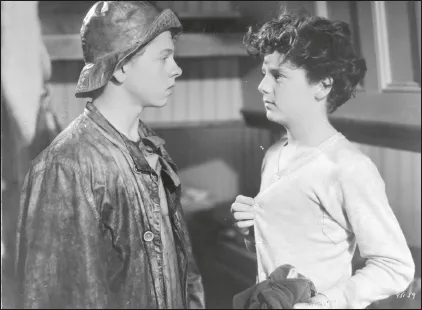
FIGURE 1.1 Mickey Rooney and Freddie Bartholomew were two of the first actors featured as teen stars, here in Captains Courageous (1937)
But Rooney’s most endearing role arrived with the initially inconspicuous A Family Affair (1937), in which he played adolescent charmer Andy Hardy, a character who would become the optimistic antidote to the disturbing crisis among America’s children on the eve of the Second World War. As Ruth Goldstein and Edith Zornow adroitly point out, Andy’s ‘teen-sized problems were sugarcoated digestibles for wartime audiences’ (1980: xvii). A Family Affair focused more on Andy’s father, Judge Hardy, whose wisdom is a positive influence within the small city of Carvel as well as his own home, and the film was such a hit that MGM made four more films featuring the Hardy family that next year.
The third film in the series, Judge Hardy’s Children (1938), established Andy Hardy as the main character in the series, bringing a wholesome energy to the American image of adolescents. By 1939, largely on the strength of the Hardy films, Rooney displaced Shirley Temple as the biggest box-office draw in the country, a position he retained for three years. In fact, the Andy Hardy character was held in such esteem that MGM was awarded a special Academy Award in 1943 ‘for its achievement in representing the American Way of Life in the production of the Andy Hardy series of films’. In just over a decade, Rooney made fifteen Andy Hardy films, with such telling titles as Love Finds Andy Hardy (1938), Andy Hardy Meets Debutante (1940), Life Begins for Andy Hardy (1941), Andy Hardy’s Blonde Trouble (1944) and his last film as the teenaged Andy, Love Laughs at Andy Hardy (1947). Even though Rooney made one last ill-advised Andy Hardy film, playing the character as an adult in Andy Hardy Comes Home (1958), the initial 11-year run of these films would be the most significant depiction of adolescent life in America until the mid-1950s. Despite their whitewashed mythologies, the Andy Hardy films remain the most coherent set of teen films in American history, and no other teen character in film to date has enjoyed Andy’s durability and popularity.
At least three other teen actors of the 1930s and 1940s deserve study for their characterisations of clean teens before the turbulent 1950s. The most prominent of these is Judy Garland, who was on contract with MGM at the age of fourteen when she appeared in the short film Every Sunday (1936) with Deanna Durbin. Universal had originally wanted Garland for the role that Durbin later took in Three Smart Girls, but MGM refused, which only looked like more of a disaster when the studio loaned Garland to Twentieth Century-Fox for the mediocre Pigskin Parade later that year. But soon the studio had her back on the road to success, utilising her singing and dancing skills in cheerful stories that showcased her dynamism, like Broadway Melody of 1938 (1937) and Listen Darling (1938). Over the next few years, Garland became one of the most popular child stars of the era, joining Mickey Rooney in three of the Andy Hardy films, and achieving full-fledged stardom with The Wizard of Oz (1939), for which she endured arduous physical regimens to play the 11-year-old Dorothy, and which won her a special Academy Award.
Unlike Temple and Durbin, Garland’s characters were not the same independent ‘fix-it’ kids that came to the rescue of bumbling adults and institutions. In her roles to repair families and communities, she was most often teamed with friends who were needed to help her in her quest. And her quests often seemed unfairly put upon her, resulting in perfunctory adventures that were always under the tormenting influence of parents (Listen Darling, Little Nellie Kelly (1940), Meet Me in St. Louis (1944)), boys (Love Finds Andy Hardy, Babes in Arms, Strike Up the Band (1940)), and other strange creatures (as in The Wizard of Oz). This provided her characters with a certain sense of codependent determination, which ran parallel with her personal life through much of her career. By the end of her teens, Garland had been hooked on speed pills through the efforts of the studio to keep her thin and tireless, started her first of many troubled marriages, and began a long struggle to convince the studio to let her play more adult roles. When she started playing post-adolescent characters in the late 1940s, Garland herself was much older than her years, and while she did go on to achieve some intermittent success on screen and stage, the toll of her youth was ultimately torturous.
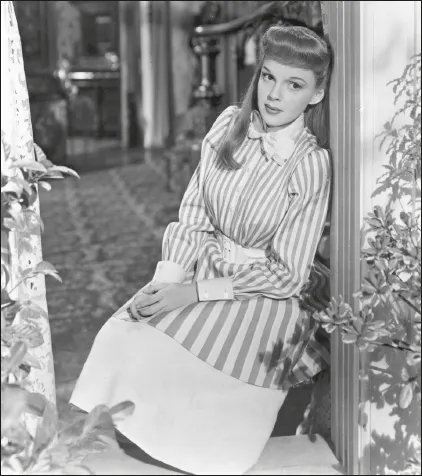
FIGURE 1.2 Esther (Judy Garland) wonders about her future as an adult in Meet Me in St. Louis (1944)
A less popular but still significant adolescent performer of the 1930s was Bonita Granville, who won her first acclaim as an actress at the age of thirteen in These Three (1936), in which she plays an invidious student out to harm two teachers by spreading rumours of their affair with a doctor (the censors could not allow the original story’s plot in which the girl claims the teachers are lesbians). Granville garnered an Academy Award nomination as supporting actress for the role, and continued playing rather mean-spirited girls in film...
Table of contents
- Cover
- Half title
- Series Page
- Title
- Copyright
- Contents
- Acknowledgments
- Dedication
- Introduction
- 1. The Teen Film in its Infancy, 1895–1948
- 2. The Teen Film Matures, 1949–1967
- 3. Youth Film Rebels, 1968–1979
- 4. Teen Cinema is Reborn in Abundance, 1978–1995
- 5. The Teen Film Takes on a New Century, 1994–2004
- Conclusion
- Notes
- Bibliography
- Index
Trusted by 375,005 students
Access to over 1.5 million titles for a fair monthly price.
Study more efficiently using our study tools.
Frequently asked questions
Yes, you can cancel anytime from the Subscription tab in your account settings on the Perlego website. Your subscription will stay active until the end of your current billing period. Learn how to cancel your subscription
No, books cannot be downloaded as external files, such as PDFs, for use outside of Perlego. However, you can download books within the Perlego app for offline reading on mobile or tablet. Learn how to download books offline
Perlego offers two plans: Essential and Complete
- Essential is ideal for learners and professionals who enjoy exploring a wide range of subjects. Access the Essential Library with 800,000+ trusted titles and best-sellers across business, personal growth, and the humanities. Includes unlimited reading time and Standard Read Aloud voice.
- Complete: Perfect for advanced learners and researchers needing full, unrestricted access. Unlock 1.5M+ books across hundreds of subjects, including academic and specialized titles. The Complete Plan also includes advanced features like Premium Read Aloud and Research Assistant.
We are an online textbook subscription service, where you can get access to an entire online library for less than the price of a single book per month. With over 1.5 million books across 990+ topics, we’ve got you covered! Learn about our mission
Look out for the read-aloud symbol on your next book to see if you can listen to it. The read-aloud tool reads text aloud for you, highlighting the text as it is being read. You can pause it, speed it up and slow it down. Learn more about Read Aloud
Yes! You can use the Perlego app on both iOS and Android devices to read anytime, anywhere — even offline. Perfect for commutes or when you’re on the go.
Please note we cannot support devices running on iOS 13 and Android 7 or earlier. Learn more about using the app
Please note we cannot support devices running on iOS 13 and Android 7 or earlier. Learn more about using the app
Yes, you can access Teen Movies by Timothy Shary,Rob McInnes in PDF and/or ePUB format, as well as other popular books in Media & Performing Arts & Film & Video. We have over 1.5 million books available in our catalogue for you to explore.