The Last Tycoon
eBook - ePub

The Last Tycoon

The Authorized Text

  1. 198 pages
  2. English
  3. ePUB (mobile friendly)
  4. Available on iOS & Android
eBook - ePub

The Last Tycoon

The Authorized Text

About this book

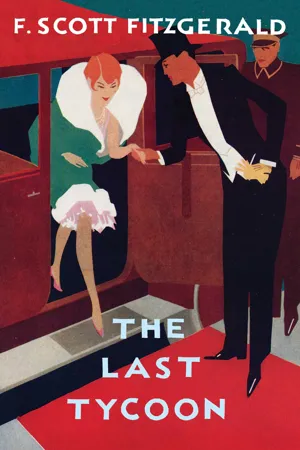
*With a new introduction by bestselling and iconic novelist Haruki Murakami* This edition of F. Scott Fitzgerald's final unfinished novel is now restored to the original 1941 text, with updates by Fitzgerald scholar James L. W. West III. When F. Scott Fitzgerald died in 1940, he left behind an unfinished draft of this poignant novel, inspired by his own experience working in Hollywood as a screenwriter. Literary critic Edmund Wilson edited Fitzgerald's notes and material to publish this text of The Last Tycoon in 1941. Now, this edition restores Wilson's editorial work and includes an introduction from celebrated author Haruki Murakami. Set in Hollywood in the 1930s, The Last Tycoon tells the tragic story of a young film producer named Monroe Stahr. Exploring themes of ambition, power, and corruption, The Last Tycoon depicts Stahr's struggle to balance his personal life and professional goals with the challenges of running a successful movie studio. Based on the career of real-life producer Irving Thalberg, the head of MGM who was known as Hollywood's "boy wonder", The Last Tycoon is a sharply observed and bittersweet exposƩ of the glittering excess of the Hollywood film industry in its prime.
Frequently asked questions

Yes, you can cancel anytime from the Subscription tab in your account settings on the Perlego website. Your subscription will stay active until the end of your current billing period. Learn how to cancel your subscription.
At the moment all of our mobile-responsive ePub books are available to download via the app. Most of our PDFs are also available to download and we're working on making the final remaining ones downloadable now. Learn more here.
Perlego offers two plans: Essential and Complete
  • Essential is ideal for learners and professionals who enjoy exploring a wide range of subjects. Access the Essential Library with 800,000+ trusted titles and best-sellers across business, personal growth, and the humanities. Includes unlimited reading time and Standard Read Aloud voice.
  • Complete: Perfect for advanced learners and researchers needing full, unrestricted access. Unlock 1.4M+ books across hundreds of subjects, including academic and specialized titles. The Complete Plan also includes advanced features like Premium Read Aloud and Research Assistant.
Both plans are available with monthly, semester, or annual billing cycles.
We are an online textbook subscription service, where you can get access to an entire online library for less than the price of a single book per month. With over 1 million books across 1000+ topics, we’ve got you covered! Learn more here.
Look out for the read-aloud symbol on your next book to see if you can listen to it. The read-aloud tool reads text aloud for you, highlighting the text as it is being read. You can pause it, speed it up and slow it down. Learn more here.
Yes! You can use the Perlego app on both iOS or Android devices to read anytime, anywhere — even offline. Perfect for commutes or when you’re on the go.
Please note we cannot support devices running on iOS 13 and Android 7 or earlier. Learn more about using the app.
Yes, you can access The Last Tycoon by F. Scott Fitzgerald in PDF and/or ePUB format, as well as other popular books in Literature & Classics. We have over one million books available in our catalogue for you to explore.

Information

Publisher
Scribner
Year
2003
Print ISBN
9781668047996
eBook ISBN
9780743247405

CHAPTER I

Though I haven’t ever been on the screen I was brought up in pictures. Rudolph Valentino came to my fifth birthday party—or so I was told. I put this down only to indicate that even before the age of reason I was in a position to watch the wheels go round.
I was going to write my memoirs once, ā€œThe Producer’s Daughter,ā€ but at eighteen you never quite get around to anything like that. It’s just as well—it would have been as flat as an old column of Lolly Parsons’. My father was in the picture business as another man might be in cotton or steel, and I took it tranquilly. At the worst I accepted Hollywood with the resignation of a ghost assigned to a haunted house. I knew what you were supposed to think about it but I was obstinately unhorrified.
This is easy to say, but harder to make people understand. When I was at Bennington some of the English teachers who pretended an indifference to Hollywood or its products really hated it. Hated it way down deep as a threat to their existence. Even before that, when I was in a convent, a sweet little nun asked me to get her a script of a screen play so she could ā€œteach her class about movie writingā€ as she had taught them about the essay and the short story. I got the script for her and I suppose she puzzled over it and puzzled over it but it was never mentioned in class and she gave it back to me with an air of offended surprise and not a single comment. That’s what I half expect to happen to this story.
You can take Hollywood for granted like I did, or you can dismiss it with the contempt we reserve for what we don’t understand. It can be understood too, but only dimly and in flashes. Not half a dozen men have ever been able to keep the whole equation of pictures in their heads. And perhaps the closest a woman can come to the set-up is to try and understand one of those men.
The world from an airplane I knew. Father always had us travel back and forth that way from school and college. After my sister died when I was a junior, I travelled to and fro alone and the journey always made me think of her, made me somewhat solemn and subdued. Sometimes there were picture people I knew on board the plane, and occasionally there was an attractive college boy—but not often during the Depression. I seldom really fell asleep during the trip, what with thoughts of Eleanor and the sense of that sharp rip between coast and coast—at least not till we had left those lonely little airports in Tennessee.
This trip was so rough that the passengers divided early into those who turned in right away and those who didn’t want to turn in at all. There were two of these latter right across from me and I was pretty sure from their fragmentary conversation that they were from Hollywood—one of them because he looked like it, a middle-aged Jew who alternately talked with nervous excitement or else crouched as if ready to spring, in a harrowing silence; the other a pale, plain, stocky man of thirty, whom I was sure I had seen before. He had been to the house or something. But it might have been when I was a little girl, and so I wasn’t offended that he didn’t recognize me.
The stewardess—she was tall, handsome and flashing dark, a type that they seemed to run to—asked me if she could make up my berth.
ā€œā€”and, dear, do you want an aspirin?ā€ She perched on the side of the seat and rocked precariously to and fro with the June hurricane, ā€œā€”or a Nembutal?ā€
ā€œNo.ā€
ā€œI’ve been so busy with everyone else that I’ve had no time to ask you.ā€ She sat down beside me and buckled us both in. ā€œDo you want some gum?ā€
This reminded me to get rid of the piece that had been boring me for hours. I wrapped it in a piece of magazine and put it into the automatic ash-holder.
ā€œI can always tell people are niceā€”ā€ the stewardess said approvingly ā€œā€”if they wrap their gum in paper before they put it in there.ā€
We sat for a while in the half-light of the swaying car. It was vaguely like a swanky restaurant at that twilight time between meals. We were all lingering—and not quite on purpose. Even the stewardess, I think, had to keep reminding herself why she was there.
She and I talked about a young actress I knew, whom she had flown west with two years before. It was in the very lowest time of the Depression and the young actress kept staring out the window in such an intent way that the stewardess was afraid she was contemplating a leap. It appeared though that she was not afraid of poverty, but only of revolution.
ā€œI know what Mother and I are going to do,ā€ she confided to the stewardess. ā€œWe’re coming out to the Yellowstone and we’re just going to live simply till it all blows over. Then we’ll come back. They don’t kill artists—you know?ā€
The proposition pleased me. It conjured up a pretty picture of the actress and her mother being fed by kind Tory bears who brought them honey, and by gentle fawns who fetched extra milk from the does and then lingered near to make pillows for their heads at night. In turn I told the stewardess about the lawyer and the director who told their plans to Father one night in those brave days. If the bonus army conquered Washington the lawyer had a boat hidden in the Sacramento River, and he was going to row upstream for a few months and then come back ā€œbecause they always needed lawyers after a revolution to straighten out the legal side.ā€
The director had tended more toward defeatism. He had an old suit, shirt and shoes in waiting—he never did say whether they were his own or whether he got them from the prop department—and he was going to Disappear into the Crowd. I remember Father saying: ā€œBut they’ll look at your hands! They’ll know you haven’t done manual work for years. And they’ll ask for your union card.ā€ And I remember how the director’s face fell, and how gloomy he was while he ate his dessert, and how funny and puny they sounded to me.
ā€œIs your father an actor, Miss Brady?ā€ asked the stewardess. ā€œI’ve certainly heard the name.ā€
At the name Brady both the men across the aisle looked up. Sidewise—that Hollywood look, that always seems thrown over one shoulder. Then the young, pale, stocky man unbuttoned his safety strap and stood in the aisle beside us.
ā€œAre you Cecelia Brady?ā€ he demanded accusingly, as if I’d been holding out on him. ā€œI thought I recognized you. I’m Wylie White.ā€
He could have omitted this—for at the same moment a new voice said, ā€œWatch your step, Wylie!ā€ and another man brushed by him in the aisle and went forward in the direction of the cockpit. Wylie White started, and a little too late called after him defiantly.
ā€œI only take orders from the pilot.ā€
I recognized the kind of pleasantry that goes on between the powers in Hollywood and their satellites.
The stewardess reproved him:
ā€œNot so loud, please—some of the passengers are asleep.ā€
I saw now that the other man across the aisle, the middle-aged Jew, was on his feet also, staring, with shameless economic lechery, after the man who had just gone by. Or rather at the back of the man, who gestured sideways with his hand in a sort of farewell, as he went out of my sight.
I asked the stewardess: ā€œIs he the assistant pilot?ā€
She was unbuckling our belt, about to abandon me to Wylie White.
ā€œNo. That’s Mr. Smith. He has the private compartment, the ā€˜bridal suite’—only he has it alone. The assistant pilot is always in uniform.ā€ She stood up. ā€œI want to find out if we’re going to be grounded in Nashville.ā€
Wylie White was aghast.
ā€œWhy?ā€
ā€œIt’s a storm coming up the Mississippi Valley.ā€
ā€œDoes that mean we’ll have to stay here all night?ā€
ā€œIf this keeps up!ā€
A sudden dip indicated that it would. It tipped Wylie White into the seat opposite me, shunted the stewardess precipitately down in the direction of the cockpit, and plunked the Jewish man into a sitting position. After the studied, unruffled exclamations of distaste that befitted the air-minded, we settled down. There was an introduction.
ā€œMiss Brady—Mr. Schwartze,ā€ said Wylie White. ā€œHe’s a great friend of your father’s too.ā€
Mr. Schwartze nodded so vehemently that I could almost hear him saying, ā€œIt’s true. As God is my judge, it’s true!ā€
He might have said this right out loud at one time in his life—but he was obviously a man to whom something had happened. Meeting him was like encountering a friend who has been in a fist fight or collision, and got flattened. You stare at your friend and say: ā€œWhat happened to you?ā€ And he answers something unintelligible through broken teeth and swollen lips. He can’t even tell you about it.
Mr. Schwartze was physically unmarked; the exaggerated Persian nose and oblique eye-shadow were as congenital as the tip-tilted Irish redness around my father’s nostrils.
ā€œNashville!ā€ cried Wylie White. ā€œThat means we go to a hotel. We don’t get to the coast till tomorrow night—if then. My God! I was born in Nashville.ā€
ā€œI should think you’d like to see it again.ā€
ā€œNever—I’ve kept away for fifteen years. I hope I’ll never see it again.ā€
But he would—for the plane was unmistakably going down, down, down, like Alice in the rabbit hole. Cupping my hand against the window I saw the blur of the city far away on the left. The green sign ā€œFasten your belts—No smokingā€ had been on since we first rode into the storm.
ā€œDid you hear what she said?ā€ said Mr. Schwartze from one of his fiery silences across the aisle.
ā€œHear what?ā€ asked Wylie.
ā€œHear what he’s calling himself,ā€ said Schwartze. ā€œMr. Smith!ā€
ā€œWhy not?ā€ asked Wylie.
ā€œOh nothing,ā€ said Schwartze quickly. ā€œI just thought it was funny, Smith.ā€ I never heard a laugh with less mirth in it: ā€œSmith!ā€
I suppose there has been nothing like the airports since the days of the stage-stops—nothing quite as lonely, as somber-silent. The old red-brick depots were built right into the towns they marked—people didn’t get off at those isolated stations unless they lived there. But airports lead you way back in history like oases, like the stops on the great trade routes. The sight of air travellers strolling in ones and twos into midnight airports will draw a small crowd any night up to two. The young people look at the planes, the older ones look at the passengers with a watchful incredulity. In the big transcontinental planes we were the coastal rich, who casually alighted from our cloud in mid-America. High adventure might be among us, disguised as a movie star. But mostly it wasn’t. And I always wished fervently that we looked more interesting than we did—just as I often have at premieres, when the fans look at you with scornful reproach because you’re not a star.
On the ground Wylie and I were suddenly friends, because he held out his arm to steady me when I got out of the plane. From then on, he made a dead set for me—and I didn’t mind. From the moment we walked into the airport it had become plain that if we were stranded here we were stranded here together. (It wasn’t like the time I lost my boy—the time my boy played the piano with that girl Reina in a little New England farm house near Bennington, and I realized at last I wasn’t wanted. Guy Lombardo was on the air playing ā€œTop Hatā€ and ā€œCheek to Cheekā€ and she taught him the melodies. The keys falling like leaves and her hand splayed over his as she showed him a black chord. I was a freshman then.)
When we went into the airport Mr. Schwartze was along with us too but he seemed in a sort of dream. All the time we were trying to get accurate information at the desk he kept staring at the door that led out to the landing field, as if he were afraid the plane would leave without him. Then I excused myself for a few minutes and something happened that I didn’t see but when I came back he and White were standing close together, White talking and Schwartze looking twice as much as if a great truck had just backed up over him. He didn’t stare at the door to the landing field anymore. I heard the end of Wylie White’s remark….
ā€œā€”I told you to shut up. It serves you right.ā€
ā€œI only saidā€”ā€
He broke off as I came up and asked if there was any news. It was then half past two in the morning.
ā€œA little,ā€ said Wylie White. ā€œThey don’t think we’ll be able to start for three hours anyhow, so some of the softies are going to a hotel. But I’d like to take you out to The Hermitage, Home of Andrew Jackson.ā€
ā€œHow could we see it in the dark?ā€ demanded Schwartze.
ā€œHell, it’ll be sunrise in two hours.ā€
ā€œYou two go,ā€ said Schwartze.
ā€œAll right—you take the bus to the hotel. It’s still waiting—he’s in there.ā€ Wylie’s voice had a taunt in it. ā€œMaybe it’d be a good thing.ā€
ā€œNo, I’ll go along with you,ā€ said Schwartze hastily.
We took a taxi in the sudden country dark outside, and he seemed to cheer up. He patted my kneecap encouragingly.
ā€œI should go along,ā€ he said. ā€œI should be chaperone. Once upon a time when I was in the big money, I had a daughter—a beautiful daughter.ā€
He spoke as if she had been sold to creditors as a tangible asset.
ā€œYou’ll have another,ā€ Wylie assured him. ā€œYou’ll get it all back. Another turn of the wheel and you’ll be where Cecelia’s papa is, won’t he, Cecelia?ā€
ā€œWhere is this Hermitage?ā€ asked Schwartze presently. ā€œFar away at the end of nowhere? Will we miss the plane?ā€
ā€œSkip it,ā€ said Wylie. ā€œWe ought to’ve brought the stewardess alo...

Table of contents

  1. Cover
  2. Chapter I
  3. Selected Fitzgerald Working Notes
  4. Explanatory Notes
  5. Further Reading
  6. FSF: Life and Career
  7. Copyright