This unique and definitive reference on hormone abuse in food producing animals is for scientists, regulators and consumers. It contains the results of a meeting held in November 2006 to discuss the progress made by the Veterinary Medicines Directorate (VMD) supported programme on steroid abuse detection. When the "hormone ban" first arose in the EU, there were only 15 Member States. There are now 27 and some newer members lack the background knowledge of this issue. This book sets out to summarise the history and show the significant progress that has been, and continues to be, made in this area. It is the only comprehensive review of this subject available and contains input from leading researchers from around the world. The initial chapters provide valuable background information. For example, the chapter on toxicology and risk covers the controversies arising from the interpretation of the effects of artificial hormones in meat-producing animals. The book then goes on to deal with how the issue has been managed via national and international detection programmes. It finishes by covering the resulting cutting edge analytical science including current research using "omics"/ profiling for "natural hormones" and novel detection techniques such as IRMS. This book offers readers an insight into the risk management of an important food related issue and how current analytical analyses can assist evidence-based risk assessments. There is comprehensive coverage of all past and current issues relating to growth promoting hormone abuse in animals.
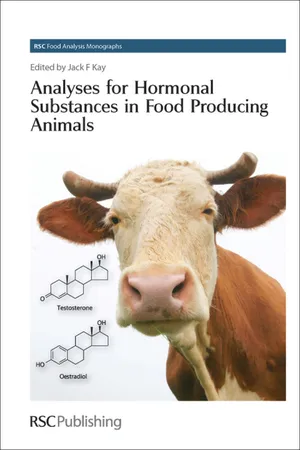
eBook - PDF
Analyses for Hormonal Substances in Food Producing Animals
- 237 pages
- English
- PDF
- Available on iOS & Android
eBook - PDF
Analyses for Hormonal Substances in Food Producing Animals
About this book
Information
Publisher
Royal Society of ChemistryYear
2009Print ISBN
9780854041985
9780854041985
Edition
1eBook ISBN
9781849730723
Table of contents
- Analyses for Hormonal Substances in Food Producing Animals
Trusted by 375,005 students
Access to over 1.5 million titles for a fair monthly price.
Study more efficiently using our study tools.
Frequently asked questions
Yes, you can cancel anytime from the Subscription tab in your account settings on the Perlego website. Your subscription will stay active until the end of your current billing period. Learn how to cancel your subscription
No, books cannot be downloaded as external files, such as PDFs, for use outside of Perlego. However, you can download books within the Perlego app for offline reading on mobile or tablet. Learn how to download books offline
Perlego offers two plans: Essential and Complete
- Essential is ideal for learners and professionals who enjoy exploring a wide range of subjects. Access the Essential Library with 800,000+ trusted titles and best-sellers across business, personal growth, and the humanities. Includes unlimited reading time and Standard Read Aloud voice.
- Complete: Perfect for advanced learners and researchers needing full, unrestricted access. Unlock 1.5M+ books across hundreds of subjects, including academic and specialized titles. The Complete Plan also includes advanced features like Premium Read Aloud and Research Assistant.
We are an online textbook subscription service, where you can get access to an entire online library for less than the price of a single book per month. With over 1.5 million books across 990+ topics, we’ve got you covered! Learn about our mission
Look out for the read-aloud symbol on your next book to see if you can listen to it. The read-aloud tool reads text aloud for you, highlighting the text as it is being read. You can pause it, speed it up and slow it down. Learn more about Read Aloud
Yes! You can use the Perlego app on both iOS and Android devices to read anytime, anywhere — even offline. Perfect for commutes or when you’re on the go.
Please note we cannot support devices running on iOS 13 and Android 7 or earlier. Learn more about using the app
Please note we cannot support devices running on iOS 13 and Android 7 or earlier. Learn more about using the app
Yes, you can access Analyses for Hormonal Substances in Food Producing Animals by Jack F Kay, Peter S Belton,Gerry Downey in PDF and/or ePUB format, as well as other popular books in Technology & Engineering & Analytic Chemistry. We have over 1.5 million books available in our catalogue for you to explore.