Popular Modernism and Its Legacies reconfigures modernist studies to investigate how modernist concepts, figures, and aesthetics continue to play essential--though often undetected--roles across an array of contemporary works, genres, and mediums.
Featuring both established and emerging scholars, each of the book's three sections offers a distinct perspective on popular modernism. The first section considers popular modernism in periods historically associated with the movement, discovering hidden connections between traditional forms of modernist literature and popular culture. The second section traces modernist genealogies from the past to the contemporary era, ultimately revealing that immensely popular contemporary works, artists, and genres continue to engage and thereby renew modernist aesthetics and values. The final section moves into the 21st century, discovering how popular works invoke modernist techniques, texts, and artists to explore social and existential quandaries in the contemporary world.
Concluding with an afterword from noted scholar Faye Hammill, Popular Modernism and Its Legacies reshapes the study of modernism and provides new perspectives on important works at the center of our cultural imagination.
- 296 pages
- English
- ePUB (mobile friendly)
- Available on iOS & Android
eBook - ePub
About this book
Information
PART ONE
New Visions of Popular Modernism
1
Gentry modernism: Cultural connoisseurship and midcentury masculinity, 1951–1957
Tucked between fashion ads and fabric swatches in a largely forgotten men’s magazine, modernism in Gentry circulated as cultural capital for American men of means in the 1950s. But not just for any affluent men. Gentlemanly jet-setters, Gentry men liked cubism with their cocktails and Goethe with their gabardine. They were refined, yet fashion-forward. And their magazine of choice offered sumptuous pages suitable for framing. One subscriber enthused: “Your impeccable taste and high artistic standards combine to make Gentry the ne plus ultra of current publications.”1 A hybrid form, the magazine was part style guide, part lifestyle manual, part art book. Today, the Gentry collector acquires literary selections and reproductions of artworks along with manufacturer’s samples of fine woolen, silk, cotton, and synthetic fabrics.
Georges Braque’s Pallas Athene graced the cover of Number 7, which included features on Alfred Stieglitz, travel wardrobes, and basset hounds. In this number, the magazine’s slogan was “The Finest in Art, Sports, Living, Fashions, and Literature.” Number 21 had cover art from Henri Matisse’s Jazz series, a poem by Vachel Lindsay, a feature on snow skiing, W. Somerset Maugham’s essay on Henry James, and Thomas Jefferson’s Christmas menu. Sharing space with such materials, modernism was refashioned in Gentry. Modernism itself had become mainstream by the time the magazine debuted in 1951, and by the end of 1957 (Gentry’s final year), Arts Magazine had published Clement Greenberg’s “Picasso at Seventy-Five.” While modernism was no longer new in the 1950s, modernist art, design, and literature made something else new in the pages of Gentry.
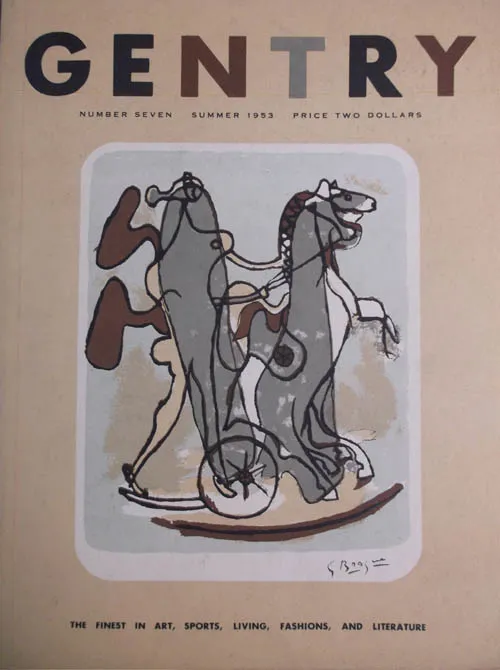
FIGURE 1.1 Cover of Gentry with Georges Braque lithograph Pallas Athene. Gentry 7 (Summer 1953).
My chapter recovers this elegant men’s magazine in the contexts of midcentury modernism, masculinity studies, and popular culture. Hal Rubenstein, InStyle’s fashion director, brought recent attention to Gentry with his anthology of excerpts, The Gentry Man: A Guide for the Civilized Male (2012). That same year, the magazine’s stylish covers anchored the exhibition “Pattern and Palette in Print: Gentry Magazine and a New Generation of Trendsetters” at the Georgia Museum of Art.2 Yet critical conversations about magazines and modernism haven’t included Gentry, which defies standard classifications as much as it defied mainstream masculinity. Gentry was much more than a swatch-filled fashion magazine, although some of its sartorial splendor recalls the upscale trade magazine Apparel Arts (1931–50), which became Gentleman’s Quarterly. Like Esquire, which debuted in 1933, Gentry functioned as a “venue for male consumption based on travel, fashion, and leisure,” as David Earle puts it.3 But Gentry was not so commercial; in fact, its debut editorial refused to “be all things to all men.”4 Gentry entered culture right before the explosion of American men’s magazines that ran across the 1950s, which Earle groups into bachelor, celebrity, and adventure categories.5 Gentry fits into none of these. Indeed, Gentry occupied a space between contemporary magazines with fashions more splendid than Esquire’s, domestic accoutrements more luxurious than Playboy’s, and literature more timeless than the New Yorker’s.
Gentry also troubles boundaries between minority and mass magazines as well as between cultural and commercial magazines. A subscription quarterly with an estimated readership of “approximately 200,000” in 1954, it was “not casually obtainable at newsstands,” as the editors noted in their reader survey report. The majority of Gentry subscribers acquired a subscription card from someone else’s copy or through word-of-mouth endorsements, the survey revealed.6 New readers could also find the magazine in select menswear shops across the United States. Gentry was a bespoke magazine. It falls outside the modernist “periodical field” that Andrew Thacker sketches in the American volume of The Oxford Critical and Cultural History of Modernist Magazines. Like Smart Set this magazine mixes “modernism and the culturally modern with a distinctively American sense of taste and ‘sophistication,’” but Gentry was not “a Magazine of Cleverness.”7 Nor was it a metropolitan magazine. Less text-heavy than literary and mostly literary magazines, Gentry offered literary selections that usually proved more establishment than cutting edge.
The magazine offered detailed instructions for appreciating design in visual art and fashion, transferring midcentury modernism’s New Critical methods to men’s high fashion and gracious living. In doing so, Gentry carved out an alternative identity for American men who rejected gray flannel suits—and the mundane minds that came with them. As Rubenstein puts it, “the Gentry man’s exuberance for the unexpected and sometimes the extraordinary” signals his rejection of suburbia and “domesticated bliss.”8 Indeed, he might fancy himself a better-suited surrealist—with a coun...
Table of contents
- Dedication
- Title
- Contents
- List of illustrations
- Acknowledgments
- Introduction Of Titanics, wars, downturns, and Downtons: Popular modernism and its legacies Scott Ortolano
- Part 1 New Visions of Popular Modernism
- 1 Gentry modernism: Cultural connoisseurship and midcentury masculinity, 1951–1957 Marsha Bryant
- 2 Modernism, operetta, and Ruritania: Ivor Novello’s Glamorous Night Nicholas Daly
- 3 Fine art on the airwaves: Radio drama and modern(ist) mass culture Adam Nemmers
- 4 “I’m gonna be somebody,” 1930: Gangsters and modernist celebrity Jonathan Goldman
- 5 Charlie Chaplin, Walter Benjamin, and the redemption of the city Barry J. Faulk
- Part 2 Legacies of Popular Modernism
- 6 “Catch a wave”: Surf noir and modernist nostalgia Kirk Curnutt
- 7 Alien pleasures: Modernism/hybridity/science fiction Paul March-Russell
- 8 Josephine Baker’s contemporary afterlives: Black female identity, modernist performance, and popular legacies of the Jazz Age Asimina Ino Nikolopoulou
- 9 A hitchhiker’s guide to modernism: The futuristic Fordisms of Aldous Huxley, Brian O’Nolan, and Douglas Adams Andrew V. McFeaters
- Part 3 Resonances of Popular Modernism in the Twenty-First Century
- 10 Smokescreens to smokestacks: True Detective and the American sublime Caroline Blinder
- 11 Of modernist second acts and African-American lives: F. Scott Fitzgerald, The Wire, and the struggle against lockdown Walter Bosse
- 12 Don Draper’s identity crisis and Mad Men’s modernist masculinity Camelia Raghinaru
- 13 A century of reading time: From modernist novels to contemporary comics Aimee Armande Wilson
- 14 Hemingway’s console: Memory and ethics in the modernist video game Dustin Anderson
- Afterword, Faye Hammill
- Notes on contributors
- Index
- Copyright
Trusted by 375,005 students
Access to over 1.5 million titles for a fair monthly price.
Study more efficiently using our study tools.
Frequently asked questions
Yes, you can cancel anytime from the Subscription tab in your account settings on the Perlego website. Your subscription will stay active until the end of your current billing period. Learn how to cancel your subscription
No, books cannot be downloaded as external files, such as PDFs, for use outside of Perlego. However, you can download books within the Perlego app for offline reading on mobile or tablet. Learn how to download books offline
Perlego offers two plans: Essential and Complete
- Essential is ideal for learners and professionals who enjoy exploring a wide range of subjects. Access the Essential Library with 800,000+ trusted titles and best-sellers across business, personal growth, and the humanities. Includes unlimited reading time and Standard Read Aloud voice.
- Complete: Perfect for advanced learners and researchers needing full, unrestricted access. Unlock 1.5M+ books across hundreds of subjects, including academic and specialized titles. The Complete Plan also includes advanced features like Premium Read Aloud and Research Assistant.
We are an online textbook subscription service, where you can get access to an entire online library for less than the price of a single book per month. With over 1.5 million books across 990+ topics, we’ve got you covered! Learn about our mission
Look out for the read-aloud symbol on your next book to see if you can listen to it. The read-aloud tool reads text aloud for you, highlighting the text as it is being read. You can pause it, speed it up and slow it down. Learn more about Read Aloud
Yes! You can use the Perlego app on both iOS and Android devices to read anytime, anywhere — even offline. Perfect for commutes or when you’re on the go.
Please note we cannot support devices running on iOS 13 and Android 7 or earlier. Learn more about using the app
Please note we cannot support devices running on iOS 13 and Android 7 or earlier. Learn more about using the app
Yes, you can access Popular Modernism and Its Legacies by Scott Ortolano in PDF and/or ePUB format, as well as other popular books in Literature & Literary Criticism Theory. We have over 1.5 million books available in our catalogue for you to explore.