The first half of the 1990s was a period of great optimism about humanitarian intervention. In the aftermath of the Cold War, it was
hoped that the international community could begin to act cohesively in defence of fundamental international principles and that a global
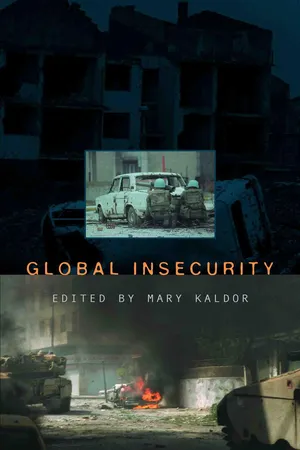
security policy aimed at the prevention of conflict and upholding human rights could be established. The actual experience of this period, however, has been sobering. Agreements engineered from above, like the Dayton Agreement or the Oslo Agreement, have mixed consequences. Efforts at humanitarian relief have often ended up frustrating good intentions and prolonging conflict. This book looks at what we learn from such experiences. Should we retreat from intervention? Is there a global reponsibility for wars and for massive violations of human rights? The authors start from a conviction that in a globalized world we do have certain responsibilities and that the point is to look at how we intervene. They aim to open up a "third approach" - an alternative to the dominance of realist or neo-liberal approaches - which would address the reality of contemporary conflict. Key themes include the need for a more democratic approach in terms of the accountability and openness of both governments and international institutions, the importance of international humanitarian law and the future of formal military forces.
eBook - PDF
Global Insecurity
About this book
Information
Table of contents
- Cover
- Contents
- Acknowledgements
- Contributors
- Foreword
- Abbreviations
- 1 Introduction
- 2 Wars in Africa
- 3 Cold Wars and Frozen Conflicts: The European Experience
- 4 From Humanitarianism to Reconstruction: Towards an Alternative Approach to Economic and Social Recovery from War
- 5 The Changing Global Composition of Armed Forces and Military Technology: The Trend towards Informalization
- 6 Loose Cannons: Creating the Arms Industry of the Twenty-first Century
- 7 Conclusion
- Research Guide to the New Agenda of Post-Cold War Security Issues
- References
- Index
Trusted by 375,005 students
Access to over 1.5 million titles for a fair monthly price.
Study more efficiently using our study tools.
Frequently asked questions
Yes, you can cancel anytime from the Subscription tab in your account settings on the Perlego website. Your subscription will stay active until the end of your current billing period. Learn how to cancel your subscription
No, books cannot be downloaded as external files, such as PDFs, for use outside of Perlego. However, you can download books within the Perlego app for offline reading on mobile or tablet. Learn how to download books offline
Perlego offers two plans: Essential and Complete
- Essential is ideal for learners and professionals who enjoy exploring a wide range of subjects. Access the Essential Library with 800,000+ trusted titles and best-sellers across business, personal growth, and the humanities. Includes unlimited reading time and Standard Read Aloud voice.
- Complete: Perfect for advanced learners and researchers needing full, unrestricted access. Unlock 1.5M+ books across hundreds of subjects, including academic and specialized titles. The Complete Plan also includes advanced features like Premium Read Aloud and Research Assistant.
We are an online textbook subscription service, where you can get access to an entire online library for less than the price of a single book per month. With over 1.5 million books across 990+ topics, we’ve got you covered! Learn about our mission
Look out for the read-aloud symbol on your next book to see if you can listen to it. The read-aloud tool reads text aloud for you, highlighting the text as it is being read. You can pause it, speed it up and slow it down. Learn more about Read Aloud
Yes! You can use the Perlego app on both iOS and Android devices to read anytime, anywhere — even offline. Perfect for commutes or when you’re on the go.
Please note we cannot support devices running on iOS 13 and Android 7 or earlier. Learn more about using the app
Please note we cannot support devices running on iOS 13 and Android 7 or earlier. Learn more about using the app
Yes, you can access Global Insecurity by Mary Kaldor in PDF and/or ePUB format, as well as other popular books in Politique et relations internationales & Politique. We have over 1.5 million books available in our catalogue for you to explore.