US constitutional jurisprudence often conflates two distinct enquiries: how to interpret the Constitution and how to allocate interpretive authority. This book explains the distinct role of judgements about interpretive authority in constitutional practice. It argues that these judgements do not determine what qualifies as good constitutional argument, and cannot substitute for it. Rather, they specify the division of labour between the political branches and the judiciary in forming applicable constitutional determinations.
This explanation of the structure of constitutional reasoning sets the stage for the development of a normative theory about each enquiry. The book advances a theory of substantive constitutional argument. It argues that constitutional interpretation is a special kind of practical reasoning, aiming to construct and specify morally sound accounts of the Constitution and surrounding constitutional practice. Yet, this task is entrusted to a scheme of institutions, as agents of free and equal citizens. The standard of review is an interlocking component of that scheme, regulating the judicial assignment. As such, it should aim to facilitate best performance of the overall interpretive task, so that the judicial process settles on appropriate constitutional determinations; grounded on morally sound reasons that reach all citizens and uphold the fundamental commitments to freedom and equal citizenship.
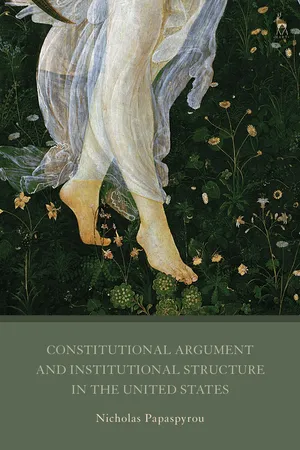
eBook - PDF
Constitutional Argument and Institutional Structure in the United States
- 299 pages
- English
- PDF
- Available on iOS & Android
eBook - PDF
Constitutional Argument and Institutional Structure in the United States
About this book
Information
Table of contents
- Acknowledgements
- Contents
- Analytical Table of Contents
- Introduction
- Part 1: Interpretive Substance
- Part 2: Institutional Architecture
- Part 3: Constitutional Doctrine
- Index
Trusted by 375,005 students
Access to over 1.5 million titles for a fair monthly price.
Study more efficiently using our study tools.
Frequently asked questions
Yes, you can cancel anytime from the Subscription tab in your account settings on the Perlego website. Your subscription will stay active until the end of your current billing period. Learn how to cancel your subscription
No, books cannot be downloaded as external files, such as PDFs, for use outside of Perlego. However, you can download books within the Perlego app for offline reading on mobile or tablet. Learn how to download books offline
Perlego offers two plans: Essential and Complete
- Essential is ideal for learners and professionals who enjoy exploring a wide range of subjects. Access the Essential Library with 800,000+ trusted titles and best-sellers across business, personal growth, and the humanities. Includes unlimited reading time and Standard Read Aloud voice.
- Complete: Perfect for advanced learners and researchers needing full, unrestricted access. Unlock 1.5M+ books across hundreds of subjects, including academic and specialized titles. The Complete Plan also includes advanced features like Premium Read Aloud and Research Assistant.
We are an online textbook subscription service, where you can get access to an entire online library for less than the price of a single book per month. With over 1.5 million books across 990+ topics, we’ve got you covered! Learn about our mission
Look out for the read-aloud symbol on your next book to see if you can listen to it. The read-aloud tool reads text aloud for you, highlighting the text as it is being read. You can pause it, speed it up and slow it down. Learn more about Read Aloud
Yes! You can use the Perlego app on both iOS and Android devices to read anytime, anywhere — even offline. Perfect for commutes or when you’re on the go.
Please note we cannot support devices running on iOS 13 and Android 7 or earlier. Learn more about using the app
Please note we cannot support devices running on iOS 13 and Android 7 or earlier. Learn more about using the app
Yes, you can access Constitutional Argument and Institutional Structure in the United States by Nicholas Papaspyrou in PDF and/or ePUB format, as well as other popular books in Droit & Jurisprudence. We have over 1.5 million books available in our catalogue for you to explore.