- 260 pages
- English
- PDF
- Available on iOS & Android
eBook - PDF
About this book
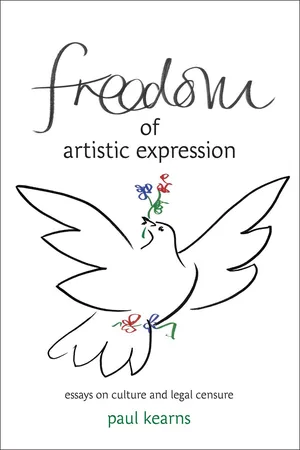
This book presents a unique and comprehensive examination of the human and moral rights of artists. In what is arguably the first exhaustive book-length account of artists' rights, Paul Kearns explores the problems associated with censorship, both from philosophical and legal perspectives, and focuses on the various ways in which the morality of art is legally regulated in different jurisdictions. In relation to human rights, English, French and American law, the law of the European Convention on Human Rights, European Union law and public international law are all closely scrutinised to discover the extent to which they offer protection for artistic freedom. The author also examines domestic and international law in respect of artists' moral rights, the law of copyright and related laws. In short, the book provides an original, and sometimes controversial, analysis of persistent concerns regarding the legal regulation of the arts universally, doctrinally and theoretically, and seeks to offer an holistic treatment which will appeal to art lawyers, artists and those interested in the future of the arts.
Information
Table of contents
- Preliminary pages
- Preface
- Contents
- Introduction
- Part I: A Contemporary Overview
- 1. A Critical and Historical Study of English Legal Restraints on Artistic Liberty*
- I. Introduction
- II. Censorship, Pornography and Art
- III. The Evolution of Freedom of Artistic Expression in England
- IV. Contemporary Crimes and Case Law
- V. Four Major Case Paradigms: The Judicialisation of Art in English Public-Moral Law
- VI. European Legal Influences: A Brief Summary
- VII. Conclusions and Reform
- Part II: Art, Obscenity, Religion and the Law: Writings at the Turn of the Century
- 2. When Art is Misunderstood: Obscene and Blasphemous Libel in 2000
- I. Introduction
- II. Backcloth
- III. The Offences
- IV. The Rushdie Problematic
- V. The Foetus Earrings
- VI. The 'Sensation' Exhibition
- VII. Conclusions
- 3. The Uncultured God: The Triumph of Blasphemy Law over Art (2000)
- I. Introduction
- II. The Domestic Context
- III. The Satanic Verses
- IV. The European Doctrine
- V. Wingrove Facts and the Commission Report
- VI. Overview
- VII. Reform
- 4. Postmodern Art: A Reflection on Western Legal Paradigms in 2000
- I. Introduction
- II. Postmodernism
- III. Obscenity
- IV. Lady Chatterley and DH Lawrence
- V. The Foetus Earrings and Gibson and Sylveire
- VI. The Satanic Verses and Salman Rushdie
- VII. St Teresa of Avila and Nigel Wingrove
- VIII. The 'Sensation' Exhibition
- IX. 'The Perect Moment' and Robert Mapplethorpe
- X. Conclusion
- 5. Obscenity Law and the Creative Writer: The Case of DH Lawrence
- I. Introduction
- II. International Involvements
- III. The English Situation and its Wider Repercussions
- Part III: Later Developments and Writing on Art, Obscenity, Religion and the Law
- 6. The Decline of Obscenity Law: A 2007 Perspective
- I. Introduction
- II. Basic Anomalies
- III. Exoneration
- IV. Conclusions: Desuetude and Abrogation
- 7. The End of Blasphemy Law: A 2008 Perspective
- I. Introduction
- II. Brief Analysis of Blasphemy Law in the UK
- III. UK Blasphemy Law in an International Context
- IV. Some Concluding Observations
- 8. Incitement to Religious Hatred and its Effects on Free Speech
- I. Historical Analysis
- II. A Short 2013 Postscript to the 2006 Act
- Part IV: Highly Topical Legal Issues on the Regulation of Artistic Freedom
- 9. The Contemporary Rights of Artists in England, France and the USA (2013)
- I. Introduction
- II. The Human Rights of Artists
- III. The Intellectual Property Rights of Artists
- IV. Some Generak Conclusions
- 10. Artistic Liberty and the European Court of Human Rights
- I. Introduction
- II. The Complexity of the Central Issues: Art, Obscenity, Pornography and Harm
- III. The Strasbourg Court on Art and Immorality: Article 10 ECHR
- IV. The Strasbourg Court on Political Art and Sedition: Article 10 ECHR
- V. American Protection of Artistic Freedom under the First Amendment: A Comparison with the Strasbourg Approach
- VI. General Conclusions
- 11. Controversial Art and the Legal Enforcement of Morality in England
- I. Introduction
- II. Constitutional Considerations and the Nature of Art and Law
- III. Relationship between Obscenity and Related Laws and Art
- IV. Blasphemy and Art
- V. Freedom of Artistic Expression under the Human Rights Act 1998
- VI. Freedom of Artistic Expression under the European Convention on Human Rights
- VII. A Concise Comparison between the Strasbourg Approach and other Systems of Artistic Freedom Protection
- VIII. Extreme Pornography and Art
- IX. Concluding Reform Proposals and Remarks
- Part V: European Union Law and Culture
- 12. The Culture Problematic in European Union Law: A 2002 Perspective
- 13. EU Law and Culture: An Holistic Overview (2004)
- I. Introduction
- II. General Perspectives on Culture and EU Law
- III. Autopoiesis, Culture and EU Law
- IV. Culture and EU Case Law
- V. Culture-related Paradigms in EU Law
- VI. Conclusions
- Envoi
- Index
- Kearns_Press_ALL.pdf
Trusted by 375,005 students
Access to over 1.5 million titles for a fair monthly price.
Study more efficiently using our study tools.
Frequently asked questions
Yes, you can cancel anytime from the Subscription tab in your account settings on the Perlego website. Your subscription will stay active until the end of your current billing period. Learn how to cancel your subscription
No, books cannot be downloaded as external files, such as PDFs, for use outside of Perlego. However, you can download books within the Perlego app for offline reading on mobile or tablet. Learn how to download books offline
Perlego offers two plans: Essential and Complete
- Essential is ideal for learners and professionals who enjoy exploring a wide range of subjects. Access the Essential Library with 800,000+ trusted titles and best-sellers across business, personal growth, and the humanities. Includes unlimited reading time and Standard Read Aloud voice.
- Complete: Perfect for advanced learners and researchers needing full, unrestricted access. Unlock 1.5M+ books across hundreds of subjects, including academic and specialized titles. The Complete Plan also includes advanced features like Premium Read Aloud and Research Assistant.
We are an online textbook subscription service, where you can get access to an entire online library for less than the price of a single book per month. With over 1.5 million books across 990+ topics, we’ve got you covered! Learn about our mission
Look out for the read-aloud symbol on your next book to see if you can listen to it. The read-aloud tool reads text aloud for you, highlighting the text as it is being read. You can pause it, speed it up and slow it down. Learn more about Read Aloud
Yes! You can use the Perlego app on both iOS and Android devices to read anytime, anywhere — even offline. Perfect for commutes or when you’re on the go.
Please note we cannot support devices running on iOS 13 and Android 7 or earlier. Learn more about using the app
Please note we cannot support devices running on iOS 13 and Android 7 or earlier. Learn more about using the app
Yes, you can access Freedom of Artistic Expression by Paul Kearns in PDF and/or ePUB format, as well as other popular books in Droit & Droits civiques en droit. We have over 1.5 million books available in our catalogue for you to explore.