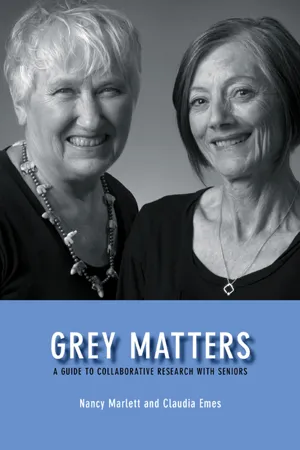
This study marks a major step in making collaboration between seniors, academic researchers, and community researchers a reality. Many aging adults are motivated to undertake research projects in later life or even return to university after retirement. Grey Matters is the result of a pilot project developed to study the effectiveness of collaborative research involving seniors. Because the project was such a success, the authors were encouraged to make their model available both to seniors interested in undertaking their own research and to those hoping to involve seniors in collaborative research. This guide provides a helpful framework for making the most of research projects by and with seniors, including sections on such techniques as narrative interviews, focus groups, and surveys. Grey Matters will be the first Open Access book published by the University of Calgary Press. On October 22, 2010, it will be released simultaneously in traditional print book format and as a free downloadable PDF file from this website.
- 344 pages
- English
- ePUB (mobile friendly)
- Available on iOS & Android
eBook - ePub
About this book
Information
Section 1
The Reason for the Book. How It Came to Be
The first two chapters discuss why, on the brink of an increase in the numbers of aging adults, it is important to prepare seniors to take on research roles.
Chapter 1 outlines the potential and essential roles seniors can play in creating new options in policy and services. It focuses on the importance of capturing the voice of seniors and how they contribute in ways that only a long life of experience can offer. It concludes by introducing the research approach that we adopted for our seniors’-led research project, Participatory Action Research (PAR).
Chapter 2 describes how a large group of seniors took on the challenge of becoming researchers and how to adapt research methods for seniors. It outlines four different methods that could be used in a participatory research project: field-work or observational research, interviews and questionnaires, focus groups, and narrative methods. It concludes with a discussion on evaluation of the research process.
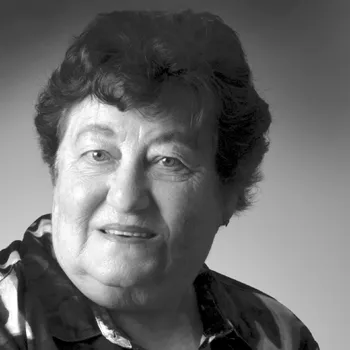
Sheila Power
The seniors involved wanted their children and grandchildren to understand what resilience meant so they could be resilient themselves.
1
Make Room for Seniors: Research with, for, and by Aging Adults
Do you ever get angry when you read in the newspaper about yet another study that talks about the problems of being old? (BM, 2006)
Not another focus group! They always ask us to come and give our ideas and then they pack up their flip charts and go home. We never hear from them again.(PA, 2004)
To older adults, it becomes frustrating when the only research news about seniors is negative. When seniors have been asked for their ideas, their ideas seem to be taken and used by others with little credit or recognition. Many aging adults have been involved with focus groups and know about research through this experience. While they appreciate the chance to get together and talk about issues, they feel used and ignored when the sessions lead nowhere. One said, “being involved after the research has been designed is like being invited to comment on the menu after the meal has been prepared.”
And yet, things don’t have to be negative, there is another way. I always thought that if the professor said it was“this”way, it was. Now with us working together, I know there are options and appreciate being listened to. There can be more meaningful science when we build on personal trust. (JL, 2006)
A. Historical Approaches to Research about Seniors
Research is a systematic inquiry into a topic, or a method of checking information. Research is about being thoughtful and careful in asking and answering questions so that you have some confidence in what you discover and share with others. Research comes in many sizes and styles, from massive projects such as the census for Statistics Canada to a gardener researching the best soil for her prized roses. Each type of research has its own methods of inquiring and making sense of information gathered. These methods are tools that anyone can learn about and use to solve problems or explore something you care about.
There are two established traditions in research about aging. One looks at problems of aging, and, the other, ways to fix the problems of aging.
The first tradition sees aging as a biological decline to be slowed or reversed. The researchers generally work at a university in a faculty of medicine or science. People working in health research are often called geriatric researchers. Geriatrics is a branch of medicine that deals with the diagnosis and treatment of diseases and problems specific to the aged. This type of research is recognized by the public and is well funded. Seniorsfrom the perspective of Geriatrics are considered to be losing health and competence.
For example, if research in this tradition were to investigate resilience, it might look for resilience genes, or how people who are resilient are different from those who are not according to some characteristic like adrenal functioning, health status, or depression.
Medical research is generally quantitative in that researchers pose questions that turn events and characteristics into numbers so that information can be subjected to statistical analysis. The methods used are generally experimental in nature. The researcher sets out to see what happens when a condition or situation is repeated in controlled situations to assess the impact. The most widely understood method is the controlled trials method used in testing an intervention, be that a drug or treatment. Here the people who are receiving the intervention do not know what they are receiving and the people who are conducting the study do not know either. This is called a double blind (both parties don’t know) study and is considered the standard to ensure that the drug or intervention is indeed having an effect. It controls the expectation or hope that something may be helping. There are common statistical standards (tables of numbers representing the possibility of an event occurring by chance) that are used by all scientists to judge their work.
Your input in this type of research might be requested in pretesting the language and structure of questionnaires, administering the questionnaires to other seniors, and looking at the implications of the results. You would likely not have a role in deciding the research questions or interpreting the results since this is the researcher’s responsibility as part of ongoing scientific studies.
The other research tradition is not about aging per se but about“fixing the problems of aging”and tends to be found mostly in professions such as social work, nursing, rehabilitation, psychology, and sociology. Gerontology is the scientific study of the biological, psychological, and social (the bio-psycho-social) phenomena associated with old age and aging. A wide range of professions bring their disciplinary skills to look at the life experiences of those who are aging so that professionals and policy-makers can be more effective in providing services. For example, the Calgary Health Region is developing a questionnaire to measure resilience so that they can identify people who are not resilient in order to offer programs to help them.
Gerontology research may use the experimental methods outlined above but are more likely to use qualitative methods, which take a more natural look at what, how, when, and where things happen. This type of research uses words to tease out meanings, concepts, definitions, characteristics, and descriptions of events and ideas. It uses methods such as observing, interviewing, documenting, and collecting objects in natural and unobtrusive ways. More recently, this type of analysis is aided by computer analysis, which organizes information, looks for patterns, and calculates the number of times that ideas occur together.
You might be invited to take part in this type of research by working to define problems and needs, to provide input into where best to study the problems, who to contact, how to do the research, and you may be invited to collect information and help with the analysis and interpretation.
A new perspective or third way of doing research looks at aging, not as a problem, but as a culture and opportunity. While there is not a readily accepted term for this type of research, the concept is taking shape within Aging Studies, an emerging field of study related to healthy aging. Here the focus shifts to the cultures of aging (history, values, beliefs, language, media) and the politics of aging. In many ways this new area is like Women’s Studies and Disability Studies, although the academic roles of seniors have yet to be widely accepted in universities.
This research is closest to the interests of most seniors. It clearly states that aging is not an illness or disability nor is it a problem. Aging happens to every one and, like any other stage of life, becoming older has advantages as well as challenges. Aging studies would place the“problem”not with individuals but with society that tends to use age as an excuse to marginalize older people because they are seen as being less productive once they reach“a certain age.”With the loss of status and place in their communities, seniors often lose connections, struggle on fixed incomes, and become overwhelmed with the illnesses of idleness.
For example, when seniors set the research agenda for resilience, they looked at resilience as a legacy that seniors had worked hard to learn and accumulate and as such resilience is a resource for future generations. From a seniors-led perspective, they did not want to research the loss of resilience as a biological function nor as a service problem, they wanted to understand how they were recruited into being resilient in childhood and how they could make sure that their grandchildren became resilient (Appendix 1).
The methods used in this type of research look to the relationships between groups of aging adults within the broad segments of society, why decisions are made, how to impact stigma and policy, how seniors can help each other avoid being marginalized and made dependent. Many methods can be used but methods such as focus groups, interviewing, collecting, and documenting seem most common.
In this research seniors are more likely to lead the research, identify an issue that needs to be addressed, attract other seniors and researchers, and set the agenda. They would be partners in deciding on the methods and analyzing the data. They would present results to other seniors, professionals, and academics and take action based on what has been found. It is research about seniors, by seniors, and for seniors.
B. Research about Seniors and Research by Seniors
This section begins with a vignette that illustrates the differences between research done by a professional about seniors and research done by seniors about seniors. It is an attempt to clarify some of the issues that arise when research about seniors does not include them and what can happen when seniors attempt to do research without having research training.
A young male cancer doctor decides to conduct research on older women with cervical cancer because he is considering hiring a social worker to provide more holistic service to his older patients. In his office he interviews older women who have had cervical cancer, using a standardized questionnaire on body image and cancer. Based on the responses he received he concludes that the women being studied are ill-informed about their bodies and seem not to care about the impact of the treatment.
The same research topic is taken up by three older women who are part of a self-help cancer support group when they became interested in some of their shared ideas about their bodies and the impact that their ideas about their bodies had on their relationships. During a series of support meetings, the three women observed and raised questions about the treatment of cervical cancer. They took careful notes and shared these with the women in the support group. They came to a consensus about their shared findings and wrote about their shared deep feelings of violation, shame, and embarrassment that interfered with intimacy. They also wrote about how to overcome these feelings and how to move to a healing process. They then wrote an article in a newsletter about their findings to share with women in other support groups.
The young doctor wrote a review of their article and claimed that, based on his research, their findings were biased and not valid because they did not use proper research methods.
The above example describes two approaches to doing research, one from a professional or problem base and the other from an aging studies perspective by seniors. The topic of the research in both cases was personal and body image related to cervical cancer in older women and the impact of cancer on relationships.
This short example puts forth the value and potential of collaborative research. It identifies some of the barriers that may face professionals and academics working with seniors. It also highlights some of the conflicts that seniors may face.
- What would be the result if seniors were trained to conduct research so the results were taken seriously by professionals?
- What would happen if the young doctor worked with seniors in designing and carrying out research?
The women who took on t...
Table of contents
- Cover
- Half Title Page
- Title Page
- Copyright
- Contents
- Acknowledgments
- Dedication
- The Kerby Centre of Excellence
- Prologue: Seniors’ Collaborative Research Manual
- Section 1: The Reason for the Book. How It Came to Be
- Section 2: Research Methods Manual
- Section 3: Conducting Inquiries and Research
- Further Readings and Resources
- Appendix 1: Resilience as Social Capital: Lessons from Older Adults
- Appendix 2: Handout of Basic Principles of PAR
- Appendix 3: Sites and Sources: Seniors and Resilience Research Proposal
- Appendix 4: Observation Workbook for Field-Work
- Appendix 5: Focus Group Training Notes
- Appendix 6: An Example of a Structured Workbook Approach to Focus Group
- Appendix 7: Follow-Up Focus Group to Discuss Rural Resilience Findings
- Appendix 8: Report of the Focus Group Meeting with CJCA Seniors Club
- Appendix 9: Narrative Interview Guide
- Appendix 10: Examining Social Problems
- Appendix 11: Navigating the “Seven C’s”: Curiosity, Confirmation, Comparison, Changing, Collaborating, Critiquing, and Combinations
- Appendix 12: Elder Self-Neglect: Project Description
- Glossary of Terms
Trusted by 375,005 students
Access to over 1.5 million titles for a fair monthly price.
Study more efficiently using our study tools.
Frequently asked questions
Yes, you can cancel anytime from the Subscription tab in your account settings on the Perlego website. Your subscription will stay active until the end of your current billing period. Learn how to cancel your subscription
No, books cannot be downloaded as external files, such as PDFs, for use outside of Perlego. However, you can download books within the Perlego app for offline reading on mobile or tablet. Learn how to download books offline
Perlego offers two plans: Essential and Complete
- Essential is ideal for learners and professionals who enjoy exploring a wide range of subjects. Access the Essential Library with 800,000+ trusted titles and best-sellers across business, personal growth, and the humanities. Includes unlimited reading time and Standard Read Aloud voice.
- Complete: Perfect for advanced learners and researchers needing full, unrestricted access. Unlock 1.5M+ books across hundreds of subjects, including academic and specialized titles. The Complete Plan also includes advanced features like Premium Read Aloud and Research Assistant.
We are an online textbook subscription service, where you can get access to an entire online library for less than the price of a single book per month. With over 1.5 million books across 990+ topics, we’ve got you covered! Learn about our mission
Look out for the read-aloud symbol on your next book to see if you can listen to it. The read-aloud tool reads text aloud for you, highlighting the text as it is being read. You can pause it, speed it up and slow it down. Learn more about Read Aloud
Yes! You can use the Perlego app on both iOS and Android devices to read anytime, anywhere — even offline. Perfect for commutes or when you’re on the go.
Please note we cannot support devices running on iOS 13 and Android 7 or earlier. Learn more about using the app
Please note we cannot support devices running on iOS 13 and Android 7 or earlier. Learn more about using the app
Yes, you can access Grey Matters by Nancy Marlett, Claudia Emes in PDF and/or ePUB format, as well as other popular books in Social Sciences & Social Science Research & Methodology. We have over 1.5 million books available in our catalogue for you to explore.