Fractional-Order Control Systems
eBook - ePub

Fractional-Order Control Systems

Fundamentals and Numerical Implementations

  1. 388 pages
  2. English
  3. ePUB (mobile friendly)
  4. Available on iOS & Android
eBook - ePub

Fractional-Order Control Systems

Fundamentals and Numerical Implementations

About this book

This book explains the essentials of fractional calculus and demonstrates its application in control system modeling, analysis and design. It presents original research to find high-precision solutions to fractional-order differentiations and differential equations. Numerical algorithms and their implementations are proposed to analyze multivariable fractional-order control systems. Through high-quality MATLAB programs, it provides engineers and applied mathematicians with theoretical and numerical tools to design control systems.

Contents
Introduction to fractional calculus and fractional-order control
Mathematical prerequisites
Definitions and computation algorithms of fractional-order derivatives and Integrals
Solutions of linear fractional-order differential equations
Approximation of fractional-order operators
Modelling and analysis of multivariable fractional-order transfer function Matrices
State space modelling and analysis of linear fractional-order Systems
Numerical solutions of nonlinear fractional-order differential Equations
Design of fractional-order PID controllers
Frequency domain controller design for multivariable fractional-order Systems
Inverse Laplace transforms involving fractional and irrational Operations
FOTF Toolbox functions and models
Benchmark problems for the assessment of fractional-order differential equation algorithms

Frequently asked questions

Yes, you can cancel anytime from the Subscription tab in your account settings on the Perlego website. Your subscription will stay active until the end of your current billing period. Learn how to cancel your subscription.
No, books cannot be downloaded as external files, such as PDFs, for use outside of Perlego. However, you can download books within the Perlego app for offline reading on mobile or tablet. Learn more here.
Perlego offers two plans: Essential and Complete
  • Essential is ideal for learners and professionals who enjoy exploring a wide range of subjects. Access the Essential Library with 800,000+ trusted titles and best-sellers across business, personal growth, and the humanities. Includes unlimited reading time and Standard Read Aloud voice.
  • Complete: Perfect for advanced learners and researchers needing full, unrestricted access. Unlock 1.4M+ books across hundreds of subjects, including academic and specialized titles. The Complete Plan also includes advanced features like Premium Read Aloud and Research Assistant.
Both plans are available with monthly, semester, or annual billing cycles.
We are an online textbook subscription service, where you can get access to an entire online library for less than the price of a single book per month. With over 1 million books across 1000+ topics, we’ve got you covered! Learn more here.
Look out for the read-aloud symbol on your next book to see if you can listen to it. The read-aloud tool reads text aloud for you, highlighting the text as it is being read. You can pause it, speed it up and slow it down. Learn more here.
Yes! You can use the Perlego app on both iOS or Android devices to read anytime, anywhere — even offline. Perfect for commutes or when you’re on the go.
Please note we cannot support devices running on iOS 13 and Android 7 or earlier. Learn more about using the app.
Yes, you can access Fractional-Order Control Systems by Dingyü Xue in PDF and/or ePUB format, as well as other popular books in Mathematics & Differential Equations. We have over one million books available in our catalogue for you to explore.

Information

Publisher
De Gruyter
Year
2017
Print ISBN
9783110499995
eBook ISBN
9783110497199

1Introduction to fractional calculus and fractional-order control

1.1Historical review of fractional calculus

In the earlier development of classical calculus, referred to in the book as integer-order calculus, the British scientist Sir Isaac Newton and the German mathematician Gottfried Wilhelm Leibniz used different symbols to denote different orders of derivatives to a function y(x): the notations Newton used were y'(x), y''(x), y'''(x), . . . , while Leibniz introduced the symbol dny(x)/dxn, where n is a positive integer.
In a letter from Guillaume François Antoine L’Hôpital, a French mathematician, to Leibniz in 1695, a specific question on the meaning of n = 1/2 was asked. In a letter dated 30 September 1695, Leibniz replied, “Thus it follows that d1/2x will be equal to x dx:x 2
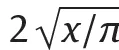
, an apparent paradox, from which one day useful consequences will be drawn” [41]. The question and answer given above were considered as the beginning of fractional calculus. In 1819, it was shown by the French mathematician Sylvestre François Lacroix that the 1 /2th-order derivative of x is 2 x/π
. It is obvious to see that the notations Newton used were not suitable to be extended to the field of fractional calculus, while the one by Leibniz was ready to be extended into the new field.
Three centuries passed, it was not until the last four or five decades, the research field concentrated on theoretical aspects. Very good historic reviews on the development of fractional calculus can be found in [41, 47], where in [41], Kenneth Miller and Bertram Ross presented a historic review of fractional calculus up to the last decade of the nineteenth century, while in [47], Keith Oldham and Jerome Spanier quoted Professor Bertram Ross’s year-by-year historic review of novel developments in fractional calculus up to the year 1975. These reviews were mainly focused on the development in pure mathematics.
From 1960s, the fractional calculus research was extended into engineering fields. The dissipation model based on fractional-order derivatives was proposed by Professors Michele Caputo and Francesco Mainardi in Italy [5]. Professor Shunji Manabe in Japan extended the theoretical work to the field of control systems and introduced the non-integer-order control systems [36]. Professor Igor Pudlubny in Slovakia proposed the structures and applications of fractional-order PID controllers [55]. The work of Professor Alain Oustaloup’s group in France on robust controller design and their applications in suspension control systems in automobile industry [48, 49] was considered as a milestone in real-world applications of fractional calculus.
From the years around 2000, several monographs dedicated to fractional calculus and its applications in a variety of fields appeared, among those, the well-organised ones are Professor Igor Podlubny’s book [54] on fractional-order differential equations and automatic control in 1999, Professor Rudolf Hilfer’s book [23] in physics in 2000, and Professor Richard Magin’s book [35] in bioengineering in 2002.
Recently, several books concentrating on numerical computation and theoretical aspects in fractional calculus were published, such as Kai Diethelm’s book [16] in 2010, Shantanu Das’s book [13] in 2011, Vladimir Uchaikin’s book [66] in 2013, and Changpin Li and Fanhai Zeng’s book [28] in 2015.
Many books on fractional-order control were published, for instance, Riccardo Caponetto, Giovanni Dongola, Luigi Fortuna and Ivo Petráš’s book [4] in 2010, Concepción Monje, YangQuan Chen, Blas Vinagre, Dingyü Xue and Vicente Feliu’s book [42] in 2010, Ivo Petráš’s book [52] in 2011, Ying Luo and YangQuan Chen’s book [33] in 2012, and Alain Oustaloup’s book [50] in 2014. The book [67] by Vladimir Uchaikin in 2013 delivered a very comprehensive coverage on the applications of fractional calculus in a variety of fields.
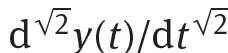
It should be noted that the terms “fractional” or “fractional-order” are misused ones; more suitable terms are “non-integer-order” or “arbitrary-order”, since apart from fractional (rational) numbers, the theory also includes irrational numbers, for instance, d 2 y( t )/d t 2
, or even, n can be a complex number, while this is beyond the scope of the book. Since in the literature and in the related research communities, the term “fractional” is extensively used, in the book we use this term as well, while it also includes irrational-orders, and even the structures of the system are irrational.
We shall use the unified terms “fractional calculus”, “fractional-order systems” and “fractional-order derivatives” throughout the book.
As is well known in classical calculus, if x is the displacement, then dx/dt is the velocity, while d2x/dt2 is the acceleration. Unfortunately, there are almost no wi...
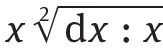
Table of contents

  1. Cover
  2. Title Page
  3. Copyright
  4. Foreword
  5. Preface
  6. Contents
  7. 1 Introduction to fractional calculus and fractional-order control
  8. 2 Mathematical prerequisites
  9. 3 Definitions and computation algorithms of fractional-order derivatives and integrals
  10. 4 Solutions of linear fractional-order differential equations
  11. 5 Approximation of fractional-order operators
  12. 6 Modelling and analysis of multivariable fractional-order transfer function matrices
  13. 7 State space modelling and analysis of linear fractional-order systems
  14. 8 Numerical solutions of nonlinear fractional-order differential equations
  15. 9 Design of fractional-order PID controllers
  16. 10 Frequency domain controller design for multivariable fractional-order systems
  17. A Inverse Laplace transforms involving fractional and irrational operations
  18. B FOTF Toolbox functions and models
  19. C Benchmark problems for the assessment of fractional-order differential equation algorithms
  20. Bibliography
  21. Index