Islam in the West: Beyond Integration offers an overview and a profile of Muslims living in the West, their identity, integration and citizenship.
The book tries to answer some hard questions surrounding the interplay between religious and national identities, and how these two types of identities negotiate their place in the hearts of Western Muslims. Case studies cover constructive integration in Canada, assimilation in France and the exclusionist approach in Bosnia. Some answers to the questions on citizenship are presented from an Islamic perspective, taking into account Islamic formative principles — the Qur'an and Sunnah (the Prophetic tradition) — as they pertain to the globalized world of today.
This includes an examination of historical perspectives found in the scholarly discourses on citizenship unearthed from early Muslim history as well as from contemporary times. These issues are analyzed through the prism of a religiously pluralistic and culturally diverse society.
Published in English.
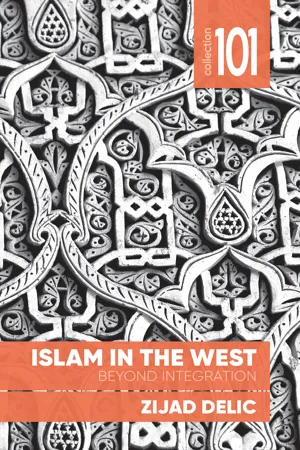
- 125 pages
- English
- ePUB (mobile friendly)
- Available on iOS & Android
eBook - ePub
About this book
Information
Topic
Theology & ReligionSubtopic
Civics & Citizenship1 | Muslims in Canada |
Canadians today practise a diversity of faiths, but this wasn’t always the case. During the early 1950s and 1960s, the faith spectrum was dominated by a variety of mainstream Christian denominations (Catholic, Orthodox, Protestant and their sub-groups). There was a tiny Jewish minority and a variety of Aboriginal spiritual traditions, as well as small groups of Buddhists, Hindus, Muslims and Sikhs whose numbers would see rapid growth during the late 20th century and into the dawn of the 21st century.
Religious Pluralism
Canada is renowned for its rich cultural diversity, which embraces not only its Aboriginal peoples and those descended from founding British and French settlers but also a wide variety of ethno-cultural and religious groups who relocated to Canada in various waves of immigration. This mid-20th-century influx of new immigrants has evolved into the distinct mosaic we see today, despite challenges imposed from time to time by various political elites and policies. Canada has attracted people from all corners of the world and has become a land of immigrants and their children, who together have contributed to Canada’s reputation as a “showpiece of multiculturalism” (Vasta 2007, 16) — an applied and harmonious concept that has become both a fundamental characteristic of the Canadian identity and a source of national pride (17).
The emergence of a pluralistic society has been a major outcome of Canada’s massive program of immigration, begun in 1971 (the year in which multiculturalism officially became government policy). From the 1970s through the 1990s, significant numbers of Buddhists, Hindus, Muslims and Sikhs were added to the mainstream Judeo-Christian mix. As these diverse groups settled in Canada, they became positive contributors to the national ethos. Thanks to federally legislated multicultural policies as well as the Charter of Rights and Freedoms, this phenomenon of pluralism has become well integrated into the fabric of Canadian society. But at the dawn of the 21st century, just when Canadian policy-makers were feeling confident that religion would no longer be a point of major policy discourse, the issue of integration (and accommodation in Quebec) resurfaced on the national agenda. Today, people continue to ask new questions about national identity versus religious identity, integration and loyalties.
Cultural and religious pluralism is a growing reality across all Western societies — even more so in Canada where it is part of an inevitable and irreversible paradigm shift. Canadian approaches to diversity naturally reflect a Canadian reality that comprises regional, communal and personal identities, in addition to an overarching national identity. Newcomers to Canada have always brought their religious beliefs, practices, concepts of community and institutions with them, adding their collective and distinctive richness to Canada’s multicultural mosaic. Without a doubt, Canada is among the top multi-ethnic and multi-religious countries in the world today.
Among the many factors characterizing a pluralistic society, religion plays a dominant role due to its massive informal influence in the formation of personal and communal ethnic identities. In fact, “religion is necessary to a society as a vital mechanism of integration for human beings and as a means to unify symbols” (Driedger 1989, 20). Accordingly, scholars repeatedly emphasize the importance of religion as a vital source of ethnic identity. Religious diversity is an established fact of life in Canadian society, just as diverse races and ethnicities have been exceptionally visible facts for many years. It is no surprise, then, that religion plays a significant role in conceptualizing new and changed realities, particularly for newcomers to Canada. This was as true for our historic colonial immigrants as it is now for a variety of diasporic religious traditions, whose numbers of adherents are ever growing in Canada.
Both historic and recent immigrants brought diverse interpretations of religious principles and cultural values from their countries of origin, some of which have endured for long periods of time. This tendency held true particularly among Irish Catholic immigrants in Newfoundland and Scottish Protestants in Nova Scotia (Murphy and Byrne 1987), many of whose churches, rituals, languages, traditions, ethical values, linguistic forms and dialects, stories, art forms, songs and stepdances continue to this day. It is reasonable to expect that similar characteristics will endure within the identities of other religious or cultural communities as their presence evolves in contemporary Canada (Adams 2006, 5(2): 75–76; Bowlby 2001, 8). Canada encourages all citizens to preserve their religious heritage as part of Canada’s national cultural mosaic. Thus freedom of religion occupies a significant position in Canada’s 1982 constitutional framework. In contemporary Canadian society, however, religion is viewed primarily as a subcategory of culture. Every Canadian citizen is guaranteed freedom of religion and belief, as outlined in Sections 2(a) and 2(b) of the Canadian Charter of Rights and Freedoms (1982). In 1985, the Supreme Court ruled that freedom of religion includes freedom of religious speech, as well as
the right to entertain such religious beliefs as a person chooses, the right to declare religious beliefs openly and without fear of hindrance or reprisal, and the right to manifest religious belief by worship and practice or by teaching and dissemination. (Dib 2006, 42)
Canada evolved into nationhood more than 150 years ago; during the past four decades, it has moved from a nation that was essentially Christian to one that is religiously diverse. Changes in immigration policy have resulted in the introduction and growth of once-foreign religious traditions such as Buddhism, Hinduism, Islam and Sikhism. These diaspora traditions, together with pre-existing Christian and Jewish sects and emerging patterns of “new age or seeker spirituality” (Beyer 2005, 165–196), are proof of entirely new religious trends in Canadian society. This changing approach in immigration toward newcomers’ religious traditions marks an innovative attitude that respects religious diversity and promotes inclusion rather than focusing on the traditional separateness or insularity of belief systems. However, in 2017, the Quebec government banned religious attire in public institutions, a move decried by faith groups as well as constitutional lawyers and prominent intellectuals as backwards. This attitude is aimed not at furthering freedom of religion and values but rather its converse, freedom from religion, thus leaving in its wake a sterile and insipid society devoid of all sympathy, empathy and care — the glue of a flourishing society.
Canadian Muslims
In 2015, Islam had 1.8 billion adherents worldwide. Muslims therefore make up close to a quarter of the world’s 7.3 billion population — approximately one in four people on earth. While Islam is often strictly considered a Middle Eastern phenomenon, it is a universal religion. Only about 20% of the world’s Muslims live in Arab states. Large concentrations of Muslims live in Asia, Africa, Europe, North America, South America and Australia. The 10 countries with the largest numbers of Muslims are home to fully two-thirds (66%) of all Muslims. The largest share lives in Indonesia (13.1%), followed by India (11%), Pakistan (10.5%), Bangladesh (8.4%), Nigeria (4.8%), Egypt (4.8%), Iran (4.6%), Turkey (4.5%), Algeria (2.2%) and Morocco (2%). The vast majority of the world’s Muslims adhere to the Sunni tradition, while an estimated 10% to 13% belong to the Shi’a tradition, with other smaller sects and branches found around the world (Miller 2009; Pew Forum 2012; Pew Research Center 2017).
Like other immigrants, Muslims came to Canada for a host of reasons such as seeking economic opportunity; escaping political instability; seeking educational opportunities; reuniting with family members and friends already living in Canada; and enjoying the freedom of religious expression and association guaranteed by the Canadian constitution.
Canada’s encounter with the people of Muslim faith is unlike any other Western liberal-democratic nation. It has a short history of receiving Muslims on its shores with no colonial past as in France or Britain, for example. Canada also has a Muslim population that is diverse and has been carefully selected before their arrival to Canada. These unique features reinforce expectations that the experience of Canadian Muslims may be quite different from those Muslims immigrating to other liberal-democratic societies. Islam and Muslims are not all that new to Canada. Muslim immigration has taken place during three main epochs, largely influenced by the changing political agenda of Canadian immigration policies.
The earliest history of Muslim contact with Canada is not well documented; however, available official records of Canadian Muslim presence date back to the mid-19th century in Upper Canada, which was then a British province. This information was not available officially — and presented to the public for the first time — until the publication of Daood Hamdani’s paper “Muslims in the Canadian Mosaic” (Institute of Muslim Minority Affairs 1984, Vol 5:1). He asserted that the information about the origins of Muslims in Canada was obtained from the handwritten documents of the 1981 Census with the National Library of Canada. His records suggest that the first Muslim settlers arrived in Canada from Scotland in the wave of immigration after 1815, following Scotland’s repeated economic and agricultural crises. Aboard the ships that carried fleeing Scots to Canada were Muslims as well. Cross-referencing the departure dates of ships from Scotland with records of Scottish Muslims found in Canadian archives, Muslim pioneers would have arrived aboard the ships Thetis, Dunlop, Amity and Albion. Among these first Muslim pioneers were James and Agnes Love, a young couple who emigrated from Scotland and settled in Wellington County, in the province of Ontario, where there were significant Scottish and English communities. The year 1854 marked the birth of the first Canadian-born Muslim. The boy was named James Love after his father and was the first of eight children born to the Love family. Their youngest child, named Alexander, was born in 1868, one year after the formation of the Canadian Confederation. In 1871, Love’s family along with another couple, John and Martha Simon, American by birth and European by origin, constituted almost the entire Muslim community in Canada. The census of 1871 counted 13 Canadian Muslims. They were described in government documents of the era as Mohametans (Hamdani 1984). History thus confirms that Canada’s Muslim community is practically as old as the nation itself.
At the dawn of the 20th century, the presence of Muslims grew with the arrival of immigrants from Syria, Turkey, Albania and regions of Yugoslavia. Thousands of newcomers were attracted by cheap homestead and farming land in the Prairies as well as plentiful wilderness tracts for prospecting. By 1901, Canada had 47 citizens of Muslim faith; by 1911, that number had grown to 797. Among these early Canadian Muslims, the majority (approximately two-thirds) had Turkish passports (by virtue of belonging to the Ottoman Empire).
The growth of this early Canadian Muslim community was disrupted in 1910 by the Canadian government’s introduction of restrictive immigration policies that arbitrarily designated originating countries with preferred or non-preferred status. Northwestern Europe, along with the United States, was given preferred status, while the Ottoman Empire, Central and Eastern Europe were deemed non-preferred (Green 1976). The same policies also banned immigrants from Asia and Africa. The result was that, by the 1931 Canadian census, there were only 645 Muslim residents in the country, most of whom were from the former Ottoman Empire, notably Syria and Lebanon (Hamdani 1984).
Canada’s first mosque, the Al Rashid mosque, was established in Edmonton in 1938, when there were only about 319 Muslims living in either Alberta or Saskatchewan. Muslim women, including Hilwie Hamdon and Mary Saddy, played a decisive role in building what could be called the original “little mosque on the prairie.” The Indian Muslim scholar Abdullah Yusuf Ali, perhaps the most famous translator of the Qur’an from Arabic into English, inaugurated the new mosque during a tour of Canada while working on his translation. The building represents an interesting and colourful chapter in Canadian Muslim history.
Hamdon, a 16-year-old bride from the Baka’a Valley in Lebanon, arrived in Canada in 1922 with her husband, Ali. They settled in a fur-trading post in northern Alberta. Despite being born and raised so far away in a small village, having little formal schooling and knowing no English upon arriving to Canada, Hamdon’s outgoing personality, community spirit and neighbourliness overcame social and cultural barriers. A decade later, as she prepared to move to Edmonton with her family, the local First Nations chief described Hamdon as “the finest white woman in the North” (Hamdani 2007, 5). During the 1930s, she went on to play an instrumental role in establishing the roots of a national Muslim community, which was beginning to organize itself in a formal way with the active participation of women. On May 15, 1938, the City of Edmonton issued a building permit allowing construction of Al Rashid. When it was completed on December 12, 1938, its small and simple structure looked more like a church than a mosque, but it was to play a major part in our history.
Ordinary Muslim women like Hamdon, Saddy and Margaret Ali El Hadiar worked tirelessly to make this building a reality, motivating fellow Muslims and others to contribute to the building campaign, even throughout the Great Depression. Hamdon and her supporters even convinced an initially reluctant mayor of Edmonton to donate a piece of land. As an early example of inter-religious concord, their infectious enthusiasm galvanized an entire community. Donations came from far and wide and were sent by people of all faiths and walks of life, from simple farmers to professionals and from the neighbouring province of Saskatchewan. At its opening, Edmonton-area Muslims and their many friends and supporters gathered to celebrate in an interfaith ceremony. In fact, a Christian was chosen to conduct the proceedings. This was yet another example of Hamdon’s passion for building bridges between different cultural and religious communities.
Unfortunately, Al Rashid was, by 1982, in a state of disrepair and no longer in use. Initially, there were plans to demolish it to make room for an expansion of an adjacent hospital but, once again, Muslim women in the community weren’t ready to give up. To them, Al Rashid was a religious space, a part of Muslim history and a piece of Canadian heritage that needed to be preserved. Just as they did more than four decades earlier, they went into action to raise funds — this time to preserve and designate their mosque as a historical landmark. It took four years of fundraising, lobbying of city officials and campaigning across the broader community in order to persuade local citizens to save the old mosque and approve its transfer to a new site. After a mammoth but successful undertaking, Canada’s first mosque is now part of a museum at Fort Edmonton Park (Lorenz 1998).
From 1911, through the First and Second World Wars and into the early 1950s, the growth of the Canadian Muslim population was very slow. Demographic change reflected immigration policies, which, typical of the era, encouraged the growth of a British-style national character to protect the purity of Anglo-Saxon Christian culture (Francis and Smith 1982). Nevertheless, Canada’s Muslim population reached 1,800 by 1951, although its growth was based largely on natural family expansion. Discriminatory policies of Canadian governments during that period forced many Muslim migrant workers to return to their native countries.
The second major stage in Muslim immigration took place between the early 1950s and late 1970s. During the 1960s, the federal government began to see immigration as a viable and effective method to augment Canada’s small population and ameliorate chronic post-war labour shortages. Formerly restrictive entry and preference policies were reversed and, in 1967, an immigration points-based system was introduced. The aim was to make Canada more attractive and accessible to skilled foreign workers and professionals. Due in large part to these measures, the Canadian Muslim population increased steadily during the two post-war decades, with immigrants drawn from all parts of the world (Husaini 1990, 20–23).
The 1950s were marked by an inflow of Muslims from Arabic-speaking countries, as well as from Turkey, Albania and the former Yugoslavia. During the 1960s, the majority of Muslim newcomers were from southern and southeast Asia, while the 1970s saw greater numbers coming from eastern Africa. Unlike their predecessors, mid-century Muslim immigrants were typically skilled workers and educated professionals attracted by the change in North Am...
Table of contents
- Cover
- Halftitle Page
- Title Page
- Copyright Page
- Dedication
- Contents
- Acknowledgements
- Introduction
- Chapter 1. Muslims in Canada
- Chapter 2. Canadian Muslim Identity
- Chapter 3. Constructive Integration
- Chapter 4. Faithful Citizenship
- Chapter 5. And the Upshot Is…?
- Glossary
- Bibliography
Trusted by 375,005 students
Access to over 1.5 million titles for a fair monthly price.
Study more efficiently using our study tools.
Frequently asked questions
Yes, you can cancel anytime from the Subscription tab in your account settings on the Perlego website. Your subscription will stay active until the end of your current billing period. Learn how to cancel your subscription
No, books cannot be downloaded as external files, such as PDFs, for use outside of Perlego. However, you can download books within the Perlego app for offline reading on mobile or tablet. Learn how to download books offline
We are an online textbook subscription service, where you can get access to an entire online library for less than the price of a single book per month. With over 1.5 million books across 990+ topics, we’ve got you covered! Learn about our mission
Look out for the read-aloud symbol on your next book to see if you can listen to it. The read-aloud tool reads text aloud for you, highlighting the text as it is being read. You can pause it, speed it up and slow it down. Learn more about Read Aloud
Yes! You can use the Perlego app on both iOS and Android devices to read anytime, anywhere — even offline. Perfect for commutes or when you’re on the go.
Please note we cannot support devices running on iOS 13 and Android 7 or earlier. Learn more about using the app
Please note we cannot support devices running on iOS 13 and Android 7 or earlier. Learn more about using the app
Yes, you can access Islam in the West by Zijad Delic in PDF and/or ePUB format, as well as other popular books in Theology & Religion & Civics & Citizenship. We have over 1.5 million books available in our catalogue for you to explore.