- 192 pages
- English
- PDF
- Available on iOS & Android
About this book
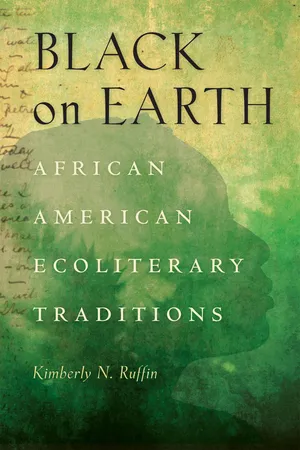
American environmental literature has relied heavily on the perspectives of European Americans, often ignoring other groups. In Black on Earth, Kimberly Ruffin expands the reach of ecocriticism by analyzing the ecological experiences, conceptions, and desires seen in African American writing.
Ruffin identifies a theory of "ecological burden and beauty" in which African American authors underscore the ecological burdens of living within human hierarchies in the social order just as they explore the ecological beauty of being a part of the natural order. Blacks were ecological agents before the emergence of American nature writing, argues Ruffin, and their perspectives are critical to understanding the full scope of ecological thought.
Ruffin examines African American ecological insights from the antebellum era to the twenty-first century, considering WPA slave narratives, neo–slave poetry, novels, essays, and documentary films, by such artists as Octavia Butler, Alice Walker, Henry Dumas, Percival Everett, Spike Lee, and Jayne Cortez. Identifying themes of work, slavery, religion, mythology, music, and citizenship, Black on Earth highlights the ways in which African American writers are visionary ecological artists.
Frequently asked questions
- Essential is ideal for learners and professionals who enjoy exploring a wide range of subjects. Access the Essential Library with 800,000+ trusted titles and best-sellers across business, personal growth, and the humanities. Includes unlimited reading time and Standard Read Aloud voice.
- Complete: Perfect for advanced learners and researchers needing full, unrestricted access. Unlock 1.4M+ books across hundreds of subjects, including academic and specialized titles. The Complete Plan also includes advanced features like Premium Read Aloud and Research Assistant.
Please note we cannot support devices running on iOS 13 and Android 7 or earlier. Learn more about using the app.
Information
Table of contents
- Contents
- Acknowledgments
- Introduction. Message of the Trees: Recognizing Ecological Burden and Beauty
- One. “Toil and Soil”: Authorizing Work and Enslavement
- Two. York, Harriet, and George: Writing Ecological Ancestors
- Three. Animal Nature: Finding Ecotheology
- Four. Bones and Water: Telling on Myth
- Five. “I Got the Blues” Epistemology: Thinking a Way out of Eco-Crisis
- Conclusion. After Levee Disaster: Learning from a Sinned-against City
- Notes
- Works Consulted
- Index