Creating a rigorous mathematical theory of randomness is far from being complete, even in the classical case. Probability and Randomness: Quantum versus Classical rectifies this and introduces mathematical formalisms of classical and quantum pro
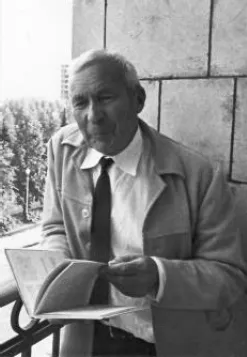
We start with the remark that, in contrast with, e.g., geometry, axiomatic probability theory was created not so long ago. Soviet mathematician Andrei Nikolaevich Kolmogorov presented the modern axiomatics of probability theory only in 1933 in his book [177]. The book was originally published in German.1 The English translation [178] was published only in 1952 (and the complete Russian translation [179] of the German version [177] only in 1974).2 Absence of an English translation soon (when the German language lost its international dimension) led to the following problem. The majority of the probability theory community did not have a possibility to read Kolmogorov. Their picture of the Kolmogorov model was based on its representations in English (and Russian) language textbooks. Unfortunately, in such representations a few basic ideas of Kolmogorov disappeared, since they were considered as philosophical remarks with no direct relevance to mathematics. This is partially correct, but probability theory is not just mathematics. It is a physical theory and, as any physical theory, its mathematical formalism has to be endowed with some interpretation. In Kolmogorov’s book the interpretation question was discussed in very detail. However, in the majority of mathematical representations of Kolmogorov’s approach, the interpretation issue is not enlightened at all. From my viewpoint, one of the main negative consequences of this ignorance was oblivion of contextuality of Kolmogorov’s theory of probability. Kolmogorov designed his probability theory as a mathematical formalization of random experiments (see also discussion below). For him, each experimental context C generates its own probability space (endowed with its own probability measure). It is practically impossible to find a probability theory textbook mentioning this key interpretational issue of Kolmogorov’s theory. We remark that contextuality of classical probability theory plays very important role when classical and quantum probability theories are being compared, see Chapter 5.
Fig. 1.1 Andrei Nikolaevich Kolmogorov
We recall that at the beginning of 20th century probability was considered as a part of mathematical physics and not pure mathematics. In 1900 at the Paris mathematical congress David Hilbert presented the famous list of problems [114] - [116]. The 6th problem is about axiomatization or physical theories:
“Mathematical Treatment of the Axioms of Physics. The investigations on the foundations of geometry suggest the problem: To treat in the same manner, by means of axioms, those physical sciences in which already today mathematics plays an important part; in the first rank are the theory of probabilities and mechanics.”
It was not clear what features of nature have to be incorporated in an adequate mathematical model of this physical theory, the theory of probability. (This is one of the main reasons of the so late axiomatization.) Kolmogorov’s measure-theoretical representation is based on one of the possible selections of features of statistical natural phenomena. Another great figure in foundations of probability, Richard von Mises, selected other features which led to the frequency theory of probability, the theory of random sequences (collectives) [247] - [249].
Nowadays von Mises theory is practically forgotten and Kolmogorov’s theory is booming - in particular, as the result of the recent tremendous development of financial mathematics [233]. In fact, this situation is not merely a consequence of better reflection of statistical physical phenomena in Kolmogorov’s approach. My personal opinion is that von Mises probability matches better real experimental situations in physics (starting with the highly natural definition of probability as the limit of frequencies). In particular, in the measure-theoretic approach contextuality is shadowed, since it is not explicitly present in its mathematical structure. It can be found only in the discussion on relation of the theory to experiment [177]. In the frequency model contextuality is explicitly encoded in the notion of collective as generated by an experiment, and the coupling experimental context
experiment is straightforward.
It is again my personal opinion that Kolmogorov’s probability is so popular because it is simpler and its logical structure is clearer than von Mises’ theory.3 People prefer simplicity… In this book we shall try to present both basic approaches to formalization of probability, Kolmogorov [177] (1933) and von Mises [247] (1919). However, since this book is aimed to play the role of an introduction to probability for physicists, more attention will be paid to Kolmogorov theory, because of its essentially wider use in theory and applications. One who wants to know more about the frequency approach to probability and its recent applications, in particular to quantum physics, can read books [133], [156]. Typically experts refer to von Mises theory as suffering from absence of rigorousness. However, this is not correct. The initial definition of random sequence (collective) of von Mises was really presented at the physical level of rigorousness. However, later it was perfectly mathematically formalized by Wald [253] and Church [60], see section 2.1.1. The main difficulty arises from the attempt of von Mises to get “in one” both probability and randomness. And this is really a great problem of modern science which has not yet been solved completely, see Chapter 2.
For now, we only emphasize that, while the notion of randomness is closely related to the notion of probability, they do not coincide. We can say that the problem of proper mathematical formalization of probability was successfully solved, by Kolmogorov. However, as we shall see in Chapter 2, mathematicians are still unable (in spite of a hundred years of tremendous efforts) to provide a proper formalization of randomness.
It is interesting that the foundations of quantum probability and randomness were set practically at the same time as the foundations of classical probability theory. In 1935 John von Neumann [250] pointed out that classical randomness is fundamentally different from quantum randomness. The first one is “reducible randomness”, i.e., it can be reduced to variation of features of systems in an ensemble. It can also be called ensemble randomness. The second one is “irreducible randomness”, i.e., the aforementioned ensemble reduction is impossible. By von Neumann, quantum randomness is an individual randomness, even an individual electron exhibits fundamentally random behavior. Moreover, only quantum randomness is genuine randomness – a consequence of violation of causality at the quantum level, see Chapter 7 for more detail.
1.1Interpretation Problem in Quantum Mechanics and Classical Probability Theory
We address the interpretation problem of classical probability theory, see [133], [156] for a detailed presentation, in comparison with the interpretation probl...
Table of contents
Cover Page
Title
Copyright
Preface
Contents
1. Foundations of Probability
2. Randomness
3. Supplementary Notes on Measure-theoretic and Frequency Approaches
4. Introduction to Quantum Formalism
5. Quantum and Contextual Probability
7. Randomness: Quantum Versus Classical
8. Probabilistic Structure of Bell’s Argument
9. Quantum Probability Outside of Physics: from Molecular Biology to Cognition
Appendix A Växjö Interpretation-2002
Appendix B Analogy between non-Kolmogorovian Probability and non-Euclidean Geometry
Bibliography
Index
Trusted by 375,005 students
Access to over 1.5 million titles for a fair monthly price.
Study more efficiently using our study tools.
Frequently asked questions
Yes, you can cancel anytime from the Subscription tab in your account settings on the Perlego website. Your subscription will stay active until the end of your current billing period. Learn how to cancel your subscription
No, books cannot be downloaded as external files, such as PDFs, for use outside of Perlego. However, you can download books within the Perlego app for offline reading on mobile or tablet. Learn how to download books offline
Perlego offers two plans: Essential and Complete
Essential is ideal for learners and professionals who enjoy exploring a wide range of subjects. Access the Essential Library with 800,000+ trusted titles and best-sellers across business, personal growth, and the humanities. Includes unlimited reading time and Standard Read Aloud voice.
Complete: Perfect for advanced learners and researchers needing full, unrestricted access. Unlock 1.5M+ books across hundreds of subjects, including academic and specialized titles. The Complete Plan also includes advanced features like Premium Read Aloud and Research Assistant.
Both plans are available with monthly, semester, or annual billing cycles.
We are an online textbook subscription service, where you can get access to an entire online library for less than the price of a single book per month. With over 1.5 million books across 990+ topics, we’ve got you covered! Learn about our mission
Look out for the read-aloud symbol on your next book to see if you can listen to it. The read-aloud tool reads text aloud for you, highlighting the text as it is being read. You can pause it, speed it up and slow it down. Learn more about Read Aloud
Yes! You can use the Perlego app on both iOS and Android devices to read anytime, anywhere — even offline. Perfect for commutes or when you’re on the go. Please note we cannot support devices running on iOS 13 and Android 7 or earlier. Learn more about using the app
Yes, you can access Probability And Randomness: Quantum Versus Classical by Andrei Khrennikov in PDF and/or ePUB format, as well as other popular books in Mathematics & Probability & Statistics. We have over 1.5 million books available in our catalogue for you to explore.