Welcome to your continuing investment in leading for life – whether as a formal leader in a corporate or nonprofit business or fraternal organization (e.g., sorority, fraternity, Links, etc), at your church, or in your family. You may be an informal leader, where no one has given you the "official" title as leader, but where you are influencing people left and right as a positive, effective role model. You may not see yourself as a leader today; however, we don't know what tomorrow holds in your leadership future. This book provides you with some strategies that will ¥Help you to identify areas of strength and development;
¥Enhance your professionalism and marketability AS A LEADER;
¥Ground you in something (rather, SOMEONE) who is able to direct your paths and help you to have good success; and
¥Provide some insights about others who have achieved success and cleared the pathway for you.
- 90 pages
- English
- ePUB (mobile friendly)
- Available on iOS & Android
eBook - ePub
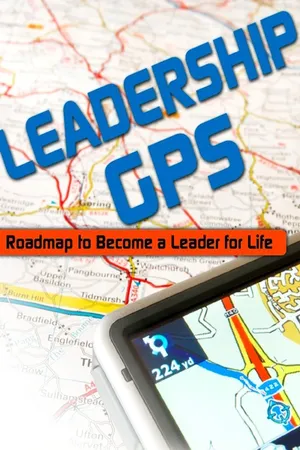
Leadership GPS: Roadmap to Become a Leader for Life
About this book
Information
Subtopic
LeadershipIndex
BusinessChapter 1 - Leadership Basics
Leading for Life Principle 1:
We are more than the work that we do. We are complicated, multifaceted beings who have multiple roles and identities. If our job becomes central to our existence, we are missing a myriad of opportunities to grow and develop.
Leading for Life Principle 2:
We need to enjoy the journey – there is much that we can learn along the way. Jesus came that we might have life and that more abundantly. The frenetic, crazy pace at which most of us operate now does not bode well for the long term.
Leading for Life Principle 3:
The people that are fellow sojourners impact and are impacted by us. We have the potential to make a difference in the lives of others. They are not merely in a parallel existence – we are interdependent and must consider how what we do and how we do it impacts others. There is the potential for collateral damage as we go about the busyness of our lives.
Leading for Life Principle 4:
We can learn to do things differently—we don’t have to be stuck where we are. We can make different choices and learn new skills and behaviors. We are not to be understudies in the production of our lives. While we shouldn’t be front and center at all times, we at least must be actively engaged and involved on the stage of our lives. God is the director, but we have an important role to play.
Leading for Life Principle 5:
We can learn from the experiences of others. We have both biblical and natural examples of leadership. You can learn from both, regardless of what your religious beliefs may be. Choose role models who holistically represent who you are as a leader. You may also learn from things people do poorly in addition to what they do well. We can also help others through our experiences.
Leading for Life Principle 6:
Failure is rarely fatal. Learning from mistakes is the key to our growth. A mistake has the potential to be a learning experience. Reframe the way you approach a situation and find the good and learning opportunities. Can the glass be half full for you? You have the choice of becoming bitter or better as a result of that experience. What is the legacy you are leaving?
Leading for Life Principle 7:
While this is listed as Principle 7, this is the core principle and is foundational for our belief that you can Lead for Life. Success means different things to different people. When I think of success, I am thinking about something that leaves a positive legacy, is sustainable, worthy of report, and makes a difference in the lives of others. Without Christ at the center of who you are and what you do, it is more difficult for you to be successful. Financial success is only one facet of success – success includes relationships, health, wisdom, right thinking, and right decisions.
These principles will show up in many different ways throughout this book. With God’s direction – His GPS – we can all be successful, impactful leaders for life.
Leading for Life Principle 1:
We are more than the work that we do. We are complicated, multifaceted beings who have multiple roles and identities. If our job becomes central to our existence, we are missing a myriad of opportunities to grow and develop.
My daughter, Janelle, and I used to sing cute little songs when we arose in the morning. We were so excited by life and wanted to jump right into our day. We would smile and sing and skip and dance our way into a wonderful and exciting day. We knew that God had great things in store for us that day, and we were not going to let anyone or anything ruin the wonderful way that we felt. We had such an exuberance when we celebrated the goodness of God and our gratitude for having another wonderful, potentially exciting, and value-laden day. What an awesome God we serve!
I wonder how long it’s been since you have skipped, smiled and sung songs to welcome your day. Does your life feel like a great adventure, where God is directing your path through incredibly wonderful and special opportunities and minor challenges? Or, does your life feel like work? Work in the sense that life was actually a burden, a necessary evil, something to be gotten through, perhaps? I can remember a time when I felt like much of what I did was W-O-R-K. I had lost my joie de vivre (joy of living), and I could not remember where I had relinquished it. Did someone steal it? Was it being held hostage somewhere? Did I throw it away, or had I left it somewhere? Sometimes I felt as if the gifts that God had given me had been stifled, and that I no longer walked with a light step, but rather with a ponderous plodding. I had exchanged my ballet and tap shoes for work boots, and I did not like the way that I felt.
Leading for Life Principle 2:
We need to enjoy the journey – there is much that we can learn along the way. Jesus came that we might have life and that more abundantly. The frenetic, crazy pace at which most of us operate now does not bode well for the long term.
During those times when I had lost my joy, I would do a quick sweep of the memories of my recent past. I would remember how often I felt frustrated because I felt that I had not been provided the opportunities to succeed that others had. Also in the midst of those pity-party times, I would recall how difficult life seemed, more of struggle than a joy, when I felt unappreciated and underutilized. Sometimes I felt that it did not matter how much I knew or could contribute – that other factors were determining whether or not I even had a chance to demonstrate what I could do. The enemy would take me back to a familiar place where I experienced so much anguish, and I would go with him. For example, I remember integrating my elementary school and always being one of one or one of the few African-Americans in whatever activity or endeavor in which I was involved. What a lonely feeling it was to believe that people saw race or gender instead of quality and value.
God kept whispering into my spirit Jeremiah 29:11-14 – For I know the thoughts that I think toward you, thoughts of good and not of evil. Thoughts of hope and an expected end. . . . .” He would sing that to me; I’d see those scriptures everywhere – on mugs, plaques, “Scripture of the day” paraphernalia and the like. Even when I felt hopeless, our God of hope let me know that He was, is and forever will be with me . . .and with you. Then, like the prodigal son, however, I would come back to myself and remember that my Father is the King of King and the Lord of Lords. God reminded me, as I am reminding you, that we ALWAYS have the victory through Christ Jesus. Like Paul, we have trouble on every side, but we are not confused, discouraged or broken up or down because of it. We have every confidence that Our Father will lead us safely through everything as encountered.
Leading for Life Principle 3:
The people that are fellow sojourners impact and are impacted by us. We have the potential to make a difference in the lives of others. They are not merely in a parallel existence – we are interdependent and must consider how what we do and how we do it impacts others. There is the potential for collateral damage as we go about the busyness of our lives.
I learned at a very early age that I could not allow what other people thought of me (when they only saw the surface, over which I had no control), and that it was much more important what I thought of me, based on who God said I am.
Before you get too religious on me, I want you to consider that my earliest lessons began when I integrated an elementary school in the fourth grade. I was the only African-American child in my grade, and there were none in the fifth through seventh grades. My sister, Beverly, was one grade behind me and had a child from our neighborhood in her class. My youngest sister, Peggy, was in the first grade and the other child’s brother was in her class. I was one of one, and I knew early on that I was different. Some people tried to make that difference (wrong, incomplete, somehow lacking) a difference of inferiority. However, my parents had instilled in me that I could do anything I tried to do, that there were no limits on what we could accomplish. My parents were both strong Christians who believed what God said about us – His children of color and all of His children – that we could do all things through Him who strengthened us. God’s wonderful gift to us is life (and eternal life at that); our gift to Him is what we become and how we take advantage of the opportunities He has provided to us for His Glory.
I remember making friends with the white kids in my classes in elementary school who were not allowed to be my friends outside of class. How strange it seemed to me that they could play with me in school, but I couldn’t be invited to the birthday parties and away-from school social events. No matter how “close” we were in class, there was a solid, un-crossable line between their lives and mine. I found this very interesting and learned to separate what I would share with “others” and what was for only my own inner circle, where I fit in. That inner circle was the ark of safety in my family and my faith. One thing that I found out early as well, was that if I did not allow myself to be distracted by how others perceived me, I could focus on becoming the best that I could – and that is what I tried to do. Every experience has the potential to make us better or bitter. We have a choice – we can believe what others say, think, and how they act toward us. Or we can be...
Table of contents
- eBook Cover
- Title Page
- Introduction
- Chapter 1 - Leadership Basics
- Chapter 2 – Knowing Who You Are and Whose You Are
- Chapter 3 – God’s Purpose and Plan for Our Lives
- Chapter 4 – Locate Where You Are
- Chapter 5 – Servant Leadership
- Chapter 6 – Time Management
- Chapter 7 – Setting Priorities
- Chapter 8 – Delegation
Trusted by 375,005 students
Access to over 1.5 million titles for a fair monthly price.
Study more efficiently using our study tools.
Frequently asked questions
Yes, you can cancel anytime from the Subscription tab in your account settings on the Perlego website. Your subscription will stay active until the end of your current billing period. Learn how to cancel your subscription
No, books cannot be downloaded as external files, such as PDFs, for use outside of Perlego. However, you can download books within the Perlego app for offline reading on mobile or tablet. Learn how to download books offline
Perlego offers two plans: Essential and Complete
- Essential is ideal for learners and professionals who enjoy exploring a wide range of subjects. Access the Essential Library with 800,000+ trusted titles and best-sellers across business, personal growth, and the humanities. Includes unlimited reading time and Standard Read Aloud voice.
- Complete: Perfect for advanced learners and researchers needing full, unrestricted access. Unlock 1.5M+ books across hundreds of subjects, including academic and specialized titles. The Complete Plan also includes advanced features like Premium Read Aloud and Research Assistant.
We are an online textbook subscription service, where you can get access to an entire online library for less than the price of a single book per month. With over 1.5 million books across 990+ topics, we’ve got you covered! Learn about our mission
Look out for the read-aloud symbol on your next book to see if you can listen to it. The read-aloud tool reads text aloud for you, highlighting the text as it is being read. You can pause it, speed it up and slow it down. Learn more about Read Aloud
Yes! You can use the Perlego app on both iOS and Android devices to read anytime, anywhere — even offline. Perfect for commutes or when you’re on the go.
Please note we cannot support devices running on iOS 13 and Android 7 or earlier. Learn more about using the app
Please note we cannot support devices running on iOS 13 and Android 7 or earlier. Learn more about using the app
Yes, you can access Leadership GPS: Roadmap to Become a Leader for Life by Janice Witt Smith in PDF and/or ePUB format, as well as other popular books in Business & Leadership. We have over 1.5 million books available in our catalogue for you to explore.