1.2.1 Diseases
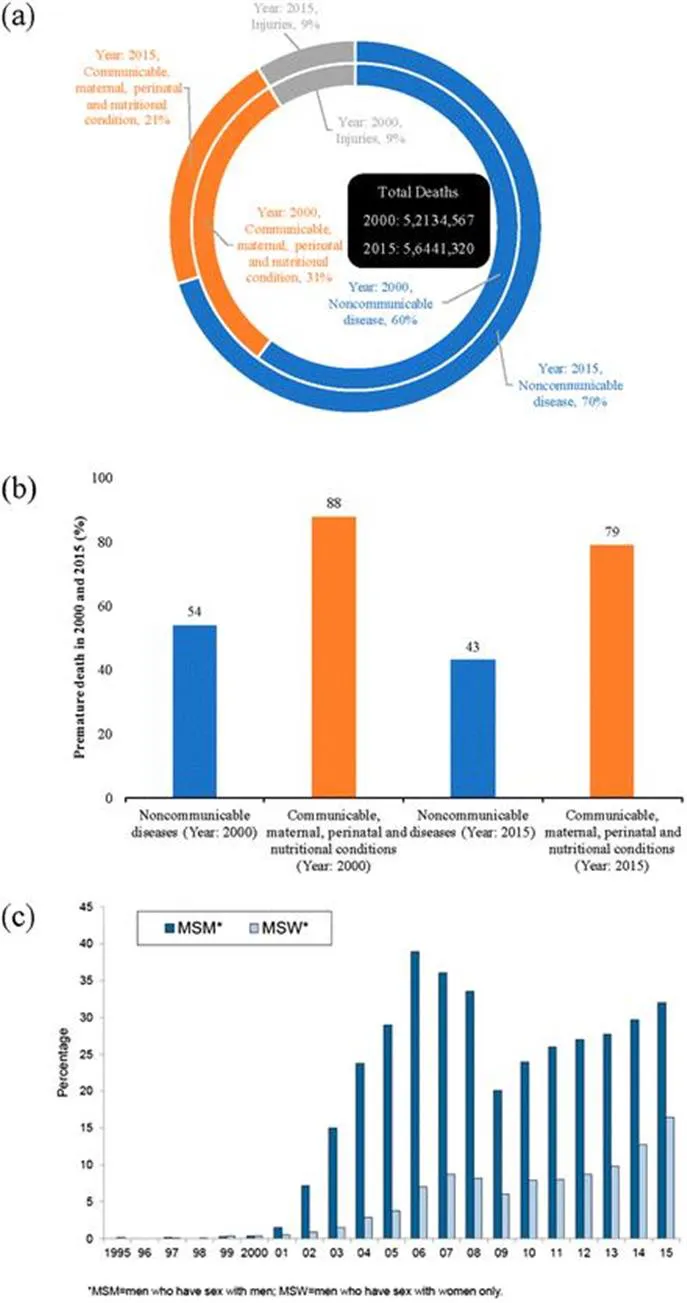
Science has made unprecedented advancement in disease prevention, diagnosis, and treatment, which has resulted in a significant reduction in mortality and an increase in life expectancy. These achievements notwithstanding, a significant proportion of the world’s population are yet to enjoy good health and well-being as exemplified by the 14.1 million new cancer cases diagnosed each year, 387 million people living with diabetes, and 1.1 billion people having high blood pressure.28 Also, the progress in medicine is challenged by the substantial number of premature deaths, for instance, the over 15.8 million premature deaths from noncommunicable diseases such as cancer in 2015 (Figure 1.2).29 The majority of these premature deaths are preventable if a healthier lifestyle is adopted or quality health care is provided. The scenario is bleak in developing countries where 82% of the deaths from noncommunicable diseases occur, and a projected $7 trillion USD will be lost over the next 13 years if the status quo remains.30 While the situation is better in developed countries whose governments implement policies that reduce risk factors and enable viable health care systems, it is still imperative that the positive epidemiological transition in these countries be sustained and copied in developing countries.
Figure 1.2 (a) Estimated global deaths and (b) global premature deaths from communicable and noncommunicable diseases in 2000 and 2015; (c) ciprofloxacin-resistant Neisseria gonorrhoeae isolates in the United States from 1995 to 2015. (a) and (b) Adapted from World Health Organization, Health Statistics and Information System. Estimates for 2000–2015, 2017,29 © WHO 2017. (c) Reproduced from Sexually Transmitted Disease Surveillance 2015: Gonococcal Isolate Surveillance Project (GISP) Supplement and Profiles, Centers for Disease Control and Prevention, Atlanta: U.S. Department of Health and Human Services; 2017.
The commendable decrease in the percentage of deaths from communication diseases between 2000 and 2015 (Figure 1.2)29 is due to advances in medicine, including the development of antimicrobial agents. However, the evolutionary process of natural selection coupled with the selective pressure exerted on pathogens by the overuse and misuse of drugs trigger a new threat: drug-resistant pathogens (Figure 1.2).8,9,12 Undoubtedly, drugs such as antibiotics have greatly benefited humanity, protecting patients from fatal illnesses and mitigating the risk involved in complex medical procedures such as surgery and chemotherapy, but the emergence of resistance threatens the sustainability of these erstwhile effective medical interventions. Globally, drug-resistant infections including malaria, HIV/AIDS, and tuberculosis kill an estimated 700 000 people yearly, and the number of deaths is projected to increase to 10 million yearly by 2050 if no pre-emptive action is taken.12 The burden of resistance extends beyond mortality, encompassing the economic, social and security landscapes with an estimated 100 trillion USD of the economy being at risk by 2050 if no action is taken to tackle the problem.12 The efforts of materials scientists on the research and development of new, affordable and accessible antimicrobial agents/drugs form part of a global action plan to mitigate the burden of antimicrobial resistance.
The therapeutic efficacy and safety of drugs directly depend on the mode of delivery, which includes the dosage form and route of administration. Indeed, drug delivery technologies affect the pharmacokinetics and pharmacodynamics of drugs as well as convenience and compliance of patients.18 The discovery of a new drug requires the development of a delivery technology that enables the therapeutic function and ensures patients’ safety and compliance. Current research on the development of drug delivery technologies seeks to localize therapeutic function at the target cells because this approach maximizes the effect and minimizes the toxicity. The administration of a new generation of highly potent and useful drugs such as peptides, proteins, genes and polymer-based drugs remains challenging due to the inherent problems such as enzymatic degradation, renal clearance, and immune system activation associated with state-of-the-art delivery systems.18,31–36 Indeed, these delivery barriers limit the clinical impact of many drugs and call for next-generation drug delivery technologies that ensure drug stability, specificity, and precise control over drug release, with the ultimate effect of localizing the therapeutic effects and guaranteeing patients’ safety and compliance.
1.2.2 Energy and Climate Change
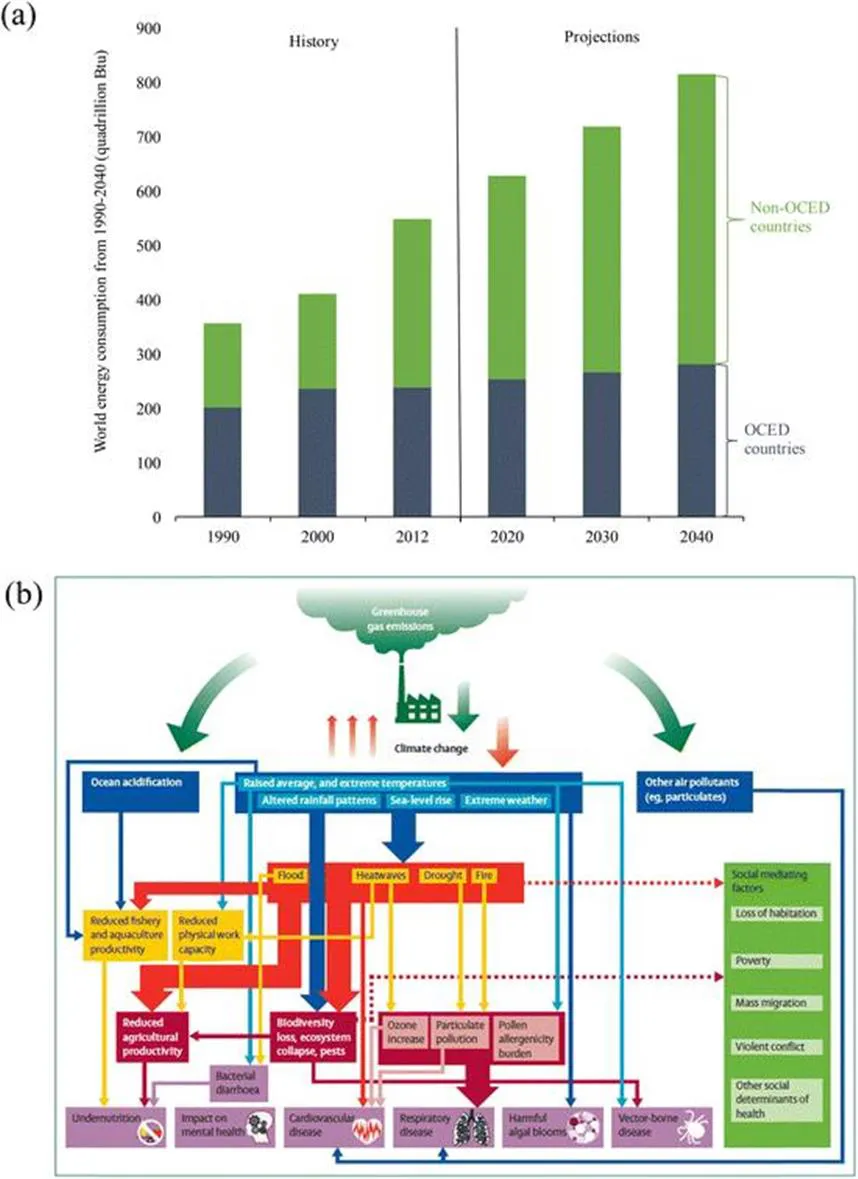
The prosperity and comfort inherent in contemporary lifestyles are strongly dependent on affordable and accessible energy. With a fast-growing population and economic prosperity, especially in developing countries, energy demand is expected to increase. The United States Energy Information Administration expects a 48% increase in 28 years, from the 549 quadrillion British thermal units (Btu) of energy consumed globally in 2012 to 815 quadrillion Btu in 2040 (Figure 1.3).6 Most likely, an extent of the projected increase could be offset by energy-efficient technologies as governments promote awareness about sustainability but a major energy crisis will persist if we maintain the existing situation. Currently, fossil fuels provide more than 80% of the global energy demand,7 but the non-renewability of fossil fuel within a realistic time frame poses a sustainability issue. Though global fossil fuel resources are of a sufficient quantity to meet increasing demand in the short term, converting these resources into reserves in an economical and eco-friendly approach requires advanced innovative solutions that could hike fuel prices and eventually challenge sustainable development. Another key issue with fossil fuel technologies is the comparatively high carbon dioxide footprint, which results from the combustion process and contributes significantly to greenhouse gas (GHG) concentrations in the atmosphere.1,5,7,22,37 The burning of fossil fuel also releases other GHGs including methane and nitrous oxide into the atmosphere, further contributing to the total concentration of GHGs in the atmosphere, which has steadily increased to an unprecedented level over the last 800 000 years.7,14 A growing amount of empirical evidence implicates these anthropogenic GHGs, mainly carbon dioxide from fossil fuel, as unequivocal drivers of global warming, which causes climate change.1,5,7,14,17,20,22,38,39 The threats posed by climate change to the planet, ecosystem and human survival are wide-ranging, affecting the physical, biological, social, and economic landscapes (Figure 1.3).14
Figure 1.3 (a) Historical and projected global energy consumption. (b)...