![]()
Part I.
The Nature of Physical Law
![]()
Chapter 1
A Bird’s Eye View of our Quest
This is an overview of the ideas covered in the book, parading many topics and their authors. This overview is not a direct summary, but serves to set the stage. Part I of the book looks at the hierarchical structure of science and physical systems arising from the existence of different energy scales and length scales. ‘Scientific revolutions’ occur when different energy and length scales are exposed by new tools. The themes unifying physical law at different length scales and at the most fundamental level are discussed. Part II looks at the emergence of collective phenomena, self-organizing processes, persistent structures, membranes, living cells, vision, memory, and consciousness as we consider increasingly complex systems at human length scales.
1.1 Duality, plurality, and reality
The idea of duality is often used in many traditions to imply that the world that we live in has a dual character — mind and matter, soul and soma, yin and yan, Adam (Om) and Eve (Jeeva), etc. The denial or defence of this duality constitutes the stuff of most philosophies and religions. Even the methodologies of analysis are categorized as reductionist or constructionist, bottom-up or top-down, and echo one’s attitude to this duality. The Jyana tradition of Buddhism, renamed as ‘Zen’ in the hands of Japanese masters, claims to reject duality and embraces a transcendent holistic unity. Willard Quine, espousing an utterly different secular philosophical tradition would also end up in demanding a holistic approach [177].
Modern physics, equipped with mathematics, a language infinitely more subtle and yet more limited than the language of human transactions, includes not only opposing dualities, but also commuting and non-commuting realities. However, in the physics approach, we need to isolate the part of nature that is to be studied, thus setting up a boundary. These boundary conditions are usually imposed to define a simpler system. This process involves working within a larger system and reducing a part of it for study. Many problems (see Sec. 2.2) associated with ‘holism, inductive knowledge’, or the ‘theory-laden’ nature of information and such matters can be resolved if the boundary conditions of the reduced system could be clearly stated. Sometimes the selected boundary conditions may have unintended symmetries that allow for dualities (Fig. 1.1) or pluralities in the perceived reality. In practice these symmetries cannot be exactly imposed and a selection is made by the observer (see Sec. 12.3.1). For instance, perception via our senses (vision or other), involves an interpretation of the input data where our brains supply the necessary information for ‘framing it’, or ‘breaking the symmetry’. This view plays a prominent role in Gestalt psychology [147].
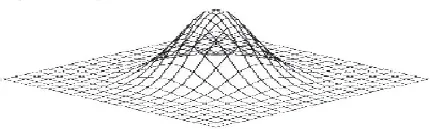
If we isolate bits of matter from each other by setting up suitable boundaries, then we can study atoms and even smaller constituents contained in them. This is the reductionist approach of the experimental physicist. The basic building blocks of physical reality at this scale are ‘excitations’ of an under-lying energy field. These excitations may be waves (Fig. 1.2) or particles (Fig. 1.3), depending on whether you set up experiments designed to ‘chase’ them along (i.e., determine the momentum) or catch them in one spot (i.e., determine the position).
Localized excitations of nature at the lowest level of reduction available to us are known as ‘elementary particles’. Frequently mentioned elementary particles are electrons, photons, gluons, neutrinos and quarks. These and other known building blocks of nature can be ‘cataloged’ in a sensible, comprehensible way using what is known as the ‘standard model’ of particle physics.
1.1.1 Contextuality, non-locality and de-coherence
The existence of a ‘wave-particle duality’ and its reconciliation are the essential features of the quantum nature of reality which underlies our experience. In the quantum world, actions are called operations, which themselves have
Fig. 1.1 Duality — the Greek vase which flips into two staring faces or reverts to a vase, as one keeps on looking at it. The frame, boundary conditions, or ‘gestalt structures’ needed to interpret the visual images are provided by the brain itself.
Fig. 1.2 An excitation of a sheet-like surface (an ‘energy field’) which is ‘wave-like’. The wave is not specifically localized at any spot but pervades the whole space defined by the boundary.
mathematical analogues known as operators. Their compatibility or incompatibility is described by mathematical rules (known as commutation rules) somewhat similar to the rules of protocol and precedence that we are familiar with, from actions in everyday life. For instance, in everyday life the operation of crossing the road and then closing our eyes, could be very different from closing our eyes and then crossing the road. So the order of operations, and the context matters. Similarly, sometimes philosophers of science [178] talk of contextuality to mean a similar property analogous to those of the quantum theory.
Another property of quantum systems is their extreme inter-connectedness. If there are a thousand particles in the system, the behaviour as observed at one end depends on every part of the system, somewhat as in a hologram. The system is described by a wavefunction which samples every bit of phase space available to it. A type of correlations found in quantum systems, i.e., quantum entanglement, is found to involve correlations far exceeding anything that can be
Fig. 1.3 A highly localized excitation of an ‘energy field’. This is a ‘particle-like’ excitation. This is built up by suitably adding (i.e., superposing) a lot of simple waves. An ‘anti-particle’ can be thought of as made up of waves which form a depression. Then the ‘vacuum state’ is the state where the underlying ‘energy field’ is ‘flat’, in an average sense (i.e., there can be spontaneous fluctuations known as ‘vacuum fluctuations’ made up of an equal number of particles and anti-particles). The particle can be made as sharply localized as we please by using suitable combinations of waves. However, such wavepackets may not hold together, i.e., stay in coherence, for very long.
produced using classical inter-connectedness, e.g., as found in a jigsaw-puzzle or a rubber netting. This brings to one’s mind some ‘spooky action’ connecting any part of the system to some part not local to it. This non-local property, or nonlocality of quantum systems, is hard to maintain for long, or over long distances, as the boundaries set up to define the system have to be maintained against all external disturbances. Otherwise, quantum correlations undergo decoherence due to perturbations from outside the boundaries of the system.
The larger the system, the more difficult it is to ‘protect it’ from decoherence. If such decoherence effects are ignored, all sorts of paradoxical conclusions can be drawn. Thus, we do not expect ‘spooky action at a distance’ within our everyday concepts of ‘localized reality’. Macroscopic quantum phenomena would indeed display ‘spooky action at a distance’; but decoherence destroys any such possibility. Furthermore, when we consider many-particle systems. the inter-particle distance begins to set a length-scale for quantum processes and electrons begin to form localized ‘chemical bonds’ (see Sec. 7.3.1). Then normal chemistry takes over from basic quantum phenomena. Loosely speaking, the resulting decrease in long-range quantum correlations leads to the property of near-sightedness proposed by Walter Kohn. Furthermore, when everyday objects (quantum systems of many particles) are considered at room temperature rather than at absolute zero, additional considerations (that we discuss in chapter 8) contribute to restore the reality that is familiar to us. Nevertheless, behind that familiar world, there is an enriched quantum reality revealed by physics.
In this enriched quantum reality, we have moved from a duality to a multi-scale plurality in a higher-level ‘unified’ view of the world, harmonizing the reductionist, holistic and non-commutative content of our knowledge. This does not really mean that we know the answers to many questions. However, the rise of molecular biology and neuroscience has presented a clear method of dealing with some of these complex questions. Furthermore, the universe is believed to be made up of dark energy (DE, 73%) and dark matter (DM, 23%). At present we have no idea of the nature of DE and DM. It is the few per cent of visible matter that is directly relevant to the human scale of things! This book deals only with those.
1.2 The ‘standard model’ of matter according to physics
Ancient thinkers distrusted the senses and resorted to introspection and usually had an idealist view of the world, although there were some materialist thinkers who were more close to the practical technologies that were known as ‘natural philosophy’. This tradition, combined with the interrogation of nature via experiments evolved into the disciplines of modern science. This was driven on the one hand by pure curiosity and theorizing about the world, and on the other by the activities of conquest, commerce, and social organization. Later in the book we discuss the nature of scientific knowledge and how successive theories have arrived at the contemporary views of our world. The most successful view of the world is the one codified by scientists who have investigated the ‘external world’ as a ...