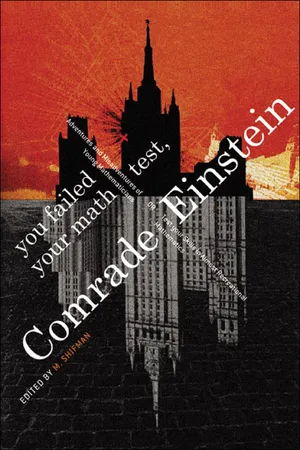
You Failed Your Math Test, Comrade Einstein
eBook - ePub

You Failed Your Math Test, Comrade Einstein

Adventures and Misadventures of Young Mathematicians

  1. 232 pages
  2. English
  3. ePUB (mobile friendly)
  4. Available on iOS & Android
eBook - ePub

You Failed Your Math Test, Comrade Einstein

Adventures and Misadventures of Young Mathematicians

About this book

This groundbreaking work features two essays written by the renowned mathematician Ilan Vardi. The first essay presents a thorough analysis of contrived problems suggested to “undesirable” applicants to the Department of Mathematics of Moscow University. His second essay gives an in-depth discussion of solutions to the Year 2000 International Mathematical Olympiad, with emphasis on the comparison of the olympiad problems to those given at the Moscow University entrance examinations.

The second part of the book provides a historical background of a unique phenomenon in mathematics, which flourished in the 1970s–80s in the USSR. Specially designed math problems were used not to test students' ingenuity and creativity but, rather, as “killer problems,” to deny access to higher education to “undesirable” applicants. The focus of this part is the 1980 essay, “Intellectual Genocide”, written by B Kanevsky and V Senderov. It is being published for the first time. Also featured is a little-known page of the Soviet history, a rare example of the oppressed organizing to defend their dignity. This is the story of the so-called Jewish People's University, the inception of which is associated with Kanevsky, Senderov and Bella Subbotovskaya.

Contents:

  • Mekh-Mat Entrance Examinations Problems (I Vardi)
  • Solutions to the Year 2000 International Mathematical Olympiad (I Vardi)
  • My Role as an Outsider, Ilan Vardi's Epilogue (I Vardi)
  • Intellectual Genocide (B Kanevsky & V Senderov)
  • Remarks (I Vardi)
  • Science and Totalitarianism (A Vershik)
  • Admission to the Mathematics Departments in Russia in the 1970's and 1980s (A Vershik)
  • Entrance Examination to the Mekh-Mat (A Shen)
  • Free Education at the Highest Price (K Tylevich)
  • Jewish University (D Fuchs)
  • Remembering Bella Abramovna (A Zelevinsky)
  • Bella Abramovna Subbotovskaya (I Muchnik)


Readership: High school and college mathematics and physics teachers, readers interested in recreational mathematics, and sociologists.
Frequently asked questions

Yes, you can cancel anytime from the Subscription tab in your account settings on the Perlego website. Your subscription will stay active until the end of your current billing period. Learn how to cancel your subscription.
No, books cannot be downloaded as external files, such as PDFs, for use outside of Perlego. However, you can download books within the Perlego app for offline reading on mobile or tablet. Learn more here.
Perlego offers two plans: Essential and Complete
  • Essential is ideal for learners and professionals who enjoy exploring a wide range of subjects. Access the Essential Library with 800,000+ trusted titles and best-sellers across business, personal growth, and the humanities. Includes unlimited reading time and Standard Read Aloud voice.
  • Complete: Perfect for advanced learners and researchers needing full, unrestricted access. Unlock 1.4M+ books across hundreds of subjects, including academic and specialized titles. The Complete Plan also includes advanced features like Premium Read Aloud and Research Assistant.
Both plans are available with monthly, semester, or annual billing cycles.
We are an online textbook subscription service, where you can get access to an entire online library for less than the price of a single book per month. With over 1 million books across 1000+ topics, we’ve got you covered! Learn more here.
Look out for the read-aloud symbol on your next book to see if you can listen to it. The read-aloud tool reads text aloud for you, highlighting the text as it is being read. You can pause it, speed it up and slow it down. Learn more here.
Yes! You can use the Perlego app on both iOS or Android devices to read anytime, anywhere — even offline. Perfect for commutes or when you’re on the go.
Please note we cannot support devices running on iOS 13 and Android 7 or earlier. Learn more about using the app.
Yes, you can access You Failed Your Math Test, Comrade Einstein by M Shifman in PDF and/or ePUB format, as well as other popular books in Education & Education General. We have over one million books available in our catalogue for you to explore.

Information

Publisher
WSPC
Year
2005
Print ISBN
9789812562791

PART

1

image
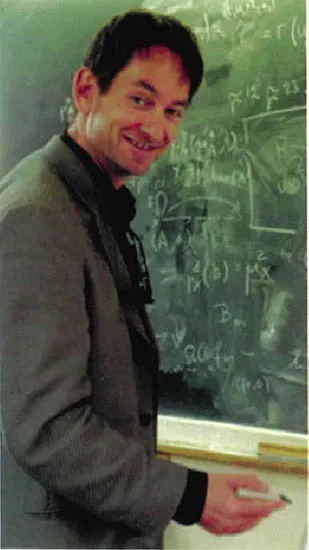
Ilan Vardi
Vardi is a mathematician with broad interests, including number theory, analysis, combinatorics, computer science, history of mathematics, and recreational mathematics. He is currently living in France.

MEKH-MAT ENTRANCE EXAMINATIONS PROBLEMS

ILAN VARDI
The recent articlesa of Anatoly Vershik and Alexander Shen [1,2] describe discrimination against Jews in Soviet universities during the 1970’s and 1980’s. The articles contain a report by Alexander Shen on the specific role of examinations in discrimination against Jewish applicants to the Mekh-mat at Moscow State University during the 1970’s and 1980’s. The article goes on to list “killer problems” that were given to Jewish candidates. However, solutions to the problems were not given in the article, so in order to judge their difficulty, one must try the problems for oneself. The aim of this note is to relieve readers of this time consuming task by providing a full set of solutions to the problems. Hopefully, this will help readers gain some insight into the ethical questions involved.
Section 2 consists of a personal evaluation of the problems in the style of a referee’s report. It was written to provide a template for readers to make a similar evaluation of the problems. This evaluation also reflects the author’s own mathematical strengths and weaknesses as well as his approach to problem solving. Readers are therefore encouraged to make up their own minds.
The problems are given exactly as in Ref. 2 with the names of the examiners and the year (A. Shen has explained that in his article, the name of the examiners and year is given by a set of problems ending with the name). Some inaccuracies of Ref. 2 both in the statement of the problems and attribution of examiners have have been corrected, see Section 4. Some of the statements are nevertheless incorrect. These errors are a reflection of either the examinations themselves, the reports given by the students, or the article of Ref. 2. In any case, this is further evidence for the need of a complete solution set.
These solutions were worked out during a six week period in July and August 1999. In order to retain some aspect of an examination, no sources were consulted. As a result, the solutions reflect gaps in the author’s background. However, this might offer some insight into how one can deal with a wide range of elementary problems without the help of outside references. An effort was therefore made to explain how the solutions were found. The solutions are the most direct that the author could come up with, so some unobvious tricks may have been overlooked.
After completing these problems, the author discussed them with other mathematicians who, in some cases, found much better solutions. These solutions are therefore given along with the author’s solutions in Section 3. Section 4 provides notes on the problems such as outside references and historical remarks.
The most egregious aspect of these problems is the fact that they are, to the author’s knowledge, the only example in which mathematics itself has been used a political tool. It is important to note that there is absolutely no controversy about whether this discrimination actual...

Table of contents

  1. Cover
  2. Half title
  3. Title
  4. Copyright
  5. About the Editor
  6. From the Editor
  7. Contents
  8. Part 1
  9. Part 2
  10. Part 3