![]()
1 | Luigi Tarisio and
the Violins of
Cremona |
What is there about that piece of maple and spruce and ebony that says ‘the master fashioned me?’
M. Aldric
It is not too much to say, that with hardly a memorable exception, all the great Cremonese and Brescian fiddles, which now command such prix fous, have passed through the cunning hands of Luigi Tarisio.
Rev. H.R. Haweiss
On a warm spring day in 1827, a man who looked like a tramp, carrying two bags on his shoulders, appeared at the Paris salon of M. Aldric, violin-maker, connoisseur of rare violins and dealer known throughout Europe. The man before him, in tattered clothing and with a bearded face, stood six feet tall with deep blue eyes and a forehead the color of copper. He identified himself as Luigi Tarisio from Milan, Italy; he was thirty-five years old and had walked all the way from Milan. On the way, he had met the violinmaker, Pierre Sylvestre in Lyon, who had directed him to Paris to seek Aldric's salon.
Reluctantly, Aldric let the man enter, who, thereafter, took out from one of his bags a beautiful, small violin without a fingerboard and a tailpiece. Aldric recognized the instrument instantly as the creation of Niccola Amati. Hiding his surprise and joy, he asked the man to show him the other contents in his bag. At this request, the man laid on the counter in front of Aldric—a Maggini, a Francesco Ruggeri, a Storioni, and two Grancinos.
After providing Tarisio with some rest and change of clothes, Aldric assembled friends and colleagues, including George Chanot, Charles Francois Gand and Jean Baptiste Vuillaume—all among Europe's greatest living authorities on violins. For a reported sum of 100,000 francs, together they purchased the masterpieces that Tarisio had brought with him from Italy.
This was the beginning of the rebirth of the Cremona violins, which for all practical purposes had been lost to the world until that point. A very few of them had found their names in the musical registers of the time and almost all of them belonged to one aristocrat or another. In Italy, the instruments, once so famous, lay collecting dust in villas, monasteries and farmhouse attics. In rescuing them from their unfortunate fate, Tarisio had begun a collection that would make him the greatest collector of stringed instruments ever known. On his first trip to Paris, he had brought only a small part of his collection—two sackfuls that he could carry on his shoulders, but it secured him a small fortune and initiated a fabulous career. During the following decades, Tarisio returned to Paris with more and more of the treasured instruments. He became a close friend of Vuillaume and through Vuillaume's patronage, a friend of almost all the well known violin dealers and collectors of the time throughout the continent.
Indeed, Tarisio occupies a special place in the history of Cremona violins. Described in some accounts as a colorful eccentric and a cunning peddler, he was gifted with a sixth sense when it came to tracking old instruments. He was born in Milan in 1792 to a poor family. As a small boy he had lessons in carpentry from his father and lessons in violin from his mother, who had ambitions for him to become a great fiddler in the tradition of Tartini, Corelli, or Pugnani. She inspired him with the contemporary example of Viotti, a blacksmith's son who had become a famous violinist at a very young age. When Tarisio was eight years old, she made him take lessons from a violin teacher in Milan.
However, it turned out that Tarisio was born with a crippled little finger. Within a few lessons, it became evident to his teacher that Tarisio was not destined to be a great violinist. While taking it upon himself to explain the unfortunate situation to his student, he simultaneously planted the seed of a different future for Tarisio. He described to him Cremona, the cradle of the art of violin making. This teacher himself owned a fine Stradivari violin. He spoke to Tarisio about the instrument and about the genius of Stradivari, saying “There are too few of these beautiful instruments left. Perhaps there lies your destiny—in finding them.”
From his father, Tarisio continued to learn the skills of carpentry and by the age of twelve or thirteen, he became a skilled carpenter, turning out picnic tables and outdoor benches. On his own, he also developed enough skills to fiddle at inns, barns and festivities. Although deprived of a formal education, he learned about the past glory of Cremona and the great works of master violin makers through the stories and rumors he heard. From these tidbits of history, he came to know, for instance, that the art treasures of Italy had been plundered and taken away to France during the Napoleonic wars and that they were much appreciated in that country. Thus he began to dream of the day when he would have the lost treasures of Cremona in his possession in order to take them to France. In 1809, he took the first step towards fulfilling his dream; he visited Cremona.
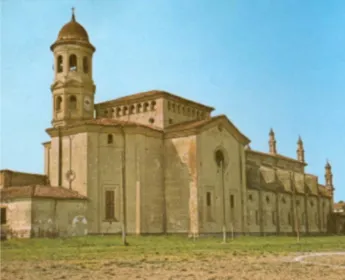
Figure 1a: Church Saint Sigismondo, a few miles away from Cremona.
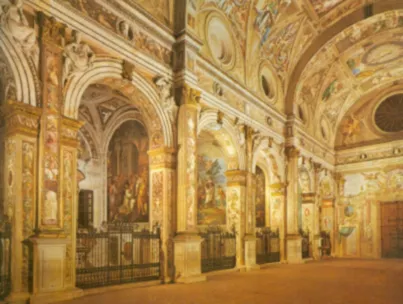
Figure 1b: The interior of the church contains the works of almost all the celebrated 16th Century Cremona painters.
He was a young man of seventeen when he walked two days from Milan to Cremona. At the St. Dominico church, he looked around the piazza and the courtyard where, less than a century ago, Antonio Stradivari and other celebrated violin makers of Cremona had built their homes and workshops, and worked side by side. And when he heard about the annual fall festival of the farmers in the parish of Saint Sigismondo, a few miles away from Cremona, Tarisio made his way to the parish to witness the festival, to fiddle and dance and enjoy the Lombardi wines. The festival marked a dramatic ritual in which an artificial bird, Colombina, made of grain and fireworks was set afire and let loose zooming along a wire stretched from the altar in the church all the way to the entrance. The flaming Colombina was believed to be the manifestation of the Lord himself, and as the bird sped along the wire with the golden bundle of grain in its tail sputtering like fireworks, the outstretched hands of humanity struggled to touch the flame. Tarisio shared the excitement of the event, which was followed by the opening of barrels of wine in front of the church.
What came next borders on a miracle. As he drank and fiddled, to his great surprise, he was met by a monk who ushered him into the church and took him to meet a nun named Sister Francesca. Tarisio learned that she was not only the most important nun of the parish but also the granddaughter of Stradivari, the daughter of his youngest son Paolo. As though she knew Tarisio and his destiny, Sister Francesca shared with him her sadness, sadness at the disappearance of the violins of her grandfather and other Cremona masters. She told him how her father and others in the family and priests had failed to persuade the city elders to build a museum commemorating the memory of her grandfather and to preserve and perpetuate the art of violin making. This proposal had fallen on deaf ears. But she was sure that someday the marvelous instruments would reappear; someone would come along and lead a renaissance of the violin. Sister Francesca believed that Tarisio, the young man sitting in front of her, was this person.
If he searched, she told him, he would find abandoned masterpieces everywhere in churches, monasteries, farmhouses, pawnshops and elsewhere. In the Castle Corte Reale in Mantua, the ancestral home of Gonzagas, a prestigious family, which once maintained their own private orchestra, she had heard there were six Stradivaris. And in her father's home, she had seen a violin that defied description in its beauty and perfection, the violin that was certainly her grandfather's most perfect piece of workmanship. She told him how her father, Paolo, disgusted with and angry at the city elders, had parted with it, selling it to a nobleman in Florence, Count Cozio di Salabue. It was in his hands currently and Tarisio must get it back at any cost.
This unexpected encounter and the burden that had been placed upon him left Tarisio in disbelief. Moreover, he was not free immediately to undertake the mission. A commitment had already been made that until he reached the age of twenty-five, Tarisio would be apprenticed to a carpenter in Milan. When he told Sister Francesca about this previous arrangement, she replied, “You need not worry about the apprenticeship. Here in the church there are ways of settling such affairs.” The next day the monk who had taken him to Sister Francesca the previous day handed him a letter written by the sister to His Holiness, Bishop of Milan. It said,
The bearer (of this letter) is Luigi Tarisio, of Milan, who is apprenticed to a carpenter in your diocese. A noble burden has been thrust upon this youth's shoulders; his heart and mind are dedicated to the task of restoring to mankind the treasured creations of my illustrious grandfather, Antonio Stradivari. In our land, torn and bleeding from the wounds of intercine war, sadness and despair have become an intaglio symbolical of all that is evil and bad. The songs and music have vanished from the hearts of our beloved children. The glorious violins and cellos of my grandfather, endowed with an almost heavenly beauty, were fashioned of things ephemeral by a man whose entire years were dedicated, in his own productive manner, to bringing joy and song to the lips and hearts of all mankind; indeed a noble purpose.
I myself, Most Reverend Father, have dedicated all my years to the work of Christ. The thread of life has worn bare and my hour is approaching.
I beseech you to release Tarisio from the bonds of apprenticeship so that he may complete this mission in life.
Along with the letter, he was also handed a violin Sister Francesca had brought with her years ago, one of her grandfather's creations and was told that Sister Francesca had passed away during the night. Saddened and mystified at the strange turn of events in his life, Tarisio returned to Milan with his mind made up to devote his life to finding the lost treasures of Cremona violins. Someday, he fancied and dreamed he would have enough of them to take to Paris and return rich and famous. But upon his arrival in Milan, he found that all this had to wait. Milan was at war, and he himself had received notice of conscription. His ambition thwarted, Tarisio had to leave Milan as a soldier with the army and fight with his regiment against both the French and the Austrians, which he did at Lodi, Piacenza, Casalmaggiori, Guastalla, and Mirandola.
When the war was over, Tarisio was in his mid-twenties. Released from his apprenticeship, his first task was to find a way to earn a livelihood. Carpentry was the only trade he knew. As luck would have it, on his way back to Milan, he encountered a farmer in a village who needed repairs to his house. While doing the job, he found an old violin case containing a violin. Some of the glue had dried out; the fingerboard was loose, with the bridge and the pegs missing; its strings hung on it frayed and useless. But the box was in good condition; it had retained its beauty and had the name of Amati imprinted inside. To Tarisio's delight, the farmer parted with the violin just for the asking. With this treasure in his possession, Tarisio's dream was rekindled. By the time he returned to Milan, six months after the war ended, he had picked up a half dozen or so more of the old violins. In the towns he visited, he came to learn that the contemporary violinmakers had little or no respect for the great works of the past. While this disregard and disrespect for the glorious past did not please him, he was happy in a way for himself. As long as they considered the old violins of little value, his own quest for them would be easy.
After a brief reunion with his parents and family and a period of settling down to carpentry and repairing old violins, he set forth to accomplish his cherished dream. He set off on foot to Mantua, some 120 kilometers away from Milan, and found several old violins the very day he arrived in the town. The city was in ruins, but in the Piazza dell'Erbe, he found a violin shop owned by a person named Dall'Aglio. When Tarisio confided the details of his quest to Dall'Aglio, the shop owner told him to go to Corte Reale, the ancestral home of the Gonzagas, where he would find a caretaker who would give him all the Stradivaris he could carry away. This report confirmed what Tarisio had heard from Sister Francesca several years before on that eventful day. Without wasting any time, Tarisio made it to Corte Reale and found the caretaker priest who guarded the ruins. The priest offered Tarisio food and rest. And then, when Tarisio played a merry tune on the cheap fiddle that he had brought along with him and let the priest play on it as well, the priest disappeared and returned with six wooden boxes, each containing a Stradivari in sad disrepair. In an easy exchange, Tarisio quickly managed to trade a cheap shiny, fiddle for six Strads; the caretaker was content to have a fiddle that he could play on to amuse himself in his lonely hours.
This encounter was the beginning of a pattern—a cheap new fiddle for a priceless old Cremona! He traveled around carrying worthless, modern instruments, which appeared of high-quality and used them as bait for owners of good but often inconspicuous violins badly in need of repair. It took little effort on Tarisio's part to make an exchange. The owners readily parted with what they perceived as junk for a lustrous new fiddle. If parts of an old instrument were to be had, he would buy them for a few coins. “He bought everything he could lay his hands on,” says Farga, “…finger-boards, peg-boxes, bridges, bellies, broken backs, and tail pieces.” Thus, Tarisio became the owner of a formidable collection of old instruments. In the process he became so knowledgeable about the various Italian schools of violin making that “a single glance sufficed him not only to recognize a Bergonzi, Amati, or Stradivari, but to tell its year of origin as well.”
Of this bounty, Tarisio took only a small portion on his first historic trip to Paris. Although he obtained only a modest amount of money from Aldric and others, it was enough to buy a farmhouse for his parents at Fontanetto near Milan. He could even rent a place for himself, an attic of a second story building, which would serve as his business office and a place to store his Cremonas. Now he could afford a horse and buggy for travel. A few days after his return, he set forth again on his relentless pursuit of the old Cremonas. Luck seemed to favor him all the way. Word was spreading about a young man in search of old violins for new ones. Thus, he learned from a stable owner in Crema that the abbot in the rundown Cathedral had in his possession several old violins. Indeed, the Father Sebastian had several Cremonas and was willing to part with them in exchange for Tarisio's skills as a carpenter, to have some badly needed repairs done in the church. With a day and a night's work, Tarisio was rewarded with two Amatis, a Stradivari, a Storoni and a Guadagnini. Although none of them had strings or any of their mountings, they were all in good condition and had the names of their creators inscribed. In Cremona, he met Carlo Bergonzi 2nd, the grandson of the illustrious Carlo Bergonzi, an apprentice and the last pupil of Stradivari. Bergonzi 2nd was now an old man. He had many great stories to tell to young Tarisio, stories that he had heard from his grandfather about Stradivari's art and craft, his method of choosing wood and varnish. More importantly, he had in his possession several Cremonas that he had used to model his own instruments. He readily parted with them for Tarisio's collection, a collection which eventually became distributed to the rest of the world.
Carlo Bergonzi 2nd also spoke to Tarisio about the last violin that Stradivari had made, an instrument of incredible beauty that had never been played, and which was sold to Count Ignazio Alessandro Cozio de Salabue. Sister Francesca had described the same instrument to him several years before and had charged him to secure it at any cost. Count Cozio was a remarkable man in his own right. Born into the aristocracy on March 14, 1755 in Casale Montferrato in Piedemont, he inherited, when his father died suddenly, a Nicolo Amati violin dated 1688. While still in his teens, Count Cozio developed a great love for the instrument and began to collect old instruments. By 1774, he had at his disposal a superb collection of Cremonas. Out of anger and frustration at the city of Cremona, Paulo Stradivari had sold him all of his father's instruments, as well as his tools and patterns. As a result, Cozio's collection included instruments that would subsequently acquire fame under the names “Le Messie,” “The Paganini,” “The Viotti.” Cozio had also some Guarneris del Jesu, some Ruggeris, some Amatis and some Cappas.
Cozio was not only a collector, but also a man who had a serious mission in his life. He had felt the decline in the art of violin making and determined to rescue it from passing to oblivion. He had heard that Gian Battista Guadagnini, a great violinmaker and son of Stradivari's pupil and assistant, Laurenzo Guadagnini, was living in Turin and at the age of sixty-three was having a hard time making a living. In keeping with his resolution, the young count adopted the old man and commissioned him to make fifty violins. These violins also passed into his collection. And when he died in 1840, having devoted the last decades of his life to the study of Piedmont general history, he left behind an estate that included seventy-four instruments, including the fifty made by Guadagnini. Tarisio, who was certainly aware of the treasur...