Geometry Of Crystallographic Groups
eBook - ePub

Geometry Of Crystallographic Groups

  1. 208 pages
  2. English
  3. ePUB (mobile friendly)
  4. Available on iOS & Android
eBook - ePub

Geometry Of Crystallographic Groups

About this book

Crystallographic groups are groups which act in a nice way and via isometries on some n -dimensional Euclidean space. They got their name, because in three dimensions they occur as the symmetry groups of a crystal (which we imagine to extend to infinity in all directions). The book is divided into two parts. In the first part, the basic theory of crystallographic groups is developed from the very beginning, while in the second part, more advanced and more recent topics are discussed. So the first part of the book should be usable as a textbook, while the second part is more interesting to researchers in the field. There are short introductions to the theme before every chapter. At the end of this book is a list of conjectures and open problems. Moreover there are three appendices. The last one gives an example of the torsion free crystallographic group with a trivial center and a trivial outer automorphism group.

This volume omits topics about generalization of crystallographic groups to nilpotent or solvable world and classical crystallography.

We want to emphasize that most theorems and facts presented in the second part are from the last two decades. This is after the book of L Charlap “Bieberbach groups and flat manifolds” was published.

Contents:

  • Definitions
  • Bieberbach Theorems
  • Classification Methods
  • Flat Manifolds with b 1 = 0
  • Outer Automorphism Groups
  • Spin Structures and Dirac Operator
  • Flat Manifolds with Complex Structures
  • Crystallographic Groups as Isometries of ℍ n
  • Hantzsche–Wendt Groups
  • Open Problems


Readership: Researchers in geometry and topology, algebra and number theory and chemist.

Frequently asked questions

Yes, you can cancel anytime from the Subscription tab in your account settings on the Perlego website. Your subscription will stay active until the end of your current billing period. Learn how to cancel your subscription.
No, books cannot be downloaded as external files, such as PDFs, for use outside of Perlego. However, you can download books within the Perlego app for offline reading on mobile or tablet. Learn more here.
Perlego offers two plans: Essential and Complete
  • Essential is ideal for learners and professionals who enjoy exploring a wide range of subjects. Access the Essential Library with 800,000+ trusted titles and best-sellers across business, personal growth, and the humanities. Includes unlimited reading time and Standard Read Aloud voice.
  • Complete: Perfect for advanced learners and researchers needing full, unrestricted access. Unlock 1.4M+ books across hundreds of subjects, including academic and specialized titles. The Complete Plan also includes advanced features like Premium Read Aloud and Research Assistant.
Both plans are available with monthly, semester, or annual billing cycles.
We are an online textbook subscription service, where you can get access to an entire online library for less than the price of a single book per month. With over 1 million books across 1000+ topics, we’ve got you covered! Learn more here.
Look out for the read-aloud symbol on your next book to see if you can listen to it. The read-aloud tool reads text aloud for you, highlighting the text as it is being read. You can pause it, speed it up and slow it down. Learn more here.
Yes! You can use the Perlego app on both iOS or Android devices to read anytime, anywhere — even offline. Perfect for commutes or when you’re on the go.
Please note we cannot support devices running on iOS 13 and Android 7 or earlier. Learn more about using the app.
Yes, you can access Geometry Of Crystallographic Groups by Andrzej Szczepański in PDF and/or ePUB format, as well as other popular books in Biowissenschaften & Wissenschaft Allgemein. We have over one million books available in our catalogue for you to explore.

Information

Chapter 1
Definitions
In this introductory chapter we define a language of the isometry group of the Euclidean space. We also introduce an elementary world of covering spaces, group actions and discrete subgroups.
Let
imges
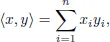
n be an n-dimensional Euclidean space with the standard scalar product
images
where
imges
and
imges
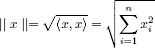
This gives us a norm of vectors
imges
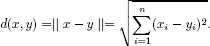
and metric
imges
Definition 1.1. A map
imges
is an isometry if for any
imges
imges
The next proposition follows directly from the definition.
Proposition 1.1. The set of all isometries of
imges
n is a group with respect to composition of maps
.
By E(n) we shall denote the group of all isometries of the Euclidean space
imges
n. We distinguish two types of isometries: translations and linear orthogonal maps.
Definition 1.2. Let a
imges
n. A map
imges
defined by the formula
ta (x) = a + x
is called a translation of the space
imges
n.
Proposition 1.2. The set of all translations of
imges
n is a normal subgroup of E(n). The function a → ta defines an isomorphism of the additive group
imges
n and the group of all translations of
imges
n.
Therefore, we shall also denote by
imges
n the group of all translations of the Euclidean space
imges
n.
Definition 1.3. A linear map :
imges
is orthogonal if for any x,y
imges
n
imges
Proposition 1.3. A linear map
imges
is orthogonal if and only if for any x
imges
n
,
imges
x
imges
=
imges
A(x)
imges
.
Proof. The implication ‘⇒’ follows from the definition of the orthogonal map. For the proof of the other implication let us assume that A is a ...

Table of contents

  1. Cover
  2. HalfTitle
  3. SubTitle
  4. Title
  5. Copyright
  6. Preface
  7. Contents
  8. 1. Definitions
  9. 2. Bieberbach Theorems
  10. 3. Classification Methods
  11. 4. Flat Manifolds with b1 = 0
  12. 5. Outer Automorphism Groups
  13. 6. Spin Structures and Dirac Operator
  14. 7. Flat Manifolds with Complex Structures
  15. 8. Crystallographic Groups as Isometries of Rn
  16. 9. Hantzsche-Wendt Groups
  17. 10. Open Problems
  18. Appendix A Alternative Proof of Bieberbach Theorem
  19. Appendix B Burnside Transfer Theorem
  20. Appendix C Example of a Flat Manifold without Symmetry
  21. Bibliography
  22. Index