Back-of-the-envelope Quantum Mechanics: With Extensions To Many-body Systems And Integrable Pdes
eBook - ePub

Back-of-the-envelope Quantum Mechanics: With Extensions To Many-body Systems And Integrable Pdes

With Extensions to Many-Body Systems and Integrable PDEs

  1. 172 pages
  2. English
  3. ePUB (mobile friendly)
  4. Available on iOS & Android
eBook - ePub

Back-of-the-envelope Quantum Mechanics: With Extensions To Many-body Systems And Integrable Pdes

With Extensions to Many-Body Systems and Integrable PDEs

About this book

Dimensional and order-of-magnitude estimates are practiced by almost everybody but taught almost nowhere. When physics students engage in their first theoretical research project, they soon learn that exactly solvable problems belong only to textbooks, that numerical models are long and resource consuming, and that “something else” is needed to quickly gain insight into the system they are going to study. Qualitative methods are this “something else”, but typically, students have never heard of them before.

The aim of this book is to teach the craft of qualitative analysis using a set of problems, some with solutions and some without, in advanced undergraduate and beginning graduate Quantum Mechanics. Examples include a dimensional analysis solution for the spectrum of a quartic oscillator, simple WKB formulas for the matrix elements of a coordinate in a gravitational well, and a three-line-long estimate for the ionization energy of atoms uniformly valid across the whole periodic table. The pièce de résistance in the collection is a series of dimensional analysis questions in Integrable Nonlinear Partial Differential Equations with no dimensions existing a priori. Solved problems include the relationship between the size and the speed of solitons of the Korteweg–de Vries equation and an expression for the oscillation period of a Nonlinear Schrödinger breather as a function of its width.


Contents:

  • Ground State Energy of a Hybrid Harmonic-Quartic Oscillator: A Case Study
  • Bohr-Sommerfeld Quantization
  • “Halved” Harmonic Oscillator: A Case Study
  • Semi-Classical Matrix Elements of Observables and Perturbation Theory
  • Variational Problems
  • Gravitational Well: A Case Study
  • Miscellaneous
  • The Hellmann-Feynman Theorem
  • Local Density Approximation Theories
  • Integrable Partial Differential Equations


Readership: Advanced undergraduate and beginning graduate students in physics.
Key Features:

  • This book is the only existing title on qualitative methods in Quantum Mechanics at the advanced undergraduate / beginning graduate level. A B Migdal's Qualitative Methods in Quantum Theory (Westview Press (2000)) is far too advanced. M Gitterman and V Halpern's Qualitative Analysis of Physical Problems (Academic Press (1981)) is too broad. [Sanjoy Mahajan's, Street-Fighting Mathematics (The MIT Press (2010)) is on mathematics. Vladimir P Krainov's Qualitative Methods in Physical Kinetics and Hydrodynamics (American Institute of Physics (1992)) is on physical kinetics and hydrodynamics. The above list is likely to exhaust all the textbooks in qualitative methods in physics and mathematics ever published
  • The book is structured as a coherent sequence of problems aimed at addressing the whole spectrum of dimensional and order-of-magnitude methods
  • This book can be used as a secondary text and a source for homework assignments in any advanced undergraduate / beginning graduate course in Quantum Mechanics or in Partial Differential Equations

Frequently asked questions

Yes, you can cancel anytime from the Subscription tab in your account settings on the Perlego website. Your subscription will stay active until the end of your current billing period. Learn how to cancel your subscription.
No, books cannot be downloaded as external files, such as PDFs, for use outside of Perlego. However, you can download books within the Perlego app for offline reading on mobile or tablet. Learn more here.
Perlego offers two plans: Essential and Complete
  • Essential is ideal for learners and professionals who enjoy exploring a wide range of subjects. Access the Essential Library with 800,000+ trusted titles and best-sellers across business, personal growth, and the humanities. Includes unlimited reading time and Standard Read Aloud voice.
  • Complete: Perfect for advanced learners and researchers needing full, unrestricted access. Unlock 1.4M+ books across hundreds of subjects, including academic and specialized titles. The Complete Plan also includes advanced features like Premium Read Aloud and Research Assistant.
Both plans are available with monthly, semester, or annual billing cycles.
We are an online textbook subscription service, where you can get access to an entire online library for less than the price of a single book per month. With over 1 million books across 1000+ topics, we’ve got you covered! Learn more here.
Look out for the read-aloud symbol on your next book to see if you can listen to it. The read-aloud tool reads text aloud for you, highlighting the text as it is being read. You can pause it, speed it up and slow it down. Learn more here.
Yes! You can use the Perlego app on both iOS or Android devices to read anytime, anywhere — even offline. Perfect for commutes or when you’re on the go.
Please note we cannot support devices running on iOS 13 and Android 7 or earlier. Learn more about using the app.
Yes, you can access Back-of-the-envelope Quantum Mechanics: With Extensions To Many-body Systems And Integrable Pdes by Maxim Olshanii in PDF and/or ePUB format, as well as other popular books in Scienze fisiche & Equazioni differenziali. We have over one million books available in our catalogue for you to explore.

Information

Chapter 1
Ground State Energy of a Hybrid
Harmonic-Quartic Oscillator:
A Case Study
Introduction
Consider the Schrödinger equation for a one-dimensional particle moving in a combination of harmonic potential of frequency ω and a quartic potential of strength β:
images
(1.1)
where m is the particle’s mass. We will be mainly interested in determining the ground state energy. The Eq. (1.1) does not allow for an exact solution. However, the major features of the dependence of the ground state energy on the system parameters can be determined via elementary methods, such as dimensional analysis, order-of-magnitude estimates, and simple variational bounds. The goal of this chapter is to illustrate the application of these methods using the ground state problem (1.1) as an example.
1.1Solved problems
1.1.1Dimensional analysis and why it fails in this case
The assignment is: perform dimensional analysis of the problem and show that from a dimensional point of view the problem is underdetermined: no estimate for the ground state energy can be produced. However, some information about the structure of the expression for the ground state energy can still be extracted, on purely dimensional grounds.
Solution: The dimensional procedure for finding the ground state energy Eg.s. (or assessing the impossibility of a complete dimensional solution) is as follows:
— Begin by identifying the principal units of measurement for the problem, i.e. the minimal set of units sufficient to describe all input parameters of the problem. For stationary problems in quantum mechanics, the units of length, [
images
], and energy, [
images
], have been proven to provide a handy set;
— Identify the input parameters and units used to measure them;
— Determine the maximal set of independent dimensionless parameters: the set will include only the parameters that are generally either much greater or much less than unity. These include both the dimensionless parameters present in the problem a priori (such as the quantum number n), and the dimensionless combinations of the dimensionful input parameters. If the set is empty, the unknown quantities can be determined almost completely, i.e. up to a numerical prefactor of the order of unity. If some dimensionless parameters are present, the class of possible relationships between the unknowns and the input parameters can be narrowed down, but the order of magnitude of the unknown quantities can not be determined.
— For each of the principal units, choose a scale: a combination of the input parameters measured using the unit in question;
— Express the unknown quantities as a multi-power-law of principal scales, times an arbitrary function of all dimensionless parameters, if any. If no dimensionless parameters are present, the arbitrary function is replaced by an arbitrary constant, presumed to be of the order of unity.
In our case, the above procedure gives:
The principal units—the units of length and the units of energy:
images
The input parameters and their units:
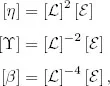
images
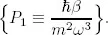
where η ≡ ħ2/m and ϒ ≡ mω2;
The set of independent dimensionless parameters =
images
(1.2)
It is represented by a single...

Table of contents

  1. Cover
  2. Halftitle Page
  3. Title Page
  4. Copyright
  5. Preface
  6. Contents
  7. 1. Ground State Energy of a Hybrid Harmonic-Quartic Oscillator: A Case Study
  8. 2. Bohr-Sommerfeld Quantization
  9. 3. “Halved” Harmonic Oscillator: A Case Study
  10. 4. Semi-Classical Matrix Elements of Observables and Perturbation Theory
  11. 5. Variational Problems
  12. 6. Gravitational Well: A Case Study
  13. 7. Miscellaneous
  14. 8. The Hellmann-Feynman Theorem
  15. 9. Local Density Approximation Theories
  16. 10. Integrable Partial Differential Equations
  17. Further Reading
  18. Subject Index
  19. Author Index