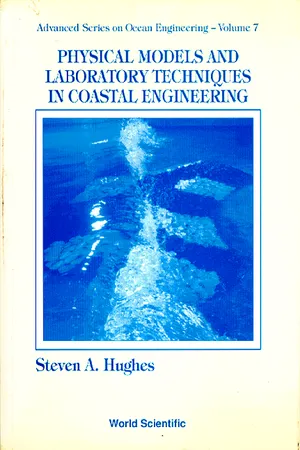
Laboratory physical models are a valuable tool for coastal engineers. Physical models help us to understand the complex hydrodynamic processes occurring in the nearshore zone and they provide reliable and economic engineering design solutions.This book is about the art and science of physical modeling as applied in coastal engineering. The aim of the book is to consolidate and synthesize into a single text much of the knowledge about physical modeling that has been developed worldwide.This book was written to serve as a graduate-level text for a course in physical modeling or as a reference text for engineers and researchers engaged in physical modeling and laboratory experimentation. The first three chapters serve as an introduction to similitude and physical models, covering topics such as advantages and disadvantages of physical models, systems of units, dimensional analysis, types of similitude and various hydraulic similitude criteria applicable to coastal engineering models.Practical application of similitude principles to coastal engineering studies is covered in Chapter 4 (Hydrodynamic Models), Chapter 5 (Coastal Structure Models) and Chapter 6 (Sediment Transport Models). These chapters develop the appropriate similitude criteria, discuss inherent laboratory and scale effects and overview the technical literature pertaining to these types of models. The final two chapters focus on the related subjects of laboratory wave generation (Chapter 7) and measurement and analysis techniques (Chapter 8).
- 586 pages
- English
- PDF
- Available on iOS & Android
eBook - PDF
Physical Models And Laboratory Techniques In Coastal Engineering
About this book
Information
Table of contents
- Contents
- Preface
- Chapter 1 Introduction
- Chapter 2 Dimensional Analysis
- Chapter 3 Principles of Similitude
- Chapter 4 Hydrodynamic Models
- Chapter 5 Coastal Structure Models
- Chapter 6 Sediment Transport Models
- Chapter 7 Laboratory Wave Generation
- Chapter 8 Laboratory Measurement and Analysis
- Appendix A Metric (SI) System
- Appendix B Symbols and Notation
- Author Index
- Subject Index
Trusted by 375,005 students
Access to over 1.5 million titles for a fair monthly price.
Study more efficiently using our study tools.
Frequently asked questions
Yes, you can cancel anytime from the Subscription tab in your account settings on the Perlego website. Your subscription will stay active until the end of your current billing period. Learn how to cancel your subscription
No, books cannot be downloaded as external files, such as PDFs, for use outside of Perlego. However, you can download books within the Perlego app for offline reading on mobile or tablet. Learn how to download books offline
We are an online textbook subscription service, where you can get access to an entire online library for less than the price of a single book per month. With over 1.5 million books across 990+ topics, we’ve got you covered! Learn about our mission
Look out for the read-aloud symbol on your next book to see if you can listen to it. The read-aloud tool reads text aloud for you, highlighting the text as it is being read. You can pause it, speed it up and slow it down. Learn more about Read Aloud
Yes! You can use the Perlego app on both iOS and Android devices to read anytime, anywhere — even offline. Perfect for commutes or when you’re on the go.
Please note we cannot support devices running on iOS 13 and Android 7 or earlier. Learn more about using the app
Please note we cannot support devices running on iOS 13 and Android 7 or earlier. Learn more about using the app
Yes, you can access Physical Models And Laboratory Techniques In Coastal Engineering by Steven A Hughes in PDF and/or ePUB format, as well as other popular books in Biological Sciences & Science General. We have over 1.5 million books available in our catalogue for you to explore.