Integer Algorithms In Cryptology And Information Assurance
eBook - ePub

Integer Algorithms In Cryptology And Information Assurance

  1. 460 pages
  2. English
  3. ePUB (mobile friendly)
  4. Available on iOS & Android
eBook - ePub

Integer Algorithms In Cryptology And Information Assurance

About this book

Integer Algorithms in Cryptology and Information Assurance is a collection of the author's own innovative approaches in algorithms and protocols for secret and reliable communication. It concentrates on the “ what ” and “ how ” behind implementing the proposed cryptographic algorithms rather than on formal proofs of “why” these algorithms work.

The book consists of five parts (in 28 chapters) and describes the author's research results in:

-->

  • Innovative methods in cryptography (secret communication between initiated parties);
  • Cryptanalysis (how to break the encryption algorithms based on computational complexity of integer factorization and discrete logarithm problems);
  • How to provide a reliable transmission of information via unreliable communication channels and;
  • How to exploit a synergetic effect that stems from combining the cryptographic and information assurance protocols.

-->

This text contains innovative cryptographic algorithms; computationally efficient algorithms for information assurance; new methods to solve the classical problem of integer factorization, which plays a key role in cryptanalysis; and numerous illustrative examples and tables that facilitate the understanding of the proposed algorithms.

The fundamental ideas contained within are not based on temporary advances in technology, which might become obsolete in several years. The problems addressed in the book have their own intrinsic computational complexities, and the ideas and methods described in the book will remain important for years to come.

Contents:

  • Introductory Notes on Security and Reliability
  • Enhanced Algorithm for Modular Multiplicative Inverse
  • Multiplication of Large-Integers Based on Homogeneous Polynomials
  • Deterministic Algorithms for Primitive Roots and Cyclic Groups with Mutual Generators
  • Primality Testing via Complex Integers and Pythagorean Triplets
  • Algorithm Generating Random Permutation
  • Extractability of Square Roots and Divisibility Tests
  • Extraction of Roots of Higher Order in Modular Arithmetic
  • Public-Key Cryptography Based on Square Roots and Complex Modulus
  • Cubic Roots of Complex Integers and Encryption with Digital Isotopes
  • Exponentiation-Free Accelerated Encryption/Decryption Protocol
  • Cryptocol Based on Three-Dimensional Elliptic Surface
  • Multi-Parametric Cryptography for Rapid Transmission of Information
  • Scheme for Digital Signature that Always Works
  • Hybrid Cryptographic Protocols Providing Digital Signature
  • Control Protocols Providing Information Assurance
  • Information Assurance Based on Cubic Roots of Integers
  • Simultaneous Information Assurance and Encryption Based on Quintic Roots
  • Modular Equations and Integer Factorization
  • Counting Points on Hyper-Elliptic Curves and Integer Factorization
  • Integer Factorization via Constrained Discrete Logarithm Problem
  • Decomposability of Discrete Logarithm Problems
  • Detecting Intervals and Order of Point on Elliptic Curve
  • Generalization of Gauss Theorem and Computation of Complex Primes
  • Space Complexity of Algorithm for Modular Multiplicative Inverse
  • New Algorithm Can Be Computed
  • Search for Period of Odd Function
  • Optimized Search for Maximum of Function on Large Intervals
  • Topological Design of Satellite Communication Networks


Readership: Integer Algorithms in Cryptology and Information Assurance would be a book of interest for researchers and developers working on telecommunication security and/or reliability, in industries such as business and banking, national security agencies, militaries, interplanetary space exploration, and telemedicine. Faculty members in Computer Science, Electrical Engineering, Information Technology, Bio-Engineering and Applied Mathematics Departments, who are planning to teach advanced courses in cryptography; graduate and PhD students; advanced undergraduate students of the same fields; and various national cryptographic societies would also find this book useful.
Key Features:

  • Innovative cryptographic algorithms
  • Computationally efficient algorithms for information assurance
  • New methods to solve the classical problem of integer factorization, which plays a key role in cryptanalysis
  • Numerous illustrative examples and tables that facilitate understanding of the proposed algorithms
  • The style of the book, which concentrates on constructive description of wha t and how to implement the proposed cryptographic algorithms rather than on formal proofs of why these algorithms work


Frequently asked questions

Yes, you can cancel anytime from the Subscription tab in your account settings on the Perlego website. Your subscription will stay active until the end of your current billing period. Learn how to cancel your subscription.
No, books cannot be downloaded as external files, such as PDFs, for use outside of Perlego. However, you can download books within the Perlego app for offline reading on mobile or tablet. Learn more here.
Perlego offers two plans: Essential and Complete
  • Essential is ideal for learners and professionals who enjoy exploring a wide range of subjects. Access the Essential Library with 800,000+ trusted titles and best-sellers across business, personal growth, and the humanities. Includes unlimited reading time and Standard Read Aloud voice.
  • Complete: Perfect for advanced learners and researchers needing full, unrestricted access. Unlock 1.4M+ books across hundreds of subjects, including academic and specialized titles. The Complete Plan also includes advanced features like Premium Read Aloud and Research Assistant.
Both plans are available with monthly, semester, or annual billing cycles.
We are an online textbook subscription service, where you can get access to an entire online library for less than the price of a single book per month. With over 1 million books across 1000+ topics, we’ve got you covered! Learn more here.
Look out for the read-aloud symbol on your next book to see if you can listen to it. The read-aloud tool reads text aloud for you, highlighting the text as it is being read. You can pause it, speed it up and slow it down. Learn more here.
Yes! You can use the Perlego app on both iOS or Android devices to read anytime, anywhere β€” even offline. Perfect for commutes or when you’re on the go.
Please note we cannot support devices running on iOS 13 and Android 7 or earlier. Learn more about using the app.
Yes, you can access Integer Algorithms In Cryptology And Information Assurance by Boris S Verkhovsky in PDF and/or ePUB format, as well as other popular books in Biological Sciences & Science General. We have over one million books available in our catalogue for you to explore.

Information

Chapter 1

Enhanced Algorithm for Modular Multiplicative Inverse

1. Introduction: Division of Two Integers

As it was indicated above, output of division of two integers in most of the cases is not integer in traditional arithmetic. However, in modular arithmetic, (c/d) mod p is either integer if d and p are relatively prime, or it does not exist if d and p are not co-prime, i.e., if gcd(d, p) > 1. Analogous case exists in traditional arithmetic:
For instance, if dy = 1 and d = 0, then there is no unique y that satisfies 0y = 1.
In this chapter, we provide an Enhanced-Euclid algorithm (NEA) that finds for two relatively prime integers p0 and p1 an integer number x, satisfying the equation
figure
This integer x is called a multiplicative inverse of p1 modulo p0 or, for short, a Modular Multiplicative Inverse (MMI). However, if p0 and p1 are not relatively prime, then the NEA finds a gcd(p0, p1). The Extended-Euclid algorithm (XEA) (Knuth, 1997) also finds a MMI of p0 and p1 if gcd(p0, p1) = 1. Otherwise, the XEA finds gcd(p0, p1).
In this chapter, we prove a validity of the NEA and provide its analysis. The analysis demonstrates that the NEA is faster than the XEA.

2. Basic Arrays and their Properties

Let us consider five finite integer arrays:
figure
Definition 2.1. Let {pi} and {ci} be integer arrays defined according to the following generating rules:
given two relatively prime integers p0 and p1 such that p0 > p1,
figure
Definition 2.2. Let for every k β‰₯ 1 {tk} be an arbitrary array; let {wk} and {zk} be defined by the following generating rules: if w0, w1, z0 and z1 are initially specified,
figure
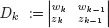
Proposition 2.3. Let us consider a sequence of determinants
figure
, then for every k β‰₯ 1,
figure
Consider Dk and substitute in the left column the values of wk and zk defined in (2.3).
After simplifications, it follows that Dk = βˆ’Dkβˆ’1, then this relation, if applied telescopically, implies (2.4).
Proposition 2.4. Let all three arrays {tk}, {wk} and {zk} be integer, and
w0 := 1, z0 := 0, |z1| := 1.
Proposition 2.3 implies that for every w1 (βˆ’1)kβˆ’1z1zk is a multiplicative inverse of wkβˆ’1 modulo wk. Indeed, since D1 = βˆ’z1, then (2.4) implies that
wkzkβˆ’1 βˆ’ zkwkβˆ’1 = (βˆ’1)kz1,
or that
figure
Therefore, (2.5) implies that {wkβˆ’1[(βˆ’1)kβˆ’1 z1zk]βˆ’1}/wk = (βˆ’1)kβˆ’1z1zkβˆ’1, i.e., x = (βˆ’...

Table of contents

  1. Cover Page
  2. Title Page
  3. Copyright Page
  4. About the Author
  5. Dedication
  6. Preface
  7. Acknowledgments
  8. Contents
  9. 0. Introductory Notes on Security and Reliability
  10. 1. Enhanced Algorithm for Modular Multiplicative Inverse
  11. 2. Multiplication of Large-Integers Based on Homogeneous Polynomials
  12. 3. Deterministic Algorithms for Primitive Roots and Cyclic Groups with Mutual Generators
  13. 4. Primality Testing via Complex Integers and Pythagorean Triplets
  14. 5. Algorithm Generating Random Permutation
  15. 6. Extractability of Square Roots and Divisibility Tests
  16. 7. Extraction of Roots of Higher Order in Modular Arithmetic
  17. 8. Public-Key Cryptography Based on Square Roots and Complex Modulus
  18. 9. Cubic Roots of Complex Integers and Encryption with Digital Isotopes
  19. 10. Exponentiation-Free Accelerated Encryption/ Decryption Protocol
  20. 11. Cryptocol Based on Three-Dimensional Elliptic Surface
  21. 12. Multi-Parametric Cryptography for Rapid Transmission of Information
  22. 13. Scheme for Digital Signature that Always Works
  23. 14. Hybrid Cryptographic Protocols Providing Digital Signature
  24. 15. Control Protocols Providing Information Assurance
  25. 16. Information Assurance Based on Cubic Roots of Integers
  26. 17. Simultaneous Information Assurance and Encryption Based on Quintic Roots
  27. 18. Modular Equations and Integer Factorization
  28. 19. Counting Points on Hyper-Elliptic Curves and Integer Factorization
  29. 20. Integer Factorization via Constrained Discrete Logarithm Problem
  30. 21. Decomposability of Discrete Logarithm Problems
  31. 22. Detecting Intervals and Order of Point on Elliptic Curve
  32. 23. Generalization of Gauss Theorem and Computation of Complex Primes
  33. 24. Space Complexity of Algorithm for Modular Multiplicative Inverse
  34. 25. New Algorithm Can Be Computed
  35. 26. Search for Period of Odd Function
  36. 27. Optimized Search for Maximum of Function on Large Intervals
  37. 28. Topological Design of Satellite Communication Networks
  38. References