![]()
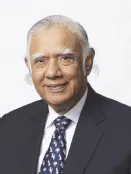
Gopinath Pillai
In 1992, the Indian Community hosted a farewell dinner for Singapore’s founding Prime Minister on his retirement as PM. The Organising Committee decided to present him with a book that captured his relationship with the Indian community during his days as head of government. The title of the book was ‘A Place in the Sun’. The message we were trying to convey was that in spite of the fact Indians were less than 10% of the population, he ensured we had a meaningful role in independent Singapore. He did not do this by having a token presence of Indians in visible positions. He ensured that those he inducted into the cabinet as well as senior positions in the civil service were men of substance with strong value systems. Singaporeans accepted them not because they belonged to a minority group, but because they were competent ministers and officials who carried out their jobs fairly and efficiently.
To understand the Indian community in Singapore, one needs to understand certain basic facts about them.
Indians are not a homogeneous community. They are diversified in terms of language, culture, religion, ethnicity and social strata, a euphemism for cast. In spite of this diversity, there is a common thread that runs through the community that links them all and makes them ‘Indian’.
Let me give four common characteristics of the community that together form the thread that links them.
First is their love for culture, which transcends religious and linguistic differences. Some of the best singers of classical Hindustani music that has strong religious references are Muslims. The best Malayalam singer of Hindu religious songs is a Christian. These are just a few examples of the soft cultural bonds between different groups of Indians in Singapore.
Second is their love of debate. Prof. Amritaya Sen writes about the ‘argumentative Indian’. Argument is part of Indian tradition because of the belief that truth can be arrived at only by vigorous debate. Some may see this as a waste of time, but the ability to articulate effectively your point of view is seen by Indians as a great asset. Connected with this is a love of politics. An extension of this penchant for politics is also the acceptance of democracy, which comes from the tradition of age-old village assemblies called ‘Panchayats’, where every citizen in the village has the right to air their grievances to an assembly of their peers who will decide on what needs to be done.
The third characteristic is the community’s respect for education. Hindus, who form the largest group among the Indians, perhaps have the only surviving ‘Goddess of Knowledge’ in their pantheon of deities. The Greeks, I believe, had a goddess of knowledge, but she has not survived. The respect for education is also strong among Christians and Muslims, which is strongly embedded in their religious institutions.
The fourth characteristic of the Indians is their religiosity. Irrespective of which religion they belong to, they take their religious duties seriously and perform them regularly. Some would say that Indians are very generous in contributing to their temples, churches and mosques, but less so for other causes.
The four characteristics of Indians I mentioned perhaps help us to understand the Indian community in Singapore.
If one goes back into the history of Singapore, the period between the end of the Second World War and independence could be divided into three segments. One would be the colonial period with a legislative council. Second would be a legislative assembly under elected Chief Ministers and the third segment started when PAP came into power in 1959 with Mr. Lee as Prime Minister, but with substantial powers still with the Colonial Secretary. In all three systems, Indians played a significant role in politics and in the trade unions. They were active not only on the governmental side, but also in the opposition leftist movements.
Indian participation in politics became less prominent when voting became compulsory and other races, particularly Chinese, became more active. There was even a danger that it would become difficult for minorities to get elected. The government then decided on group representation councils with four, five and six representatives, among whom one or two would be from minority communities. In spite of the uncertainties of getting minorities elected, the cabinet had a fair share of minorities holding office who were selected on the basis of merit. This also applied to the civil service and the judiciary. Perhaps the one event that boosted the moral of the Indian community was the election Mr. S. R. Nathan as President in 2000. The Indian community felt proud not only because a member of their community was elected President, but also he was genuinely popular across all communities. This, in a way, underscored the point that Singaporeans are generally multiracial in their outlook. This is borne out by the fact that in the last 50 years since independence, Singapore has had three Deputy Prime Ministers who were Indians and numerous minority ministers.
Moving from politics to culture, the Indian communities are even more vibrant. The Tamils, who are the largest community, have the greatest number of cultural events. The Malayalees, who number about 40,000 and are the second biggest group among the Indians, have more than twenty organisations, including religious organisations, who have at least one event a month, making them culturally a very vibrant community. Then there are the Bengalis, the Telugus, the Maharashtrians, the Punjabis, the people from the Hindi-speaking states like Uttar Pradesh, Bihar and Madhya Pradesh, the Kannadias and several others. Together, they not only create a very vibrant community, but also keep the languages and many of the practices of their home states alive in Singapore.
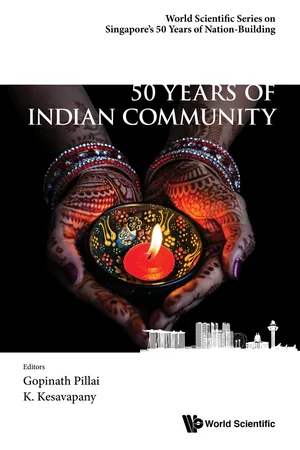
Perhaps the most important single event in the last year was the building of the Indian Heritage Centre in the heart of Little India on a piece of land given by the government. The major part of the funding was also done by the Singapore Government. It was officially opened by the Prime Minister on 7 May 2015. I will not go into more detail on the IHC, as there is a separate article on it written by Dr. Gauri Krishnan later on in this publication.
While the Indian community in Singapore is currently in a secure and happy position, there are challenges going forward. The main challenge pertains to integration. Hitherto, the population of Singapore generally had a common background. They were migrants who came with little and worked their way up. They respected each other for their achievements. The next phase of growth will be knowledge based and the Indian community has to ensure that they place sufficient emphasis on education and training, particularly training in the latest technology. Some sections of the community may need help in this so that they reach the national average in performance.
There is another factor that needs to be attended to in our move to achieving national integration. This pertains to the issue of language. While English is still the common language, the Chinese community is encouraged to speak in Mandarin among themselves. If Mandarin is increasingly the language used by the Chinese, who make up more than 70% of the population, it effectively becomes the lingua franca of the country. The Indian community should seriously consider acquiring a working knowledge of conversational Mandarin. Learning Mandarin should not be at the expense of learning their own language or English. Indians are good at languages, as can be seen by the large number of Indians in Hong Kong who speak Cantonese. To ensure their continued place in the sun, the Indian community must get itself fully embedded in the national fabric.
Ambassador Gopinath Pillai holds several key public appointments simultaneously. He is Chairman of the Management Board of the Institute of South Asian Studies; Ambassador-at-Large in the Ministry of Foreign Affairs since August 2008; and also Singapore’s Special Envoy to Andhra Pradesh.
Ambassador Pillai was Singapore’s Non-Resident Ambassador to Iran between 1989 and 2008 and also served as Singapore’s High Commissioner to Pakistan.
Ambassador Pillai has varied business interests which include investments in education, logistics and information technology. He is Chairman of Snowman Logistics Ltd in India; and is also Director of AEC Education PLC, listed on AIM in London.
Ambassador Pillai is also Deputy Chairman of Ang Mo Kio-Thye Hua Kwan Hospital Limited, a non-government organisation-administered hospital for step-down care. He is a member of the Steering Committee of the Indian Heritage Centre project and Chairman of its Concept and Content Sub-committee. He has also held positions of Chairman of NTUC Fairprice Co-operative Ltd for 10 years; Trustee of NTUC Healthcare Cooperative Ltd; Director of NTUC Choice Homes Co-operative Ltd; and President of the National University of Singapore Society (NUSS). He was made a Distinguished Member of NUSS in 2011.
Ambassador Pillai has received several awards, including the Friend of Labour (NTUC 1987); Meritorious Award (NTUC 1990); Friend of MCD from the Ministry of Community Development (1998); Friend of IT from Singapore Computer Society (2001) and Outstanding Service Award (NUS 2015). The Singapore government has awarded Ambassador Pillai the Public Service Star Award (BBM) in 1999, BBM (BAR) in the 2009 National Day Awards and The Meritorious Service Medal on National Day 2015.
The Indian government conferred Ambassador Pillai with the Padma Shri award at the 2012 Republic Day.
![]()
| 2 | Indians in the Modelling of the Global Metropolis |
Rajesh Rai
Introduction
The Indian community in Singapore is the product of multiple journeys — movements dating to the founding of the British colonial settlement, which have continued to this day, 50 years since Singapore’s independence. Collectively, the sojourners and settlers from the subcontinent created the basis for a small but significant diaspora that has remained influential throughout the modem city‘s development. In 2014, Indians comprised 9.1% (353,021) of the country’s resident (i.e. citizen and permanent resident) population of 3.87 million (Singapore Department of Statistics, 2014, 39). If one is to include the non-resident number, the Indian presence on the island is substantially larger — cumulatively, about 700,000 in the total (resident and non-resident) population of just under 5.5 million (2015).
The multi-layered fabric of the Indian diaspora in Singapore has been produced by multiple trajectories of emigration across the Bay of Bengal, and this, along with the complex economic topography of the city, has informed its diversity. Viewed in ethno-linguistic terms, Tamil speakers form the largest segment of the Indian population, although the diaspora also includes sizeable numbers of Malayalam, Hindi and Punjabi speakers. Hindus comprise nearly 60%, Muslims a quarter, Christians one-eighth, and along with smaller numbers of Sikhs and Buddhists, inform the diverse religious composition of Indians here. In socio-economic terms, they have prospered in the city — the average monthly income of Indian households exceeded S$7,600 in 2010 (Singapore Department of Statistics, 2010, x) — a figure that, at the last official census, was higher than any other major ethnic community (Chinese and Malays). That said, differences in income distribution amongst Indians in Singapore are also purportedly greater than any of the other major ethnic communities (Shantakumar and Mukhopadhaya, 2008, 581–5).
While always a minority, the diaspora, over its nearly 200-year history on the island, has been, and remains, an integral part of this multicultural nation. This chapter explores the formation and development of the Indian diaspora in Singapore, with a view to explaining how Indians have contributed to the transformation of a once minor frontier colonial outpost “into a metropolis of global significance” (Rai, 2014, i). Framed on the basis of key episodes in Singapore’s development — the British colonial period, the Japanese occupation and independent Singapore — the study examines the distinct and complex experience of this diaspora, marking out how, at every stage of Singapore’s development, Indians have left an indelible mark on the social, cultural, economic and political life of the city.
1. Forging the Diaspora
1.1. Multiple movements, diverse roles
The very ‘founding’ of modern Singapore was closely connected to British interests in India in the late 18th and early 19th centuries. The search for a base east of the Bay of Bengal that was strategically positioned to safeguard the East India Company’s (EIC) burgeoning India–China trade was critical in Sir Stamford Raffles’ decision to establish a British outpost on the island in 1819 (Tan and Major, 1995, 1–28). The first Indians in colonial Singapore came with him — mostly sepoys of the 2nd Battalion 20th (Marine) Regiment of the Bengal Native Infantry and camp followers, who were crucial in securing the fledgling colony (Rai, 2004, 1–2). Their presence marked the beginnings of a dominant position for Indians in the defence of the colony, which continued well into the early years of the 20th century.
The rapid commercial success of Singapore and the fact that the settlement was administratively a part of British India until 1867 quickly drew traders and entrepreneurs to its shores. The first, reportedly, was Narayana Pillai, an associate of Raffles, who began his career in Singapore as a clerk in the colonial treasury, but soon after ventured into brick-making, construction and retail businesses (Rai, 2006, 177). Most Indian businessmen who ventured to the early settlement were from the Coromandel Coast, a region that had long sustained commercial linkages with the archipelago. Amongst these, the ‘Chulias’ — a term used for Muslims from the Coromandel Coast in early Singapore — who had established a vast commercial network that extended from the Maldives to the South China Sea, constituted, certainly until the late 19th century, the largest component. Some were affluent ship owners who were engaged in the textile, gem, cattle and spice trades, while others provided petty retail services or served as boatmen, lightermen and wharfingers on the riverine trade, a segment of the economy over which they had a stronghold in early Singapore. Also prominent were the Natukkotai Chettiars from ‘Chettinad’, the “pioneers of microfinancing in Asia,” whose credit facilities greased the wheels of commerce in colonial Singapore (See, 2015, 28). They provided a ready source of finance for individuals and businesses that would have otherwise found it hard to secure loans from European banks, and over time also came to be engaged in the property and plantation sectors. By 1935, Chettiars were said to have invested “no less than 400 million dollars” in the Straits Settlements and the Malay States (Rai, 2014, 105). Amongst other early commercial emigrants at the colony were a small but prominent group of Parsis, who, until the mid-19th century, were heavily engaged in the opium trade. In the second half of the 19th century, they were joined by Gujarati, Sindhi and Punjabi traders from north-western India, who added to the diversity of Indian entrepreneurs in a city that, by this time, had transformed into a bustling regional entrepôt.
While businessmen arrived in Singapore independently because they had the motive and the means to cross the ocean, the procurement of Indian labour required official and private intervention. The establishment of a penal colony for transported Indian convicts in Singapore in 1825 proved to be one of the most important mechanisms through which colonial authorities were able to muster large numbers of labourers for public works. Until 1873 (when the penal settlement was closed), 15,000–25,000 Indian convicts, drawn from nearly all parts of the subcontinent and from various social groups, were transported to the Straits Settlements. Most accounts suggest that their role in the making of Singapore was immense. Effectively all the large-scale building works on the island until the late 19th century — the Horsburgh Lighthouse, St. Andrews Cathedral and Government House (now called Istana), amongst others — were produced by their hands. In 1856, Governor Blundell, in his annual report to the Indian Government, provided a glowing testimony of their impressive contributions:
The whole of the existing Roads throughout the Island, more than 150 miles in extent, every Bridge in both Town and Country, Jetties, piers, etc. have been constructed by Convict labour … A Church has been erected every brick and every measure of lime in which has been made and laid by Convicts and which in Architectural beauty is second to no Church in India. Powerful batteries have been erected at various points and fortifications are now in progress … which would have been too expensive for sanction if exe...