Project-based and industry-linked learning are increasingly pursued in undergraduate studies at the university as well as at the polytechnics, 'A' levels and the international baccalaureate programmes. These courses are usually structured as part of the Final Year Projects. Their applied nature is also motivated by the increasing emphasis on collaborations between the academia and the industry. This book shall serve as a text and a practical reference for students, lecturers and industry supervisors to design, structure and supervise their projects so that they will serve the desired curricular objectives as well as the needs of the industry collaborators. In essence, it will guide students to write their final year dissertations. A key feature of this book is its practical orientation. It contains a lot of examples. It is structured in a series of questions and answers which mimics the thought process of a student working on his/her final year project dissertation. Specifically, the book has also included some contemporary topics such as design thinking and pecha kucha presentations which would be of particular interest to instructors and students.
- 212 pages
- English
- ePUB (mobile friendly)
- Available on iOS & Android
eBook - ePub
About this book
Information
Topic
EducationSubtopic
Education GeneralCHAPTER 1
CURRICULAR OBJECTIVES OF ‘PROJECT WORK’
After reading this chapter, you will be able to:
—Design a project for academic inquiry.
—Decide if a project should be research-based or practice-based.
—Consider if a project should involve industry collaboration.
—Write a project proposal.
1.1What is ‘Project Work’ in the curriculum of tertiary education?
Project Work (PW) is a common feature in the curriculum in junior colleges, polytechnics and universities. Indeed, in the increasingly popular International Baccalaureate (IB) program as well as the Integrated Programme (IP) in Singapore, PW is even central to the pedagogical philosophy.
PW may be done through various platforms or named in different ways. Some examples of these include:
—Final Year Projects (FYP),
—Final Year Thesis (FYT),
—Final Year Dissertation (FYD),
—Term Paper (TP),
—Extended Essay (EE), as in the IB program, or simply
—Project Work (PW) as in the General Certificate of Education (GCE) ‘A’ level curriculum.
For the purpose of this book, the generic terms of Project Work (PW) or simply ‘project’ are used interchangeably to refer to various types of projects offered in tertiary education.
It is common for PW to be a curriculum requirement in the final year of a course of study. What this means is that PW is directed at the application of knowledge and competencies gained in the earlier years of studies in an integrated manner towards addressing an issue of interest.
1.2What are the differences between a dissertation, thesis, project report or an extended essay?
In American universities, a dissertation is the work that is submitted to earn a doctorate degree, while a thesis is submitted to fulfill part of the requirements for a master’s or bachelor’s degree. However, in the British context, the reverse would apply. Hence, it is not surprising that the usage of these terms can be confusing.
Nevertheless, a common thread of their descriptions is that they entail an endeavor in research or problem solving in the academic context.
In continuation from Section 1.1 earlier, the discussions in this book will refer to them generically as dissertation, Project Work report or simply PW report. While the PW reports submitted for the different levels of studies in the universities, polytechnics, colleges or high schools differ in terms of the expectations of length, rigor and originality, the basic principles upon which they should be constructed are similar as discussed in this book.
1.3What are the curricular objectives of PW?
Project-based learning (PBL) is an approach that seeks to organize learning around projects. Projects, as compared to issues in specific modules, are usually characterized by their multi-dimensional nature.
Accordingly, PW is directed at the application of knowledge and competencies gained in the earlier years of studies in an integrated manner towards addressing an issue of interest. They provide the platform to engage students in investigative activities, problem solving, decision making, and design. They also provide opportunities for students to work relatively independently over extended periods of time (Thomas, 2000).
The key aspect of a PW is the applied and integrated nature. It should be student-driven, involve students in constructive investigation, realistic and be differentiated from traditional didactic teaching in the classrooms.
Specifically, PW can be directed at achieving two equally important objectives (Figure 1.1):
a.Process: Develop and test the problem-solving skills in addressing a set of research questions or finding solutions to a set of problems in practice.
b.Content: Enhance and test competencies in a specialization discipline. Students are to demonstrate that they are able to draw from the subjects or modules they have learnt earlier and apply them in the context of the projects they work on.
It is alright that the balance between the two objectives may differ from project to project. What is important is that the expectations must be discussed and clarified among the supervisor, student and the external collaborator as far as possible before and during the course of the project.
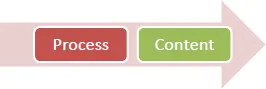
Figure 1.1 Twin curricular objectives of PBL.
1.4Who are the main stakeholders in a project and what are their roles and responsibilities?
A project will entail at least two parties, namely, the academic supervisor and the student. They have distinct roles.
It is important for these to be clarified and mutually understood prior to the commencement of the project such that the student will be able to optimize his or her learning and that the other objectives of the academic supervisor can also be met.
At times, a project may also be undertaken in conjunction with an industry collaborator. In this case, the problem may entail addressing an issue defined by the industry collaborator. In such instances, the project will involve a third party and the academic supervisor will have additional duties (Figure 1.2).
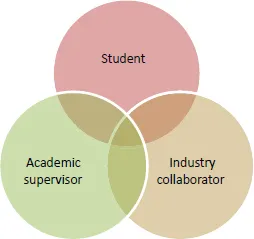
Figure 1.2 Key stakeholders in a project.
In general, the roles of each party are suggested below:
Student:
—Take full ownership for self-directed learning in order to complete the project.
—Should not rely on the supervisor to solve the problem for him. The supervisor’s primary role is to provide guidance and facilitation.
The academic supervisor:
—Ensure the design of the project is appropriate for the level of studies of the student and doable within the constraints of time and other resources.
—Provide adequate and appropriate intervention to ensure the project progresses in accordance to plans.
—Not to take over and complete the project on behalf of the student.
—In an industry-linked project, the academic supervisor should also have formed an understanding or an agreement with the industry collaborator on the scope and design of the project prior to its start. This is important so that when the semester commences and the student comes on board, the student can focus on the substantive matter of the project straight away.
—Specifically with regard to industry-linked projects, it will be a cause of concern if the project is affected due to delays or commercial factors beyond the control of the students, for example, if the project is for the students to organize an event for an external industry collaborator, but this event has to be cancelled midway due to the change of plan of the industry collaborator. If and when such things happen, the academic supervisor will have to intervene and prioritize on finding solutions that will allow the student to complete the project and fulfill the academic requirements.
The industry supervisor:
—Be familiar with the academic perspectives on why the project is structured as a PW with industry collaboration.
—One of the critical factors necessary for the successful completion of industry-linked PW (Figure 1.3) is that the industry collaborators should also be concerned with providing the learning experience to the students rather than treating the students as a mere resource or outsourced contractors. Thus, it is advisable that the industry collaborators ensure that they are able to align their intentions with that of the academic institutions, which is to educate and nurture the students. If not, they should consider alternatives of engaging consultants or contractors on a commercial basis.

Figure 1.3 Industry-linked PW provides opportunities to achieve win–win outcome for the academic institution, industry collaborator and the students within a nurturing context.
1.5When should the industry seek to collaborate with tertiary institutions to undertake projects? Are there alternative approaches?
Traditionally, when the industry has a problem to solve, it can solve it either in-house with internal resources, or it can engage a third party service provider. These third party service providers can be consultants or contractors who are experts in the specific fields (Figure 1.4).
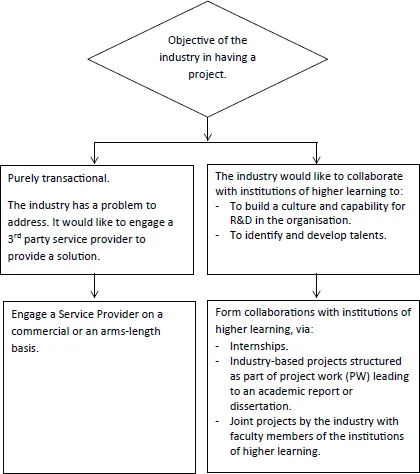
Figure 1.4 Objectives of the industry.
Increasingly, institutions of higher learning are also keen to provide an authentic learning experience for students. The mechanisms that they can leverage upon to achieve this include:
—Providing internship opportunities to students; or
—Structuring PW that can be done as part of the curriculum leading to an FYP report or dissertation.
Organizations can consider the latter approach if in addition to addressing a problem in practice, they would also like to build a culture and capability for research and development (R&D) in the organization. Furthermore, by collaborating with institutions of higher learning to provide industry-linked projects for students to work on, organizations can also take the opportunity of working with the students to identify potential talents for potential hiring in the future. By the same token, students should be incentivized to take their PW seriously as it may open doors for potential future career opportunities.
1.6Can a lecturer who is not a domain expert of the project topic perform the role of the academic supervisor for the project effectively?
PW is directed at achieving the two objectives of developing process skills as well as enhancing substantive knowledge of a specific subject matter.
It will be ideal if the academic supervisor is an expert in both aspects so that a balanced approach can be taken. However, sometimes this is not possible. An academic supervisor who has worked for many years as a researcher in an academic institution may...
Table of contents
- Cover
- Halftitle
- Title Page
- Copyright
- Contents
- Foreword
- Acknowledgement
- Preface
- About the Authors
- Chapter 1 Curricular Objectives of ‘Project Work’
- Chapter 2 Structure of the Report/Dissertation/Thesis
- Chapter 3 Techniques in Reference Sourcing and Styles of Academic Writing
- Chapter 4 Selection of Methodology
- Chapter 5 Assessment
- Chapter 6 Project Management
- Chapter 7 Ethics Declaration
- Bibliography
- Annex A Project Schedule
- Annex B Project Proposal Sample
- Annex C Project Gantt Chart
- Epilogue
Trusted by 375,005 students
Access to over 1.5 million titles for a fair monthly price.
Study more efficiently using our study tools.
Frequently asked questions
Yes, you can cancel anytime from the Subscription tab in your account settings on the Perlego website. Your subscription will stay active until the end of your current billing period. Learn how to cancel your subscription
No, books cannot be downloaded as external files, such as PDFs, for use outside of Perlego. However, you can download books within the Perlego app for offline reading on mobile or tablet. Learn how to download books offline
Perlego offers two plans: Essential and Complete
- Essential is ideal for learners and professionals who enjoy exploring a wide range of subjects. Access the Essential Library with 800,000+ trusted titles and best-sellers across business, personal growth, and the humanities. Includes unlimited reading time and Standard Read Aloud voice.
- Complete: Perfect for advanced learners and researchers needing full, unrestricted access. Unlock 1.5M+ books across hundreds of subjects, including academic and specialized titles. The Complete Plan also includes advanced features like Premium Read Aloud and Research Assistant.
We are an online textbook subscription service, where you can get access to an entire online library for less than the price of a single book per month. With over 1.5 million books across 990+ topics, we’ve got you covered! Learn about our mission
Look out for the read-aloud symbol on your next book to see if you can listen to it. The read-aloud tool reads text aloud for you, highlighting the text as it is being read. You can pause it, speed it up and slow it down. Learn more about Read Aloud
Yes! You can use the Perlego app on both iOS and Android devices to read anytime, anywhere — even offline. Perfect for commutes or when you’re on the go.
Please note we cannot support devices running on iOS 13 and Android 7 or earlier. Learn more about using the app
Please note we cannot support devices running on iOS 13 and Android 7 or earlier. Learn more about using the app
Yes, you can access Practical Guide to Project-Based Learning by Mun Wai Ho, Mark Brooke in PDF and/or ePUB format, as well as other popular books in Education & Education General. We have over 1.5 million books available in our catalogue for you to explore.