An Introduction to the Standard Model of Particle Physics for the Non-Specialist
eBook - ePub

An Introduction to the Standard Model of Particle Physics for the Non-Specialist

  1. 164 pages
  2. English
  3. ePUB (mobile friendly)
  4. Available on iOS & Android
eBook - ePub

An Introduction to the Standard Model of Particle Physics for the Non-Specialist

About this book

-->

This book takes the reader from some elementary ideas about groups to the essence of the Standard Model of particle physics along a relatively straight and intuitive path. Groups alone are first used to arrive at a classical analog of the Dirac equation. Using elementary quantum mechanics, this analog can be turned into the actual Dirac equation, which governs the motion of the quarks and leptons of the Standard Model. After an introduction to the gauge principle, the groups introduced in the beginning of the book are used to give an introduction to the Standard Model. The idea is to give an Olympian view of this evolution, one that is often missing when absorbing the detailed subject matter of the Standard Model as presented in an historical approach to the subject.

--> Contents:

  • Preface
  • Groups
  • A Semblance of the Dirac Equation From Groups
  • Minimalist Quantum Mechanics
  • Gauge Principle
  • Standard Model Beginnings
  • Particles of the Standard Model and QCD
  • Appendix A: The Particle Enigma
  • Appendix B: Spinor Representations of the Lorentz Group
  • Appendix C: The Schwinger Term
  • Appendix D: The Cosmic Microwave Background Radiation
  • A Few Reference Books
  • Index

-->
--> Readership: Undergraduate students and academics interested in the Standard Model. -->
Keywords:Standard Model?? Particle Physics;Standard Model?? QCDReview: Key Features:

  • Presents the Standard Model not only using an historical approach, but also with some philosophical aspects, discussing some recent research on the nature of a "particle"

Frequently asked questions

Yes, you can cancel anytime from the Subscription tab in your account settings on the Perlego website. Your subscription will stay active until the end of your current billing period. Learn how to cancel your subscription.
No, books cannot be downloaded as external files, such as PDFs, for use outside of Perlego. However, you can download books within the Perlego app for offline reading on mobile or tablet. Learn more here.
Perlego offers two plans: Essential and Complete
  • Essential is ideal for learners and professionals who enjoy exploring a wide range of subjects. Access the Essential Library with 800,000+ trusted titles and best-sellers across business, personal growth, and the humanities. Includes unlimited reading time and Standard Read Aloud voice.
  • Complete: Perfect for advanced learners and researchers needing full, unrestricted access. Unlock 1.4M+ books across hundreds of subjects, including academic and specialized titles. The Complete Plan also includes advanced features like Premium Read Aloud and Research Assistant.
Both plans are available with monthly, semester, or annual billing cycles.
We are an online textbook subscription service, where you can get access to an entire online library for less than the price of a single book per month. With over 1 million books across 1000+ topics, we’ve got you covered! Learn more here.
Look out for the read-aloud symbol on your next book to see if you can listen to it. The read-aloud tool reads text aloud for you, highlighting the text as it is being read. You can pause it, speed it up and slow it down. Learn more here.
Yes! You can use the Perlego app on both iOS or Android devices to read anytime, anywhere — even offline. Perfect for commutes or when you’re on the go.
Please note we cannot support devices running on iOS 13 and Android 7 or earlier. Learn more about using the app.
Yes, you can access An Introduction to the Standard Model of Particle Physics for the Non-Specialist by Gerald E Marsh in PDF and/or ePUB format, as well as other popular books in Scienze fisiche & Fisica nucleare. We have over one million books available in our catalogue for you to explore.

Information

Publisher
WSPC
Year
2017
eBook ISBN
9789813232600

Appendix A: The Particle Enigma

What is a particle? We all know that the concept of a particle comes from Democritus’ idea of atoms. His conception, and what today we would call Brownian motion, was related by Lucretius to the origin of all motion in his poem On the Nature of Things (50 B.C.E.):
Whence Nature all creates, and multiplies
And fosters all, and whither she resolves
Each in the end when each is overthrown.
This ultimate stock we have devised to name
Procreant atoms, matter, seeds of things,
Or primal bodies, as primal to the world.
‱ ‱ ‱
For thou wilt mark here many a speck, impelled
By viewless blows, to change its little course,
And beaten backwards to return again,
Hither and thither in all directions round.
Lo, all their shifting movement is of old,
From the primeval atoms; for the same
Primordial seeds of things first move of self,
And then those bodies built of unions small
And nearest, as it were, unto the powers
Of the primeval atoms, are stirred up
By impulse of those atoms' unseen blows,
And these thereafter goad the next in size;
Thus motion ascends from the primevals on,
And stage by stage emerges to our sense,
Until those objects also move which we
Can mark in sunbeams, though it not appears
What blows do urge them.
With a little license, Lucretius’ “Procreant atoms, matter, seeds of things, Or primal bodies” formed the basis of physical thought until quite late into modern times. In the ancient world, however, while it was accepted there might be different kind of atoms, the number of types was small and sometimes related to geometrical shapes. The advent of modern chemistry and spectroscopy in the 19th century began the formation of the current understanding of the nature of atoms.
Today, it is believed that the elementary building blocks of matter are leptons and quarks, all of which are called fermions and obey the Dirac equation for a particle of spin of œ In addition, there is electromagnetic radiation carrying a spin of 1. Lucretius’ understanding of atoms has been carried over into the modern conception of “particle” in the sense that the basic fermions are thought to be “structureless” or “point” particles. This can be seen in the attempts to construct “classical” models for the electron. Examples are the de Broglie-Bohm interpretation of quantum mechanics [1] and the work of David Hestenes. [2] But retaining the idea of a massive charged point particle requires that both mass and charge be renormalized, a process that has never rested comfortably with many physicists.
The greatest challenge to the ancient idea of a particle came from the work of de Broglie, who introduced in 1924 the idea that each particle had associated with it an internal clock of frequency m0c2/h. From this idea he found his famous relation showing particles of matter were associated with a wave. [3] He did not believe a particle like the electron was a point particle, but rather that the energy of an electron was spread out over all space with a strong concentration in a very small region: “L’électron est pour nous le type du morceau isolĂ© d’énergie, celui que nous croyons, peut-ĂȘtre Ă  tort, le mieux connaĂźtre; or, d’aprĂšs les conceptions reçues, l’énergie de l’électron est rĂ©pandue dans tout l’espace avec une trĂšs forte condensation dans une rĂ©gion de trĂšs petites dimensions dont les propriĂ©tĂ©s nous sont d’ailleurs fort mal connues.” [4]

A1. The de Broglie Relation: Theory and Experiment

De Broglie, in his 1929 Nobel lecture used the following argument:
image
Identifying the energy of the massive particle with E = hv gives
image
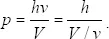
De Broglie then assumed that c2 / V corresponds to a phase velocity via vV = c2, so that
image
Using V = vλ, he obtains his relation λp = h.
Note that by assuming that c2 / V corresponds to a phase velocity de Broglie is introducing waves having neighboring frequencies so that he can define both phase and group velocities. The phase velocity so introduced is, in Max Born’s words, “a purely artificial conception, inasmuch as it cannot be determined experimentally.” [5]
The existence of de Broglie’s internal clock has recently been directly subject to experiment. The experimental approach used is known as “electron channeling”, a phenomenon observed in silicon crystals. [6], [7] In the experiments, a stream of electrons is aligned along a major axis of a thin single crystal corresponding to a row of atoms. Th...

Table of contents

  1. Cover
  2. Halftitle
  3. Title
  4. Copyright
  5. Dedication
  6. Preface
  7. Contents
  8. Groups
  9. A Semblance of the Dirac Equation From Groups
  10. Minimalist Quantum Mechanics
  11. Gauge Principle
  12. Standard Model Beginnings
  13. Particles of the Standard Model and QCD
  14. Appendix A: The Particle Enigma
  15. Appendix B: Spinor Representations of the Lorentz Group
  16. Appendix C: The Schwinger Term
  17. Appendix D: The Cosmic Microwave Background Radiation
  18. A Few Reference Books
  19. Index