![]()
Chapter 1
The Rich History of Geometric Dissections
A geometric dissection is a cutting of a geometric figure into pieces that we can rearrange to form another figure. As visual demonstrations of relationships such as the Pythagorean theorem, dissections have had a surprisingly rich history, reaching back to Islamic mathematicians a millennium ago and Greek mathematicians more than two millennia ago. Over the years these curious puzzles have charmed geometrically-inclined people, including the star of this book, Ernest Irving Freese, an architect who lived and worked in Los Angeles. Shortly before his death in 1957, Freese completed a 200-page manuscript that presented a wealth of geometric dissections, many of his own invention. His tract constituted the first book-length document devoted in large measure to geometric dissections. Yet aside from some sample pages that circulated amongst a lucky few, it seemed for decades as though the bulk of the manuscript might have been lost.
However, with determination, with good fortune, and with the assistance of key people, I was able to track down this prize! Laid out with a draftsman’s keen eye and labeled with an architect’s exquisite hand lettering, the plates will take your breath away. Although he had no formal training in mathematics, Freese found within himself the ingenuity and resourcefulness to create novel geometric dissections. This current book showcases a carefully restored manuscript, electronically cleaned to remove stains and smudges that had accumulated over the years. To understand what motivated a self-educated man to create such a dazzling document near the end of his life, we begin with a brief history of dissections, followed by a biography of Freese in the next chapter. Then come a series of chapters, each consisting of a contiguous sequence of plates from Freese’s manuscript and introduced with appropriate commentary. The commentary highlights recent improvements in the dissections that Freese had presented.
Resurrecting a 60-year-old all-but-forgotten manuscript is admittedly an audacious project, mirroring both the audacity of the man and the audacity of his manuscript. We will focus on mathematical recreations that are primarily geometric dissections, but we will also touch on biography, history, culture, and art. It’s the biography of an uncommon ‘common man’, the history of a ‘recreational area’ of a serious field, an everyday culture that stretches from self-education to transformer toys, and a sort of art that has both geometric and kinetic overtones. (Just glance again at this book’s cover art, and imagine the pieces swinging on their hinges!)
Let’s begin by picking up the history of geometric dissections several centuries ago. In 1778 Jean Montucla introduced geometric dissections in a revision of Jacques Ozanam’s book on mathematical and physical recreations. In 1821 John Jackson included dissections in his book on “rational amusement.” During the same time period, John Lowry (1814), William Wallace (1831), Farkas Bolyai (1832), and Prussian Lieutenant (Karl) Gerwien (1833) showed that for any two simple polygons of equal area, there exists a dissection from one to the other that uses a finite number of pieces. The basic idea is to decompose each polygon into triangles and then dissect the set of triangles into pieces that fill out a square. Projecting the (dissected) square for one polygon onto the (dissected) square for the other polygon produces the overlapping cuts that define the dissection for the two polygons. Unfortunately, this method usually results in an ugly dissection with a mind-numbing surfeit of pieces.
Luckily, many people strove to identify attractive dissections with fewer pieces. Édouard Lucas incorporated dissection material in his 1883 book. In England, Henry Perigal (1873,) Henry M. Taylor (1905,) and William Macaulay (1914, 1919) wrote articles for periodicals such as the Messenger of Mathematics and the Mathematical Gazette.
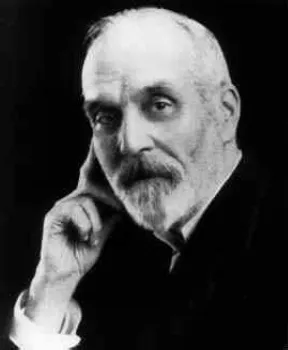
1.1: Henry Ernest Dudeney - 1910
As mathematical puzzles, geometric dissections enjoyed great popularity a century ago, in newspaper and magazine columns written by the American Sam Loyd and the Englishman Henry Ernest Dudeney (Figure 1.1). Loyd and Dudeney chose as their goal the minimization of the number of pieces in such dissections. Their puzzles captivated readers, converting many amateur mathematicians into enthusiasts, while professional mathematics tended towards abstraction and beyond the reach of all but specialists. Singularly notable were Loyd’s book, Cyclopedia of Puzzles (1914), and Dudeney’s books, The Canterbury Puzzles (1907) and Amusements in Mathematics (1917).
As geometric dissections attracted more attention, the topic appeared with greater frequency in books devoted to mathematical recreations. Those included Emile Fourrey’s 1907 book, Coxeter’s revision of W. W. Rouse Ball’s book in 1939, Geoffrey Mott-Smith’s 1946 book, and Cundy and Rollett’s 1952 book.
Let’s cherry-pick a few stunning examples to understand why these puzzles became so popular. First, marvel at the remarkable 5-piece dissection of a regular octagon to a square in Figure 1.2. In both the octagon and the square, a small square anchors the center, with the four remaining, identical pieces arranged around it. Both dissected polygons display lovely 4-fold rotational symmetry. This grand dissection originated at least 700 years ago in an anonymous Persian manuscript, Interlocks of Similar or Complementary Figures. In (1926), in his column “Perplexities” in the Strand Magazine, vol. 72, page 316, Henry Dudeney reported the dissection’s (re)discovery by Geoffrey Thomas Bennett, a mathematician at the University of Cambridge.
1.2: Dissection of a regular octagon to a square
In 1951 Harry Lindgren provided a wondrous explanation for how to derive this dissection. We can tile the plane with pairs consisting of a regular octagon and a square of the same side length. We can also tile the plane with pairs of two squares, one of area equal to that of the regular octagon and the other of side length equal to that of the octagon. Figure 1.3 denotes the first tiling with solid lines and the second tiling with dashed lines. We overlay the two tilings so that the centers of the small squares coincide with the centers of the octagons and the large squares. It’s amazing how the dissection just pops out at you! Harry Lindgren called this method completing the tessellation, where tessellation is another term for tiling, and we can create a tiling for the octagon by “completing” it with small squares.
1.3: Superposition of tessellations for the dissection of an octagon to a square
One of the most symmetrical dissections is Henry Perigal’s dissection of two not necessarily congruent squares to one, which we see in Figure 1.4. We leave the smaller square as is and cut the larger square into four congruent pieces. When we tilt the largest square appropriately, we can easily shift the pieces from one figure to another by translation with no rotation. We call a dissection with this property translational. Thus square piece A shifts from being by itself to being in the middle of the largest square, and pieces B, C, D, and E each shift without rotation from the leftmost square to the rightmost square. Philip Kelland had noted such a property for a specific dissection in 1864, and Hugo Hadwiger and Paul Glur characterized all such dissections in 1951.
1.4: Dissection of two not necessarily congruent squares to one square
Perigal published his nifty dissection in 1873, although one could argue that Abū’l-Wafā, a tenth-century mathematician and astronomer, had used the same technique in his dissection of three congruent squares to one. Figure 1.5 shows how we can derive the dissection by taking a tessellation based on pairs of smaller and larger squares, represented with solid line segments, and superposing a tessellation consisting of the resulting squares, represented with dashed line segments. The dots represent some of the points of 2-fold rotational symmetry in both of the tessellations.
1.5: Superposition of tessellations for dissection of two noncongruent squares
1.6: Relabeled dissection of two noncongruent squares to one square
In the latter part of the twentieth century David Singmaster saw how to hinge together the dissection pieces, so that we can rotate the pieces around on their hinges to form the desired figures. We redraw the dissection and relabel the pieces as in Figure 1.6 and then show how to hinge the pieces in Figure 1.7. If we start with piece 1 astride piece 5 in Figure 1.7, we can then swing the three remaining pieces clockwise until they enclose piece 1, producing the rightmost square in Figure 1.6. If instead we swing pieces 3, 4, and 5 clockwise around piece 2, we get the leftmost square in Figure 1.6. How magical is Perigal’s dissection – not only translational but also hingeable!
1.7: Hinged pieces for dissection of two noncongruent squares
Another outstanding dissection is that of an equilateral triangle to a square in Figure 1.8. Henry Dudeney posed the problem on April 6, 1902 in the Weekly Dispatch, and supplied the startling 4-piece solution (Figure 1.8) four weeks later in that same periodical. While many people credit Dudeney with the discovery, Dudeney apportioned some degree of credit to one of his most prolific correspondents, Charles William McElroy. You can read an analysis of those curious circumstances in my 2002 book.
In 1964 Harry Lindgren described a simple way to derive this diss...