Report on the rapid development of railway engineering construction in China, this book introduces the basic concepts of railway engineering supported by reference to cases. This book underpins the experiences and technologies of the Chinese engineering sector in railway construction and explores systematic and optimal design in safety, reliability, applicability, economy, durability, systematic nature and interface in relation to railway engineering, and construction, to ensure the quality control at every stage of the process.The authors of this book have long been engaged in the design, consultation and research of railways and directed the engineering consultation on many high-speed railways in China, including Beijing–Shanghai High-speed Railway and Wuhan–Guangzhou Passenger Dedicated Railway. This book was compiled on the basis of the systematic analysis and summary of railway engineering consultation and in consideration of engineering consultation practices.This book is an excellent reference for relevant personnel engaged in the management, design, consultation and construction of railways and teachers and students in universities and colleges.
- 376 pages
- English
- ePUB (mobile friendly)
- Available on iOS & Android
eBook - ePub
About this book
Information
Subtopic
Civil EngineeringChapter 1
Development and Technical Characteristics of Railwaysg
In 1804, Trevithick, a British engineer, built the first railway steam locomotive named “Newcastle.” After its successful trial run on a circular track, this steam locomotive went from Merthyr to Abercynon, with a speed of 4 km/h. On September 27, 1825, the world’s first railway that was formally put into operation was opened for traffic between Stockton and Darlington. The speed of this railway was 4.5 km/h in the initial stage and reached 24 km/h later. From the end of the 19th century to the beginning of the 20th century, railways developed quickly and greatly promoted the development of the Western capitalist economy.
In 1876, China’s first railway was completed and opened to traffic between Shanghai Concession to Wusong Town, with a total length of 14.5 km. It was dismantled in the next year, due to an accident causing the death of a Chinese and consequently rousing people’s great wrath not long after operations begun. On July 1, 1952, the first railway of New China, the Chengdu–Chongqing Railway, was completed and opened to traffic (see Fig. 1.1).
Since the 1960s, the new-technology railways represented by high-speed railways have emerged in the countries with developed economy and technology. Compared with other modes of transport, the transport by high-speed railways is marked by safety, reliability, technological innovation and quality service, and characterized by high speed, large passenger traffic volume, good adaptability to all weather conditions, comfort and stability, low energy consumption, light pollution, small land use and high benefit. As the development tendency of railway transport, high-speed railways have many technical and economic advantages, compared with traditional railways, including more convenience and time-savings, larger carrying capacity, better safety and reliability, less land use and more energy-saving. Thanks to such advantages, transport efficiency can be dramatically increased, the transport environment can be improved, traffic circulation can be enhanced and economic development can be promoted. Therefore, to solve the problem of large-scale population mobility, the most effective way for a country with a large population and a vast territory is to construct modern high-speed railways featuring safety, convenience, economic efficiency, environmental protection and reliability (see Fig. 1.2).
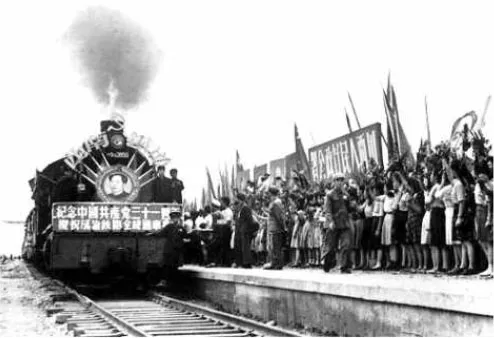
Fig. 1.1 Completion and Opening to Traffic of Chengdu–Chongqing Railway (the First Railway of New China)
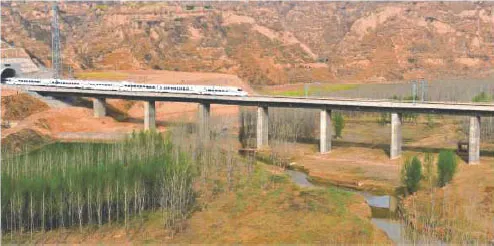
Fig. 1.2 A High-speed Railway in China
1.1Overseas High-speed Railway Development
1.1.1Overview
On December 19, 1958, the construction of the Tokaido Shinkansen Project in Japan was approved on the meeting of the Cabinet of Japan. The project was commenced on April 20, 1959. As the first high-speed railway in the world, Japan’s Tokaido Shinkansen was completed and opened to traffic on October 1, 1964, launching the high-speed era of railway transport. Along with the worldwide recognition of the high-speed railway technology and its enormous effect on the economic and social development, high-speed railways developed rapidly in Asia and Europe (see Fig. 1.3).
In Asia, Sanyo Shinkansen, Tohoku Shinkansen, Joetsu Shinkansen, Hokuriku Shinkansen, Yamagata Shinkansen and Akita Shinkansen were completed and put into operation in Japan after the Tokaido Shinkansen, with a total operation length of 2,325 km. On April 1, 2004, the 330-km-long Korean Seoul–Busan High-speed Railway (KTX line) was completed and put into operation.
In Europe, the north section of TGV Sud–Est, as Europe’s first high-speed railway, was competed and put into operation in France on September 22, 1981. Since then, the south section of TGV Sud–Est, TGV Atlantique, TGV Nord, the extension line of TGV Sud–Est, TGV Mediterranean Line and TGV Est, with a total length of 1,893 km were completed and put into operation. In June 1991, the Hannover–Wuerzburg High-speed Railway was completed and put into operation in Germany, followed by the Mannheim–Stuttgart, Hannover–Berlin, Cologne–Frankfurt and Nuremberg–Ingolstadt–Munich ICE High-speed Railways, with a total length of 1,088 km. Other high-speed railways were also completed and put into operation successively in Spain, Italy, the Netherlands, the United Kingdom and Belgium (see Fig. 1.4).
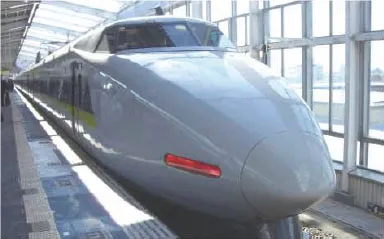
Fig. 1.3 A 100-series High-speed Train in Japan
1.1.2Development history
(1)Initial development stage
The period from 1964 to 1990 is the initial development stage of high-speed railways in the world. During this period, Japan completed the backbone railway network throughout the country, i.e. the Shinkansen network. Except for North America, Japan, France, Italy and Germany — which were the most economically and technologically developed countries at that time — promoted the first climax of high-speed railway construction.
The operation of Japan’s Tokaido Shinkansen and France’s TGV Sud–Est was a great success in the technical, commercial, financial and political aspects. All investment in Japan’s Tokaido Shinkansen was recovered only within 8 years, while that in France’s TGV Sud–Est was recovered within 10 years.
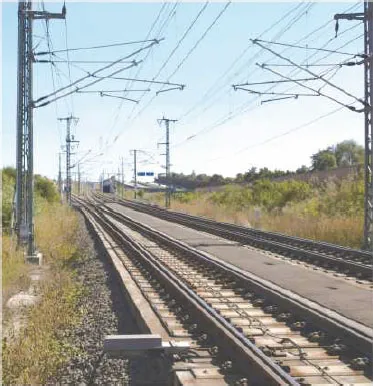
Fig. 1.4 A High-speed Railway in Germany
During this period, the application of new technologies to high-speed railways not only enhanced competitiveness of railways, solved the problem of insufficient transport capacity, brought about the rise of railway passenger transport, and improved economic benefit, but also resulted in the promotion of balanced economic development in the regions along railways, the construction of relevant industries, the technological transformation of existing railway networks driven by new projects, the improvement of national existing facilities and the benefit from such improvement (see Fig. 1.5).
In the initial stage of high-speed railway construction, Japan, France, Germany and Italy spent tremendous expenses on research and development and completed their own high-speed railways by using self-developed technologies.
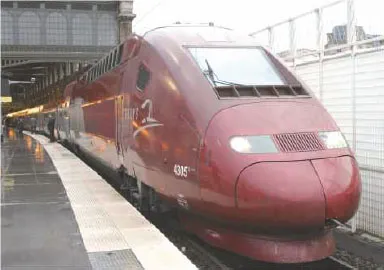
Fig. 1.5 A High-speed Railway Station in France
(2)Stage of railway network planning
Japan, France and Germany set about to formulate their national master plans for high-speed railways at the initial stage of high-speed railway construction to guide the construction.
In May 1967, the Japan Society of Civil Engineers (JSCE) raised a railway network proposal, in which the north–south high-speed railway network was considered as the skeleton, with a planned total extension length of high-speed railways of 3,300 km, as shown in Fig. 1.6(a). In August of the same year, Japanese National Railways (JNR) conceived a nationwide Shinkansen railway network, with a planned total extension length of high-speed railways of 4,500 km, as shown in Fig. 1.6(b). In August of the following year, Japan Railway Construction Public Corporation (JRCC) put forward the trial proposal on a nationwide Shinkansen railway network, with 4,750 km of planned total extension length of high-speed railways, as shown in Fig. 1.6(c). In May 1969, the Cabinet of Japan approved the nationwide comprehensive development plan and planned to construct high-speed railways with a total extension length of 7,200 km, as shown in Fig. 1.6(d). In March 1970, the Railway Council of Japan made the decision to formulate the Outline of Nationwide Shinkansen Railways Construction and Improvement Act. In May of the same year, the Nationwide Shinkansen Railways Construction and Improvement Act was approved by National Diet of Japan and enacted for implementation.
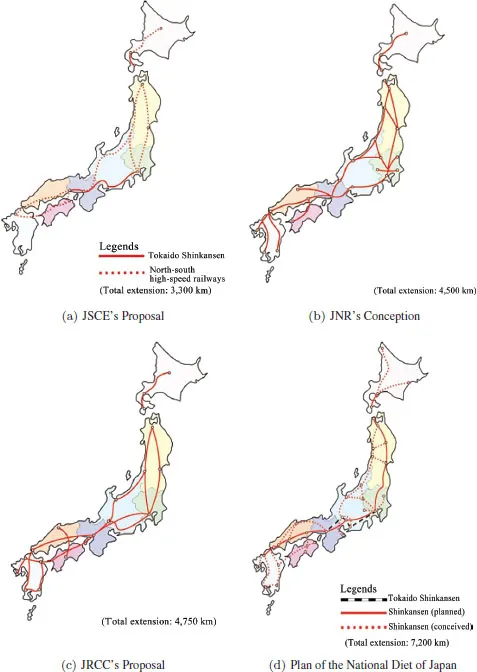
Fig. 1.6 Japan’s Plans for High-speed Railways
Note: This graph is used only to show the planned routes of high-speed trains in Japan, excluding the islands.
In September 1964, Deutsche Bahn (a German railway company) internally proposed to construct high-speed railways with a total length of 3,200 km and maximum speed of 200 km/h. In 1970, Deutsche Bahn submitted the Plan for Railway Network Reconstruction in the Federal Republic of Germany to the federal government, for construction of 300 km/h new high-speed railways with a total length of 2,200 km. In 1985, Deutsche Bahn released the Development Pl...
Table of contents
- Cover
- Halftitle
- Title
- Copyright
- Introduction
- About the Authors
- Preface
- Contents
- Chapter 1. Development and Technical Characteristics of Railways
- Chapter 2. Management of Railway Engineering Consultation
- Chapter 3. Methods for Railway Engineering Consultation
- Chapter 4. Key Points of Railway Engineering Consultation
- Chapter 5. Cases of Railway Engineering Consultation
- References
Trusted by 375,005 students
Access to over 1.5 million titles for a fair monthly price.
Study more efficiently using our study tools.
Frequently asked questions
Yes, you can cancel anytime from the Subscription tab in your account settings on the Perlego website. Your subscription will stay active until the end of your current billing period. Learn how to cancel your subscription
No, books cannot be downloaded as external files, such as PDFs, for use outside of Perlego. However, you can download books within the Perlego app for offline reading on mobile or tablet. Learn how to download books offline
Perlego offers two plans: Essential and Complete
- Essential is ideal for learners and professionals who enjoy exploring a wide range of subjects. Access the Essential Library with 800,000+ trusted titles and best-sellers across business, personal growth, and the humanities. Includes unlimited reading time and Standard Read Aloud voice.
- Complete: Perfect for advanced learners and researchers needing full, unrestricted access. Unlock 1.5M+ books across hundreds of subjects, including academic and specialized titles. The Complete Plan also includes advanced features like Premium Read Aloud and Research Assistant.
We are an online textbook subscription service, where you can get access to an entire online library for less than the price of a single book per month. With over 1.5 million books across 990+ topics, we’ve got you covered! Learn about our mission
Look out for the read-aloud symbol on your next book to see if you can listen to it. The read-aloud tool reads text aloud for you, highlighting the text as it is being read. You can pause it, speed it up and slow it down. Learn more about Read Aloud
Yes! You can use the Perlego app on both iOS and Android devices to read anytime, anywhere — even offline. Perfect for commutes or when you’re on the go.
Please note we cannot support devices running on iOS 13 and Android 7 or earlier. Learn more about using the app
Please note we cannot support devices running on iOS 13 and Android 7 or earlier. Learn more about using the app
Yes, you can access Modern Railway Engineering Consultation by Ying Zhu, Lie Chen in PDF and/or ePUB format, as well as other popular books in Technology & Engineering & Civil Engineering. We have over 1.5 million books available in our catalogue for you to explore.