![]()
Part One
Thinking about Learning and Learning about Thinking
1 What does this book offer?
2 Why should we teach thinking and learning skills?
3 What are thinking and learning skills?
4 How do you teach thinking and learning?
5 How do I use the THINK! programme?
6 Tips for success: questions and answers
7 What could I do to take this further?
![]()
Chapter 1
What does this book offer?
‘Most people would rather die than think. In fact, they do,’ claimed Bertrand Russell. Possibly a slight exaggeration! Nevertheless, one that may bring a smile to the faces of the many teachers who feel they are fighting a constant battle against their students’ longing to be told exactly what to write, what to learn, what to think.
Try it for yourself. Do any of the following traits sound familiar?
Are there pupils in your class who …
- Prefer you to tell them exactly what to write and feel uncomfortable unless there is one ‘right answer’?
- Either lack the confidence to put forward their own ideas or have plenty of confidence, but don’t think before they speak?
- Swing between waiting for you to tell them what to do next and making rash decisions without thinking through the options?
- Dislike problem solving because they have to work out for themselves the best method to use?
- Assume learning should be fast and easy – and judge themselves as failures when it isn’t and they sometimes get things wrong?
If so, you are not alone. Our pupils have many wonderful traits, but independent thinking is sadly rare. The question is – why is this snapshot so familiar? Well, in part, it probably describes a natural and fairly prevalent human characteristic – the unwillingness to do more than we need in any given situation. Or put another way – laziness!
However, it is likely that matters are being made worse by three more recent trends:
The brain is a wonderful organ; it starts the moment you get up in the morning and does not stop until you get to the office.
Robert Frost (American poet, 1874–1963)
- The trend towards an increasingly prescriptive curriculum.
- The trend towards judging pupils by the number of examination hurdles over which they can jump.
- The trend towards judging schools by overly simplistic league tables.
Each of these is acting in concert to mean that it may not, after all, be the students’ fault.
There is a saying that children enter school as question marks and leave as full stops. Something happens during this phase of life – a diminishing curiosity, a desire to conform rather than stand out, an increasing unwillingness to take risks. While we can certainly attribute it in part to adolescent hormones, in part to society, in part simply to ‘growing up’, we should not ignore the fact that one of the contributing factors is very likely to be what takes place in schools. As McPeck put it, ‘Children are not fools: if regurgitation and getting the right answer are what bring high marks, then that is what they will do’ (1990: 51).
There has been, over the past few years in particular, a growing interest in the field of thinking and learning skills. While some may argue that children should be developing such skills automatically through the enquiry and analysis demanded by the various school subjects, others suggest this is an idealistic assumption which may be limiting the scope of children’s educational experience. Should we be re-assessing our methods and approaches to make sure we are doing all we can to support the development of our students’ cognitive processes and abilities?
While the debate has raged, a growing wealth of approaches has developed, each of which offers something new and valuable to the thinking and learning skills story. And, more recently, the UK’s ‘Decade of the Brain’ provoked a flurry of interest in the potential gains that may eventually result from the application of the latest brain imaging techniques and understanding to educational practice.
Many schools are keen to investigate what all of this might mean in practice. Educators have an instinctive idea that teaching pupils to be independent, creative and critical thinkers who can take control of their own learning is surely ‘a good thing’. Furthermore, the DfES endorses the idea, offering a list of thinking skills, together with guidance regarding methods that can be used. Indeed, there is now a vast and often bewildering tangle of ideas and material being published within the field of thinking and learning skills – some good, some less so. The problem is that very few teachers have the time to plough through the many books and Internet sites that offer suggestions and, with so much information available, developing a thinking and learning skills focus can seem a rather daunting prospect.
So, to return to the original question … What does this book offer?
1. This book offers a clear and practical way forward for schools
The programme described here is innovative but easy to use, either by individual class teachers who have an interest in the subject or by schools who want to develop a shared approach that gives greater attention to thinking and learning skills.
2. The programme is rooted in sound educational theory
The programme is the product of several years of sifting through the vast array of material that exists, as well as adapting, improving and creating new techniques. As a result, it is packed full of great ideas and resources. Basically, it has done the hard work for you.
3. It is extremely flexible
You might choose any of the following options:
- Dip in and pick out the activities that you would like to try. Although presented as a programme for different year groups, almost all the techniques are suitable for a range of ages, with a little adaptation. The table ‘Thinking and learning skills strategies and games’, in Part Two on pages 32–3, gives a useful overview of the wide range of approaches that are described.
- Focus on one class only and use that year group’s lesson plans.
- Follow the programme across several or all year groups.
- Extend the programme’s impact significantly by referring back to the lesson plans of previous year groups and continuing to use and develop these strategies in later classes, together with the methods suggested for that year.
4. The techniques work
The lesson plans are based on ideas that have been developed and trialled with pupils at Northwood College, Middlesex. Its highly innovative thinking skills programme was described in the magazine Teaching Thinking and Creativity and it attracted much interest from schools around the world when presented at the International Conference on Thinking, in Melbourne July 2005 and in Singapore in March 2006.
5. Your pupils will enjoy it!
This is a programme for all pupils. The techniques have been found to appeal enormously to pupils across a range of abilities, learning approaches and personalities. As the content is predominantly skills-based, the activities are ‘equalising’ by nature, allowing all to respond at their own levels. Differentiation occurs by outcome, often with surprising results. Pupils appreciate the message that everyone can learn to be a better thinker and a more effective learner.
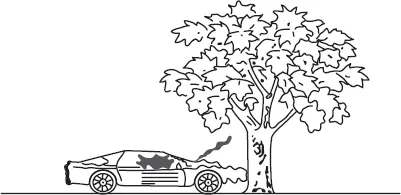
To paraphrase Edward de Bono, you may be lucky enough to have been born with a Ferrari of a brain, but you can still crash it into a tree. It’s what we learn to do with our natural abilities that makes by far the most difference.
This book certainly does not claim to provide an exhaustive list of every method that exists. Critical Thinking, for an example, is a subject in its own right and the ideas included here simply introduce and develop the type of logical reasoning that forms a background for these skills. However, it does suggest a starting point for schools who recognise the importance of helping their pupils to become independent thinkers and learners, but who are not quite sure how best to proceed. Put simply, it offers schools one clear route through the jungle. After that, it will be up to each school to decide whether they would also like to explore other directions.
![]()
Chapter 2
Why should we teach thinking and learning skills?
You might ask why we should be teaching thinking and learning skills? Don’t children think and learn already? The response is that of course children develop their thinking and learning skills while at school, regardless of whether these are given specific focus. It would be extremely worrying if this were not the case. The question is simply: is this enough or could we do more?
Well, let’s begin by looking at the alternative. Sticking with things as they are. Students are passing through school, learning their subjects, carrying out their course work and sitting their exams. A greater proportion than ever before are achieving A grades and a higher number are going into further education. Surely this is a sign of success?
We all certainly hope so. However, we must ask ourselves whether grades and university entrance statistics paint an ...