eBook - ePub
The Minimum Core for Information and Communication Technology: Knowledge, Understanding and Personal Skills
- 120 pages
- English
- ePUB (mobile friendly)
- Available on iOS & Android
eBook - ePub
The Minimum Core for Information and Communication Technology: Knowledge, Understanding and Personal Skills
About this book
The teacher training framework, introduced in September 2007, requires all teachers in the post-16 sector to possess knowledge, understanding and personal skills to at least level 2 in the minimum core for ICT. Coverage and assessment of the minimum core have to be embedded in all Certificate and Diploma courses leading to QTLS and ATLS status. This book is a practical guide to ICT for trainee teachers in the Lifelong Learning Sector. It enables trainee teachers to identify and develop their own ICT skills and to support their students in ICT.
Information
1
Your professional development
This chapter will help you to:
• understand the Continuous Professional Development (CPD) process;
• undertake a personal knowledge and skills assessment for ICT;
• identify an action plan for your development;
• understand how to record evidence of your development.
Links to minimum core ICT
A2 | Develop your personal ICT skills and knowledge and reflect upon your own experiences. However, this chapter relates to the whole ICT minimum core so that there is a relationship to the whole standard. |
Links to LLUK Professional Standards
AS4 | Reflection and evaluation of your own practice and your own continuing professional development as teachers. |
AS7 | Improving the quality of your practice. |
Links to Diploma in Teaching in the Lifelong Learning Sector (DTLLS)
Unit 5 Continuing personal and professional development.
Introduction
It is not enough to become a qualified teacher or trainer in the further education (FE) sector. You need to maintain and enhance your skills and understanding through a process of CPD throughout your career. Since September 2007 full-time teachers and trainers in the FE sector have been required to carry out a minimum of 30 hours of CPD each year and part-time staff a pro rata amount. They must also record their development activities. In the context of this book, CPD means to keep up to date with the contents of the ICT minimum core. ICT is a dynamic and rapidly changing subject. Its impact on society and specifically on education and training is developing quickly so there is an on going need to maintain and extend your skills and knowledge. CPD is essential if you are not to fall behind.
The aims of the ICT minimum core (LLUK, 2007b) are:
• to promote an understanding that underpinning ICT skills may be necessary for learners to succeed and achieve their chosen qualification;
• to encourage the development of inclusive practices in addressing the ICT needs of learners;
• to raise awareness of the benefits to learners of developing embedded approaches to teaching and learning the Skills for Life;
• to provide signposts to useful materials that will support collaborative working with specialist ICT teachers in understanding how to integrate these skills within other areas of specialism.
The Institute for Learning (2007) offers the dual model of CPD that asks teachers to consider not only their subject but also teaching and learning and the policy context in which they are working. You need to balance your CPD across the three areas. In some cases the emphasis may be on some areas more than others.
The ICT minimum core requires that teachers are able to support learners with limited ICT skills. This may have an impact on all three areas of the dual model.
For example:
ICT may form part of your subject specialism.
E-learning methods may be used during the course that assume a level of learner skill (e.g. searching the world wide web).
Government policy may require actions by the education or training provider in relation to ICT (e.g. HM Goverment, 2008).
The Institute for Learning provides a model for the CPD process. Figure 1.1 shows the model. This requires a systematic and objective approach in which you need to analyse your skills and knowledge in relation to your objectives. This analysis provides the basis of your development or action plan. The activities identified within the plan are undertaken and recorded. The final step is to reflect on what you have achieved and feed the conclusions into the next cycle of the CPD process.
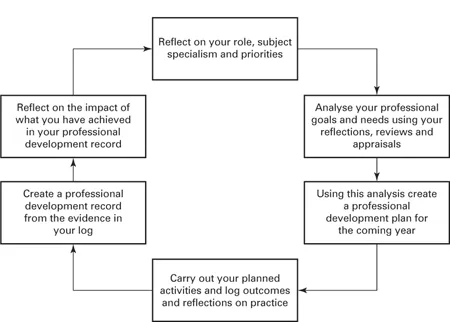
Figure 1.1 Institute for Learning CPD process model
Reflection
Reflection is a major component of the Institute for Learning’s CPD process and forms a key element in the requirements for many other professions. In addition it can help you to achieve deep learning. Undertake the following reflective tasks.
REFLECTIVE TASK
1 Consider how ICT is changing your teaching subject. How will you need to adapt your approach to meet the changes and assist your learners?
2 Consider how ICT is changing society, the world of work and people’s lives. How will you need to adapt your approach to meet the changes and assist your learners?
3 Consider how ICT is changing teaching and learning. How will you need to adapt your approach to meet the changes and assist your learners?
Table of contents
- Cover
- Title
- Copyright
- Contents
- The author and acknowledgements
- List of acronyms
- Introduction
- 1 Your professional development
- 2 Different factors affecting the acquisition and development of ICT skills
- 3 Importance of ICT in enabling users to participate in public life, society and the modern economy
- 4 Main learning disabilities and difficulties relating to ICT learning and skills development
- 5 Potential barriers that inhibit ICT skills development
- 6 Communicating about ICT
- 7 Personal ICT skills: communication
- 8 Personal ICT skills: processes
- Appendix 1: Qualified Teacher Learning and Skills
- Appendix 2: Minimum core
- Appendix 3: Skills audit and action plan
- Appendix 4: Development
- Appendix 5: ICT minimum core checklist
- Glossary
- Index
Trusted by 375,005 students
Access to over 1.5 million titles for a fair monthly price.
Study more efficiently using our study tools.
Frequently asked questions
Yes, you can cancel anytime from the Subscription tab in your account settings on the Perlego website. Your subscription will stay active until the end of your current billing period. Learn how to cancel your subscription
No, books cannot be downloaded as external files, such as PDFs, for use outside of Perlego. However, you can download books within the Perlego app for offline reading on mobile or tablet. Learn how to download books offline
Perlego offers two plans: Essential and Complete
- Essential is ideal for learners and professionals who enjoy exploring a wide range of subjects. Access the Essential Library with 800,000+ trusted titles and best-sellers across business, personal growth, and the humanities. Includes unlimited reading time and Standard Read Aloud voice.
- Complete: Perfect for advanced learners and researchers needing full, unrestricted access. Unlock 1.5M+ books across hundreds of subjects, including academic and specialized titles. The Complete Plan also includes advanced features like Premium Read Aloud and Research Assistant.
We are an online textbook subscription service, where you can get access to an entire online library for less than the price of a single book per month. With over 1.5 million books across 990+ topics, we’ve got you covered! Learn about our mission
Look out for the read-aloud symbol on your next book to see if you can listen to it. The read-aloud tool reads text aloud for you, highlighting the text as it is being read. You can pause it, speed it up and slow it down. Learn more about Read Aloud
Yes! You can use the Perlego app on both iOS and Android devices to read anytime, anywhere — even offline. Perfect for commutes or when you’re on the go.
Please note we cannot support devices running on iOS 13 and Android 7 or earlier. Learn more about using the app
Please note we cannot support devices running on iOS 13 and Android 7 or earlier. Learn more about using the app
Yes, you can access The Minimum Core for Information and Communication Technology: Knowledge, Understanding and Personal Skills by Alan Clarke in PDF and/or ePUB format, as well as other popular books in Education & Education Technology. We have over 1.5 million books available in our catalogue for you to explore.