Metal-free carbons have recently shown great efficiency in several catalytic processes, including oxidative dehydrogenation (ODH) of ethylbenzene and alkenes, hydrogen evolution, liquid Brønsted and Lewis acid catalysis and electrochemical reactions. The catalytic activities of carbon materials are intimately related to their defects, structures, and surface chemistry. In particular, nitrogen functionalized carbons present different surface functional groups, and they can be used as multifunctional catalysts, either through their electronic or nucleophilic properties, or their ability to form additional H bonds with substrates.
This book provides an overview of the preparation, characterization and application of metal-free functionalized carbons, including carbon nanotubes, graphene, carbon nitride and covalent organic frameworks (COFs). It is ideal for researchers and industrialists working in catalysis, gas sensing and carbon dioxide storage.
eBook - ePub
Metal-free Functionalized Carbons in Catalysis
Synthesis, Characterization and Applications
- 325 pages
- English
- ePUB (mobile friendly)
- Available on iOS & Android
eBook - ePub
Metal-free Functionalized Carbons in Catalysis
Synthesis, Characterization and Applications
About this book
Information
Section III
Applications
Applications
CHAPTER 6
Metal-free Functionalized Carbon in Liquid Phase Reactions
a Department of Chemistry, Università degli Studi di Milano, via Golgi 19, 20133 Milan, Italy
*E-mail: [email protected]
*E-mail: [email protected]
b Institut pour la Maitrise de l’Energie, Université d’ Antananarivo, B.P. 566 – 101 Antananarivo, Madagascar
6.1 Introduction
At present, a tremendous amount of attention is being focused on finding green alternatives to liquid- or gas-phase catalytic transformations. Ideally, the use of biomass as a feedstock for the chemical industry would be of benefit, and it would be even better if such catalytic transformations could occur on metal-free catalysts. Indeed, sustainable chemistry researchers have been demonstrating a high interest in metal-free catalysis.1
Both the academic and the industrial world are dedicating more attention to finding and improving alternatives to fossil-based carbon sources. The most straightforward candidate, due to its availability, low cost and abundance on Earth, is carbon.2–4 Carbon-based materials are widely used either as supports for metal-based catalysts, or as catalysts themselves.5 Metal-based carbon catalysts are active in the aerobic oxidation of alcohols,6–9 the selective reduction of nitroarene and the oxidative dehydrogenation of ethylbenze,10 among other examples. Returning to carbon as a catalyst, carbon is the ideal candidate because of its position in the periodic table. Diverse bonding states lead to different structural arrangements: sp1-hybridization results in a carbon chain structure, whilst sp2-hybridization leads to a planar carbon structure, and, finally, sp3-hybridization results in a tetrahedral carbon structure. For the target liquid phase reaction, tailoring the physical (surface area and porosity) and chemical (surface functional groups) properties of carbon catalysts is possible through careful and precise synthesis. Sustainable and proficient metal-free carbon catalysts are, therefore, excellent candidates. Corrosion resistance, no heavy metal pollution and environmental friendliness are some of the desired advantages.
Metal-free carbon catalysts, functionalized or not, would, therefore, be able to replace metals or metal-oxide-based catalysts in several reactions, such as hydrogenation and dehydrogenation reactions.11,12 Recent reviews13,14 have reported the use of metal-free carbon materials as catalysts (also called carbocatalysis) for liquid phase reactions. The catalyst design often determines the catalytic performance of these carbon materials. The design of the catalyst is tailored to the target liquid phase reaction (among them dehydrogenation, alcohol oxidation, transesterification, electrocatalysis and photocatalysis). Indeed, the expected catalytic properties of the catalyst suggest how the material surface should be prepared. Thus, the synthesis of these metal-free carbonaceous materials constitutes one of the key elements of a successful reaction. One prerequisite of such a catalyst preparation lies in the total absence of any trace metal elements inside the materials. Only when this condition is satisfied can the catalyst be called a “metal-free carbonaceous material”. The completion of such a condition is difficult, as almost all preparation methods for carbon materials include the use of metal. As an example, carbon nanotubes (CNTs) are obtained by chemical vapor deposition.15 Furthermore, to make these materials active for any reaction, active sites are of importance. The addition of functional groups (heteroatoms) results in a modification of the electronic properties. The insertion of functional groups inside or outside these carbon materials alters the nature (basic or acidic), as well as the physical properties, of the final metal-free carbonaceous materials and, thus, their catalytic performance.
The aim of this chapter is to summarize the main liquid phase reactions carried out with metal-free carbon materials.
6.2 Hydrocarbon Oxidation
The oxidation of hydrocarbons into oxygen-containing compounds to fine chemicals relies upon efficient C–H bond activation. In heterogeneous metal-based catalysis, breaking the C–H bond is possible in the presence of metals.
6.2.1 Cyclohexane Oxidation
The oxidation of cyclohexane (see Scheme 6.1) is an important industrial reaction, which takes place on a metal catalyst16 or on a bimetallic catalyst.17 The oxidation of cyclohexane results in the production of cyclohexanone, cyclohexanol and adipic acid, which play a significance role in producing nylon polymers.18 The production of cyclohexanone and cyclohexanol is a major process in industrial chemistry, since these two products are chemical precursors for the manufacture of nylon-6 and nylon-6,6 fibres via oxidation to adipic acid.19 Jointly, however, with a cyclohexane conversion and a low selectivity to the target molecule, toxic organic acid waste is produced. Industrially, low cyclohexane conversion is maintained (4–12%) to raise a selectivity over 70% to alcohol and ketones.20

Scheme 6.1 Cyclohexane oxidation to cyclohexanone, cyclohexanol and adipic acid.
It is, therefore, of interest to find a substitute catalyst to fulfil this lack of conversion and selectivity. Some authors have investigated several different catalysts and suggested a series of carbon materials.21 Graphene (sp2-hybridized carbon) oxides, micrometer-sized diamond and nanosized diamond (sp3 bonding configuration) catalyzed the oxidation of the inert cyclohexane to the oxygenated chemicals at a pressure of 1.5 MPa oxygen. Because they contain various structural defects, such as vacancies, the authors also found that non-treated sp2-hybridized carbon materials are more active in the reaction mentioned above. Indeed, sp2 carbon could easily decompose the intermediate molecule C6H11COOH.
With the aim to improve the cyclohexane conversion, some research groups explored the idea of activating the carbon-based materials by doping with N atoms, for example. It is in this respect that Ma et al. utilized N-doped graphene as a catalyst and the cyclohexane oxidation proceeded with 24.7% yield.22 In order to achieve this result, they used oxygen and a small (3.0 mmol) amount of TBHP (tert-butyl hydroperoxide) as oxidants. Moreover, they demonstrated that the amount of N improves the catalytic performance significantly. Wang and co-authors also attributed the improved activity to the presence of graphitic sp2 nitrogen. Although the graphitic sp2 nitrogen is not directly correlated to the catalytic mechanism, it participates in the change of the electronic structure of the adjacent carbon atoms, as well as in the formation of reactive oxygen species.
The selective oxidation of cyclohexane to the organic acid, namely adipic acid, also faces challenges due to low activity and safety problems. Zheng et al. performed this reaction over nitrogen-doped CNTs with a 59.7% selectivity at 45.3% conversion.23 In addition to being active and selective, the catalyst was also stable over five runs.
6.2.2 Ethylbenzene Oxidation
Acetophenone (AcPO) is an intermediate material in the production of perfumes, pharmaceuticals, resins, alcohol, esters, and aldehydes. It can be derived from the selective oxidation of ethylbenzene (EB) (see Scheme 6.2).
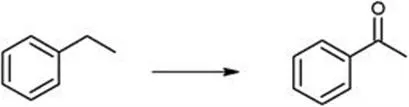
Scheme 6.2 Selective oxidation of ethylbenzene to acetophenone.
Several catalysts are active for this reaction, such as MCM-41 molecular sieves with Mn and Co,24 NiAl hydrocalcite,25 and manganese nanocatalysts.26 These three catalysts require the addition of a small amount of TBHP as an oxidant.
However, the main drawbacks of using metallic species or an acidic solvent lie in the costs and the environmental impact. This has aroused more interest in finding a catalyst that can assuage these worries, one that is metal-free, cheap, environmentally friendly, recyclable, efficient and selective in the oxida...
Table of contents
- Cover
- Title
- Preface
- Contents
- Section I Synthesis
- Section II Characterization
- Section III Applications
- Subject Index
Trusted by 375,005 students
Access to over 1.5 million titles for a fair monthly price.
Study more efficiently using our study tools.
Frequently asked questions
Yes, you can cancel anytime from the Subscription tab in your account settings on the Perlego website. Your subscription will stay active until the end of your current billing period. Learn how to cancel your subscription
No, books cannot be downloaded as external files, such as PDFs, for use outside of Perlego. However, you can download books within the Perlego app for offline reading on mobile or tablet. Learn how to download books offline
Perlego offers two plans: Essential and Complete
- Essential is ideal for learners and professionals who enjoy exploring a wide range of subjects. Access the Essential Library with 800,000+ trusted titles and best-sellers across business, personal growth, and the humanities. Includes unlimited reading time and Standard Read Aloud voice.
- Complete: Perfect for advanced learners and researchers needing full, unrestricted access. Unlock 1.5M+ books across hundreds of subjects, including academic and specialized titles. The Complete Plan also includes advanced features like Premium Read Aloud and Research Assistant.
We are an online textbook subscription service, where you can get access to an entire online library for less than the price of a single book per month. With over 1.5 million books across 990+ topics, we’ve got you covered! Learn about our mission
Look out for the read-aloud symbol on your next book to see if you can listen to it. The read-aloud tool reads text aloud for you, highlighting the text as it is being read. You can pause it, speed it up and slow it down. Learn more about Read Aloud
Yes! You can use the Perlego app on both iOS and Android devices to read anytime, anywhere — even offline. Perfect for commutes or when you’re on the go.
Please note we cannot support devices running on iOS 13 and Android 7 or earlier. Learn more about using the app
Please note we cannot support devices running on iOS 13 and Android 7 or earlier. Learn more about using the app
Yes, you can access Metal-free Functionalized Carbons in Catalysis by Alberto Villa, Nikolaos Dimitratos, Alberto Villa,Nikolaos Dimitratos in PDF and/or ePUB format, as well as other popular books in Physical Sciences & Industrial & Technical Chemistry. We have over 1.5 million books available in our catalogue for you to explore.