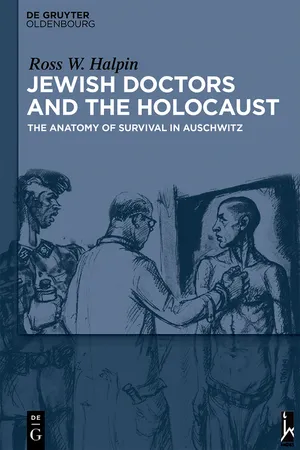
This is the first attempt to explain how Jewish doctors survived extreme adversity in Auschwitz where death could occur at any moment. The ordinary Jewish slave labourer survived an average of fifteen weeks. Ross Halpin discovers that Jewish doctors survived an average of twenty months, many under the same horrendous conditions as ordinary prisoners. Despite their status as privileged prisoners Jewish doctors starved, froze, were beaten to death and executed. Many Holocaust survivors attest that luck, God and miracles were their saviors. The author suggests that surviving Auschwitz was far more complex. Interweaving the stories of Jewish doctors before and during the Holocaust Halpin develops a model that explains the anatomy of survival. According to his model the genesis of survival of extreme adversity is the will to live which must be accompanied by the necessities of life, specific personal traits and defence mechanisms. For survival all four must co-exist.
- 249 pages
- English
- ePUB (mobile friendly)
- Available on iOS & Android
eBook - ePub
About this book
Information
Subtopic
German HistoryIndex
History
Part I:The Road to Auschwitz
As a religion, Judaism has long countenanced it [medicine] as a respectable and indeed necessary calling, and socially the Jews have long viewed medicine as a path to professional fulfilment and honour within the community. (Efron 2001, 2)
The road taken by Jewish doctors to Auschwitz is a cautionary tale and an example of how forces experienced throughout life shape who we are and prepare us for what we will face. It is a cautionary tale because at the beginning of the twentieth century the western European Jews were largely accepted, even had assimilated into society yet within forty-five years they were the victims of genocide. Second by following the path taken by the Jewish doctors over the period from 1900 to 1945, particularly those who survived, we become witnesses to how the past through nurture and nature determines human strengths and weaknesses. Although history is not tangible it is a beacon that should protect and prevent historical events that include genocide, the violation of human rights, terrorism and racism from being repeated. Thus, it is important to have some understanding of the life and trials and tribulations experienced by the average Jewish person and the Jewish doctor during the forty years leading up to the Final Solution.
Prior to the Holocaust, the Jewish doctors of Europe were largely assimilated in their respective societies and considered themselves citizens of the countries in which they and their families were born and lived. Memoirs, oral testimonies and biographies suggest they belonged to close-knit families and communities that valued relationships, family ties, education, religious observance and adherence and respect to the laws of the state. The communities were characterized by several distinctive attributes, most of which still hold true today. They were dependent on strong attachments, both on the familial and on the community level. There was close spatial interaction, as orthodox and, in particular, ultra-orthodox Jews must live within walking distance from a synagogue or mikva (ritual bath) and close to their extended family for the purpose of gatherings on the Sabbath, holy days and festivals. There was a strong commitment to keeping the family together – for the young and aged to live together and for children to care for their parents and other members of the extended family and to participate in Jewish organizations and associations, particularly ones that extended help to those in need.
It becomes clear that early life experiences, particularly the influence of family life, the encouragement and determination to receive an education, and, in most cases, the commitment to practice their faith and the refusal to bow down to antisemitism influenced the survivors’ later life attitudes and responses to challenges they were to face. Although they were considered a group on the periphery of society throughout history, Jewish doctors established themselves as a successful part of the society wherever they settled and in almost every sphere of medicine including research, pioneers in specialization, the establishment of clinics and hospitals, and health insurance. Since emancipation and despite discrimination and antisemitism, they had achieved heights of success nationally and internationally. From the turn of the century to 1936, eight Jews from Germany, Austria and Russia were recipients of the prestigious Nobel Prize for scientific and medical research.9
By the early 1930s, more than half of all Nobel prizes in science had been awarded to German-speaking scientists while many of the most advanced medical tools and concepts had been developed in Germany (Proctor, 1988, 293). Research contributed to innovations and medical progress that allowed such countries as Germany and Austria to be considered centres of medical and scientific excellence. According to Saul Friedländer (1997, 225),
on April 1, 1933, some 8000 to 9000 Jewish physicians were practicing in Germany. By the end of 1934, approximately 2,200 had either migrated or abandoned their profession, but despite their steady decline during 1935, at the beginning of 1936, 5000 Jewish physicians (among them 2,800 in the Public Health Service) were still working in the Reich.
By early 1939 this number had been reduced to 285 (Kater 1989, 201). The tragic loss of doctors by emigration, suicide, murder and incarceration symbolized the death of German Jewry in that the Jewish doctor represented everything the Jews aspired to and had achieved in Germany. They were successful in the professions (law, medicine, finance), in business (trade, manufacturing, small business), in scholarship (university, research and teaching) and politics. They had assimilated into the society and at the same time continued to practice their religion. Germany from the middle of the nineteenth century had become the centre of medical research and scholarship attracting researchers, academics and medical students worldwide. After the enlightenment10 Germany encouraged the development of a Jewish health care system with hospitals, clinics and medical training. The Jewish physician and medical services were highly regarded and attracted both Jewish and non-Jewish patients. As John Efron (2001, 3) states, ‘few occupations are as immediately linked to a group as medicine is to the Jews … and … as a people, the Jews have enjoyed an intimate and deeply symbiotic relationship with medicine.’ However, there is no doubt that the irrefutable success of the Jewish doctor, particularly from the turn of the century, contributed to the increasing level of resentment, discontentment and, finally, outright antisemitism felt by Aryan doctors.
At the turn of the nineteenth century, Jews constituted approximately two per cent of Germany’s doctors, however, by the beginning of the twentieth century, Jews, who represented just over one per cent of the German population made up sixteen per cent of Germany’s doctors (Efron 2001, 234). Approximately one third of medical doctors in Berlin were Jewish. According to Efron (2001, 234), medicine had become so fundamental ‘to the social structure and thus self-perception of German Jewry that nearly one half of all Jews attending universities in 1900 studied medicine.’ Jewish women made up a very high proportion of the women attending European medical schools especially in Germany (Freidenreich 1996, 80). The universities of Germany not only experienced an influx of German Jews into the faculties of medicine. Due to the manifest antisemitic quota systems, which limited the number of Jews who could study medicine in countries such as Poland and Russia, there was a continuous stream of foreign students into German universities. The extent of this migration of foreign students is demonstrated by the figures for the University of Königsberg, at which by 1911 foreign Jews studying medicine outnumbered German Jews. While foreign Jews had constituted a mere seven per cent of all Jewish university students that figure skyrocketed to fifty-six per cent by 1911–1912 (Efron 2001, 235). In Vienna approximately fifty per cent of the city’s doctors and sixty-three per cent of dentists were Jewish. Similarly, in Poland some 3,500 Jewish doctors accounted for almost twenty per cent of the country’s approximately 20,000 physicians (ed. Falstein 1963, 46).
The hostility and alienation towards the Jewish doctors that had begun fermenting since the turn of the century increased at the end of the Great War. Germany’s defeat had destroyed the country politically, socially and economically, and the new government, the Weimar Republic, was weak and unable to provide stability and security. Under the Republic the seeds of xenophobia, racism and antisemitism took root and flourished. Antagonism towards the Jews grew in direct relationship to their involvement, perceived influence and integration into German politics, finance, culture and business. The most successful became the most vulnerable and Jewish doctors were confronted ‘with an antisemitic campaign of remarkable vehemence’ (Efron 2001, 5). In a country with a destroyed economy and chronic unemployment, the combination of thousands of German physicians returning home from the War and the arrival of hundreds of immigrant Jewish doctors fleeing from pogroms in Tsarist Russia led to fierce competition for work within the medical profession. When over time it became obvious that the Jewish doctor were more successful at finding work than German doctors, they begun to be perceived as a serious threat to the continuing livelihood of the German doctors, especially medical graduates seeking work. The success of the Jewish doctor by way of competency and providing better health services attributed to the rise in unemployment of non-Jewish doctors and dentists. Despite the bitterness and ill-feeling there was little that could be done to curb Jewish domination. It was not until Hitler came to power in 1933 that the German doctor saw some hope that their professional and financial status would improve and measures would be taken to rid them of Jewish competition.
Antisemitism existed in Germany before the Nazis came to power yet it was relatively mild compared to that suffered by Jews in neighbouring countries such as Poland, Hungary, France, and Russia. Nevertheless, the pervading atmosphere of blatant discrimination created by the imminent coming to power of an antisemitic regime gave local councils and municipalities, universities and other institutions license to begin discriminatory actions against Jews. At the same time the popular press and medical journals openly condemned the continuing influence and monopoly of Jews in the country’s medical system. Hitler’s accession to power and the National Socialist takeover in 1933 was a watershed and marked the end of the German government’s adherence to legal norms which had offered Jews some measure of protection in the preceding years’ (Wildt 2000, 183). Once the Law for the Reconstruction of the Civil Services11 was introduced in 1933, even tenured civil servants of non-Aryan descent could be legally dismissed. Local government officials of Berlin and Munich, Julius Lippert, State Commissioner of Berlin, and Karl Fiehler, Mayor of Munich, respectively, of their own accord broke legitimate contracts when they dismissed all Jewish public health and welfare physicians (Kater 1989, 185). In Bavaria the contracts of Jewish doctors working for the public-school system were dismissed and in Munich Jewish doctors could only treat Jewish patients. In Hamburg after 1933:
[the city’s] community welfare administration had operated according to the tenor and spirit of National Socialism from the outset. It not only accepted the creation of a completely new welfare group, the Jews, but also contributed of its own accord and finally actively practiced discrimination and segregation. (Lohalm 2000, 45)
Kurt Klare, co-founder of the Nazi Physicians’ League, wrote to a colleague Dr Scheidegg, ‘that Jews and philosemites ought to take note of the fact that Germans are masters of their own house once more and will control their own destiny’ (Kater 1989, 183). Another founder of the League, Dr Conti, warned that because no professional group in Germany had been harmed more by Jewry than the medical one, nobody ought to be surprised when Hitler effectively orchestrated the gradual disenfranchisement of the Jewish doctor in German medicine. He appointed Dr Gerhard Wagner, The Führer’s Commissioner for National Health, to oversee the reorganization and restructure of the German medical system, and it was Wagner aided by Carl Haedenkamp and Alfons Stauder who initiated the process for dismissing Jewish functionaries from the national medical associations as well as regional and local groups (Kater 1989, 183). From May 17, 1934 Jewish doctors were no longer allowed to be a member of and practice within Germany’s state-supported health insurance program. This was, in fact, a sequel to the Law for the Reconstruction of the Civil Services of April 7, 1933 that effectively removed all Jewish physicians (Amtsärzte) from the civil service. During 1934 and 1935 pharmacists and dentists were targeted and had to show proof of Aryan descent. Legislation began to have a far-reaching and permanent impact on the Jewish physician when the Reich Physicians’ Ordinance of December 13, 1935 was introduced. Gentiles were forbidden to be treated by Jewish doctors or to attend a Jewish hospital. Jewish doctors were forbidden to call themselves ‘physicians’ and only allowed to use the more degrading term, ‘sick treaters’ (Efron 2001, 264).
This progressive erosion of the recognition Jewish doctors in the Reich reached its conclusion with the legislation of the Fourth Ordinance of the Citizen Law, enacted on July 25, 1938, which revoked the medical licenses of Jewish physicians thus preventing them from practicing medicine in Germany. Despite the early rush in 1933 to victimize and discriminate against Jewish doctors, at ‘the end of September (1938), then, Jewish doctors, as the world had admired them for decades, to all intents and purposes vanished from the German medical scene’ (Kater 1989, 200). The process evolved over a five-year period through a combination of propaganda, intimidation and official laws. Jewish doctors were accused of sexual assault by German women patients, their surgeries and clinic leases were revoked or not renewed, those holding academic positions, some eminent international medical scientists were dismissed, they were accused of monopolizing the medical profession and causing financial hardship to German doctors and their families. Subsequently the doctors became victims of pogroms during which, ‘in accordance with the “Aryan” medical counterculture that wished to see Jews dead, were, if anything, treated more brutally than non-doctors because they alone could help preserve Jewish life’(Kater 1989, 201).
Joseph Tenenbaum argues that in the post-Great-War period Poland was borne on a wave of pogroms where Jew-baiting, Jew-beating, beard-cutting and economic discrimination was endemic (Tenenbaum 1963, 144). According to Edmund Goldenberg (1995), a survivor of Auschwitz, born in Terezin, Czechoslovakia, but educated in Poland, antisemitism was unrestrained and widespread throughout Poland, nowhere more so than in the schools and universities. Goldenberg recalled that at Kacimierz University, there was a quota system with a limit of ten per cent Jews. The student body and teaching staff were extremely antisemitic. Jewish students were not allowed to sit or communicate with non-Jews and various humiliations were introduced by actively antisemitic professors. One such was:
the ‘ghetto bench,’ an arrangement whereby Jews were allowed to sit only in a special area on the left side of the lecture hall. Another was the placing of yellow tags on those benches, bearing the resurrected medieval slogan, ‘Here sits a Jew’. (Roland 1992, 9)
According to Janina Zaborowska, a non-Jewish medical student, there was physical intimidation at Warsaw University, including the beating of Jews with rubber hoses in the dissecting room (Roland 1992, 9). Goldenberg (1995) maintains that Jewish students were even required to find their own corpses to carry out dissections. He suggests that prior to the invasion the Polish government and the institutions were watching the events in Germany under Hitler and trying to implement similar policies that discriminated against the Jewish doctors. This is important in regards to the working relationship of medical staff in Auschwitz because Jewish doctors not only needed to fear the Nazi SS in the camp, they were forced to contend with bullying, humiliation and sometimes beatings by non- Jewish prisoners, particularly Polish doctors. Jewish doctors in all Nazi-occupied countries suffered a similar fate. Professor Josef Charvát, a Czechoslovakian endocrinologist and specialist in general internal diseases, who was a prisoner doctor in Dachau, writes of the poor sanitary conditions and the fate of medicine in Czechoslovakia under German occupancy:
All the universities (which in our country also educated medical doctors) were closed down by force on the 17th November 1939, and for fully six years we were without any possibility of educating and training medical practitioners. Many Czech doctors were arrested, sent to concentration camps or executed; all Jewish doctors were deported and most of them done away with (Medical Science Abused: German Medical Science as Practiced in Concentration Camps and in the so-called Protectorate 1946).
The ghettos introduced the Jewish doctors to conditions that were beyond their comprehension. Epidemics were rampant, typhoid and malaria for example were foreign to many doctors, particularly young graduates, medicine and equipment was almost non-existent, and many doctors were not qualified in the fields of medicine most needed. Starvation was at the core of almost every illness. The quantity and quality of food and water was so poor as to cause massive weight loss and emaciation, which led to the breakdown of the immune system, which in turn led to epidemics and chronic diarrhoea. The population of the ghetto of Warsaw was approximately five hundred thousand Jews, Lodz ghetto alone housing a population of approximately three hundred and twenty thousand. Essentially, the plan was to empty the countryside of Jews and drive them into the city precincts and the walled ghettos. This led to overcrowding, massive unemployment, disease and epidemics. Some of the true perspective of the conditions that prevailed is demonstrated by these statistics:
[O]ne third of the population of the entire city of Warsaw…was crammed into the ghetto, which took up no more than three to four percent of the built area of the city. People were crowded seven to a room. The ghetto was in the poorest vicinity of Warsaw; the problems exacerbated by the run-down environment, cramped streets and deficient drainage. (Nadav 2009, 70)
The official food allocation in the Warsaw ghetto gives an even more indication of the inadequacy: Polish prisoners received 634 calories per day and 2310 for the Germans (Noakes & Prindham 1988, 1067). Thus to survive was very difficult. The following are descriptions of life in the ghettos and camps that provide an insight into the conditions in which the Jewish doctor and carer were required to work. Stanislav Rozycki, a visitor to the Warsaw ghetto provides evidence of these conditions:
The majority are nightmare figures, ghosts of former human be...
Table of contents
- Cover
- Title Page
- Copyright
- Dedication
- Foreword
- Preface
- Acknowledgements
- Contents
- Introduction
- Part I: The Road to Auschwitz
- Part II: Parallel Lives: Drs Sima Vaisman, Gisella Perl and Louis Micheels
- Part III: Jewish Physicians and the Hospital System
- Part IV: Survival
- Part V: Anatomy of Survival
- Part VI: Evaluation of Sources
- Conclusion
- Epilogue
- Bibliography
- Glossary
- Appendices
- Index
Trusted by 375,005 students
Access to over 1.5 million titles for a fair monthly price.
Study more efficiently using our study tools.
Frequently asked questions
Yes, you can cancel anytime from the Subscription tab in your account settings on the Perlego website. Your subscription will stay active until the end of your current billing period. Learn how to cancel your subscription
No, books cannot be downloaded as external files, such as PDFs, for use outside of Perlego. However, you can download books within the Perlego app for offline reading on mobile or tablet. Learn how to download books offline
Perlego offers two plans: Essential and Complete
- Essential is ideal for learners and professionals who enjoy exploring a wide range of subjects. Access the Essential Library with 800,000+ trusted titles and best-sellers across business, personal growth, and the humanities. Includes unlimited reading time and Standard Read Aloud voice.
- Complete: Perfect for advanced learners and researchers needing full, unrestricted access. Unlock 1.5M+ books across hundreds of subjects, including academic and specialized titles. The Complete Plan also includes advanced features like Premium Read Aloud and Research Assistant.
We are an online textbook subscription service, where you can get access to an entire online library for less than the price of a single book per month. With over 1.5 million books across 990+ topics, we’ve got you covered! Learn about our mission
Look out for the read-aloud symbol on your next book to see if you can listen to it. The read-aloud tool reads text aloud for you, highlighting the text as it is being read. You can pause it, speed it up and slow it down. Learn more about Read Aloud
Yes! You can use the Perlego app on both iOS and Android devices to read anytime, anywhere — even offline. Perfect for commutes or when you’re on the go.
Please note we cannot support devices running on iOS 13 and Android 7 or earlier. Learn more about using the app
Please note we cannot support devices running on iOS 13 and Android 7 or earlier. Learn more about using the app
Yes, you can access Jewish Doctors and the Holocaust by Ross W. Halpin in PDF and/or ePUB format, as well as other popular books in History & German History. We have over 1.5 million books available in our catalogue for you to explore.