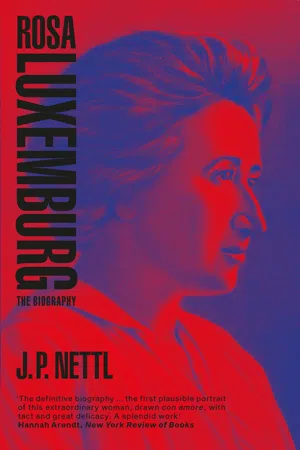
This biography, first published half a century ago, remains the most detailed and comprehensive study of Rosa Luxemburg. Nettl's extensive knowledge of the social and political context of the European socialist movements in which she was active, and his engagement with her voluminous writings in German, Polish, and Russian (many of which are only now being translated into English), brings to light the multidimensional nature of her life and work.
This new edition will enable a new generation to explore Luxemburg's effort to develop an emancipatory version of Marxism liberated from the constraints of both reformism and authoritarianism, as well as grasp the unique personality of this remarkable women theoretician and revolutionary.
- 1,056 pages
- English
- ePUB (mobile friendly)
- Available on iOS & Android
eBook - ePub
About this book
Information
Rosa Luxemburg
VOLUME I
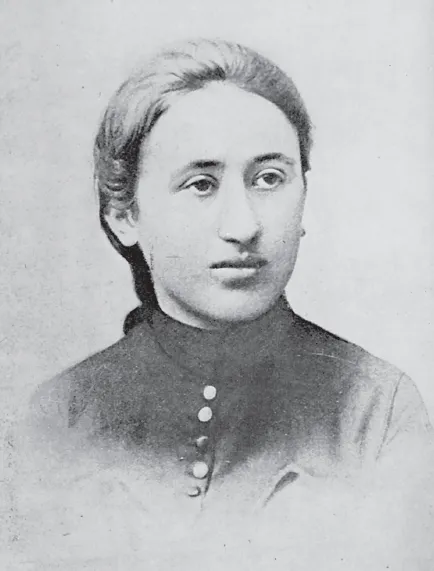
Rosa Luxemburg as a school girl
CREDO
‘COMMUNISM is in reality nothing but the antithesis of a particular ideology that is both thoroughly harmful and corrosive. Thank God for the fact that Communism springs from a clean and clear ideal, which preserves its idealistic purpose even though, as an antidote, it is inclined to be somewhat harsh. To hell with its practical import: but may God at least preserve it for us as a never-ending menace to those people who own big estates and who, in order to hang on to them, are prepared to despatch humanity into battle, to abandon it to starvation for the sake of patriotic honour. May God preserve Communism so that the evil brood of its enemies may be prevented from becoming more barefaced still, so that the gang of profiteers … shall have their sleep disturbed by at least a few pangs of anxiety. If they must preach morality to their victims and amuse themselves with their suffering, at least let some of their pleasure be spoilt!’
Karl Kraus in Die Fackel, November 1920; reprinted in Widerschein der Fackel (Volume IV of Selected Works of Karl Kraus), Munich 1956, p. 281.
I
ROSA LUXEMBURG—WHO,
WHAT, AND WHY?
WHY a biography of Rosa Luxemburg at this great length—or any length for that matter? She is well known to those who study or believe in Marxism. The main outline of her life and work is established. There are biographies, even though none recent and only one in English. Has important new evidence recently come to light? Is there a case for diffusing knowledge about Rosa Luxemburg among a wider public—and if so, is a book of this length not far more likely to repel than to attract? Since I have had to convince myself of having good reasons for writing this book, I want to start by outlining them.
Many people actually know Rosa Luxemburg’s name, but its associations are vague—German, Jewish, and revolutionary; that is as far as it goes. To those who are interested in the history of Socialism she emerges in clearer focus, as the spokeswoman and theoretician of the German Left, and one of the founders of the German Communist Party. Two aspects of her life seem to stand out: her death—which retrospectively creates a special, if slightly sentimental, interest in a woman revolutionary brutally murdered by the soldiery; and her disputes with Lenin in which she appears to represent democracy against Russian Communism. The translator and editor of her works in America has seen fit to put out an edition of her polemics against Lenin under the title Marxism or Leninism, presumably because he too thinks this neatly sums up her position.1 To many casual readers in the West she has therefore come to represent the most incisive defender of the democratic tradition in Marxism against the growing shadow of its misuse by the Bolsheviks. In so far as revolutionary Marxism can be democratic, Rosa Luxemburg stands at its apex. She has become the intellectual sheet-anchor of all those old, but ever young, radicals who think that Communism could have been the combination of violence and extreme democracy. In their frequent moments of nostalgia it is the name Rosa Luxemburg that they utter.1 Her death in action ended any possibility of giving effective battle to the Bolsheviks and also sanctified her views with the glow of martyrdom. But the difficulty is that these same Bolsheviks and their followers, whose ascendancy she is supposed to have resisted, have also claimed her for their own. In spite of her alleged mistakes and misinterpretations they see her ultimately committed to Communism in its struggle against Social Democracy; had she lived she would have made the choice even more decisively than in the confusion of 1918. Once again the date of her death is crucial—as well as its form. Communist tradition can no more afford to ignore a martyr than any other embattled faith—and so someone who later might well have been buried with all the obloquy of a renegade, today still retains her place in the official pantheon, by dying early and by dying hard.
So the first reason for Rosa Luxemburg’s importance in the history of political Marxism is the unique moment of her death. She and Karl Liebknecht were perhaps the only Marxists who committed themselves to the Bolshevik revolution in spite of fundamental criticisms, which are as old as that revolution itself. What makes Rosa Luxemburg’s case especially interesting is that her debates with Lenin on certain fundamental Marxist problems date back to 1903—they are central to her philosophy. Others in Russia had departed from or quarrelled with Bolshevism long before 1917—quite apart from those who were never within sight or sound of sympathy with Lenin. These had nothing to contribute to orthodox revolutionary Marxism after 1917. An even more important group came to differ from Leninism as it evolved into Stalinism; they opted out of the charmed circle of Communist politics. Trotsky and his followers, and all those purveyors of a precise conscience who orbited on the periphery of revolutionary Marxism from the 1920s onwards, suffered from the same two major disabilities: lack of a disciplined mass following to compensate for the organized support of Soviet power, and the ideological distress of having suddenly to prise themselves loose from their inheritance of the October Revolution. There was little political and even less psychological room for a genuinely uncommitted middle position between friend and foe—the limbo of sophistry that characterized Trotsky and many lesser spirits for so many years. The awful alternative was either to deny the validity of the original event—the revolution—or to claim that it was those in power in Russia who deviated from some purely intellectual norm set by the dissidents. The lack of a ‘neutral’ tribunal made it all too easy for official Communism to elbow these people out as traitors—by the reality of sheer power and weight of argument. Rosa Luxemburg, however, could neither be brushed aside as irrelevant before 1917 nor denounced as a traitor afterwards When she died she was a critical supporter; in her own words, ‘Enthusiasm coupled with the spirit of revolutionary criticism—what more can people want from us?’1 She too would no doubt have had to make a more concrete choice had she lived. But death is final, it freezes into perpetuity the views, however tentative, held at the time. The most that could be done was to speak of Rosa Luxemburg’s ‘errors’—and to avoid any detailed analysis of her contribution and attitude in their historical context. There is a strange but severe honesty about Communist historiography. Trotskyism, Bukharinism, even Menshevism, are historical deviations, their ‘treachery’ has a beginning, a middle (development), and an end (discovery and condemnation); their ‘theory’ is the product of historical action and is welded to it irrevocably. It can be proved by identifiable actions during specific events. Not so Luxemburgism. This is pure inductive theory, built up mostly from writings; once established (posthumously), it could be deduced in turn from other writings. It hangs in the air—a purely theoretical construct. Even during the worst Stalin period, Luxemburgism never became treason; it led to opportunism but was never one of its ‘proofs’, or essential components. Silence was the rule for twenty years after 1933, or occasional stiff and stilted references—brickbats accompanying the political slaughter. As in an old-fashioned cartoon, Luxemburgism was trapped in a bubble and taken away to safe storage—while Luxemburg herself remained without blemish, an active but unthinking revolutionary personality of the second rank. No one else has had their person and their ideas separated so assiduously. Even though Stalin always insisted that errors could not be abstracted from those who made them—‘it is wrong to separate Trotskyism from the Trotskyites’—this connected condemnation of sin and sinners was never applied in the same way to Rosa Luxemburg.
None of this is new. Our continuing interest in the life and works of anyone who left behind so many unresolved ideas, and who was handled so uniquely, is only natural. But there are also good reasons why the relevance of Rosa Luxemburg’s ideas should be greater today than at any time since the 1930s. With the death of Stalin, Communist theory has ceased to be merely the iron-clad accretions and deposits of the dictator’s own notion of Marxism-Leninism. The bands have burst and with them a lively, if uneven, froth of speculation has broken out. The impetus came directly from the top—but was taken up and carried forward from lower down. To take an example: Khrushchev and the Central Committee of the Russian Communist Party have carried out a reinterpretation of war, both as a feature of competing imperialisms and as an ‘inevitable’ consequence of the confrontation between capitalism and socialism. Now, with the destructive power of modern technology, war has become the ultimate disaster once more, very like the summum malum, the blight of all civilization, which it was to Rosa Luxemburg. The fact that the proletariat, as the majority of the population, provides also the majority of victims was as obvious to Khrushchev as it was to Rosa Luxemburg—and both put it in very similar terms.1
This leads straight to the large-scale Marxist excavation which, at the time of writing, blaringly accompanies the Russo-Chinese conflict. And it did not take long for the digging to reach the revisionist controversy—one of the great watersheds of Marxism (though the thesis of this book is in part an attempt to shift its impact to a different time and a different dispute).1 No one spans these two great issues of war and revisionism more comprehensively than Rosa Luxemburg, and on both questions her conclusions are at least as authoritative and relevant as Lenin’s, though they differed on the solution to the one and about the total applicability of the other. The whole problem of revising Marx—which is none other than the problem of capturing the only authoritative interpretation of Marxism—was of great concern to Rosa Luxemburg. She expended some of her most important political analysis on the difference between Marxism and revisionism and on the consequences of the attempts to revise Marx. The contrast between postulating revolution and being revolutionary, which today agitates the Russians as much as the Chinese, was precisely the central issue which Rosa Luxemburg tried to emphasize for the first time in her much neglected polemics against Kautsky in 1910. In addition, the inevitable confrontation, not of alternative philosophies but of the two different worlds of socialism and capitalism, was central to Rosa Luxemburg’s thesis just as it is the mainspring of the Chinese attack on the Soviet Union. Placid and well-fed capitalism leading to an equally placid and well-fed socialism was as much Rosa Luxemburg’s bogey as it is that of the Central Committee of the Chinese Communist Party. If Lenin’s works are now being used in this controversy as the main arsenal of ammunition for both sides, Rosa Luxemburg’s writings could just as well serve for this purpose—except that the Chinese could find better and more systematic weapons in Rosa Luxemburg’s armoury than in Stalin’s.
But if the interpretation of the new line comes from the top, the pressure for it comes diffusely from below. The areas of free expression in Russia and the People’s Democracies have suddenly become much larger. Though transgression of the limits is still a serious offence against Communist discipline, there is at least more room for manœuvre. The notion that art is not the completely disciplined tool of political will but a spontaneous expression which merely requires a censor’s check in the light of stated political needs; that art needs social control but need not stem from controlled social inspiration, is slowly seeping its way upwards through the Russian Communist Party—and has made even further progress in Poland and Hungary. Here again the whole notion of art as conforming, as being analysed for good or bad content, corresponds much more closely to Rosa Luxemburg’s conception than Stalin’s idea of a disciplined expression of social purpose.
Rosa Luxemburg was not alone, out of her time, in the expression of ideas. Some things she said were exclusive to her, the emphasis often particular; but there was a whole consensus of similar views and aspirations. The relevance Rosa Luxemburg has re-acquired with recent changes in the complexion and emphasis of Communism applies equally to others. But few covered the ground as thoroughly and vivaciously, as totally as she. Before we look at those of her merits which are justifiably unique we must be clear about the present-day importance of a wider trend in Marxist thinking of which she was but a part, albeit an important one.
For a start, the cyclical revival of particular ideas should not be exaggerated. Many of the concepts advocated by Rosa Luxemburg are still anathema to present-day Communism. Her disregard, even contempt, for the problems and techniques of organization can have no place in a society as highly organized as the Soviet Union or China. Those societies that have become Communist since the Second World War are also preoccupied with ‘correct’ organization and to that extent Rosa Luxemburg has no place in them. As in other areas of stark disagreement—between Lenin and herself, between the German Left and the Bolsheviks—the debate has simply become out of date. It refers to problems which have no more bearing on existing Communist societies, even though they might once have altered the course of history. To extrapolate views specifically concerned with past issues into a totally different present or future is an exercise on which we shall not waste any time.
Thus I do not claim complete relevance or justification for all her work today. The most that can be said is that some neglected aspects are coming into their own. Surely it is already a mark of greatness for part of a political writer’s work to have retained even partial relevance for fifty years, particularly when that writer was not concerned with general philosophy but with analysis of and influence on contemporary events. Yet even so, Rosa Luxemburg’s importance does not end here. While history has decided some of the issues against her, a substantial part of her so-called errors prove on closer examination to be based not on what Rosa Luxemburg said or meant but on later interpretation of her work—hammered out in the course of political controversy. She is relevant because of, as well as in spite of, these interpretations. We shall have to disentangle them. But both matter. As long as Marxism exists politically, no contributor can ever become irrelevant. Marxist writers may be deliberately annihilated, but they never die or fade away.
This is, in a very special sense, true of Rosa Luxemburg. The refined implications of her ideas fade into a colourless background compared with the freshness of their presentation. She had much of that vital quality of immediate relevance which she praised so highly in Marx himself—often to the detriment of his actual arguments. She made Marxism real and important in a way which neither Lenin nor Kautsky nor any other contemporary was able to achieve—even more so than Marx himself, for his most attractive writing was also the most dated. She was total where Lenin was selective, practical where Kautsky was formal, human against Plekhanov’s abstraction. Only Trotsky had the same vitality, but—as far as his pre-war writing was concerned—only in retrospect, a belated attribute of his post-revolutionary stature. Though there are hardly any Luxemburgists, in the way that there were Stalinists and still are Trotskyites, it is almost certainly true that more people at the time found their early way to revolutionary Marxism through Social Reform or Revolution and other writings of Rosa Luxemburg than through any other writer. And justly so. The very notion of Luxemburgism would have been abhorrent to her. What makes her writing so seductive is that the seduction is incidental; she was not writing to convert, but to convince.
Not only the quality of her ideas, then, but the manner of their expression: the way she said it as much as what she said. The bitter tug-of-war for Rosa Luxemburg’s heritage was a struggle for the legitimacy bequeathed by an important Marxist and in even more outstanding exponent of revolutionary Marxism. Social Democracy of the 1920s, particularly the German Social-Democratic Party (SPD), thought that it could see in her an ardent advocate of democracy who sooner or later was bound to come into conflict with oligarchical and arbitrary Bolshevism. Such an interpretation was cherished particularly by the many ex-Communists who left the party in the course of the next thirty years. They found in Rosa Luxemburg’s undoubted revolutionary Marxism, combined with the frequent use of the words ‘masses’, ‘majority’, and ‘democracy’, a congenial lifebelt—to keep them afloat either alone or at least on the unimportant left fringe of offi...
Table of contents
- Cover Page
- Halftitle Page
- Title Page
- Copyright Page
- Contents
- Illustrations
- Introduction: Luxemburg in Our Time
- Preface
- Abbreviations
- Rosa Luxemburg: Volume I
- Rosa Luxemburg: Volume II
- Appendix 1: Rosa Luxemburg as an Economist
- Appendix 2: The National Question
- Notes
- Bibliography
- Index
- About the Author
Trusted by 375,005 students
Access to over 1.5 million titles for a fair monthly price.
Study more efficiently using our study tools.
Frequently asked questions
Yes, you can cancel anytime from the Subscription tab in your account settings on the Perlego website. Your subscription will stay active until the end of your current billing period. Learn how to cancel your subscription
No, books cannot be downloaded as external files, such as PDFs, for use outside of Perlego. However, you can download books within the Perlego app for offline reading on mobile or tablet. Learn how to download books offline
Perlego offers two plans: Essential and Complete
- Essential is ideal for learners and professionals who enjoy exploring a wide range of subjects. Access the Essential Library with 800,000+ trusted titles and best-sellers across business, personal growth, and the humanities. Includes unlimited reading time and Standard Read Aloud voice.
- Complete: Perfect for advanced learners and researchers needing full, unrestricted access. Unlock 1.5M+ books across hundreds of subjects, including academic and specialized titles. The Complete Plan also includes advanced features like Premium Read Aloud and Research Assistant.
We are an online textbook subscription service, where you can get access to an entire online library for less than the price of a single book per month. With over 1.5 million books across 990+ topics, we’ve got you covered! Learn about our mission
Look out for the read-aloud symbol on your next book to see if you can listen to it. The read-aloud tool reads text aloud for you, highlighting the text as it is being read. You can pause it, speed it up and slow it down. Learn more about Read Aloud
Yes! You can use the Perlego app on both iOS and Android devices to read anytime, anywhere — even offline. Perfect for commutes or when you’re on the go.
Please note we cannot support devices running on iOS 13 and Android 7 or earlier. Learn more about using the app
Please note we cannot support devices running on iOS 13 and Android 7 or earlier. Learn more about using the app
Yes, you can access Rosa Luxemburg by J.P. Nettl in PDF and/or ePUB format, as well as other popular books in Politics & International Relations & Political Biographies. We have over 1.5 million books available in our catalogue for you to explore.