'What does all this stuff about flying saucers amount to? What can it mean? What is the truth?' Winston Churchill, prime minister's personal minute, 28th July 1952
The UFO Files tells the story of over 100 years of UFO sightings, drawing on formerly secret government documents at the National Archives in London. Alongside extraordinary reports by ordinary people, it reveals details of official interest and investigations stretching back more than 80 years.
In this remarkable book, fully updated for this second edition, David Clarke reveals an array of startling stories from possible UFO reports hidden among Met Office investigations of aerial phenomena in the 1920s to the conclusions of Project Condign, the secret British Intelligence UFO study completed in 2000. As well as covering Roswell and Britain's own Rendlesham Forest mystery, Clarke raids the records for dramatic stories of abductions and close encounters, ghost aircraft and crop circles, and UFO reports by both civilian aircrew and military personnel. Dramatic witness statements and interviews combine with rarely seen photographs, drawings and newly available documents to offer a unique guide to one of our most intriguing mysteries.

- 160 pages
- English
- ePUB (mobile friendly)
- Available on iOS & Android
eBook - ePub
About this book
Information
Print ISBN
9781408164891
Edition
2Chapter 1
Strange Lights in the Skies
Throughout recorded history humans have observed objects in the heavens that they have been unable to identify. Until relatively recently celestial phenomena such as comets, the aurora and eclipses of the sun and moon were regarded with superstitious awe and terror. Today most people have a basic understanding of an eclipse and the origins of comets and meteors, but there remain many less readily recognisable things in the sky. Together such phenomena fall into the category of Unidentified Flying Objects, or UFOs, a term that covers anything in the heavens which cannot be easily identified but carries the heavy implication of an extraterrestrial origin. But if you know where to look, history is full of accounts that seem spookily similar to modern UFO sightings, although contemporary explanations were often very different.
In ancient times signs and portents in the sky were attributed to the activities of the gods, but the Romans entertained the possibility of voyages to the moon and other worlds. Some modern authors point to descriptions of ‘fiery chariots’ and ‘pillars of cloud and fire’ from the Old Testament as evidence of UFO activity in ancient times. In Chariots of the Gods?, Erich von Daniken claimed that myths and legends concerning gods and angels were really descriptions of technologically advanced aliens who visited our world in the distant past. His book was first published in 1968, the same year Stanley Kubrik’s movie 2001: A Space Odyssey predicted the discovery of evidence of extraterrestrial life and suggested that intervention by alien intelligences may have occurred at an earlier stage of human evolution. In 1969 science fiction became science fact when Apollo astronauts Neil Armstrong and Buzz Aldrin became the first men to walk on the moon.
But the idea that explorers from other worlds visited Earth in the past and occasionally returned to keep a watchful eye on the human race was nothing new. Half a century before the moon landings, the American collector of curiosities, Charles Fort (1874–1932), speculated the human race was ‘property’. In his Book of the Damned, published in 1919, he wrote that: ‘… once upon a time, this earth was No-man’s Land, that other worlds explored and colonised here, and fought among themselves for possession, but that now it’s owned by something… all others warned off.’ Fort’s evidence was culled from accounts of unusual phenomena in the sky that he found in the archives of scientific journals and newspapers during the late nineteenth and early twentieth century. He referred to this as ‘damned data’ because of the way the establishment attempted to explain away phenomena that could not be accounted for within the confines of existing scientific knowledge.
During the nineteenth century sightings of strange lights in the sky were occasionally recorded in the logbooks and journals of mariners and explorers. Sometimes these were reported officially to the British government. Charles Fort highlighted a sighting recorded in February 1893 by Captain Charles Norcock, commander of the corvette HMS Caroline, as evidence that Earth had been visited ‘by explorers from other worlds’. On a wintry evening, the ship was steaming from Shanghai towards the Sea of Japan when the watch officer called the captain to the deck and pointed towards the 6,000 ft height of Mount Auckland. Above the horizon, but in front of the mountain, appeared a formation of strange lights, ‘resembling Chinese lanterns festooned between the masts of a lofty vessel’. The lights first appeared as one mass, then spread out in irregular lines as they moved northwards. More curious lights were seen the following night from a different location. Capt. Norcock, using a telescope, described them as oval, red-coloured ‘globes of fire’ that hovered above the horizon in a massed group ‘with an outlying light away to the right’. Occasionally this would disappear and ‘the others would take the form of a crescent or diamond, or hang festoon-fashion in a curved line’. On arrival in the Japanese port of Kobe, the captain noticed a newspaper report which said ‘the unknown light of Japan’ had been seen by local fishermen ‘as was customary at this season when the weather is very cold, stormy and clear’. Norcock learned from the captain of another warship, HMS Leander, that his officers had also seen lights they thought were from a ship on fire in the same locality. They altered their course to assist but found the lights rose into the sky as they approached.1
Three decades earlier the British government set up the very first official inquiry into unexplained aerial phenomena. In 1865 the Board of Trade was asked to investigate the source of ‘mysterious lights’ that lured many ships to destruction on the coast of northeast England. In December of that year the losses became so great that a group of sea pilots and fishermen petitioned their MP for an inquiry. A commission led by Rear Admiral Sir Richard Collinson (1811–1883) arrived in Sunderland and took statements from coastguards, mariners and residents who had witnessed the lights. In testimony preserved at The National Archives, experienced crewmen described how they had been lured towards the shore by a revolving light or lights which they mistook for the lighthouse at the mouth of the Tyne. They did not realise they were mistaken until the ships struck treacherous rocks. Coastguards and fishermen told the inquiry similar lights had been seen over the coast near Souter Point for a period of 30 years, but never as frequently as during the winter of 1865–66. The commission was unable to find any evidence that ‘false lights’ had been deliberately lit by anyone who could profit from the wrecks. After the loss of 20 further vessels in 1869, Trinity House built a new lighthouse on Souter Point to guide ships to safety. The mysterious lights were never seen again.2
Although the phenomena seen over the Durham coastline and the Sea of Japan were just ‘lights’, there are also nineteenth century examples of circular and torpedo-shaped objects seen in the sky. For example, on 22 March 1870 the crew of the barque Lady of the Lake observed what they described as a ‘remarkable cloud’ rising into the sky during a cruise in the North Atlantic Ocean. The ‘cloud’ was circular, grey in colour and had a complex internal structure divided into four sections, the central dividing shaft beginning at the centre of the circle and extending far outwards. The mysterious ‘cloud’ was visible for half an hour and appeared to rise from the southern horizon. It disappeared in the northeast. In an entry taken from the ship’s log, Captain Frederick Banner noted the strange object appeared much lower than the other clouds and added: ‘It came up obliquely against the wind, and finally settled down right in the wind’s eye.’3
Apart from Charles Fort, few people in the ninenteenth century were prepared to speculate that Earth received regular visits from alien explorers. But journeys through the sky – and ultimately to other worlds – were now part of science fiction literature. Jules Verne’s 1865 book Round the Moon and its sequel From Earth to the Moon introduced the idea of travel by spaceship to a mass readership. Meanwhile, stories describing exotic aliens who lived on the moon and Mars were published by mass circulation newspapers. For instance, Benjamin Day caused a sensation in 1835 when his newspaper, the New York Sun, published a series on ‘Great Astronomical Discoveries’ that described plants and animals living on the lunar surface and humanoid creatures who flew with bat-like wings. Later in the century, Percival Lowell scrutinised the planet Mars from an observatory in Arizona and became convinced the Martian ‘canals’ were evidence the red planet was home to an advanced civilisation.
If intelligent aliens existed on Mars or elsewhere in the solar system, the next logical question was: were they friendly or hostile? When H. G. Wells discussed this question with his brother Frank, the two men wondered how humans would cope when confronted by a more advanced alien race. Frank drew parallels with the trauma experienced by the native people of Tasmania when they were colonised by Europeans. This remark gave Wells the inspiration for what is undoubtedly one of the finest science fiction novels ever written, The War of the Worlds.
The year before Wells’s book was published, there was a flood of sightings in North America of a ‘mysterious airship’ similar to those imagined in the books of Jules Verne. Many believed the airship was the product of an American secret inventor who was testing his flying machine in secrecy. Most of the sightings were of lights in the night sky but the ‘airship’ was also seen in daylight and was described as cigar-shaped, silver in colour and equipped with a variety of wings, sails and propellers. The airship wave began in California in November 1896 and the sightings spread eastwards. By the spring of 1897 hundreds of American citizens including police officers, judges and businessmen were quoted by newspapers as having observed the ‘mysterious airship’. These sightings, however, took place more than five years before the Wright brothers’ flimsy aeroplane took to the air at Kitty Hawk. Intriguingly, they also included many themes that would later turn up in the age of the modern UFO, including landings in remote areas, crashes that left behind strange pieces of metal inscribed with hieroglyphs and even encounters with airship crews. For example, one man in California claimed he had encountered a landed craft and its Martian crew, who tried to kidnap him and his companion.
AIRSHIPS AND SCARESHIPS
The optimism and wonder that sustained the North American craze for seeing advanced flying machines similar to those imagined by Jules Verne was replaced in Europe by fear of invasion and attack from the air. In 1908 H. G. Wells’s novel The War in the Air predicted a future war in which German airships and aircraft would be used to bomb civilians in New York and other cities. In Britain Wells’s fiction appeared to take a step nearer to fact in the spring of 1909, when stories began to reach London of weird lights and cigar-shaped objects seen lurking in the heavens at night. Startling accounts soon appeared in the press. Among these was one volunteered by farmhand Fred Harrison from King’s Lynn, Norfolk, and published in the Daily Express on 14 May 1909. Harrison said: ‘I heard a whirring noise overhead, and when I looked up I saw that the fields round were lit up by a bright light. The light came from a long, dark object which was travelling swiftly overhead. It was low down – only a little way above the trees – so I could see it plainly… The searchlight lit up the road, the farm buildings, the trees and everything it touched, so that it was like day.’
Some reports came from respectable sources. One of the first was made by a serving officer of the Peterborough police force who was pounding the beat in the early hours of 23 March 1909. According to a story published in the Daily Mail two days later, PC Kettle heard ‘the steady buzz of a high-powered engine’ and on looking up saw a powerful light high up in the dawn sky and ‘a dark body, oblong and narrow in shape, outlined against the stars’.
It is not hard to imagine these accounts making headlines as the latest UFO or flying saucer sightings. In 1909 they were interpreted not as evidence of alien craft that had crossed vast interplanetary distances, but of enemy airships that had travelled to Britain across the North Sea. The monstrous German Zeppelin was less than a decade old but had in its various incarnations come to symbolise German technical superiority in the air. With rivalry between the two countries growing, these sightings were taken by some as incontrovertible evidence that Germany was spying on Britain from the air.
As with the late nineteenth century American sightings there were even allegations of ‘contact’, as found in the tale of the Cardiff man who encountered what he thought to be a landed airship on a remote hillside in South Wales. Mr Lethbridge, a Punch-and-Judy showman, was riding across Caerphilly Mountain late at night in May 1909 when he turned a bend and saw ‘a long-tube-shaped affair lying on the roadside’. Two men dressed in heavy fur-coats and caps were busy at work on their flying machine. As he approached they jumped up and ‘jabbered furiously to each other’ in a language he didn’t understand. Before he could say anything, the men (whom he assumed were German spies) jumped into a cabin beneath the airship, which then ‘rose into the air in a zig-zag fashion’. It disappeared towards Cardiff, showing two brilliant lights as it rose into the sky.4

A Punch cartoon by Bernard Partridge published at the height of the ‘phantom airship’ scare in 1909
As headlines questioned ‘Whose is the airship?’, some members of the press used these alarming stories to pressurise the British government to increase spending on aircraft. Others asked ‘does it really exist or is it a figment of our imagination?’. It was, as many recognised at the time, highly unlikely that any extant German airships would have been capable of such a journey. After all, it was only in July 1909 that French aeronaut Louis Blériot completed his famous aeroplane crossing of the English Channel, a feat that led the newspaper magnate Lord Northcliffe to proclaim ‘England is no longer an island’.
Sceptical journalists dubbed the nocturnal visitors ‘scareships’ and asked why they seemed to vanish at dawn. At 1,000 miles each way, the round trip from the Zeppelin hangars at Friedrichshafen in Germany to the east coast of Britain would also have been impossible to complete under cover of darkness and would have taken the giant airship over parts of Belgium and France in daylight, where it would have been seen by thousands of people.
THE SHEERNESS INCIDENT
Although the 1909 airship scare came to an end after a couple of months, more sightings would follow. In 1912 Winston Churchill, then First Lord of the Admiralty, presided over what could be called the first government inquiry into a UFO sighting over a sensitive military base. The future Prime Minister’s interest in this subject would resurface again when UFOs made headlines during the 1950s (see p. 43).
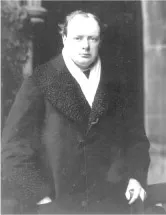
Winston Churchill in 1910. Two years later, as First Lord of the Admiralty, he ordered the first British government inquiry into a UFO sighting over Sheerness naval base in Essex. This UFO was suspected to be the German Zeppelin, the L-1. (COPY 1/543)
On 13 October 1912 a new naval Zeppelin, the L-1, set out on a 30-hour endurance flight from its base at Friedrichshafen in Germany. The 900-mile flight took the airship out over the North Sea; it then turned towards Berlin, where it landed at 3.45 pm on the following day. Just after sunset that afternoon, something was seen and heard flying above the port of Sheerness in Kent. The dockyards here were an important part of Britain’s defences and home to a Royal Navy torpedo school and naval flying station at nearby Eastchurch.
As the days passed, news of the Zeppelin flight over the North Sea reached the British government and the incident assumed a more sinister aspect for officials. On 25 October the director of the Admiralty Air Department, Murray F. Sueter, asked the Captain of the Royal Navy torpedo school to ‘make private enquiries’ to discover whether a Zeppelin really had visited Sheerness. Questioned in the House of Commons on 21 November, Churchill wrote: ‘I caused enquiries to be made and have ascertained that an unknown aircraft was heard over Sheerness about 7 pm… Flares were lighted at Eastchurch, but the aircraft did not make a landing.’ Questioned further as to whether he knew ‘where our own airships were on that night’, Churchi...
Table of contents
- Cover
- Title Page
- Contents
- Introduction
- 1 Strange Lights in the Skies
- 2 The Flying Saucer Age
- 3 Cold War UFOs
- 4 Close Encounters
- 5 Crop Circles and Alien Abductions
- 6 Turn-of-the-Century UFOs
- 7 Closing the UFO Files
- Afterword
- Acknowledgements
- Appendix
- Notes and References
- Resources
- eCopyright
Trusted by 375,005 students
Access to over 1.5 million titles for a fair monthly price.
Study more efficiently using our study tools.