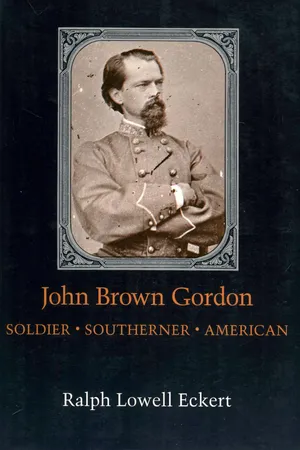
John Brown Gordon's career of prominent public service spanned four of America's most turbulent decades. Born in Upson County, Georgia, in 1832, Gordon practiced law in Atlanta and, in the years immediately preceding the Civil War, developed coal mines in northwest Georgia. In 1861, he responded to the Confederate call to arms by raising a company of volunteers. His subsequent rise from captain to corps commander was unmatched in the Army of Northern Virginia. He emerged from the Civil War as one of the South's most respected generals, and the reputation that Gordon earned while "wearing the gray" significantly influenced almost every aspect of his life during the next forty years.
After the Civil War, Gordon drifted into politics. He was elected to the United States Senate in 2873 and quickly established himself as a spokesman for Georgia and for the South as a whole. He eloquently defended the integrity of southern whites while fighting to restore home rule. In addition to safeguarding and promoting southern interests, Gordon strove to replace sectional antagonisms with a commitment to building a stronger, more unified nation. His efforts throughout his post-war career contributed significantly to the process of national reconciliation.
Even in the wake of charges of corruption that surrounded his resignation from the Senate in 1880, Gordon remained an extremely popular man in the South. He engaged in a variety of speculative business ventures, served as governor of Georgia, and returned for another term in the Senate before he retired permanently from public office. He devoted his final years to lecture tours, to serving as commander-in-chief of the United Confederate Veterans, and to writing his memoirs, Reminiscences of the Civil War.
Utilizing newspapers, scattered manuscript collections, and official records, Ralph Eckert presents a critical biography of Gordon that analyzes all areas of his career. As one of the few Confederates to command a corps without the benefit of previous military training, Gordon provides a fascinating example of a Civil War citizen-soldier. Equally interesting, however, were Gordon's postwar activities and the often conflicting responsibilities that he felt as a southerner and an American. The contributions that Gordon made to Georgia, to the South, and to the United States during this period are arguably as important as any of his career.
- 367 pages
- English
- ePUB (mobile friendly)
- Available on iOS & Android
eBook - ePub
About this book
Information
Subtopic
American Civil War HistoryIndex
HistoryIndex
Aberdeen, Miss., 242
Aberdeen, Scotland, 6
Academy for the Blind, 292
Akerman, Amos T., 156
Alabama, 11–12, 13, 14, 15, 16, 141, 142, 148, 226, 230, 242, 243, 244, 245, 246
Alston, Robert A., 264–65
Altgeld, John P., 310
Amelia Springs, Va., 116
American Railway Union, 310
Americus, Ga., 277
Anderson, George B., 33
Anderson, Joseph, 243
Anderson, Richard H., 117
Antietam, Battle of. See Sharpsburg, Battle of
Appomattox Court House, 117, 125, 126, 149, 162, 215, 321
surrender at, 121–22, 342
JBG’s reference to spirit of, 149–50, 160
Appomattox Court House, Battle of, 118–21
Appomattox River, 114, 115
Athens, Ala., 148
Athens, Ga., 8, 230
Athens Southern Watchman, 230
Atlanta, Ga., 8, 133, 135, 140, 148, 149, 154, 170, 189, 199, 221, 230, 246, 247, 262, 268, 270, 273, 281, 288, 291, 298, 329, 330, 337, 341
JBG moves to, 10, 11, 128, 133, 139
Raccoon Roughs arrive in, 16–17
and railroads, 224, 225, 226, 232, 242–43, 244, 245, 246
Hill ceremonies in, 269, 271, 272
JBG’s inauguration in, 282–83
funeral of JBG in, 339–40
Atlanta Constitution, 177, 184, 217, 218, 219, 225, 242, 243, 303, 304
praises SLIC, 134, 135
praises JBG, 135, 195, 215, 216–17, 221, 223–24, 245, 272
JBG explains actions in, 219, 220–21, 261
activities in 1886 race, 271, 272, 273, 275, 276, 278–79, 281
Atlanta Daily Post, 217
Atlanta Evening Capitol, 282
Atlanta Ring, 155, 275–76, 278, 279
Atlanta University, 131n, 291–92
Augusta, Ga., 278, 322
Augusta Chronicle and Constitutionalist, 197–98, 221, 279
Austell, A., 135
Bacon, Augustus O., 273, 279, 280, 282
front-runner for governor, 268, 269, 274
and primaries, 274–76
criticism of JBG, 277–78
defeated, 281
Baltimore Gazette, 162, 214
Barlow, Francis C., 53–54, 54n, 315–16
Barlow, Mrs. Francis C., 53
Barlow, Samuel L. M.: financial dealings with JBG, 129, 175, 241, 241n, 256, 257
political considerations, 180, 260
Barlow’s Knoll, 52
Barnesville, Ga., 311
Bayard, Thomas F., 175, 235, 258
Beasley, William, 71–72
Beauregard, P. G. T., 19, 253
Beechwood, 262–64
Belle Grove, 95
Belmont mines, 246
Benning, Henry L., 154
Bingham, C. C., 285
Birmingham, Ala., 226, 230, 242, 245
Biscayne Bay, 338, 339
Black, J. C. C., 271
Blackshear, Ga., 142
Blaine, James G., 259
Blair, Francis P., 86
Bleckley, Logan E., 10, 11n, 250
Bleckley, Mrs. Logan E., 10, 11n
Bloody Angle, 79–80
Bloody Lane, 33–36, 274
Blount Springs, Ala., 242
Bogy, Lewis V., 254
Bourbon Triumvirate, 239–41, 283
Bower’s Hill, 44
Bowker Fertilizer Company, 222–23
Bowman’s Ford, 95
Breckinridge, John C., 82, 83, 86, 90, 105n
candidate for president, 13, 14
praises JBG, 85
Brown, John Young, 181, 183, 184
Brown, Joseph E., 16, 221, 223, 224, 230, 235, 238, 265, 295, 297
as “Citizen,” 184–85
appointment as senator criticized, 215, 217, 218
sketch of, 216
defends himself, 219
involved in secret negotiations, 225, 226–29, 231, 232–33, 234
election as senator, 237
member of Bourbon Triumvirate, 239–41, 283
Brunswick, Ga., 128, 129, 130, 132, 133
Brunswick Colored School, 130
Brunswick Railroad, 128
Bullock, Ruf us, 140, 143, 145
Bull Run, 19, 20
Burgess’ Mills, 106
Burnside, Ambrose E., 65, 66, 67
Butler, “Beast,” 23
Calhoun, Patrick, 300, 303, 304
Camp Bingham, 284, 285
Candler, D. G., 230
Carnegie Music Hall, 316
Carolina Life Insurance Company, 174
Carter, Thomas H., 97, 99
comments on Cedar Creek, 104
describes JBG, 123
Cartersville Free Press, 197, 256
Cashtown, Pa., 50
Castle Rock Coal Company, 11, 128, 133
Cedar Creek, 92, 95
Cedar Creek, Battle of, 92–104, 103n
Cemetery Hill, 54–55, 56, 57
Central of Georgia Railroad, 139–40
Central Pacific Railroad Company, 187, 252, 254
Central Presbyterian Church (Atlanta), 340
Chamberlain, Daniel H., 177, 186
Chambersburg, Pa., 50
Chancellorsville, Battle of, 40–41, 64, 92
Chantilly, Va., 30
Charles S. Scribner’s Sons, 332
Charleston, S.C., 6, 131, 158
Charlottesville, Va., 87
Chattanooga, Tenn., 225
Chester Gap, 42
Chicago Tribune, 252n
Chickahominy River, 22, 25, 28
Chickamauga, Battle of, 7
“Citizen,” 184–85, 238
Clark’s Mountain, 61
Clay, Henry, 9
Cleveland, Grover, 308, 310
advised by JBG, 258–59
considers cabinet appointments, 260–61
visits Atlanta, 288
Cobb, Howell, 239
Cold Harbor, Battle of, 81
Cole, Edwin W. “King,” 225, 227
Colquitt, Alfred Holt, 38, 201, 219, 221–22, 223, 224, 295
business partner of JBG, 135, 242, 245
criticized for appointment of Brown, 215–16, 217, 218
involved in secret negotiations, 227, 230, 232, 233
runs for reelection, 235–37
member of Bourbon Triumvirate, 239–41, 283
recommends JBG for cabinet post, 260
Colquitt’s Salient, 109, 110
Colton, David D., 252, 253
Colton Letters, 252, 255
mention Gordon, 253–54, 256
Columbia, Pa., 48
Columbia, S.C., 177, 178, 186
Columbus, Ga., 126, 128, 217, 236, 262
Columbus, Miss., 242
Columbus Enquirer, 217
Columbus Times, 217
Commercial Club (Boston), 191–92
Compromise of 1877, 254
JBG’s role in, 3, 181, 182–85
Confederate Survivors Association (Augusta), 322–23
Congressional Record, 190
Conkling, Roscoe C., 163
nearly duel swith JBG, 189–90
Convict lease system, 277, 280, 288
JBG’s participation in, 4, 263–65, 263n
JBG’s investigation of, 283–87
Conyers, Ga., 278
Corinth, Miss., 17
Coulter, E. Merton, 138
Cox, Edward, 264–65
Coxey, Jacob S., 308–309
“Coxey’s army,” 308–309
Crédit Mobilier, 252
Creek Indians, 6
Culpeper Court House, 42
Culp’s Hill, 56
Curtis, Newton M., 311
Custer, George A., 119–20
Dade County, Ga., 11, 265
Darien, Ga., 130
Davis, Jefferson, 126
as president of the Confederacy, 60, 79, 105n
used in JBG’s gubernatorial campaign, 269, 270–71, 272, 273, 277
Decatur, Ga., 8n
Decatur Presbyterian Church, 8n
DeGive’s Opera House, 221
Demosthenian Literary Society, 8
de Vere, Scheie, 138
Dos Passos, John R., 266
Dougherty County, Ga., 263
Dwinell, Melville, 271
Early, Jubal A., 39, 42, 47, 52, 60, 72, 80, 86, 105
at Chancellorsville, 40–41
at Winchester (1863), 44–45
at Gettysburg, 55–57
at the Wilderness, 65–69
troubles with JBG, 65, 92, 98, 99, 101–104, 103n
on Washington raid, 82, 83, 85–86
at Winchester (1864), 87, 88, 90, 91
comments on Fanny, 90
at Cedar Creek, 92, 93—95, 96–98, 99–100
Eatonton, Ga., 278
Edmunds, George, F., 163–64
clashes with JBG, 165, 166–67
Elections: 1860, p. 13
1868 gubernatorial, 141, 143–45
1868 presidential, 150–51
1872, pp. 151–53
1873, pp. 154–56
1874, pp. 162–63
1876, pp. 175–86
1878 congressional, 193, 194, 195
1878 senatorial, 195
1880, pp. 235–37
1884, pp. 258–59, 260
1886, pp. 268–69, 272–82
1888, p. 289
1890, pp. 297, 300–305
Electoral commission, 180, 181, 183
Electoral controversy, 3, 177–86
Erie Railroad, 243
Evans, Clement A., 86, 88, 97
at Spotsylvania Court House, 75, 76, 78, 79
at Monocacy, 83–85
Ewell, Richard S., 19–20, 42, 44, 73, 80, 116
praises JBG, 44, 54
at Gettysburg, 55–57
at the Wilderness, 61, 63–64, 65–66, 67, 68–69
Fairfax Station, Va., 19
Fairfield, Va., 57
Fair Oaks, Battle of. See Seven Pines, Battle of
Farmers’ Alliance movement, 283, 297–98, 300, 301, 302
Felton, Rebecca Latimer, 193, 194–95, 199, 230, 265,...
Table of contents
- Cover
- Title Page
- Copyright Page
- Dedication
- Contents
- Illustrations
- Maps
- Acknowledgments
- Abbreviations
- Introduction
- I • The Early Years
- II • Initiation
- III • Brigadier
- IV • Evening Star of the Confederacy
- V • In the Valley
- VI • Toward Appomattox
- VII • In Search of a Livelihood
- VIII • Emerging Politician
- IX • Southern Spokesman
- X • Post-Reconstruction Politics
- XI • A Breath of Scandal
- XII • New South Businessman
- XIII • Governor of Georgia
- XIV • Return to the Senate
- XV • The Southerner as American
- Epilogue
- Bibliographical Essay
- Index
Trusted by 375,005 students
Access to over 1.5 million titles for a fair monthly price.
Study more efficiently using our study tools.
Frequently asked questions
Yes, you can cancel anytime from the Subscription tab in your account settings on the Perlego website. Your subscription will stay active until the end of your current billing period. Learn how to cancel your subscription
No, books cannot be downloaded as external files, such as PDFs, for use outside of Perlego. However, you can download books within the Perlego app for offline reading on mobile or tablet. Learn how to download books offline
Perlego offers two plans: Essential and Complete
- Essential is ideal for learners and professionals who enjoy exploring a wide range of subjects. Access the Essential Library with 800,000+ trusted titles and best-sellers across business, personal growth, and the humanities. Includes unlimited reading time and Standard Read Aloud voice.
- Complete: Perfect for advanced learners and researchers needing full, unrestricted access. Unlock 1.5M+ books across hundreds of subjects, including academic and specialized titles. The Complete Plan also includes advanced features like Premium Read Aloud and Research Assistant.
We are an online textbook subscription service, where you can get access to an entire online library for less than the price of a single book per month. With over 1.5 million books across 990+ topics, we’ve got you covered! Learn about our mission
Look out for the read-aloud symbol on your next book to see if you can listen to it. The read-aloud tool reads text aloud for you, highlighting the text as it is being read. You can pause it, speed it up and slow it down. Learn more about Read Aloud
Yes! You can use the Perlego app on both iOS and Android devices to read anytime, anywhere — even offline. Perfect for commutes or when you’re on the go.
Please note we cannot support devices running on iOS 13 and Android 7 or earlier. Learn more about using the app
Please note we cannot support devices running on iOS 13 and Android 7 or earlier. Learn more about using the app
Yes, you can access John Brown Gordon by Ralph Lowell Eckert in PDF and/or ePUB format, as well as other popular books in History & American Civil War History. We have over 1.5 million books available in our catalogue for you to explore.