"This is a well-organized, gracefully written account of a significant aspect of Southern fiction, and it contains information and incisive commentary that one can find nowhere else." --Thomas Daniel Young
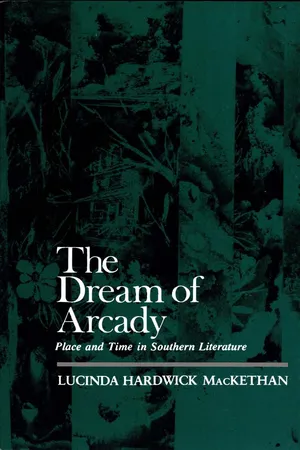
Many southern writers imagined the South as a qualified dream of Arcady. They retained the glow of the golden land as a device to expose or rebuke, to confront or escape the complexities of the actual times in which they lived.
The Dream of Arcady examines the work of post-Civil War southern writers who criticize the myth of the South as pastoral paradise. Sooner or later in all their idealized worlds, the idyllic vision fades in an inescapable moment of awakening. This moment, which is central to MacKethan's study, produces an atmosphere pastoral in mood and implications.
Her perspective analysis juxtaposes the responses of Sidney Lanier, Joel Chandler Harris, and Thomas Nelson Page, who contributed to yet hope to transcend sectionalism, with the ambivalent views of black writers Charles Chesnutt and Jean Toomer. Considering the writings of the Agrarians, William Faulkner, and Eudora Welty, MacKethan then concludes her study by questioning whether the Arcadian dream still serves the artist of our era as a frame for artistic and ideological purposes.
- 278 pages
- English
- ePUB (mobile friendly)
- Available on iOS & Android
eBook - ePub
About this book
Information
Index
Agrarianism, 16, 33–34, 36, 133–34, 136, 141, 143, 208
Agrarians. See Fugitive-Agrarians
Anderson, Charles, 28
Anderson, Sherwood, 126
Arcady: southern images of, 2, 3, 5, 8, 16–17, 36
Arp, Bill, 65
Atlanta Constitution, 61, 67, 68, 81
Atlanta, Georgia, 61, 67
Atlantic Monthly, 27, 88, 92
Audubon, John James, 180
Bagby, George W., 43
Baltimore, Md., 25, 26
Black slave characters: in plantation literature, 11–12, 17, 84, 87, 91
missing in Lanier’s work, 19
Page’s use of, 36, 42, 44, 50, 53–60
Harris’ identification with, 63–64, 79–80
in Chesnutt’s fiction, 90–96
Black writers: perspective of, 86–87, 105–27 passim, 132
Blotner, Joseph, 156
Bone, Robert, 37, 84, 103n, 125, 130–31
Brooks, Cleanth, 157, 164
Buck, Paul, 8, 12, 63
Cable, George Washington, 37, 91, 103
Cardwell, Guy, 43–44
Century, 35
Chase, Patricia, 122
Chesnutt, Charles Waddell: 7, 17, 86–104, 210
moves away from South, 84, 87
formulates strategy for fiction, 87
as antipastoral writer, 85, 96–97, 103–104
description of The Conjure Woman, 90
attitude toward nature, 93–94
as activist on race issue, 103–104
—Writings: The Colonel’s Dream, 17, 89–90, 97–103
The Conjure Woman, 17, 84, 88, 89, 90–96, 102
“Dave’s Neckliss,” 92
“The Goophered Grapevine,” 88, 94
The House Behind the Cedars, 89
The Marrow of Tradition, 89–90
“Mars Jeems’s Nightmare,” 92–94
“The Passing of Grandison,” 91
“Po’ Sandy,” 94
“Sis’ Becky’s Pickaninny,” 95
Chicago Liberation, 126
Cinderella, 79
Civil War: disruption of life in South, 4, 9, 17, 18, 160, 163, 167
effect on Harris, 2, 66
effect on Lanier, 18–19, 24
effect on Thomas Nelson Page, 38–40
Clemens, Samuel. See Mark Twain
Cleveland, Ohio, 87, 88
Community: concept of, 7, 210–214; 216
Welty’s and Faulkner’s compared, 183
Country and the City, The. See Williams, Raymond
Countryman, 1, 2, 64, 66
Cowley, Malcolm, 163
Davidson, Donald: as Fugitive-Agrarian, 134
outline for “I’ll Take My Stand, 135
argument over “I’ll Take My Stand title, 136
“A Mirror for Artists,” 143
Davis, Charles T., 125
Dayton, Tenn., 129
Dial, The, 211
Douglass, Frederick, 89
Durham, Frank, 110, 121–22
Eatonton, Georgia, 64
Empson, William, 5, 53
“Fall of the House of Usher” (Poc), 45
Faulkner, William: 7, 133, 152, 153–180, 183, 210, 217
beginnings of Yoknapatawpha saga, 156
use of the past, 156–58, 159, 162, 164, 177, 179
comments on Ike McCaslin, 171–72
time in, 157, 169–70, 175–76
primitivism in, 170, 175
—Writings: Absalom, Absalom!, 45, 158, 163–68, 168–69, 170, 179, 210, 213
“The Bear,” 158, 170–79
“The Fire and the Hearth,” 172, 173
Flags in the Dust, 156, 157
Go Down, Moses, 173–79
The Hamlet, 211–12, 213, 214
Mosquitoes, 156
“An Odor of Verbena,” 162–63
“The Old People,” 174–75, 177
Soldier’s Pay, 156
Sartoris, 156, 157, 158, 159–63, 169–70, 179, 216
The Sound and the Fury, 158, 168–70, 172, 179, 183, 216
“Was,” 173–74
Fayetteville, N.C., 87, 88
Fletcher, John Gould, 136
Forsyth, Ga., 66
Frank, Waldo, 109, 124
Fugitive, 126–27, 129
Fugitive-Agrarians, 7, 15, 23–34, 126–27, 128–152. See also I’ll Take My Stand
Gaines, Francis Pendleton, 2, 11, 12, 14, 54
Gelfant, Blanche, 171, 173
Grady, Henry, 9, 34, 62, 64, 81, 97, 132
Greever, Garland, 24
Greg, Walter, 14
Harcourt, Brace, 157
Harlem Renaissance, 104, 125
Harris, Joel Chandler: 7, 10, 14, 16–17, 61–85, 210
boyhood days on Georgia plantation, 1–2, 64–66, 81
compared to Thomas Nelson Page, 37–38, 59–60
early career as a journalist, 66–67
early newspaper sketches of Uncle Remus, 68
analysis of Negro folklore, 68–69
attitude toward progress, 80–84
compared to Chesnutt, 85, 86, 90
—Brer Rabbit tales analyzed: 38, 59–60, 70ff
“Mr. Man” in, 71–72
theory of race in, 72
moral code in, 74
classifications of, 75
rabbit as hero, 77–79
—Writings: Nights with Uncle Remus, 81–82
Told by Uncle Remus, 81, 83–84
Uncle Remus and His Friends, 82–83
Uncle Remus, His Songs and His Sayings, 68–69, 81
Harris, Mary, 65
Hayne, Paul Hamilton, 30
...Table of contents
- Cover
- Title Page
- Copyright Page
- Dedication
- Contents
- List of Abbreviations
- One: The South as Arcady: Beginnings of a Mode
- Two: Sidney Lanier: The Scythe of Time, The Trowel of Trade
- Three: Thomas Nelson Page: The Plantation as Arcady
- Four: Joel Chandler Harris: Speculating on the Past
- Five: Charles Chesnutt’s Southern World: Portraits of a Bad Dream
- Six: Jean Toomer’s Cane: The Pastoral Return
- Seven: Agrarian Quarrel, Agrarian Question: What Shall This Land Produce?
- Eight: Faulkner’s Sons of the Fathers: How to Inherit the Past
- Nine: To See Things in Their Time: The Act of Focusing in Eudora Welly’s Fiction
- Ten: The South Beyond Arcady
- Bibliography
- Index
Trusted by 375,005 students
Access to over 1.5 million titles for a fair monthly price.
Study more efficiently using our study tools.
Frequently asked questions
Yes, you can cancel anytime from the Subscription tab in your account settings on the Perlego website. Your subscription will stay active until the end of your current billing period. Learn how to cancel your subscription
No, books cannot be downloaded as external files, such as PDFs, for use outside of Perlego. However, you can download books within the Perlego app for offline reading on mobile or tablet. Learn how to download books offline
Perlego offers two plans: Essential and Complete
- Essential is ideal for learners and professionals who enjoy exploring a wide range of subjects. Access the Essential Library with 800,000+ trusted titles and best-sellers across business, personal growth, and the humanities. Includes unlimited reading time and Standard Read Aloud voice.
- Complete: Perfect for advanced learners and researchers needing full, unrestricted access. Unlock 1.5M+ books across hundreds of subjects, including academic and specialized titles. The Complete Plan also includes advanced features like Premium Read Aloud and Research Assistant.
We are an online textbook subscription service, where you can get access to an entire online library for less than the price of a single book per month. With over 1.5 million books across 990+ topics, we’ve got you covered! Learn about our mission
Look out for the read-aloud symbol on your next book to see if you can listen to it. The read-aloud tool reads text aloud for you, highlighting the text as it is being read. You can pause it, speed it up and slow it down. Learn more about Read Aloud
Yes! You can use the Perlego app on both iOS and Android devices to read anytime, anywhere — even offline. Perfect for commutes or when you’re on the go.
Please note we cannot support devices running on iOS 13 and Android 7 or earlier. Learn more about using the app
Please note we cannot support devices running on iOS 13 and Android 7 or earlier. Learn more about using the app
Yes, you can access The Dream of Arcady by Lucinda Hardwick MacKethan in PDF and/or ePUB format, as well as other popular books in Literature & North American Literary Criticism. We have over 1.5 million books available in our catalogue for you to explore.