"Wright vividly portrays the clash between racist militants and blacks who would not submit to terror. The book makes clear the brutality concealed beneath the surface veneer of moderation." -- Journal of Southern History
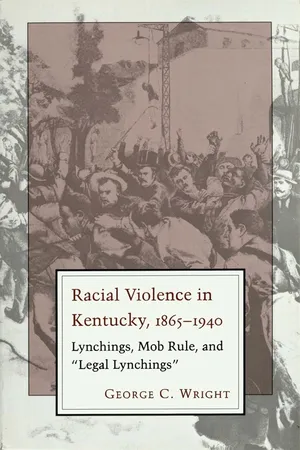
In this investigative look into Kentucky's race relations from the end of the Civil War to 1940, George C. Wright brings to light a consistent pattern of legally sanctioned and extralegal violence employed to ensure that blacks knew their "place" after the war.
In the first study of its kind to target the racial patterns of a specific state, Wright demonstrates that despite Kentucky's proximity to the North, its black population was subjected to racial oppression every bit as severe and prolonged as that found farther south. His examination of the causes and extent of racial violence, and of the steps taken by blacks and concerned whites to end the brutality, has implications for race relations throughout the United States.
- 368 pages
- English
- ePUB (mobile friendly)
- Available on iOS & Android
eBook - ePub
About this book
Information
Subtopic
North American HistoryIndex
HistoryIndex
ACLU. See American Civil Liberties Union
Allen County, 34
Allen, Dick, 132
Allensworth, James L., 108–109
American Civil Liberties Union, 267–69
Anderson County, 54
Anderson, Katie: accused Bob Harper of rape, 83–87
Antilynching laws: of 1897, pp. 180–81, 183
of 1902, pp. 182, 201
of 1920, pp. 202–205
Association of Southern Women for the Prevention of Lynching (ASWPL): 208
opposition to lynchings, 209;
urged sheriffs to sign pledge cards, 210, 211, 212–13
urged end to public hangings, 213
Auburn, Logan County: lynchings, 73, 88–89, 163, 169
mentioned, 109
Ayers, Edward, 7–8, 9–10, 70–71, 225
Bailey, Sambo, 6
Bailey, Tennie, 215, 217, 221
Baker, Lee, 141–42
Ballard, Bland: heard cases involving black testimony, 23–24, 51
Barbourville, Knox County, 271–73
Bard, Nathan, 263–66
Bardwell: lynching, 90–93
Barkley, Alben W., 199–200
Bascom, Sam, 47–48
Bath County, 67
Benjamin, Robert C. O.: questioned rape as cause of lynchings, 67, 79
killed in Lexington, 296–97
Berea College, 36–37, 190
Bethea, Rainey, 257–58
Birmingham, Marshall County, 137–39
Blackburn, Luke P., 55, 157, 223, 245
Blacks: population of, 3, 72
defended themselves against whites, 11, 56–59, 139–40, 162, 172, 245, 248
as soldiers, 19
prohibited from testifying in court, 22–24, 27, 51
lynched for political activities, 48–52
Blair, Thomas, 158–59
Blanks, Robert: executed for rape, 215–18, 220, 221, 222, 231
Blanks v. Commonwealth, 217
Boiling, George, 42–43
Bond, J. Max, 267–68
Bond, James A., 150, 205
Boone County, 6n, 20
Bowling Green: 15, 21, 35, 64
lynching of Bob Harper in, 83–87, 280, 285–88
Bowman, Jennie, 237–41, 250
Boulder, Gertrude, 294–95
Bradley, William O.: 11, 15
pardoned George Dinning, 16–17
denounced lynchings, 89, 95, 102, 177–79
supported antilynching law of 1897, pp. 180–81, 185
prevented lynching of Robert Blanks, 215–17
allowed execution of Blanks, 218, 220
mentioned, 260
Brame, Bennie, 74, 108–109
Breathitt County: 26
white gangs in, 69
lynchings, 120, 205, 206
Breithaupt, Neil Catherine, 262–64, 266
Brite, Mary D., 267, 269, 271
Broadus, John Albert, 159–60
Browder, Rufus: 66, 124
trial and conviction, 280–84
Brown, John Y.: denounced M. L. Buchwalter, 173–74
lynchings during administration of, 174, 177, 179, 229
Brown, Richard Maxwell, 41, 125
Brown, Tom, 6
Buckner, James, 274–75
Buchwalter, M. L., 172–77
Bullitt County, 36
Burlington, Boone County, 173
Bush, Charles H., 193, 219
Bush, John: convicted and executed for murder, 234–37, 246
Bushrod, Raymond, 89
Butner, Lillian, 146–47
Cadiz, Trigg County, 73–74, 107–108, 109–10
Camp Nelson, Jessamine County, 58
Carroll County, 20
Carter County, 101
Cary, Bell County, 148–49
Cash, Sam G., 136
Cattlesburg, 156–57
Chadbourn, James H., 223
Chesapeake and Ohio Railroad, 106
Chesapeake and Ohio Railroad Bridge: as site of Shelbyville lynchings, 110–11, 116
Chicago Tribune: failed to report several lynchings, 5
documentation of lynchings, 7
figures on lynchings, 700
reported on black conspiracy, 170, 257
“Chicken-thief law,” 290–91
Childress, Smith, 186–87
Christian County: black population of, 72
lynchings, 108–109
Night Rider attacks in, 135–36, 143
Jim Hill forced to leave, 152–53, 219
mentioned, 74
CIC. See Commission on Interracial Cooperation
Cincinnati, 35, 172, 173, 176, 177, 267
Cincinnati Commercial: 41
on lynchings during Reconstruction, 42
Cincinnati Enquirer, 94
Clark, Walter, 225–26
Cole, I. Willis, 212
Coleman, Richard: burned alive, 93–95, 103, 178–79, 183
mentioned, 114, 117–18
Commission on Interracial Cooperation (CIC): investigated Dix River riot, 150
worked to end violence, 206–208, 211, 213
involved in Covington rape cases, 267–68
Conn, Jodie, 15, 16, 17
Corbin riot, 144–47, 148, 149, 150, 207
Corbin Times, 146
Corydon, 36
Covington: 24, 39
blacks taken for safekeeping, 93, 114
rape cases in, 266–71
Crab Orchard, 36
Crittenden County, 143
Crumbaugh, W. L., 140
Cummings, Irene, 268–71
Cunningham, James, 124, 280–82, 283, 284
Cunningham, Irene, 280–81
Cutler, James E., 3–4
Danville: lynchings during Reconstruction, 9, 36, 42, 46–47
Daviess County: blacks forced to flee from, 38
black population of, 72
Democrats: condemned for Klan violence, 26
refused to pass law against mob violence, 27
provided guns to whites, 48
reaction to ousting of black political leaders, 132
Dewberry, Walter, 276–77
Dinning, George, 14–17
Diuguid, Guthrie, 193, 218–19
Dix River riot, 150–52, 207
Dixon, Webster County, 186–88, 284
Douglass, Frederick: 13, 76
questioned reasons for lynchings, 81–82, 160, 224
Dudley, James, 98, 163, 169
Dulaney, William L., 84–85
Duncan, George, 59
Durrett, Luther, 113
Dyer Bill, 198–99
Eddyville, 136, 276
Elliott County, 128
Emancipation Proclamation, 20
Estill County, 38–39
“Expiation,” 232
Fields, Jimbo, 74, 110, 115–16
Fields, William J.: and efforts to prevent lynching of Ed Harris, 196–97, 208, 244, 265, 292
Finley, Henry, 170
Fitzgerald, Jesse, 271–73
Fleming, Bunyan, 263–66
Frankfort: 38
lynchings of blacks during Reconstruction, 43, 44–45, 49–51, 170, 194
Ed Harris taken for safekeeping, 196, 197, 238
mentioned, 34, 106, 192
Franklin, Simpson County, 15, 282
Franklin County: blacks forced to flee from, 38
black population of, 72
mentioned, 59
Freedman’s Bureau: extended to Kentucky, 2, 9, 20, 20–21
assisted blacks in legal matters, 22–23, 37, 53
worked to end the whipping of blacks, 24–25
attempted to end lynchings and other forms of violence, 25, 43, 46, 47
involved in education, 34, 36
French, Ben and Mollie, 98–99, 103
Frizzell, Nat: owned land in Marshall County, 139
sued Night Riders, 141–42
Fugate, Chester, 205
Fulton County: lynchings, 72, 100;
mentioned, 124
Garland, Jim, 148–49
Garnett, Clarence, 74, 110, 115–16
Garrard County, 54–55
Gaskins, Charles, 185–86
Georgetown: lynching, 11, 98
whites disrupted church service, 34
as setting of novel, 61–63
blacks protested lynching, 155, 163, 169, 204
Germantown, 36
Glasgow, 183
Golden Pond, Trigg County: invaded by Night Riders, 123, 137, 139–40
Graves County: lynchings, 72
attacks by Night Riders in, 143, 180
sheriff prevented lynching, 208
Green County, 172–74, 177
Grimké, Francis J., 79–80, 224
Hale, Joe, 287–89
Hale v. Kentucky, 289
Hall, Jacquelyn, 223
Hampton, A. H., 172–77
Hancock County, 68
Harding, Elliott: character in novel, 61–63
Hardman, Geneva, 194, 256
Harper, Bob: 64
trial and lynching of, 83–87
mentioned, 280
Harper, Nathaniel R.: 241
protested blacks’ exclusion from juries, 248–49
Harris, Ed: tried for rape and murder, 196–97, 198, 295–96, 301, 302–303
Harrison County, 53
Harrodsburg: lynchings during Reconstruction, 42, 228
Hawkins, Samuel, 51–52
Hazard, 120–22, 190, 211
Henderson: whipping of blacks in, 25
attempt to disband the Klan in, 26
black population of, 72
lynching, 96–97
alleged black crime wave, 292–94
Henderson, John, 98, 163
Henley, Brock, 112–14, 193
Henry County: Klan activities in, 28–32, 58
forced removal of blacks from, 128–31, 139
mentioned, 59, 227
Henson, Annie, 271–73
Hickman, Fulton County: 36
lynchings, 119–20, 123, 185
forced removal of blacks from, 131–32, 191
Hill, Jim, 152–54
Hobson, Will, 86–87
Hofstadter, Richard, 14
Hollis, Columbus, 263–64
Holt, Alfred, 67, 74–75
Hopkins County, 13...
Table of contents
- Cover
- Title Page
- Copyright Page
- Dedication
- Contents
- Illustrations
- Tables
- Acknowledgments
- INTRODUCTION: Kentucky Violence, Severe and Long Lasting
- ONE: Reconstruction: Using Violence to Preserve the Status Quo, 1865–1874
- TWO: “Lynchings Are Necessary,” 1875–1899
- THREE: “To Hang in an Orderly Fashion,” 1900–1940
- FOUR: Ousting “Troublemakers”
- FIVE: Holding Back A Rising Tide, 1875–1899
- SIX: Meeting Mob Violence with Renewed Determination, 1900–1940
- SEVEN: “A Sacrifice Upon the Altar of the Law,” 1875–1899
- EIGHT: Color-Coded Justice: Racial Violence Under the Law, 1900–1940
- APPENDIX A: Victims of Lynchings
- APPENDIX B: Names of People Legally Executed
- Selected Bibliography
- Index
Trusted by 375,005 students
Access to over 1.5 million titles for a fair monthly price.
Study more efficiently using our study tools.
Frequently asked questions
Yes, you can cancel anytime from the Subscription tab in your account settings on the Perlego website. Your subscription will stay active until the end of your current billing period. Learn how to cancel your subscription
No, books cannot be downloaded as external files, such as PDFs, for use outside of Perlego. However, you can download books within the Perlego app for offline reading on mobile or tablet. Learn how to download books offline
Perlego offers two plans: Essential and Complete
- Essential is ideal for learners and professionals who enjoy exploring a wide range of subjects. Access the Essential Library with 800,000+ trusted titles and best-sellers across business, personal growth, and the humanities. Includes unlimited reading time and Standard Read Aloud voice.
- Complete: Perfect for advanced learners and researchers needing full, unrestricted access. Unlock 1.5M+ books across hundreds of subjects, including academic and specialized titles. The Complete Plan also includes advanced features like Premium Read Aloud and Research Assistant.
We are an online textbook subscription service, where you can get access to an entire online library for less than the price of a single book per month. With over 1.5 million books across 990+ topics, we’ve got you covered! Learn about our mission
Look out for the read-aloud symbol on your next book to see if you can listen to it. The read-aloud tool reads text aloud for you, highlighting the text as it is being read. You can pause it, speed it up and slow it down. Learn more about Read Aloud
Yes! You can use the Perlego app on both iOS and Android devices to read anytime, anywhere — even offline. Perfect for commutes or when you’re on the go.
Please note we cannot support devices running on iOS 13 and Android 7 or earlier. Learn more about using the app
Please note we cannot support devices running on iOS 13 and Android 7 or earlier. Learn more about using the app
Yes, you can access Racial Violence In Kentucky by George C. Wright in PDF and/or ePUB format, as well as other popular books in History & North American History. We have over 1.5 million books available in our catalogue for you to explore.