?
- 712 pages
- English
- ePUB (mobile friendly)
- Available on iOS & Android
eBook - ePub
About this book
Information
Topic
Storia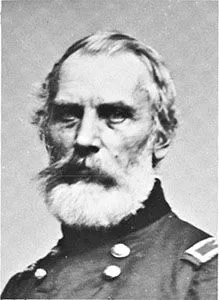
John Joseph Abercrombie was born in Baltimore, Maryland. Upon the authority of a daughter, the date was March 4, 1798; however, his gravestone reports “March 28, 1798.” (1) He was a son-in-law of General Robert Patterson of Mexican War fame and a brother-in-law of Brigadier General Francis E. Patterson, U. S. Volunteers. Considerable mystery surrounds his early life, and some sources record his birthplace as Tennessee. In any event, he was graduated from the Military Academy in 1822, standing thirty-seventh in a class of forty. Abercrombie established a long and gallant army record during his service at many posts in the South and Northwest. He was promoted to first lieutenant of infantry in 1828, to captain in 1836, to major in 1847, to lieutenant colonel in 1852, and to full colonel at the outbreak of the Civil War. Meanwhile, he received the brevet promotions of major for gallant and meritorious services in Florida, and of lieutenant colonel in the Mexican War. He was appointed brigadier general of volunteers on August 31, 1861. In the early part of the war he was in field command: at Falling Waters, Virginia; at Seven Pines, where he was wounded; and at Malvern Hill during the withdrawal of George B. McClellan’s army to Harrison’s Landing. With the use of younger officers in the field, Abercrombie’s activities were confined mainly to garrison and administrative duties, including command of depots around Fredericksburg and White House, Virginia, during U.S. Grant’s Overland campaign. Brevetted brigadier general in the Regular Army on March 13, 1865, and retired from active service the following June 12, he continued on court-martial duty until 1869. He then made his home in Roslyn, Long Island, where he died on January 3, 1877. He is buried in Woodlands Cemetery, Philadelphia.
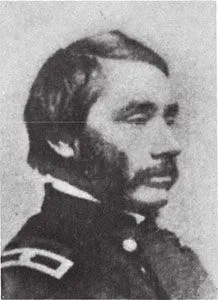
Robert Allen was born in West Point, a hamlet of Morrow County, Ohio, on March 15, 1811. (2) Little is known of his life before he was admitted to the Military Academy at the age of twenty-one. He was graduated in the lower third of the class of 1836 and was commissioned into the 2nd Artillery. He performed routine garrison duties at various points until the outbreak of the Mexican War in 1846, when he transferred from the line to the Quartermaster’s Department. Chief quartermaster of the Pacific Division of the army in the 1850’s, he was brevetted major for gallant and meritorious conduct at Cerro Gordo and achieved the rank of major in 1861. In the course of his distinguished Civil War career—during which he was successively promoted to colonel, to brigadier general of volunteers, and to brevet major general in both the volunteers and the regular establishment—he acted as chief quartermaster of the turbulent Department of Missouri, and his authority soon extended to the entire Mississippi Valley. In this latter post he supplied U. S. Grant’s army at Vicksburg, W. T. Sherman’s army through the Georgia campaign, the great Federal base at Nashville, and the various secondary expeditions in that theater, and the troops in New Mexico, on the Plains, and in the Northwest. In his forty-six years in the army—from 1832 until his retirement in 1878 as assistant quartermaster general—he reputedly disbursed some $111 million (equivalent today to almost $3 billion) without a penny being disallowed by the Treasury. After retirement, General Allen traveled abroad. He died on August 5, 1886, in Geneva, Switzerland, where he is buried in the cemetery of Chêne-Bougeries.
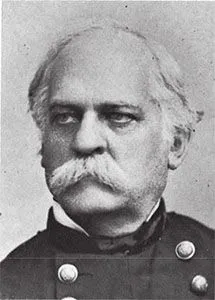
Benjamin Alvord was born August 18, 1813, in Rutland, Vermont. He was the lineal descendant of one Alexander Alvord who had settled in Connecticut about 1645. Young Alvord entered the Military Academy at the age of sixteen and was graduated in the class of 1833. For the next twenty-one years he was an officer of the 4th Infantry, serving with it continuously except for a two-year tour of duty as an instructor at West Point. During the Florida War against the Seminoles he was with his regiment, and in the Mexican War he fought at Palo Alto and Resaca de la Palma under Zachary Taylor and in the advance on Mexico City under Winfield Scott. He was brevetted major for his services during the latter operation and, after some garrison duty in the early 1850’s, changed from line to staff by accepting an appointment as paymaster with rank of major. From 1854 until 1862 Alvord was chief paymaster of the Department of Oregon—an area which included the present states of Oregon and Washington as well as much of Idaho. On April 15, 1862, he was appointed a brigadier general of volunteers and placed in command of the recently created District of Oregon, serving there until the spring of 1865. His principal problem during the war years was that of mediating between the Nez Percés, whose treaty rights had been repeatedly ignored and violated, and the whites who swarmed into the region in search of gold. General Alvord was relieved from command of the district in late March, 1865, and was ordered East. He resigned his volunteer commission in August and the following month became paymaster at New York City. From that time until his retirement in 1880, General Alvord was, successively, chief paymaster at Omaha, chief paymaster of the Department of the Platte, and paymaster general of the U. S. Army after 1872. He was made brigadier general, U. S. Army, in 1876. Meantime, he had become well known for his research and writings in a variety of technical fields, especially mathematics and agriculture in the West. Alvord died in Washington, D. C., on October 16, 1884, and was buried near his birthplace in Rutland.
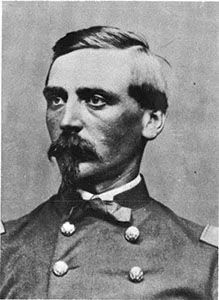
Adelbert Ames was born in Rockland, Maine, on October 31, 1835. In his youth he became a sailor and was mate on a clipper ship. He left the sea in 1856 to enter the U. S. Military Academy where he was graduated fifth in the class of May 6, 1861. He went almost immediately to the front as a lieutenant of artillery and was badly wounded at First Manassas. This gallantry won him the rank of brevet major in the Regular Army and later the Congressional Medal. Returning to duty, Ames remained in the Washington defenses until the spring of 1862 when he took part in the Peninsular campaign and was brevetted lieutenant colonel for services at Malvern Hill. As colonel of the 20th Maine Volunteers, he led his troops in the Maryland campaign, at Fredericksburg, and at Chancellorsville. On May 20, 1863, he was appointed brigadier general of volunteers. While commanding a brigade in the XI (Howard’s) Corps at Gettysburg, he received the brevet of colonel in the regular service. During the siege of Petersburg, Ames was in divisional command; he later participated in the capture of Fort Fisher, North Carolina. For gallantry in this last operation and for meritorious services throughout the war, he was brevetted major general of volunteers and brigadier and major general, U.S. Army. His contribution to the Federal war effort was second to none of his age and experience, but General Ames later embarked upon a political career in Mississippi which ultimately tarnished his Civil War fame. In 1868 he was appointed provisional governor under the Reconstruction acts, and resigned from the army in 1870 to accept election to the United States Senate by the “carpetbag legislature.” Four years later he became governor, but after the state was reclaimed by the whites in 1875, Ames offered his resignation to the Democratic legislature in return for the withdrawal of articles of impeachment. He left the state in 1876 to reside in Tewksbury, Massachusetts, and later in Florida. His remaining fifty-seven years of life contrasted sharply with those of fame and turbulence in his earlier career. During the Spanish-American War he served briefly as a brigadier general of volunteers. This was his last public service before his death at Ormond, Florida, on April 13, 1933. This last survivor of the full-rank general officers on either side of the conflict was buried in Hildreth Cemetery, Lowell, Massachusetts. General Ames’s wife was a daughter of General Benjamin F. Butler.
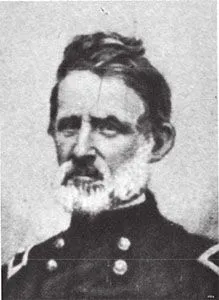
Jacob Ammen was born on January 7, 1806, in Botetourt County, Virginia, but his parents moved north and he grew up in Ohio and was then appointed to the U. S. Military Academy. After being graduated from there in the class of 1831, he remained in the army only until his resignation in 1837. He served two tours of duty at the Academy as an instructor, was present in Charleston Harbor in 1832-33 during the nullification proceedings, and taught mathematics at various colleges in Kentucky, Indiana, and Mississippi. He reentered Federal service as captain of a company of the 12th Ohio six days after the bombardment of Fort Sumter. During the early part of the war he participated, as colonel of the 24th Ohio, in the western Virginia campaign and later in the battle of Shiloh and in the subsequent siege of Corinth. He was promoted to brigadier general of volunteers on July 16, 1862, having mainly administrative duties in garrison commands and courts-martial. He resigned on January 14, 1865, to become a surveyor and civil engineer before settling on a farm near Beltsville, Maryland, in 1872. He was a member of the board of visitors to the Military Academy and was also deputed by the Secretary of the Navy to accompany the Isthmus of Panama commission to examine canal routes. In 1891 General Ammen removed to Lockland, Ohio, where he died on February 6, 1894. He is buried in Spring Grove Cemetery, Cincinnati.
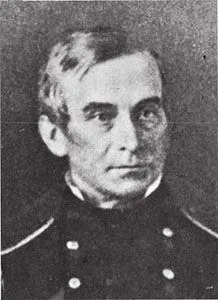
Robert Anderson was born at “Soldier’s Retreat” near Louisville, Kentucky, on June 14, 1805. His father, a lieutenant colonel of the Continental line, had moved from Virginia to Kentucky after the American Revolution. Commissioned into the 3rd Artillery after being graduated from West Point in 1825, Anderson was assigned to artillery and ordnance duty at various places. He participated in the Black Hawk, Florida, and Mexican Wars, and was brevetted twice for gallantry. He also served on various artillery boards while translating a number of French artillery texts. He received the rank of major in 1857 and, in November, 1860, was ordered to Charleston Harbor to command the three United States forts there—Castle Pinckney, Moultrie, and the unfinished Sumter—in the face of South Carolina’s imminent secession. This assignment was dictated by both military and political considerations: Anderson was a Kentucky-born proslavery officer whose wife was a Georgian, but he was also highly competent and respected in his profession and his loyalty was unquestioned. Anderson, who had established his headquarters at Moultrie, realized his untenable position and moved his command to Sumter. The South Carolina authorities immediately declared this act a violation of the status quo previously agreed upon in Washington. When the steamer Star of the West appeared to reinforce him, Anderson—not wishing to provoke war and having only vague instructions from Washington—permitted it to be driven off. A formal demand for surrender was finally presented. Anderson refused and beginning in the early morning of April 12, 1861, sustained a thirtyfour hour bombardment which made further resistance suicidal. Accepting the terms offered by the Confederates, he marched out with colors flying and saluted his flag with fifty guns. His conduct served to unify the North. Arriving in New York as a hero, he was appointed brigadier general in the Regular Army by President Abraham Lincoln on May 15, 1861. After commanding for a short time in Kentucky, where he helped maintain the state’s nominal allegiance to the Union, he fell ill, was relieved in October, and retired in 1863. He raised the United States flag over Sumter on April 14, 1865, exactly four years after he had hauled it down. He was brevetted major general the same year. He died in Nice, France, on October 26, 1871, but his remains were returned to the United States for burial at West Point.
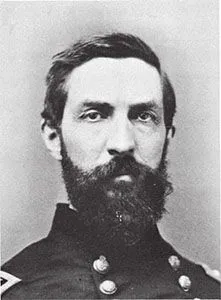
Christopher Columbus Andrews was born at Hillsboro, New Hampshire, on October 27, 1829. A precocious young man, he was admitted to the Massachusetts bar at the age of twenty-one after three terms at Francestown Academy in New Hampshire and a stint at Harvard Law School. He began practice in Newton, Massachusetts, but in 1854 went to Kansas. Andrews soon received a political appointment as clerk in the Treasury Department in Washington. His writing talent led him to contribute accounts of his travels East and West to various newspapers. In 1857 he established residence in St. Cloud, Minnesota, and in 1859 became a member of the Minnesota state senate. He enlisted as a private in 1861, but was soon commissioned captain of the 3rd Minnesota. Taken prisoner near Murfreesboro, Tennessee, in July 1862, he was exchanged in October of that year and appointed lieutenant colonel. He was colonel in command of the regiment in the Arkansas campaign of 1863; on January 5, 1864, he was appointed brigadier general of volunteers. For his part in the assault and capture of Fort Blakely, Alabama, during the Mobile campaign, Andrews was brevetted major general of volunteers on March 9, 1865. Mustered out in January, 1866, he returned to St. Cloud and became prominent in state politics. President Grant appointed him minister to Sweden and Norway in 1869, a post he occupied until 1877. He was then successively a newspaper editor, a district supervisor of the 1880 census in Minnesota, a consul general to Brazil, and chief warden and forest commissioner of Minnesota. From 1911 until his death in St. Paul on September 21, 1922, he was secretary of the state forestry board. General Andrews’ writings extended over many fields, among them law, history, and military tactics, and included his impressions of the foreign countries in which he had served as a government representative. He is buried in Oakland Cemetery, St. Paul.
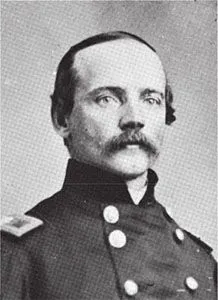
George Leonard Andrews was born at Bridgewater, Massachusetts, on August 31, 1828. After finishing the state normal school in Bridgewater, he attended West Point and was graduated at the head of the class of 1851. He worked in the Engineer Corps on the construction of Fort Warren in Boston Harbor and, after a brief tour at the Academy as an assistant professor, Andrews resigned in 1855 to pursue the profession of civil engineer. He returned to the army as lieutenant colonel of the 2nd Massachusetts Infantry, of which he became colonel in June, 1862. On November 10, 1862, he was appointed brigadier general of volunteers and was involved in some of the early battles in the Eastern theater of war, including Cedar Mountain and Sharpsburg. He served with General N. P. Banks’s expedition to Louisiana as chief of staff, taking part in the siege and capture of Port Hudson. Until joining the attack on Mobile, Andrews was placed in command of a district near Baton Rouge and charged with the organization and training of Negro troops raised from the vicinity of the Mississippi. He was mustered out in August, 1865, having been brevetted a major general of volunteers. His civil occupations included being a planter in Mississippi from 1865 until 1867, a United States marshal of Massachusetts until 1871, and a professor of French at West Point. Retiring in 1892, he made his residence in Brookline. Massachusetts, where he died April 4, 1899. He is buried in Mt. Auburn Cemetery, Cambridge.
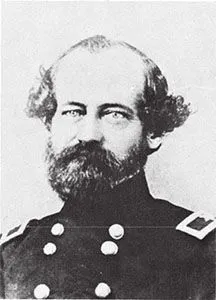
Lewis Golding Arnold was born in Perth Amboy, New Jersey, (3) on January 15, 1817. At sixteen he was appointed to the Military Academy from that state and in 1837 was graduated tenth in a class of fifty. Arnold had a distinguished record in the army before the Civil War; he served in the Florida War during 1837-38; assisted in transferring the Cherokees to the West; was on the Canadian frontier a year later; and after several years of garrison duty won the brevets of captain and major for gallant and meritorious conduct in the Mexican War. He was commissioned captain in the Regular Army in 1847 and major at the outbreak of the Civil War. Arnold participated in the defense of Fort Pickens, Florida, in August, 1861, and was subsequently in command of the work until May 9, 1862. On January 24, 1862, he was appointed brigadier general of volunteers and assigned for some months to command the Department of Florida. In the fall he was transferred to the command of New Orleans but, on November 10, while reviewing his troops, suffered a stroke from which he never recovered. On sick leave until 1864, he was retired on February 8 of that year when it became apparent that he was permanently paralyzed. (4) He died in South Boston, Massachusetts (now a part of Boston), on September 22, 1871, and was buried in St. Mary’s Cemetery, Newton Lower Falls, Massachusetts.
2323__perlego__...Table of contents
- Cover
- Title Page
- Dedication
- Copyright Page
- Preface
- Acknowledgments
- Contents
- Introduction
- Biographical Sketches
- Appendices
- Notes
- Bibliography
Trusted by 375,005 students
Access to over 1.5 million titles for a fair monthly price.
Study more efficiently using our study tools.
Frequently asked questions
Yes, you can cancel anytime from the Subscription tab in your account settings on the Perlego website. Your subscription will stay active until the end of your current billing period. Learn how to cancel your subscription
No, books cannot be downloaded as external files, such as PDFs, for use outside of Perlego. However, you can download books within the Perlego app for offline reading on mobile or tablet. Learn how to download books offline
Perlego offers two plans: Essential and Complete
- Essential is ideal for learners and professionals who enjoy exploring a wide range of subjects. Access the Essential Library with 800,000+ trusted titles and best-sellers across business, personal growth, and the humanities. Includes unlimited reading time and Standard Read Aloud voice.
- Complete: Perfect for advanced learners and researchers needing full, unrestricted access. Unlock 1.5M+ books across hundreds of subjects, including academic and specialized titles. The Complete Plan also includes advanced features like Premium Read Aloud and Research Assistant.
We are an online textbook subscription service, where you can get access to an entire online library for less than the price of a single book per month. With over 1.5 million books across 990+ topics, we’ve got you covered! Learn about our mission
Look out for the read-aloud symbol on your next book to see if you can listen to it. The read-aloud tool reads text aloud for you, highlighting the text as it is being read. You can pause it, speed it up and slow it down. Learn more about Read Aloud
Yes! You can use the Perlego app on both iOS and Android devices to read anytime, anywhere — even offline. Perfect for commutes or when you’re on the go.
Please note we cannot support devices running on iOS 13 and Android 7 or earlier. Learn more about using the app
Please note we cannot support devices running on iOS 13 and Android 7 or earlier. Learn more about using the app
Yes, you can access Generals in Blue by Ezra J. Warner in PDF and/or ePUB format, as well as other popular books in Storia & Storia della guerra civile americana. We have over 1.5 million books available in our catalogue for you to explore.