- 168 pages
- English
- ePUB (mobile friendly)
- Available on iOS & Android
eBook - ePub
About this book
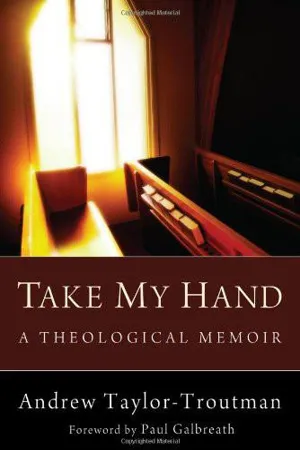
Take My Hand is an invitation to experience a year of preaching through the eyes of a first-year pastor. Andrew Taylor-Troutman reflects on his experience of ministry as a dynamic exchange between his theological education and the people in the pews. Each chapter consists of Taylor-Troutman's reflections about a particular aspect of living as a faith community and concludes with a sermon exploring similar themes and ideas. As this book journeys through the Christian liturgical year, Taylor-Troutman considers a wide range of contemporary church issues, including the role of children in worship and the communal practice of Sabbath. He discusses topics as diverse as the Rapture, the death penalty, and church league softball. Along the way, readers will laugh at Sunday morning bloopers, study biblical texts from new perspectives, wrestle with theological questions, and discover parallels between their own experience of faith and the life of this small, rural congregation. More than just a retrospective summary of events, Take My Hand poignantly illustrates how a pastor's work on Sunday morning grows out of his or her engagement with the hopes and fears of daily life, and the inspiring faith of men, women, and children in a church.
Trusted by 375,005 students
Access to over 1.5 million titles for a fair monthly price.
Study more efficiently using our study tools.
Information
Topic
Theology & ReligionSubtopic
Christian Church1
The New and the Unexpected
DAILY COMMUTES
ONE OF THE BEST perks about my job is the “morning commute.” New Dublin Presbyterian Church sits at the end of a private road, elevated on a slight ridge. To get to my office from the manse, I simply walk about three hundred yards underneath ancient oak trees, past an iconic cemetery, and into a little white church with a green metal roof. Farmland stretches for miles all around and the green hills gently slope at the horizon. The landscape is beautiful and tranquil; it makes you want to take a deep breath and be at peace.
I try my best to maintain a welcoming office space at this picturesque church. I want the inside of the church to be just as open and inviting to visitors as the surrounding landscape. Despite this goal, I knew from my very first day on the job that much of my time should be spent out of the office. In the eyes of the folk at New Dublin, the work of a pastor is not confined to his or her study. As people come to church, I am expected to visit their homes. We are a throwback to the days when “preacher’s cookies” were whipped up on the spot because the preacher had dropped by unannounced for a friendly chat.
I have learned to appreciate these “afternoon commutes” to people’s homes just as much as my time in the office. Sometimes we must allow others to welcome us. A pastoral visit is like many social situations in that there is a great deal of importance placed upon food! In my first ten days of visiting alone, I ate ice cream, cookies, banana pudding, brownies, and strawberries, not to mention cup after cup of strong, black coffee. While I quickly learned that I could not keep track of all the edible gifts I received, I will admit that there have been several occasions when I have been grateful for the caffeine. The rules of etiquette for pastoral visitation include some tedious formalities. For instance, the summer forecast for southwestern Virginia inevitably includes some chance of thunderstorms, and most of my parishioners seem to enjoy speculating upon this ubiquitous topic. This can make me a little drowsy.
Do not assume, however, that I have been bored by my conversations. I am often amazed by the things people will share. During one visit, a woman described an evening when she looked out of her bedroom window and saw a vision of her brother-in-law dancing across the mountains in the distance. About two hours later, she received a phone call that he had died. Another parishioner is visited each night by a bright light that she believes is an angel. Such conversations are not held around a typical dinner table!
While a pastoral visit may include a discussion about the weather or a detailed chronicling of various aches and pains, I try to be patient and attentive because even the most mundane conversations can lead to a meaningful discussion of faith. Towards the end of the visit, I typically ask, “What have you been praying about lately?” I have seen this question act like a key that unlocks the real struggle inside. Quite unexpectedly, someone may give voice to what lies heavily on the heart.
One day I had an appointment to visit a family, but mistakenly presented myself at the wrong house. Though I was completely unexpected and unannounced, this church member graciously invited me inside. Even early in my ministry, I was beginning to understand the importance of hospitality in this culture. We sat at his kitchen table, drinking cold water from the well and chatting amicably. He and I do not have a great deal of experiences in common, and this fact became even more apparent as we talked. For instance, I do not include feeding the cows as part of my Sunday routine to get ready for church. While I enjoyed our time together, I knew that we both needed to get back to work. Just before I was about to leave for my scheduled appointment, I offered to pray for him and his family.
In response to my request for prayer concerns, tears fell freely down his sun-browned face. I couldn’t have been more surprised than if I saw a vision of my sister-in-law dancing across the distant mountains! This steady rock of the church whose clear blue eyes seemed forever set to the task at hand was crying. He shared the details of a sudden and tragic loss in the extended family, which had left him with questions about his faith. There in the kitchen, he added his voice to the great chorus of faithful people who have cried out in anguish, “Why God?”
I do not know how helpful I was to this parishioner on that day. I did not have much to say in response to his questions, much less any answers. I was still learning to find my way, literally around Dublin and figuratively as a pastor. But I was grateful for this unexpected visit and the chance to listen. Though I had visited the wrong house, sometimes we don’t know where we are going until we’ve already arrived.
This unexpected visit points to another lesson I learned quickly at New Dublin: some mistakes are actually gifts.
My first Sunday in the pulpit was Pentecost, which marks the church’s celebration of the gift of the Holy Spirit. According to the book of Acts, this spirit of fire came from heaven with a sound like a mighty rush of wind (Acts 2:2). How ironic that the very first sound out of my mouth was the mighty sound of microphone feedback! Though the sound system’s malfunction nearly busted everyone’s eardrums, this unexpected event did prove to be an unexpected blessing. As our ears rang, everyone shared a laugh, and I could see the anxiety melting away from their faces. I felt my own apprehension easing off my shoulders.
Perhaps others would have preferred a more somber or professional introduction. As I’ve reflected about this incident, I think it is a great illustration of the grace that my congregation affords me. I also believe that we could laugh together because we had started to trust each other. My reputation was growing as a “preacher who likes to visit.” Even before the first sermon, we were forming relationships that could stand the test of mishaps. This has continued to serve us well to this very day, no matter where life leads us on our daily commutes.
COWS ARE COOL!
While I do value pastoral visitation, I also spend a great deal of time in the church office. I love to study and I love to learn. I want to teach my academic knowledge by putting the wealth of biblical and theological scholarship into the language of the laity. Craig Barnes writes of the importance of “the fresh articulation of familiar old truths in a specific context.”1 The message must be translated so it can be understood in a deeply personal way, which Barnes terms as “a realm beneath the presenting issues.”2 We may have daily conversations about the weather, but the Bible and theological tradition speak to our hearts if we can only hear their messages as addressed to us.
As a pastor, serving as such a translator is much easier to understand within the walls of a study than it is to put into practice in the life of the congregation. Rob Bell offers a metaphor for this difficulty as “playing the piano while wearing oven mitts.” Bell explains: “We can make a noise, sometimes even hit the notes well enough to bang out a melody, but it doesn’t sound like it could, or should. The elements are all there—fingers, keys, strings, ears—but there’s something in the way, something inhibiting our ability to fully experience all the possibilities.”3 Bell’s image resonates with me. In reviewing sermons for this book, certain messages that I was trying to proclaim were not nearly as clear or as sharp as I would have liked for them to sound. I have cringed in embarrassment at some of the “notes” of my sermons. I take comfort in the fact that, just as there is grace to be found in mistakes, so grace can be heard in any sermon.
Here, then, is yet another importance of pastoral visits: messages can be learned through relationships. By reaching out to people in their physical space, we can discern where others are in their spiritual journey. It is fine and good to make declarative statements about theology and faith, but I’ve already suggested that it is the right question that unlocks a deep meaning in a personal way. By listening attentively and seeking to learn from others, perhaps we will then discover opportunities to translate some of that wonderful scholarship into words that ring true. Moreover, preachers can be taught a great deal by the classroom of daily experience.
On another visit during my first week as a pastor, I had asked a grandmother to tell me a little about her grandson. She responded by telling this story: Her ten-year-old grandson was visiting their farmhouse one evening last winter when his grandfather went out to feed the cattle. Despite his grandmother’s urging, the young man declined the invitation to accompany him. He was still watching television, comfortable by the fire, when the grandfather came back inside with a young calf cradled in his arms. This poor animal had fallen in the creek and was nearly frozen to death. Grandpa set the calf down in the living room and began vigorously rubbing its body with warm towels. Forget the television; the grandson was now transfixed by this battle against death. Wordlessly his grandfather held out another towel with his free hand. The boy grabbed it and joined in massaging the calf back to life. Thankfully, this towel therapy worked and that baby calf eventually stumbled to its feet in that awkward way of theirs. Then the grandson willingly accompanied his grandfather to the barn for the chores. In fact, he insisted on tagging along! The child came back and proudly announced, “Cows are cool!”
Imbedded in a grandmother’s love for her grandson is a valuable lesson for pastors. In order to preach, we must be in relationship. We must accept the offered towel or outstretched hand, and be willing to work beside the people in our congregation. Just as the boy’s insight into cows was gained through the laborious, even potentially tragic work alongside his grandfather, so a sermon must be forged in a loving relationship with parishioners. Even if the message does not hit all the right notes, something of God’s truth will be communicated.
To appreciate the deep wisdom of a child’s lesson that “cows are cool,” I have learned from Wendell Berry that I need to “let the farm judge.” A novelist, essayist, and poet, Berry is also a man who shows tremendous appreciation for the art of farming. For instance, he writes of the importance of animal husbandry in light of the needs of the land. Knowledge and skill, including modern breeding practices, play a vital role. But a conscientious farmer should “let the farm judge” which breed is most compatible with environmental factors, such as topography, climate, and soil quality. For instance, Berry’s farm is along the lower Kentucky River valley, so he grazes a breed of hill sheep that can maneuver across the landscape and eat the natural vegetation.4
Let me be clear that I am not making a pejorative comparison between the congregation of New Dublin and a farm! My point is I am coming into an existing ecosystem that has functioned before me and will continue to do so after I leave. My role is proactive; I am here to “work the land.” My tools are exegetical methods to till the fertile soil of the Bible. With prayer and patience, these seeds I plant may blossom and help people think theologically.
Bu...
Table of contents
- Title Page
- Foreword
- Acknowledgments
- Introduction
- Chapter 1: The New and the Unexpected
- Chapter 2: Open Eyes, Open Table
- Chapter 3: Take My Hand
- Chapter 4: Praying the Questions
- Chapter 5: Please Join Our Team
- Chapter 6: A Different Kind of Thunder
- Chapter 7: Named by Grace
- Chapter 8: Songs of Hope
- Chapter 9: O Pastor, What is Required of Thee?
- Chapter 10: With All Thy Might
- Chapter 11: Come, Lord Jesus!
- Chapter 12: Runaway Bulls
- Chapter 13: Re-Membering the Future
- Chapter 14: Any Last Words?
- Chapter 15: The End of Our Beginning
- Bibliography
Frequently asked questions
Yes, you can cancel anytime from the Subscription tab in your account settings on the Perlego website. Your subscription will stay active until the end of your current billing period. Learn how to cancel your subscription
No, books cannot be downloaded as external files, such as PDFs, for use outside of Perlego. However, you can download books within the Perlego app for offline reading on mobile or tablet. Learn how to download books offline
Perlego offers two plans: Essential and Complete
- Essential is ideal for learners and professionals who enjoy exploring a wide range of subjects. Access the Essential Library with 800,000+ trusted titles and best-sellers across business, personal growth, and the humanities. Includes unlimited reading time and Standard Read Aloud voice.
- Complete: Perfect for advanced learners and researchers needing full, unrestricted access. Unlock 1.5M+ books across hundreds of subjects, including academic and specialized titles. The Complete Plan also includes advanced features like Premium Read Aloud and Research Assistant.
We are an online textbook subscription service, where you can get access to an entire online library for less than the price of a single book per month. With over 1.5 million books across 990+ topics, we’ve got you covered! Learn about our mission
Look out for the read-aloud symbol on your next book to see if you can listen to it. The read-aloud tool reads text aloud for you, highlighting the text as it is being read. You can pause it, speed it up and slow it down. Learn more about Read Aloud
Yes! You can use the Perlego app on both iOS and Android devices to read anytime, anywhere — even offline. Perfect for commutes or when you’re on the go.
Please note we cannot support devices running on iOS 13 and Android 7 or earlier. Learn more about using the app
Please note we cannot support devices running on iOS 13 and Android 7 or earlier. Learn more about using the app
Yes, you can access Take My Hand by Andrew Taylor-Troutman in PDF and/or ePUB format, as well as other popular books in Theology & Religion & Christian Church. We have over 1.5 million books available in our catalogue for you to explore.