- 152 pages
- English
- ePUB (mobile friendly)
- Available on iOS & Android
eBook - ePub
About this book
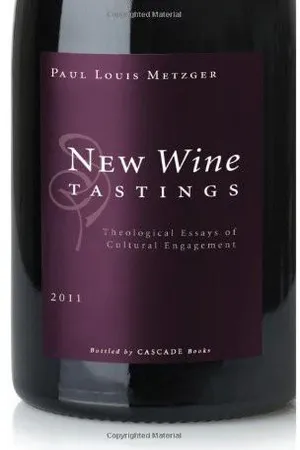
This collection of essays provides samplings of a theological engagement of culture that Paul Louis Metzger has been developing over the years in his work as founder and director of The Institute for the Theology of Culture: New Wine, New Wineskins at Multnomah Biblical Seminary of Multnomah University. Metzger espouses an incarnational over against a predominantly worldview-oriented or market-driven theological approach to engaging culture, and situates his work in Trinitarian communal and co-missional thought forms. This volume of biblically and theologically framed and compassion-driven essays addresses such themes as postmodernity, structural evil, cultural genocide, sexuality, HIV/AIDS, the prison system, the global slave trade, and the arts. It will be welcomed by those analyzing and developing theological-cultural paradigms and engaging key issues in the contemporary setting.
Information
Topic
Theology & ReligionSubtopic
Christian Ministry1
The Incarnate Christ’s Church in a Camcorder Culture1
The Context: “The Vacation” and Virtual Reality
In “The Vacation,” the poet Wendell Berry writes of a man who spends his entire holiday capturing it on video so as to preserve it forever on film. The irony of the situation, however, is that although he went on vacation and captured the vacation on video, he was never in his vacation. “With a flick of a switch, there it would be. But he would not be in it. He would never be in it.”2
The poem bears significance for the purposes of this essay in several ways. For one, the immoderate appeal of camcorder or video productions symbolizes the growing problem of the absence of real presence in our society. The virtual or artificial is replacing actual reality. It is not only Wendell Berry who speaks to this concern. Bill Joy of Sun Microsystems sounds like a modern-day Nostradamus when he warns that the hour may soon draw near when artificial intelligence, specifically those forms with self-replicating capabilities, may not need us, making humanity “an endangered species.”3 Morpheus in the movie The Matrix would lead us to believe that artificial intelligence will indeed take over, after which time no one will know that it has. Is this not already the case? For society has not noticed the emergence of the camcorder as a modern-day mutation protruding from the head, or its counterpart—the cell phone.
Such mutations, although subtle, are by no means harmless—and not simply by means of posing potential threats as carcinogenic devices. For as Ken Myers of Mars Hill maintains, the use of the cell phone in public “pointedly ignores the presence of others.”4 Myers argues that the church must address the real problem of the subtle invasion into our culture of trends that promote dehumanization and disembodied existence.5 Whether one ignores the presence of others by talking on a cell phone in front of them, or negates or minimizes one’s own presence through the use of the camcorder as in the case of Berry’s “Vacation,” the same problem surfaces in each situation—disembodiment, that is, the absence of embodied presence.6
Berry’s poem bears significance for the purposes of this essay in another way. For the absence of real presence is a hallmark of certain sectors of postmodern thought.7 For example, the author of the text, whether the author’s name is Paul or God or Wendell Berry, for that matter, is dead. There is no presence or meaning. The meaning one finds there is nothing but the projection of one’s own desired intention. Thus, it is not simply that the virtual is replacing the actual, but also that the virtual is all there really is, was, and will be.
Not only is this true of ivory-tower academic analyses of texts, but it is also true of news shows, movies, even Bible studies, all of which
demonstrate that constructivist features of postmodernity are everywhere. Dan Rather, the longtime anchor of the CBS Evening News, once provocatively stated: “We don’t give you the news. We make it”—a point that the movie Wag the Dog so vividly portrays.8 In Sunday schools across the land, so often the central question is no longer, What does the text say? but rather, What does the text say to you? or, better, How does the text make you feel? Taken far enough, the projected or virtual is taken to be all there really is, was, and will be; from this vantage point, the thing in itself, “reality,” is actually a human construction or fiction, perhaps even an illusion. This is the second item of importance.
demonstrate that constructivist features of postmodernity are everywhere. Dan Rather, the longtime anchor of the CBS Evening News, once provocatively stated: “We don’t give you the news. We make it”—a point that the movie Wag the Dog so vividly portrays.8 In Sunday schools across the land, so often the central question is no longer, What does the text say? but rather, What does the text say to you? or, better, How does the text make you feel? Taken far enough, the projected or virtual is taken to be all there really is, was, and will be; from this vantage point, the thing in itself, “reality,” is actually a human construction or fiction, perhaps even an illusion. This is the second item of importance.
Last, Wendell Berry’s poem “The Vacation” holds significance for this essay in that if one were to use broad brushstrokes, postmodernity represents the era of the poet or artist. Premodernity and modernity, on the other hand, constitute the age of the priest and physicist respectively. The logic behind this sketch is that whereas postmodernity often celebrates the fiction of artistic rendition, premodernity champions faith and revelation. In contrast to each, modernity sets forth facts of physics and pure, unadulterated reason.9 However, science has fallen prey to suspicion. The utopia it promised is but the afterglow of nuclear radiation.10 Truth itself, from whatever quarter, is suspect to many people today; many, though certainly not all, postmoderns view “truth” as an urge for mastery, the
politically correct opinion of those wielding power. On this account, knowledge is not power, but power is knowledge.11 Power corrupts, and absolute power (and knowledge) corrupts absolutely.
politically correct opinion of those wielding power. On this account, knowledge is not power, but power is knowledge.11 Power corrupts, and absolute power (and knowledge) corrupts absolutely.
It is the poet, the artist, who looms large as the iconic figure of these postmodern times, and the collected works of Friedrich Nietzsche, though he himself is long dead, serve as its living, prophetic voice. For Nietzsche denounced Immanuel Kant’s halfway-house attempts whereby he relativized art yet safeguarded the relative absoluteness of science and ethics.12 Nietzsche, on the other hand, claimed that truth and values are themselves matters of taste.13 Thus, Nietzsche extended Kant’s dictum that beauty is in the eye of the beholder to include in its grasp truth and morality as well. Everything is projection, the result of which is fragmentation.
In Thus Spoke Zarathustra, Nietzsche’s prophet Zarathustra speaks of having “reached my truth.”14 He adds that inquiries about “the way” have “always offended my taste.” For his own part, he prefers “to question and try out the ways themselves.”15 His approach, namely, wrestling through the various ways, is a matter of “taste”; it is a matter of neither goodness nor badness. One must choose a way, which again is a matter of taste. There is no such thing as “‘the way.’ For the way—that does not exist.”16 In fact, for Nietzsche, “truths are illusions.” They are like “coins which have lost their pictures and now matter only as metal, no longer as coins.” Truth is a dead metaphor—“worn out and without sensuous power.”17 Thus, it is not simply for ornamental reasons that this essay begins with a poem. Consideration now turns from comparing the poem with postmodern culture to contrasting Nietzsche’s famous critique of truth as dead metaphor with the fact of Christian faith, and the living Christ with the dead church, namely, Christendom, and culture.
The Contrast between the Virtuous Christ
and the Virtual Church and Culture
and the Virtual Church and Culture
We argue, contra Nietzsche, that truth is not a dead but living metaphor. For in the incarnation of the divine Word of God, the central truth of Christian faith, poetry meets prose. The incarnation is not a mythical form,18 or an ornament of language. In Christ, the poetic Word, the language of the gods, becomes historical prose. As C. S. Lewis argues, “if ever a myth had become fact, had been incarnated, it would be just like this.”19 In it, one finds the transcendent presence of God. The transcendent presence of God is embodied presence—poetic prose.20
In Christ, fiction has become fact, and God’s presence is embodied presence. Christ turns fiction into fact and heals the fragmentation of culture. The paradigm for the Christian’s response to the current age centers, as it always has, in the incarnation of Jesus Christ.21 The virtuous Christ is the basis for the Christian’s critique and constructive dialogue with postmodern culture.
Too often though, the virtuous Christ stands in marked contrast to Christendom, defined here as the virtual church. The term virtual should not be equated with the satellite-campus church as such, but with any church that fails to be intentional about authentic community, vulnerability, and personal sacrifice for the sake of others inside and outside the church; the term virtual describes a church that seeks to engage society at large from a position of dominance and cultural privilege. For Christendom rests content, projecting a Gnostic or Docetic conception of Christ—disembodied presence whereby the divine Christ only appears to be the human Jesus, and only appears to live among us humbly and self-sacrificially (see 1 John 4). Christendom mistakenly substitutes the vicarious death of Christ with vicarious living—Christ lived for us so that we would not have to live for him and others. Moreover, Christendom signifies the pursuit of power and privilege at the center of society rather than pursuit of life among the oppressed at society’s margins. It involves upward mobility and escape from those most in need rather than downward mobility and engagement with them from the standpoint of coexistence and communion.
The Word became flesh. The reality of Jesus Christ stands in stark contrast to the modern project of detached speculation, the result of which is fragmentation—so evident in many sectors of postmodern thought and life. However, when the church of Jesus Christ itself fails to flesh out the gospel, for example, by falling prey to the great migration known as white ...
Table of contents
- New Wine Tastings
- Author’s Note
- Introduction
- Chapter 1: The Incarnate Christ’s Church in a Camcorder Culture
- Chapter 2: Free at Last!
- Chapter 3: The Sorcerer’s Apprentice and the Savior of the World
- Chapter 4: The Gospel of Genocide and the Good News of Jesus Christ
- Chapter 5: Fire
- Chapter 6: Beyond the Culture Wars
- Chapter 7: Seeing the Face of Christ in the Homeless
- Chapter 8: Toward a Theologically Conservative, Compassionately Liberal Faith
- Chapter 9: “Folsom Prison Blues” Revisited
- Chapter 10: Rising Temperatures and Turning Tides
- Chapter 11: “Money for Nothing and Your Chicks for Free”— But at What Cost?
- Chapter 12: Getting Past the Ghettoizing of the Gospel in Today’s Culture
- Postscript: Fleshing Out and Selling Crazy
- Bibliography
Trusted by 375,005 students
Access to over 1.5 million titles for a fair monthly price.
Study more efficiently using our study tools.
Frequently asked questions
Yes, you can cancel anytime from the Subscription tab in your account settings on the Perlego website. Your subscription will stay active until the end of your current billing period. Learn how to cancel your subscription
No, books cannot be downloaded as external files, such as PDFs, for use outside of Perlego. However, you can download books within the Perlego app for offline reading on mobile or tablet. Learn how to download books offline
Perlego offers two plans: Essential and Complete
- Essential is ideal for learners and professionals who enjoy exploring a wide range of subjects. Access the Essential Library with 800,000+ trusted titles and best-sellers across business, personal growth, and the humanities. Includes unlimited reading time and Standard Read Aloud voice.
- Complete: Perfect for advanced learners and researchers needing full, unrestricted access. Unlock 1.5M+ books across hundreds of subjects, including academic and specialized titles. The Complete Plan also includes advanced features like Premium Read Aloud and Research Assistant.
We are an online textbook subscription service, where you can get access to an entire online library for less than the price of a single book per month. With over 1.5 million books across 990+ topics, we’ve got you covered! Learn about our mission
Look out for the read-aloud symbol on your next book to see if you can listen to it. The read-aloud tool reads text aloud for you, highlighting the text as it is being read. You can pause it, speed it up and slow it down. Learn more about Read Aloud
Yes! You can use the Perlego app on both iOS and Android devices to read anytime, anywhere — even offline. Perfect for commutes or when you’re on the go.
Please note we cannot support devices running on iOS 13 and Android 7 or earlier. Learn more about using the app
Please note we cannot support devices running on iOS 13 and Android 7 or earlier. Learn more about using the app
Yes, you can access New Wine Tastings by Paul Louis Metzger in PDF and/or ePUB format, as well as other popular books in Theology & Religion & Christian Ministry. We have over 1.5 million books available in our catalogue for you to explore.