- 318 pages
- English
- ePUB (mobile friendly)
- Available on iOS & Android
eBook - ePub
About this book
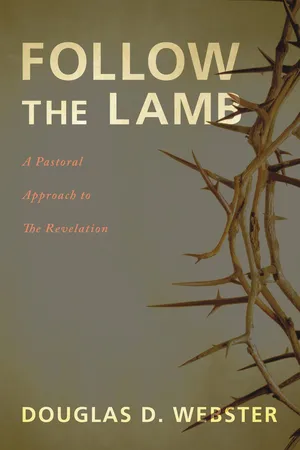
The Revelation builds conviction, inspires worship, and encourages patient endurance. This is a prison epistle like no other: a disciple-making tract, a manifesto, an extraordinary treatise on Christ and culture, and a canonical climax. We come expecting to learn the ABCs of the end times, and the Apostle John gives us the fullness and fury of his Spirit-inspired praying imagination. Meaning is not found in cleverly devised interpretations, but in God's redemptive story. The apostle's purpose was to strengthen the people of God against cultural assimilation and spiritual idolatry, not to stimulate end times speculation. The Revelation is a sustained attack against diluted discipleship with an unrelenting focus on the immediacy of God's presence in the totality of life. Nothing escapes the gaze of Christ.
Information
Topic
Theology & ReligionSubtopic
Biblical Studies1
The Canonical Climax
“If you can’t explain it simply, you don’t understand it well enough.”
—Albert Einstein
The Revelation is not a biblical book you master. John’s prison epistle masters us. To be swept along by the force of this inspired theological treatise is to be simultaneously humbled and challenged. Recently, I taught the book in northern Ghana to a group of seventy-six pastors and fourteen Christian chiefs. The pastors serve churches throughout this rural and remote region. We met in the small village of Carpenter, where my African brother David Mensah heads up a holistic and fruitful ministry in the northern region.1 We worked hard, five hours a day for seven days, in the heat. We covered the entire book, but in our last session, I shared with the pastors that I had only given them an introduction, only a taste of the spiritual impact of the Revelation. We agreed that the real work continues as we endeavor to stay in the Spirit and in the rhythm of John’s powerful depiction of salvation and judgment.
All the pastors came out of villages steeped in witchcraft and shamanism. For them, the dangers of idolatry are very real. Villagers sacrifice chickens and goats before wooden idols and sacred stones. Their churches wrestle with the occult and demonic taboos. As the followers of Christ break away from these customs they are often blamed for disease and drought and anything bad that happens in the villages. Believers are shunned and ridiculed. Their livelihood is threatened. Simple acts of faithfulness are costly. Even Christian chiefs are under pressure to prove their loyalty by complying with ancient taboos. These believers, like the first recipients of the Revelation, know what it is like to suffer for not eating meat offered to idols.
To work through the Revelation with believers who deal with shamans and idol worship was a reminder of what the first-century believers faced in confronting the imperial cult. Ghanian believers have experienced the demonic power of the devil. They know the complexity and dread of evil in ways that Western Christians seldom acknowledge, much less confront. American Christians suffer from idolatry but in ways that are more subtle and seductive. We disciples may not bow before wooden statues but we are in danger of giving ourselves to the gods of success, sports, and sex.
The emerging church in the Muslim–dominated northern region of Ghana resembles the first-century church. She may be relatively small and beleaguered but her witness is strong and her faith is vital. These pastors resonated with the Apostle John’s Spirit-led warnings and admonitions. They identified personally with his spiritual direction and his grasp of the Old Testament Scriptures. The pastors impressed me as being emotionally and intellectually present in John’s vision of Christ. They were also more open to the apostle’s description of evil than we in the West tend to be. Maybe if we had someone living on our street with a reputation for spiritual powers who concocted curses for a fee, we might more readily grasp John’s vivid portrayal of the power of evil. These Ghanian pastors were free to concentrate on what John was saying without having to be burdened with the heavy load of false and misleading interpretations that many believers seem to labor under. Instead of being bothered by rapture questions and millennial categories, they were able to enter into the Revelation with fresh ears and receptive hearts. There was no popular Left Behind series distorting their perspective. The Revelation’s spiraling intensity of worship and judgment made perfect sense to these first-generation believers saved out of spiritual bondage.
A Prison Epistle
“The Apocalypse of John is a work of immense learning, astonishingly meticulous literary artistry, remarkable creative imagination, radical political critique, and profound theology.”
—Richard Bauckham, The Climax of Prophecy2
The Revelation builds conviction, inspires worship, and encourages patient endurance. The author was a prophet, poet, and pastor. Tradition has John on the island because he was a political prisoner. The imperial authorities wanted him out of the way, so they exiled him to a mountainous island off the coast of Asia Minor. This veteran ambassador of the gospel, who refused to bow the knee to Caesar, proclaimed the gospel to the world, to the churches of Asia Minor, and then to twenty-one centuries of church history; to every tribe, language, people, and nation. This “revelation of Jesus Christ” is a prison epistle like no other. It is also an extraordinary treatise on Christ and culture. Two thousand years has only deepened its prophetic impact.
Most of us are unaccustomed to the medium that John used to communicate “the word of God and the testimony of Jesus Christ.” We come expecting to learn the ABC’s of the end times and the Apostle John gives us the fullness and fury of his praying imagination. This Spirit–led prophet-pastor leads us into a vast array of sounds and images drawn from salvation history. We discover that meaning is not found in cleverly devised interpretations, but in God’s redemptive story.
Careful study of this prison epistle reveals that John’s mind was steeped in prophetic exile texts. His companions for this Spirit-filled experience were Isaiah, Jeremiah, Daniel, Ezekiel, Zechariah, and, most importantly, the risen Christ. The truth of the gospel remains constant: God in Christ is reconciling the world to himself. Salvation is by grace through faith and the atoning sacrifice of the cross of Christ is central to our faith. Evil charges forth, but the Lamb of God prevails. Evil is not the supreme reality. Heaven and hell are real. Salvation and judgment are coming. Jesus is Lord.
John is authorized by the Spirit of God to write to the churches. Twelve times he is told to write what he has seen and heard. Each time the imperative is given, John’s holy and demanding work is affirmed. John makes sure we don’t take the work of writing for granted. John testified “to everything he saw—that is, the word of God and the testimony of Jesus Christ.”3 He immersed himself in the Old Testament and the life of Jesus as a biblical theologian. In the Spirit, he is our prophet-pastor and inspired poet. John is not copying down a dream—a verbatim heavenly script; he’s crafting a disciple-making manifesto.
Over 500 references to earlier Scripture in the Revelation’s 404 verses testify to John’s canonical climax. But it is only when we study the layers of parallel texts in Isaiah, Daniel, Ezekiel, and Zechariah that we begin to realize how deeply John’s prophecy is steeped in the Old Testament. If John is anything, he is an Old Testament theologian. How fitting that the New Testament should end with such a powerful restatement of God’s promises and warnings. John’s Spirit-inspired vision is informed from beginning to end by the images, metaphors, numbers, and theology of the ancient prophets. As a writer, John gathered up all this revelation and proclaimed it for the church, not only to the seven churches of Asia Minor, but to every generation of believers in the global church from the Ascension to the second coming.
The apostle’s purpose was to strengthen the church against cultural assimilation and spiritual idolatry, not to stimulate end times speculation. He wanted to deepen spirituality and nurture resilient saints. He was not out to heighten fear and scare believers into obedience. The Revelation is a manifesto on living faithfully to the end. It is not a manual charting the chronology of the second coming of Christ. John’s prophetic focus was on preparation, not prediction. The Revelation is as necessary for young believers starting out on the path of discipleship as it is for mature believers who have walked with Christ for years. First things first, and a faith that lasts is what John offers not only the first-century church but the church universal.
The Revelation is a sustained attack against idolatry. John explored the complexity of evil in-depth and the simplicity of lifelong faithfulness. He attacked the notion that life could be lived in orbit around the imperial cult. The logic of his prophetic argument applies today to the autonomous individual, to the imperial self. He placed the spirit of the times in tension with the Spirit of Christ. He lifted the believer’s gaze to a new horizon—heaven. In the Spirit, his aim was to inspire the believer’s faithful presence amidst the harsh realities of evil. We should not be surprised that this biblical book is in sync with the rest of the New Testament. A sensible, straightforward reading of the Revelation reveals a symphony of truth in harmony with not only the Gospels and the Epistles, but with the law and the prophets. John’s prison epistle is one long sustained attack against diluted discipleship. His unrelenting focus is on the immediacy of God’s presence in the totality of life; nothing escapes the gaze of Christ.
Dispensational Distraction
“Though St. John the Evangelist saw many strange monsters in his vision, he saw no creature so wild as one of his own commentators.”
—G. K. Chesterton4
This may be the devil’s favorite book. Believers are confused and intimidated by the Revelation and pastors avoid preaching it because they don’t want to stir up controversy. Fanciful interpretations of the rapture and tribulation make faithful preaching difficult. It is an easier book to ignore than to study. As a young Christian I thought that the Revelation was beyond the ability of most Christians to understand—myself included. Many of the preachers I heard made it seem like a complicated end times jigsaw puzzle that required a special expertise to figure it out. Eventually I came to see that John’s purpose in writing was not to fuel curiosity or reveal hidden insights into terrorism, oil shortages, and turmoil in the Middle East. There is nothing in his book about modern nuclear warfare. The book was not the crystal ball some made it out to be. John’s purpose was not to explore modern history, identify the Antichrist, and make geopolitical prognostications. His mission was to prepare the church for repentance, resistance, and resilience. He wrote to strengthen believers, not scare unbelievers.
In my teens I worked through a 300-page commentary on the Book of Revelation recommended to me by my pastor. The author argued that God had two salvation tracks running parallel to one another, one for Israel and one for the church. The rapture of the church was to take place before the tribulation, followed by the second coming of Christ and the 1,000-year rule of Christ. Armageddon and the final judgment followed the millennial rule. Virtually everything said in the Old Testament about Israel was meant for ethnic Israel. The prophecies of hope, laid out by Isaiah, Jeremiah, Daniel, and Ezekiel, predicted the restoration...
Table of contents
- Title Page
- Acknowledgments
- Chapter 1: The Canonical Climax
- Chapter 2: One Act Drama
- Chapter 3: Deep Meaning
- Chapter 4: The Jesus I Need to Know
- Chapter 5: The Seven Letters
- Chapter 6: First Love Witness
- Chapter 7: Band of Martyrs
- Chapter 8: Urban Fidelity
- Chapter 9: Idol Resistant
- Chapter 10: Beyond User Friendly
- Chapter 11: Real Mission
- Chapter 12: True Riches
- Chapter 13: Christ the Center
- Chapter 14: The Open Scroll
- Chapter 15: Heaven’s Perspective on Evil
- Chapter 16: Deliverance in Tribulation
- Chapter 17: Evil Unleashed
- Chapter 18: Witness
- Chapter 19: The Measure of the Mission
- Chapter 20: The Christmas Story
- Chapter 21: The Easter Story
- Chapter 22: Filled with Wonder
- Chapter 23: Keeping Perspective
- Chapter 24: The Wrath of God
- Chapter 25: The Beautiful Side of Evil
- Chapter 26: Salvation and Judgment
- Chapter 27: Millennial Martyrs
- Chapter 28: The Second Death
- Chapter 29: All Things New
- Chapter 30: The Garden City of God
- Bibliography
Trusted by 375,005 students
Access to over 1.5 million titles for a fair monthly price.
Study more efficiently using our study tools.
Frequently asked questions
Yes, you can cancel anytime from the Subscription tab in your account settings on the Perlego website. Your subscription will stay active until the end of your current billing period. Learn how to cancel your subscription
No, books cannot be downloaded as external files, such as PDFs, for use outside of Perlego. However, you can download books within the Perlego app for offline reading on mobile or tablet. Learn how to download books offline
Perlego offers two plans: Essential and Complete
- Essential is ideal for learners and professionals who enjoy exploring a wide range of subjects. Access the Essential Library with 800,000+ trusted titles and best-sellers across business, personal growth, and the humanities. Includes unlimited reading time and Standard Read Aloud voice.
- Complete: Perfect for advanced learners and researchers needing full, unrestricted access. Unlock 1.5M+ books across hundreds of subjects, including academic and specialized titles. The Complete Plan also includes advanced features like Premium Read Aloud and Research Assistant.
We are an online textbook subscription service, where you can get access to an entire online library for less than the price of a single book per month. With over 1.5 million books across 990+ topics, we’ve got you covered! Learn about our mission
Look out for the read-aloud symbol on your next book to see if you can listen to it. The read-aloud tool reads text aloud for you, highlighting the text as it is being read. You can pause it, speed it up and slow it down. Learn more about Read Aloud
Yes! You can use the Perlego app on both iOS and Android devices to read anytime, anywhere — even offline. Perfect for commutes or when you’re on the go.
Please note we cannot support devices running on iOS 13 and Android 7 or earlier. Learn more about using the app
Please note we cannot support devices running on iOS 13 and Android 7 or earlier. Learn more about using the app
Yes, you can access Follow the Lamb by Douglas D. Webster in PDF and/or ePUB format, as well as other popular books in Theology & Religion & Biblical Studies. We have over 1.5 million books available in our catalogue for you to explore.