- 286 pages
- English
- ePUB (mobile friendly)
- Available on iOS & Android
eBook - ePub
About this book
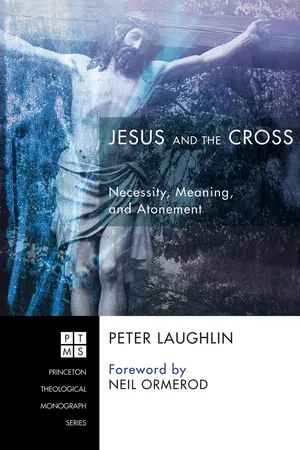
According to the Nicene Creed, Christ died for us and for our salvation. But while all Christians agree that Christ's death and resurrection has saving significance, there is little unanimity in how and why that is the case. In fact, Christian history is littered with various accounts of the redemptive value of Christ's death, and new models and motifs are constantly being proposed, many of which now stand in stark contrast to earlier reflections. How then should contemporary articulations of the cross's saving significance be judged?
At the heart of this book is the contention that Christian reflection on the atonement is faithful inasmuch as it incorporates the intention that Jesus himself had for his death. In a wide-reaching study, the author draws from both classical scholarship and recent work on the historical Jesus to argue that not only did Jesus imbue his death with redemptive meaning but that such meaning should impact expressions of the cross's saving significance.
Information
Topic
Theology & ReligionSubtopic
Christian Theology1
Introduction: Cross Intentions
At the beginning of Christianity there are two crosses: One is a real cross, the other a symbol.1
—Jürgen Moltmann
In her introduction to Cross Examinations, Marit Trelstad remarks that the meaning of the cross is dependent upon the context in which it is found.2 One can hardly dispute her point: a burning cross on the lawn of an African American home in the mid twentieth-century does not have the same meaning as a cross mounted at the focal point of a contemporary African American church. Nor does the symbol of the cross have the same meaning when worn as a fashion accessory today as it once did in its crude representations on the shields of Constantine’s army. Like any symbol the cross is open to the changes of context in which it is found, its meaning dependent upon the collective intentions of those appropriating it.
But the cross is not just any symbol, it is the symbol par excellence of the Christian faith and so there is an understandable reaction against any suggestion that its meaning is dependent upon variable contexts. Surely the salvific meaning of the cross is fixed in the event itself—forever locked down in Christ’s outstretched arms and pierced feet. And indeed, ever since the early Church reflected upon what happened on the cross, Christians have proclaimed a consistent message: “Christ died for our sins” (1 Cor 15:3). But the question of how Christ’s death functions to “save” us from our sins remains. What is it, in other words, that makes the atonement “work”? And it is here that Christian reflection has not been univocal, its many voices offering up a range of images and metaphors all of which attempt in some way to capture a facet of the truth that is confessed. And it is here, too, that Moltmann’s point in the epigraph is valid, for while there is a “real” cross locked away in human history, the “symbol” of the cross has grown large through Christian reflection, becoming much more than a simple retelling of the facts themselves.
This point is readily discernible even from within the pages of the New Testament. What we find expressed therein is not a reduction of the power of the cross to a single understanding but a number of metaphors and images that collectively weave a tapestry of meaning: Jesus’ death is, amongst others, the death of the Paschal lamb (1 Cor 5:7), the inauguration of a new covenant (Heb 8:8; 9:15), the paid ransom price (Mark 10:45), a sin offering (Rom 8:3) and an example to follow (1 Pet 2:21). The fact that these multiple reflections exist is perhaps why the Nicene Creed simply stated without any elaboration that Christ died “for us and for our salvation.”3 It seems the early church quickly recognized that the meaning of the cross readily transcended any one interpretation. Of course, since the creed does not specify how salvation is actually effected by the cross, theories of atonement are left to describe for themselves how it is that the cross functions pro nobis to their communities. And so diverse motifs emerged as differing cultures and contexts appropriated the cross event anew.
An obvious example is the emergence of the Satisfaction motif during the Middle Ages. It was the developing feudal context of that era that led Anselm of Canterbury to take offence at the then traditional motif, which had systematized the cross’ victory into an explanation of how God had tricked Satan into giving up his hold on fallen humanity.4 Horrified at the thought that God should have to respect Satan in any way, Anselm contended that what was really at issue was the fact that honor was owed to God by a rebellious humanity who had failed to uphold their responsibilities in the lord-vassal relationship.5 The death of the incarnate Son was the only means by which that responsibility could be met, thereby restoring the honor lost to God and righting what was wronged.
Anselm’s conception was not only logically and contextually coherent it also made a lot of popular sense. The First Crusade was being preached and there was a strong drive to rid the infidel from the Holy Land in order to restore God’s honor.6 Therefore to portray salvation in the same terms had immense popular appeal and gained easy and immediate traction. However, there is also no doubt that this interpretation would have made little sense prior to the rise of feudalism, and indeed, much of the motif’s power was lost with feudalism’s decline. But what is often glossed over in what Anselm achieved is that the satisfaction motif was a clear departure from the traditional (ransom) understanding of how the cross saves. He did not consider it necessary to hold on to the previous articulation at all costs but rather saw the need for a new framework of understanding that connected with his own context. What is interesting, is that far from decrying Anselm’s work as an abandonment of received truth, the Christian community welcomed his reflections as a valid and appropriate way of conveying the mechanism of salvation. Naturally, not everyone agreed and Anselm’s work prompted additional reflections, the most notable being Peter Abelard’s moral influence theory. But what such fluidity demonstrates is that cultural context has an important and indeed fundamental role in the development and appropriation of the cross’ saving significance. It is therefore not unorthodox in and of itself to postulate alternative meanings for the cross event that differ from previous reflections.
And for this reason alone it would be rather presumptuous to declare Christian reflection on the atonement closed or to consider the soteriological narrative definitively told. On the contrary, it must be strongly asserted that it is not possible to simply repeat the words of the Bible, Fathers, or the Reformers and expect to gain a hearing within our own contemporary context. Their terms and expressions are valuable, but this does not relieve us of the responsibility to articulate the saving message of the Gospel in contemporary language and within the constituted meaning of our own culture. Indeed, this is the very thing that the biblical writers, Fathers, and Reformers did themselves and it is what made their contribution so contextually meaningful.7
Simply put, changing cultures and contexts demand new articulations, or at least re-articulations of salvific motifs, in order that the saving significance of the cross can continue to be meaningfully appropriated. Of course, this means that an essential characteristic of individual reflections which needs to be acknowledged is that they are inherently temporal.8 “Images of Christ and conceptions of salvation bear the mark of the prevailing cultural consciousness and are only temporarily relevant,” writes Herman-Emiel Mertens. “They are not always and everywhere equally useful.”9 Yet because of the universal significance of the cross in Christian redemption, Mertens’ point often gets overlooked. The overwhelming theological temptation is to elevate (our favorite) motifs above cultural considerations and declare them to be equivalently universal. This is arguably what Bernard of Clairvaux did in energetically defending the Anselmian motif against Abelard’s moral influence theory.10 And if so, then Saint Bernard is not alone. More than once in Christian history has today’s contextual theology comfortably drifted into tomorrow’s entrenched dogma. What makes sense to us now is naively assumed to make sense to everyone and to do so for all time. As Douglas Hall recognizes, the problem with some atonement theologies,
is that they are sometimes so perceptive and brilliant that they last beyond their appropriate time—and, at the same time, they are perpetuated longer than they should be because too few Christians have the courage to enter into the new, emerging darkness and prefer to rely on the old light of entrenched soteriologies.11
Without a doubt, the old light is both familiar and comforting, but as time goes on it does struggle to illuminate the far corners of the present. But this is not to say that it is time for the old light to be disconnected, it is merely an acknowledgement that there is a need for other lights to shine as well. Indeed, this is the experiential reality of the cross. Its power is always evidenced anew in the lives of individuals as the death of Jesus of Nazareth overcomes the horror of their fallen contingent existence. And just as that existence is not static but always changing from culture to culture and from generation to generation, so too there is a dynamism in salvific experience that c...
Table of contents
- Title Page
- Foreword
- Preface
- Abbreviations
- Chapter 1: Introduction: Cross Intentions
- Chapter 2: Divine Action and the Contingent Cross
- Chapter 3: Atonement, History, and Meaning
- Chapter 4: The Meaning of Jesus’ Death
- Chapter 5: From Meaning to Motif
- Afterword
- Bibliography
Trusted by 375,005 students
Access to over 1.5 million titles for a fair monthly price.
Study more efficiently using our study tools.
Frequently asked questions
Yes, you can cancel anytime from the Subscription tab in your account settings on the Perlego website. Your subscription will stay active until the end of your current billing period. Learn how to cancel your subscription
No, books cannot be downloaded as external files, such as PDFs, for use outside of Perlego. However, you can download books within the Perlego app for offline reading on mobile or tablet. Learn how to download books offline
Perlego offers two plans: Essential and Complete
- Essential is ideal for learners and professionals who enjoy exploring a wide range of subjects. Access the Essential Library with 800,000+ trusted titles and best-sellers across business, personal growth, and the humanities. Includes unlimited reading time and Standard Read Aloud voice.
- Complete: Perfect for advanced learners and researchers needing full, unrestricted access. Unlock 1.5M+ books across hundreds of subjects, including academic and specialized titles. The Complete Plan also includes advanced features like Premium Read Aloud and Research Assistant.
We are an online textbook subscription service, where you can get access to an entire online library for less than the price of a single book per month. With over 1.5 million books across 990+ topics, we’ve got you covered! Learn about our mission
Look out for the read-aloud symbol on your next book to see if you can listen to it. The read-aloud tool reads text aloud for you, highlighting the text as it is being read. You can pause it, speed it up and slow it down. Learn more about Read Aloud
Yes! You can use the Perlego app on both iOS and Android devices to read anytime, anywhere — even offline. Perfect for commutes or when you’re on the go.
Please note we cannot support devices running on iOS 13 and Android 7 or earlier. Learn more about using the app
Please note we cannot support devices running on iOS 13 and Android 7 or earlier. Learn more about using the app
Yes, you can access Jesus and the Cross by Peter Laughlin in PDF and/or ePUB format, as well as other popular books in Theology & Religion & Christian Theology. We have over 1.5 million books available in our catalogue for you to explore.