- 222 pages
- English
- ePUB (mobile friendly)
- Available on iOS & Android
eBook - ePub
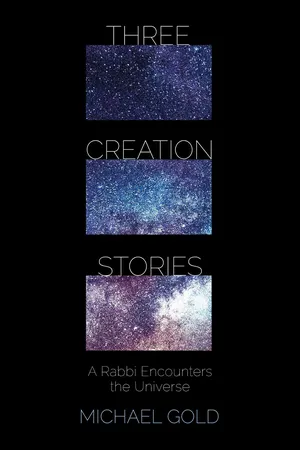
About this book
What is reality? Is reality both mind and matter, body and soul, as taught by Western religions such as Judaism, Christianity, and Islam? This is dualism, the approach of philosophers from Plato to Descartes. Or is reality only matter, as taught by many modern scientists and philosophers? This is materialism, the approach of philosophers from Hobbes to Marx. Or is reality only mind, as taught by Eastern religions and Western mystics. This is the approach of philosophers from Berkeley to Whitehead.
The beginning of Genesis allows for multiple translations and interpretations. We will read the creation story in Genesis from the point of view of each of these three approaches--dualism, materialism, and idealism. In doing so, we will tell three very different creation stories. These stories will take us on a fascinating journey through science, philosophy, and religion. Join us on this journey as we explore issues such as does God perform miracles, why is there evil in the universe, was Darwin correct, can robots have souls, and if light is a wave, what is waving?
Information
Topic
Theology & ReligionSubtopic
Biblical StudiesPart I
The First Creation Story—Dualism
א בְּרֵאשִׁ֖ית בָּרָ֣א אֱלֹהִ֑ים אֵ֥ת הַשָּׁמַ֖יִם וְאֵ֥ת הָאָֽרֶץ: ב וְהָאָ֗רֶץ הָֽיְתָ֥ה תֹ֨הוּ֙ וָבֹ֔הוּ וְח֖שֶׁךְ עַל־פְּנֵ֣י תְה֑וֹם וְר֣וּחַ אֱלֹהִ֔ים מְרַחֶ֖פֶת עַל־פְּנֵ֥י הַמָּֽיִם: ג וַיֹּ֥אמֶר אֱלֹהִ֖ים יְהִי־א֑וֹר וַֽיְהִי־אֽוֹר: ד וַיַּ֧רְא אֱלֹהִ֛ים אֶת־הָא֖וֹר כִּי־ט֑וֹב וַיַּבְדֵּ֣ל אֱלֹהִ֔ים בֵּ֥ין הָא֖וֹר וּבֵ֥ין הַחֹֽשֶׁךְ: :ה וַיִּקְרָ֨א אֱלֹהִ֤ים ׀ לָאוֹר֙ י֔וֹם וְלַחֹ֖שֶׁךְ קָ֣רָא לָ֑יְלָה וַֽיְהִי־עֶ֥רֶב וַֽיְהִי־בֹ֖קֶר י֥וֹם אֶחָֽד
“In the beginning God created the heaven and the earth. And the earth was without form, and void; and darkness was upon the face of the deep. And the Spirit of God moved upon the face of the waters. And God said, Let there be light: and there was light. And God saw the light, that it was good: and God divided the light from the darkness. And God called the light Day, and the darkness he called Night. And the evening and the morning were the first day.”
(Genesis 1:1–5)
Chapter 1
Theism—Can We Still Believe?
The Talmud tells the story of the Roman emperor Antonius who said to the rabbi, “the body and the soul can both release themselves from judgment. The body can plead, the soul made me sin for since it left me I lie here like a dumb stone. The soul can plead, the body made me sin for since it left me I fly around like a bird.” The rabbi replied, “I will tell you a parable. To what can it be compared? To a human king with a beautiful orchard growing splendid figs. Now there were two watchmen, one lame and one blind. One day the lame man climbed on the back of the blind man and the two of them stole some figs. The owner of the orchard confronted them. What became of my beautiful figs? The lame man said, ‘do I have feet to walk with?’ The blind man said, ‘do I have eyes to see with?’ What did the owner do? He put the blind man and the lame man together for judgment. So the Holy One Blessed be He puts the body and the soul together and judges them.”3
I teach an Introduction to Philosophy class at the local community college. At the first class I always introduce my students to the ancient Greeks. My students are mostly young, freshmen and sophomores, and mostly from Christian backgrounds. A few are older, later in life students. I always ask them, “Have any of you ever heard the idea that we live in a world filled with decay and corruption? But, do not worry. One day our soul will depart this world and return to the perfect place from whence it came. Who taught you that?” They tell me they heard it from their priest, minister, or pastor; some say their rabbi or imam. I then shock them when I respond, “What if I told you that these ideas are not in the Bible. What you have heard is pure Plato. Western religions borrowed this from the Greeks.”
The God of Theism
Our first creation story is the one most of us in the West grew up with. It is the religion of Jews, Christians, and Muslims (as opposed to Eastern religions like Hinduism and Buddhism). This creation story is based on the King James translation of the Bible of 1611, also known as the Authorized Version. In this translation, we see an all-powerful God creating an entire universe from absolute nothingness. This approach to religion goes by the name classical theism. Most Jews, Christians, and Muslims who take their religion seriously are classical theists.
To create the entire heaven and earth from absolute nothingness defies the old Greek notion, mentioned by Parmenides, that to create something from nothing is impossible. The Greeks believed that there was no particular moment in time when the world was created. Aristotle taught that universe has always existed. Unlike the Greeks, the Bible seems to teach that on the contrary, God at a certain moment in time created the universe by an act of pure will from absolute nothingness. The Latin term for such creation from nothing is creation ex nihilo. Many classical biblical commentators and most modern biblical scholars will question whether such creation ex nihilo was the intention of the biblical author. But this certainly seems to be the intention of the King James translation. One moment there was nothing and then in the next moment an entire universe came into being through an act of divine will.
This theistic view of creation also teaches that God used divine speech to create a universe. “God said, Let there be light: and there was light.” The first chapter of Genesis continues with each step of creation. Each morning religious Jews, when they begin their preliminary morning prayers, say a prayer that begins with the words, “Blessed is He Who spoke and the world came into being.” The power of words is a major theme throughout biblical literature. Christians in the Gospel of John teach, “In the beginning was the word, and the word was with God, and the word was God” (John 1:1). The Greek word for “word” is logos, a word we use today to mean rational thought. With rational thought and the use of words, God created an entire universe.
What are we saying about God by the claim that God created the universe through an act of speech out of nothing? Perhaps the most important idea is that God is all-powerful. Or to use the term of classical theism, God is omnipotent. God can do anything that it is possible to do. (Using the term “possible” removes all the rather nutty paradoxes of medieval scholastics such as, can God create a stone He cannot lift?) God has the maximum power possible for any being to have.
The theistic view also views God as possessing all knowledge, of knowing everything. Here we use the term omniscient. God knows everything there is to know about the universe He created. (I will use the term “he” for the moment because classical theism paints a rather masculine image of God. Many modern thinkers have rethought their image of God, using more feminine terms. More about this when we speak of mysticism later in this book.) Of course, if God knows everything, there are some difficult paradoxes. For example, does God know the future? Does God know what I will do tomorrow? If the answer is “yes,” as most theists claim, then how can I have free will? If God knows that I will have Cheerios for breakfast tomorrow, am I making a free choice when I decide to eat Cheerios? The book of Exodus teaches that God knew in advance that Pharaoh would harden his heart, so was Pharaoh acting freely? If not, why did God punish Pharaoh?
Theists have come up with answers. For example, they say that God lives outside time, and therefore sees the past, present, and future all at once. But we humans live within time, remembering the past, living in the present, and making choices about the future. Therefore, from our perspective we have free will. From God’s perspective everything has already been decided. It is like a movie, where God has the entire movie reel in front of Him and knows the ending, but the characters in the movie feel like they are acting freely. This answer is tied into the nature of time, a very complex question that we will explore later when we consider relativity.
Theists believe that God is omnipresent. God is everywhere at once. If God created all of space, then God can be found in all of space. This is the basis of one of the great Hasidic teachings Menachim Mendel of Kostz taught, “Where is God? Wherever we let Him in.” Of course, this lovely teaching seems to indicate that until we let him in, God is not yet there. That point becomes very important in Jewish mystical and Hasidic teaching.
Finally, theists believe that God is all good. Some use the term benevolent or omnibenevolent. If God is good, then everything God does must be for the good. The prophet Isaiah already challenges this idea. He describes a God who “forms light and creates darkness, makes peace and creates evil” (Isaiah 45:7). The answer given by many theists to this verse from Isaiah is that what seems to be evil in our eyes is actually good in the eyes of God. For goodness, by definition, is whatever God does. From this point of view, there is no evil in the world because from God’s perspective, everything is good. We will devote an entire chapter to this question.
So we have a vision of God who is omniscient, omnipotent, omnipresent, omnibenevolent, perfect in every way. Anselm, who we mentioned in the introduction, used these various perfections to prove God’s existence. According to Anselm, we have the ability in our minds to imagine a perfect being. This being would contain every perfection mentioned above. Is it closer to perfection to exist or not to exist? Anselm claims that it is closer to perfection to exist, and therefore this perfect being must exist. This is called the ontological proof of God. (Ontological means “being”; this is a proof from the being or the very definition of God.) Descartes used a version of this proof to prove that God exists.
Now we are ready to describe Western religions as they have historically been understood. An all-powerful God created a world from nothing. God set the laws of this world he created into motion. Now and again God, being all-powerful, can set aside some of those laws. For example, God can make the sea part, allowing the Israelites to cross over and then drown the Egyptians in the sea. God can cause the sun to stand still for Joshua. From a Christian perspective, God can even resurrect Jesus from the dead. We will dedicate a chapter to the question of miracles.
God through a revelation in Holy Scriptures can make his will known to human beings. God can give the Ten Commandments to the entire people Israel at Mt. Sinai. God becomes the source of right and wrong, and ethics means living in accordance with God’s will. Ethics becomes simply obeying God and the unethical becomes disobeying God. We will also devote a chapter to ethics.
This is a God worthy of our prayers. God can hear our prayers and sometimes answer them. He can perform miracles on our behalf, bringing about healing. When we die, God can reward us or punish us according to our deeds. This is a God not only of this world but of the world-to-come. This is also a God who will send a redeemer in the end of days, what Jews call the Messiah or “anointed one,” ushering an age of peace. Finally, everything that happens in this world is the result of God’s will. As the midrash teaches, “Every blade of grass has an angel that bends over it and whispers, grow!”4
If everything happens by the will of God, then Jews say regularly Beyertze Hashem—“By the will of God.” Similarly, Muslims say Insha’Allah—“If Allah wills it.” Christians can sing that old American spiritual, “He’s got the whole world in his hands.” But if God is all-powerful and controls everything, what does that say about the world God created?
God’s Creation
The first chapter of Genesis teaches that God created the heaven and the earth by a singular act of divine will. Then the Torah goes on to fill in a series of steps in this c...
Table of contents
- Title Page
- Acknowledgments
- Introduction—What Is Reality?
- Part I: The First Creation Story—Dualism
- Part II: The Second Creation Story —Materialism
- Part III: The Third Creation Story—Idealism
- Conclusion: In the End, What Is Consciousness?
- Bibliography
Trusted by 375,005 students
Access to over 1.5 million titles for a fair monthly price.
Study more efficiently using our study tools.
Frequently asked questions
Yes, you can cancel anytime from the Subscription tab in your account settings on the Perlego website. Your subscription will stay active until the end of your current billing period. Learn how to cancel your subscription
No, books cannot be downloaded as external files, such as PDFs, for use outside of Perlego. However, you can download books within the Perlego app for offline reading on mobile or tablet. Learn how to download books offline
Perlego offers two plans: Essential and Complete
- Essential is ideal for learners and professionals who enjoy exploring a wide range of subjects. Access the Essential Library with 800,000+ trusted titles and best-sellers across business, personal growth, and the humanities. Includes unlimited reading time and Standard Read Aloud voice.
- Complete: Perfect for advanced learners and researchers needing full, unrestricted access. Unlock 1.5M+ books across hundreds of subjects, including academic and specialized titles. The Complete Plan also includes advanced features like Premium Read Aloud and Research Assistant.
We are an online textbook subscription service, where you can get access to an entire online library for less than the price of a single book per month. With over 1.5 million books across 990+ topics, we’ve got you covered! Learn about our mission
Look out for the read-aloud symbol on your next book to see if you can listen to it. The read-aloud tool reads text aloud for you, highlighting the text as it is being read. You can pause it, speed it up and slow it down. Learn more about Read Aloud
Yes! You can use the Perlego app on both iOS and Android devices to read anytime, anywhere — even offline. Perfect for commutes or when you’re on the go.
Please note we cannot support devices running on iOS 13 and Android 7 or earlier. Learn more about using the app
Please note we cannot support devices running on iOS 13 and Android 7 or earlier. Learn more about using the app
Yes, you can access Three Creation Stories by Michael Gold in PDF and/or ePUB format, as well as other popular books in Theology & Religion & Biblical Studies. We have over 1.5 million books available in our catalogue for you to explore.